What are mRNA vaccines? What is a universal vaccine — and how close are we to developing one?
Northeastern experts say the fastest route to a universal vaccine desired by RFK Jr. is most likely through mRNA technology.

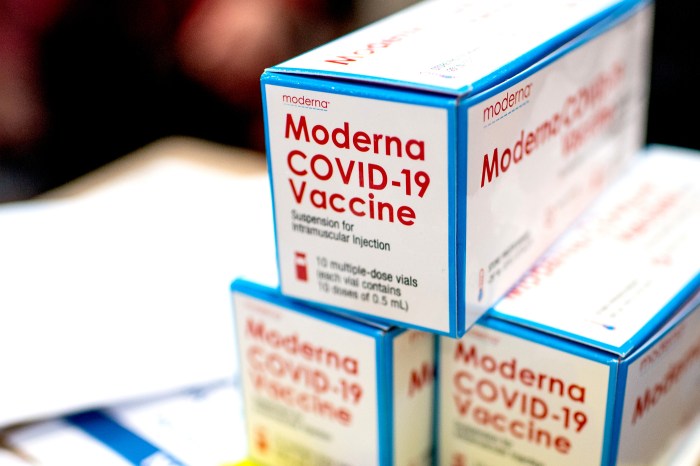
Shortly after Health and Human Services Secretary Robert F. Kennedy Jr. announced plans to halt $500 million in funding to develop vaccines using mRNA technology, he said in a press conference that he favors the development of a universal vaccine that mimics “natural immunity.”
What is the mRNA technology that led to rapid development of a vaccine against COVID-19, and how does it differ from other vaccines, such as whole virus vaccines championed by Kennedy?
And how close are we to developing a universal vaccine for COVID and the flu — and how would it work?
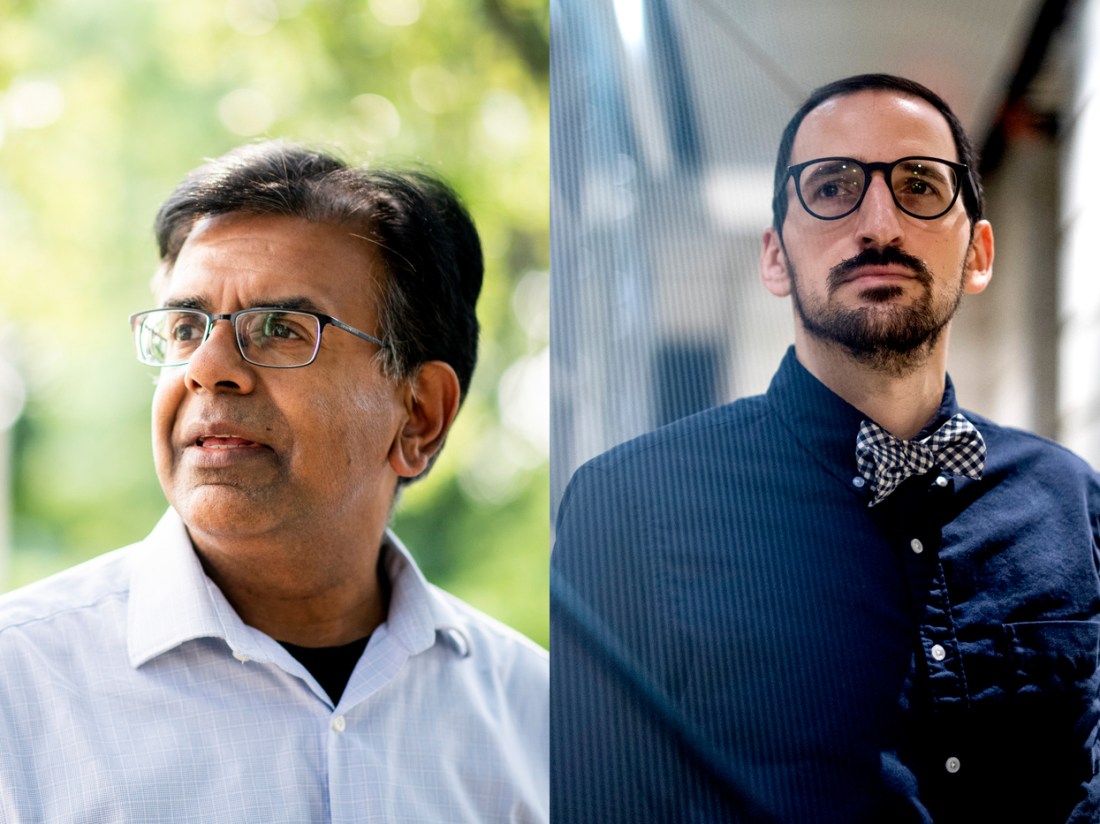
Northeastern Global News talked to Mansoor Amiji, university distinguished professor of pharmaceutical sciences and chemical engineering, and Brandon Dionne, associate clinical professor of pharmacy and health systems sciences, to find out.
“The basic premise of a vaccine is that you are using your body’s immune system to either protect against disease or to treat diseases,” Amiji says.
“What you’re doing with vaccines is you are priming your own body’s immune system,” he says.
The mRNA technology platform
“MRNA stands for messenger RNA,” Dionne says. “It’s like the genetic code or material that tells our body or any living organism how to make something.”
“In the case of the mRNA vaccines, it is messenger RNA that tells our cells how to produce whatever the antigen is that we’re trying to develop an antibody response to,” he says.
“With the COVID vaccines, that would be the spike protein from SARS CoV2,” Dionne says.
With mRNA influenza vaccines currently under development by pharmaceutical companies Moderna and Pfizer, it would most likely be the hemagglutinin molecule, another surface protein, he adds.
“The advantage of mRNA is that it’s very easy to change the specific mRNA sequencing to account for changes in the spike proteins or the hemagglutinin proteins that we see from season to season in different variations of the viruses,” Dionne says.
Amiji says he likes to compare mRNA platform technology to developing a recipe for cookies.
“The batter could be the same but we could change the ingredients and adapt it to our taste,” be it for chocolate chips or nuts, he says.
Editor’s Picks


“With mRNA platform technology, you develop this core recipe and then you can make slight modifications after that relatively quickly,” Amiji says.
Other ways to develop vaccines
Traditionally, researchers developing seasonal vaccines for the flu, for instance, have grown bits of hemagglutinin in egg cultures or other media, called a subunit approach, Dionne says.
“It takes time to actually grow the virus or make those hemagglutinin proteins to then put in a flu vaccine for you to develop antibodies,” he says.
The whole virus approach to vaccine development involves inactivating it to make sure it is no longer pathogenic, Amiji says.
“It’s not going to cause the disease, but it still has the immune component that will prime or activate our immune system,” he says.
Dionne says mRNA vaccines have similar antibody responses to viruses but can be updated more quickly than other vaccine development methods by providing instructions for your body to develop the antibodies.
“It’ll either prevent the disease or reduce the symptoms and severity,” he says.
The universal vaccine
“Currently, you have to keep developing new vaccines every season to keep up with changes” in the viruses, Dionne says.
“The idea of a universal vaccine is that you pick a target in the virus that doesn’t change, that’s highly conserved, that doesn’t change from season to season,” he says.
“With flu, our vaccines normally target the hemagglutinin head, the top of the protein, which changes more frequently. A potential target could be the stem of hemagglutinin, which is more highly conserved,” Dionne says.
“If you could develop a universal flu vaccine, it wouldn’t be specific to last year’s H1N1 strain,” he says. “It would be all influenza A because you’re targeting a part of the virus that is common among all the different influenza A viruses and is the same from season to season.”
The idea is that “you don’t have to keep updating the vaccine every year,” Dionne says.
When a universal vaccine might be available
Thus far it’s been difficult to develop a robust immune response that can translate across different flu viruses and show “actual clinical effect,” Dionne says.
“It’s been a goal for a while, and it’s just been challenging to develop,” he says.
“There have been phase one trials of universal vaccines, but I don’t know of any phase two or phase three trials, and those take time,” Dionne says.
“So my bet would be that we are at least a year if not more out, and that depends on how the regulatory process goes,” he says.
There are different ways of trying to develop a universal vaccine, but mRNA “would be perfect for that because you can encode how to develop just the universal target and develop an antibody response to that,” Dionne says.
He called a universal vaccine, whether for influenza or COVID-19, “a valuable goal.”
“It’s something that we’ve been working on for a while, but haven’t gotten there yet,” Dionne says.
Amiji says “mRNA as a platform technology holds a lot of promise.”


