Economists think a rate hike is coming. Here’s what that could mean for the economy
Ahead of the upcoming Federal Reserve meeting, stubborn inflation, rising Treasury yields and signals from other central banks have all raised the prospect of a rate hike, which economists say is now all but certain.
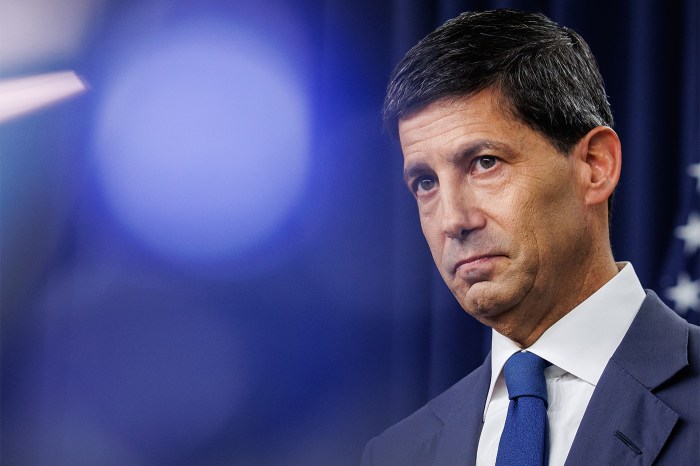

Ahead of the upcoming highly-anticipated Federal Reserve meeting, stubborn inflation, rising Treasury yields and signals from other central banks have all raised the prospect of a rate hike, which economists say is now all but certain.
“Signals are pointing to broad inflationary pressure beyond one-off energy and tariff shocks,” said William Dickens, university distinguished professor emeritus of economics and public policy. He added that he expects the central bank to raise the benchmark interest rate by 25 basis points, or one-quarter of a percentage point — a move that could portend a more challenging period ahead for the economy.
The meeting comes amid recent concerns over rising government debt, with a global bond sell-off pushing yields to multi-year highs, while energy prices have surged amid the ongoing war with Iran.
On Sept. 10, the European Central Bank raised its three key interest rates by 25 basis points, citing persistent inflationary pressures from the war. The following day’s consumer price index, or CPI, report by the Bureau of Labor Statistics showing that inflation remained elevated at 3.4% in August was the final major data point of the week to factor into expectations for the Fed’s decision on Sept. 16.
A rate hike could mark a significant shift in the Fed’s approach to an economy confronting the competing pressures of persistent price increases and a still-resilient labor market. It would also mean that Fed Chair Kevin Warsh, long viewed as an inflation hawk, may be willing to risk the ire of President Donald Trump, who is threatening to halt trade with America’s key partners if the Fed doesn’t cut rates.
Dickens said the Federal Reserve “will be very concerned” that inflation could become deeply entrenched in the way businesses set prices and workers negotiate wages, making it more persistent than it would otherwise be.
The administration, led by Treasury Secretary Scott Bessent, has repeatedly characterized the rise in inflation as transitory and linked to the war with Iran. Without intervention, Dickens said, higher prices could be here to stay.
Dickens argues that Fed officials will be laser-focused on preventing inflation expectations from further propelling inflation or becoming baked into broader economic and labor decisions — a mechanism that Fed chairs have repeatedly warned about over the years.
“When that happens we are back to the 1970s, where the expectation of inflation becomes a cause of inflation,” Dickens said. “That is how we get double digit inflation.” The Fed understands this and won’t let it happen.”
But taming inflation at this stage could be tricky, particularly in an election year, Dickens acknowledged. Typically the Federal Reserve refrains from tinkering with monetary policy so close to a vote.
During election years between 1972 to 2024, the Fed has generally been less likely to adjust interest rates in the weeks leading up to Election Day, according to a historical analysis by CME Group, a global derivatives marketplace and financial markets company. The study noted that the Fed is less likely to act on monetary policy before a midterm election, but has made moves “on occasion” when confronted with serious economic crises or concerning inflation levels.


It might be hard to avoid the charge of politicization either way.
“I suspect that if anyone raises this in a September meeting, the argument that not taking action in the face of rising prices would also be a political intervention and that the Fed should just do what it would normally do any other month of any other year,” Dickens added.
So far, employment has held up in the face of recent economic shocks tied to the Iran war and tariffs. Employers added 162,000 jobs in August and the unemployment rate held steady at 4.1%, according to the latest data from the Bureau of Labor Statistics.
Jai Kedia, a research fellow at the Cato Institute’s Center for Monetary and Financial Alternatives, a research organization within the Washington, D.C.-based think tank, said he thinks a rate hike is the likely outcome given positive signs in the labor market and stubbornly high inflation.
But he noted that the change in leadership with the Fed has muddied the signals the central bank is sending to investors about the path of monetary policy. The Fed typically telegraphs its policy intentions to some degree, giving investors clues about how it is likely to respond to incoming economic data.
Warsh’s many changes to the central bank’s framework and his messaging mean it could take several months for the Fed’s policy “reaction function” — how it responds to changing economic conditions — to become clearer, Kedia said.
“Most of these changes are headed in the right direction,” he added.
At the same time, Kedia argues that Fed officials waited too long to raise rates. The central bank held off during 2025 and the lead-up to the war, as officials thought some of the inflation was a product of temporary shocks produced by tariffs that could fade without the need to raise rates.
Instability in the bond market has been another wrinkle for the Fed. Longer-term Treasury yields have risen sharply even as the central bank has held its benchmark rate steady. The 10-year Treasury yield recently approached 5%, while the 30-year yield climbed to its highest level in more than two decades.
Kedia said that poor macroeconomic policies, such as war, tariffs and excessive spending are the primary determinants of bond yields at this time.
“If broader interest rates such as T-bonds and mortgage rates are a clue, then there may be at least one more rate hike coming this year from the Fed,” he said.


