Mistrial not necessarily the end of Clancy case, expert says.
“There are two different things to watch going forward,” said Rose Zoltek-Jick, an associate teaching professor at Northeastern University School of Law.
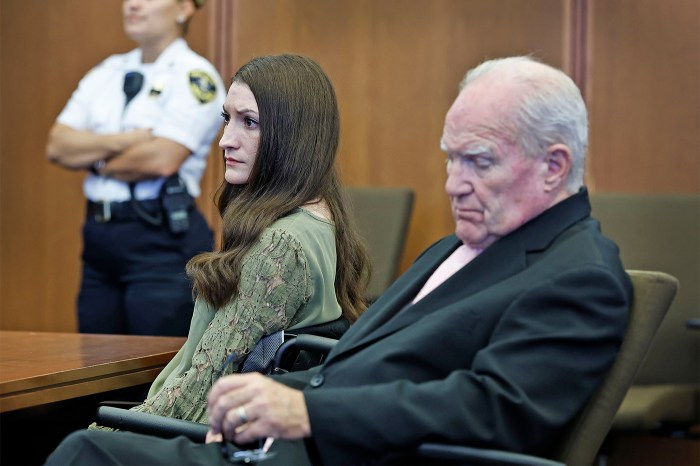

The judge in the Lindsay Clancy murder trial declared a mistrial on Friday after jurors remained deadlocked following days of deliberation and the Massachusetts Supreme Judicial Court’s refusal to grant the defense an emergency appeal.
Northeastern law expert Rose Zoltek-Jick said that the mistrial, which means a trial is stopped and declared invalid before a verdict is reached, does not necessarily end the matter involving the 36-year-old mother who admitted to killing her three children. Clancy’s attorneys argued she was not criminally responsible because she was overmedicated and suffering from postpartum psychosis.
“There are two different things to watch going forward,” said Zoltek-Jick, an associate teaching professor at Northeastern University School of Law who specializes in criminal law and procedure. One is a “legal issue,” she said, the other a “political issue.”
The legal issue involves a motion for reconsideration that is scheduled for Sept. 29. In this motion, Defense Attorney Kevin Reddington will likely ask Superior Court Judge William Sullivan to reconsider the mistrial declaration and give a ‘directed verdict of acquittal’ – or rule that Clancy is not guilty, Zoltek-Jick said.
It’s “an extreme longshot,” she added.
The law professor explained that a motion to reconsider is normally submitted after a verdict and, even then, is usually unsuccessful. She pointed to the 1997 Louise Woodward case as an exception. In that trial, a jury convicted the British former au pair of murdering the eight-month-old baby she cared for, and Massachusetts Judge Hiller B. Zobel reduced the conviction to involuntary manslaughter. The Supreme Judicial Court upheld the reduced conviction.
“It’s very unusual …for a judge to substitute his own verdict based on evidence if the jury has decided it’s murder, because then why have a jury?” Zoltek-Jick said.
That the Clancy case resulted in a mistrial makes a motion to reconsider and a directed verdict of acquittal “even more unusual,” she added.

Yet, Zoltek-Jick predicted that the defense would make two arguments in support of its motion to reconsider.
First, Reddington could argue that the Commonwealth had not met the burden of proof in proving that Clancy was sane when she killed her children and, thus, an acquittal was warranted.
The 36 year old Duxbury, Mass. woman admitted to killing 5-year-old Cora, 3-year-old Dawson and 8-month-old Callan in their home.
Second, the defense could argue that the judge erred in his handling of a sole so-called “holdout juror,” whom the defense accused of deadlocking the jury and, on Friday morning, had asked the judge to remove. Sullivan refused. Reddington could argue that it was incorrect to allow the juror to stay, and/or that Sullivan did not sufficiently query jurors to find out the holdout’s motivations, Zoltek-Jick said.
“This is novel, unusual, and somewhat more complicated because we do not fully know whether the holdout juror was doing so out of conscience, out of a different view of the facts, or was just being ornery and stubborn and refused to join in the verdict even though they were convinced the Commonwealth hadn’t made its case,” Zoltek-Jick said. “That’s a serious question for the rule of law. That’s a serious legal issue about the integrity of our trials.”
Editor’s Picks


Nevertheless, the professor predicted neither of these arguments would succeed, due to the mistrial declaration and rarity of successful motions to reconsider.
As for the political issue, Zoltek-Jick said Plymouth District Attorney Timothy Cruz has to make a decision whether to re-try Clancy. The law professor questioned
whether a second trial would be a wise use of the Commonwealth’s resources, since it appears that 11 of 12 jurors were not convinced that Clancy was sane when she killed her children.
“This is a case [of] whether blame should again be pursued rather than compassion, and we already know how eleven jurors thought about that,” Zoltek-Jick said.
She suggested “stay tuned.”