Witnessing Roman space telescope launch was a ‘privilege,’ Northeastern professors say
Two Northeastern cosmologists were invited to witness the launch of the Nancy Grace Roman Space Telescope that will help scientists learn more about exoplanets, dark matter and other mysteries of deep space.


“10…9…8…”
Jacqueline McCleary paid no attention to the countdown and trained her eyes on the northern horizon. She wasn’t going to miss a thing.
The Northeastern University observational cosmologist and assistant professor stood on the sandy shoreline of Alan Shepard Park in Cocoa Beach, roughly 17 miles away from where the SpaceX Falcon Heavy rocket was preparing to send the 18,000-pound, tour bus-sized Nancy Grace Roman Space Telescope on a million-mile mission to help scientists learn more about exoplanets, dark matter and other mysteries of deep space.
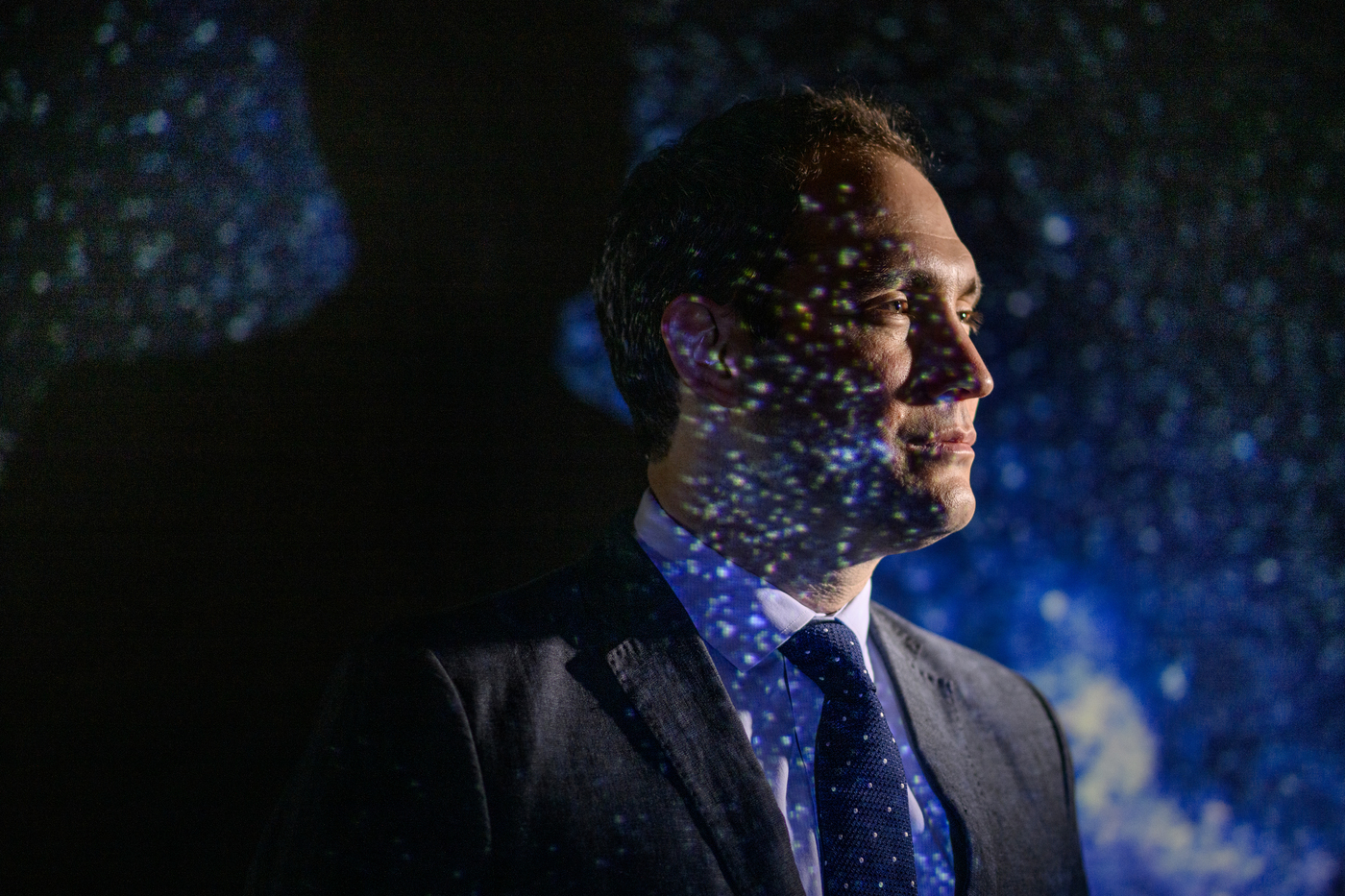
That recent Sunday was the first time she and fellow Northeastern cosmologist and associate professor Jonathan Blazek witnessed a rocket launch in person. The pair were invited to Florida as members of the Roman Science Collaboration, a volunteer group of scientists who came together as a community with varied expertise to plan the research they will conduct using data from the $4.3 billion mission, driven by the National Aeronautics and Space Administration, NASA. They will also be conducting their own supernova, galaxy and dark matter research with Roman data.

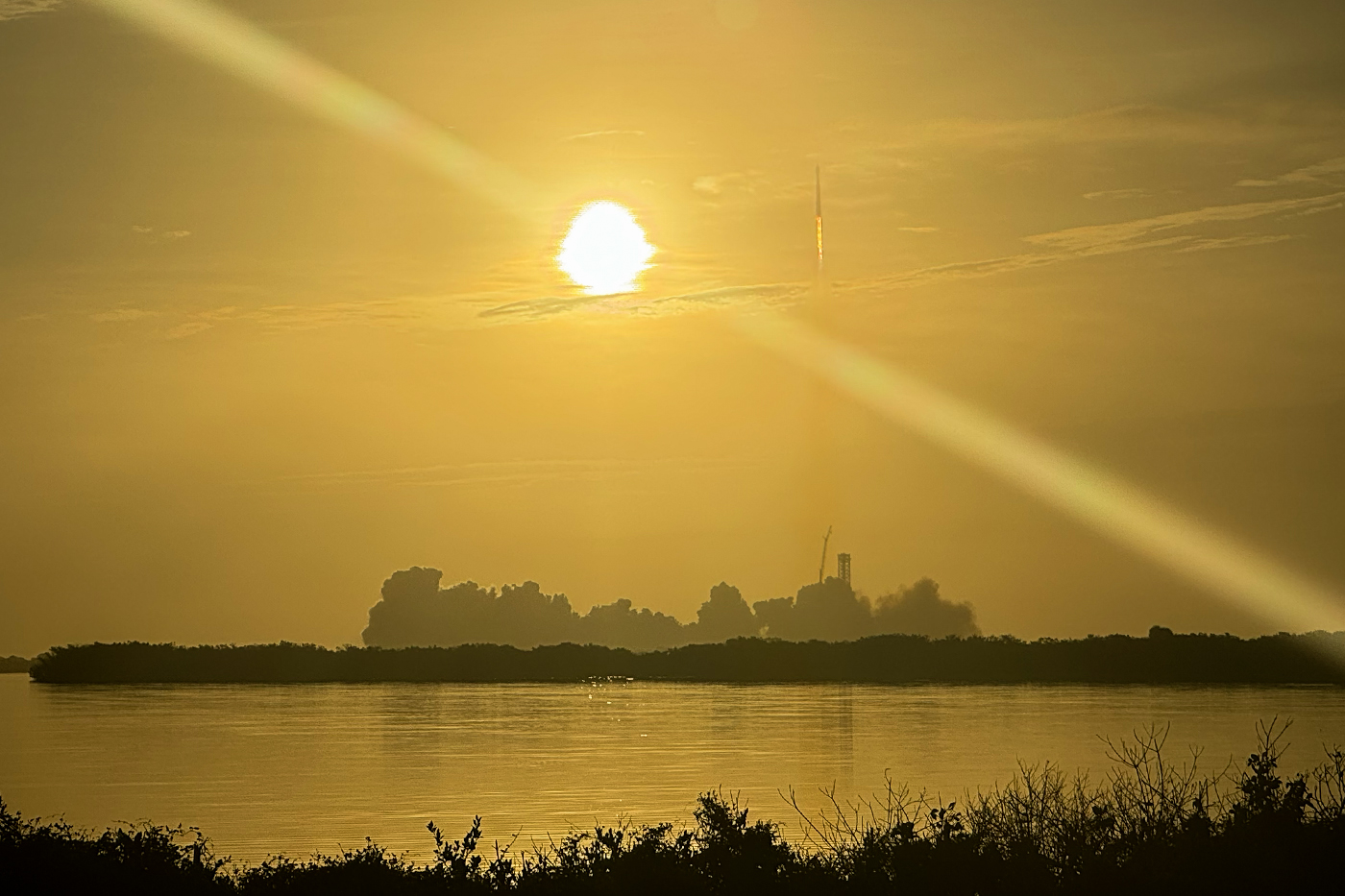
Blazek had the chance to see the rocket propel into the sky from an official NASA viewing platform less than four miles away from the historic Launch Complex 39A, which also served as the departure point for the maiden manned moon voyage in 1969. But McCleary, waitlisted for a closer vantage point, ended up watching the 7:26 a.m. launch with a small crowd from the beach.
She didn’t know quite what to expect watching a rocket launch. Another astrophysics colleague offered her a tip: NASA’s official broadcast was on a delay, so be sure to look up, he advised.
Sure enough, as the beach crowd counted down with the broadcast, the rocket was already airborne to send the Roman space telescope to an orbit four times as far as the distance between Earth and the moon, or 238,855 miles.
McCleary and Blazek witnessed all of the rocket’s bright light, smoky tail and chest-rumbling sonic boom.
Editor’s Picks




“Whether it’s the engineers working on some component of the launch system, or some sensor engineer or optical engineer, or whether it’s a new scientist, whether it’s a Nobel laureate-caliber scientist, we’re all motivated by the wonder of it all, by the beauty of it all,” McCleary said. “Being at a launch like this for a new transformative mission like the Roman space telescope reminds us why we’re doing this.”
Blazek concurred that “it was really a privilege to be here and be part of it.”
The space telescope is named for NASA’s first chief astronomer Nancy Grace Roman, considered the “mother” of the Hubble Space Telescope and the force behind NASA’s Great Observatories program, a collection of space telescopes launched between 1990 and 2003.
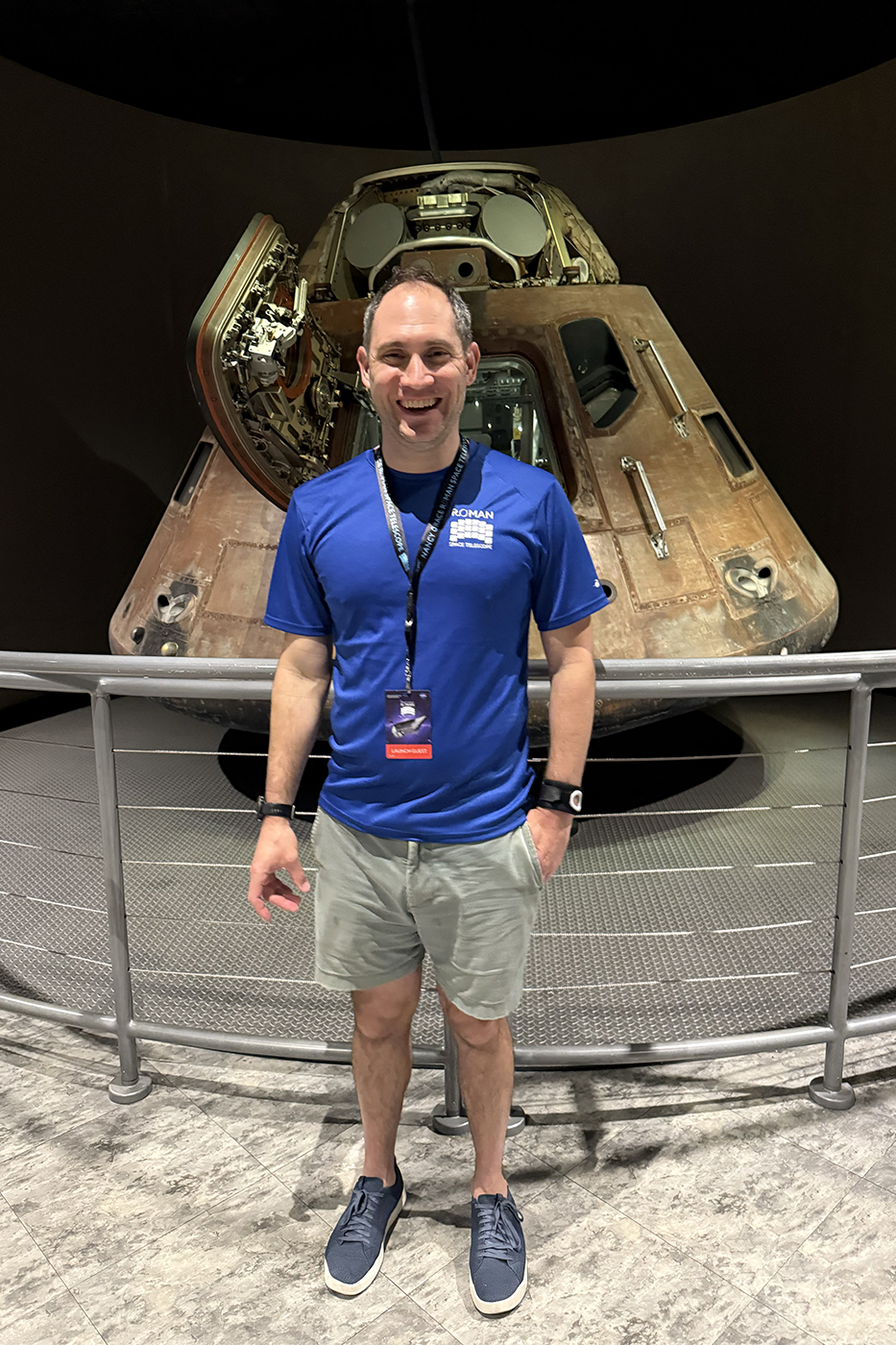
While McCleary could get from her hotel to the beach in a six-minute drive, Blazek’s launch morning required a 3 a.m. wake-up call, a 30-minute drive to the Kennedy Space Center and a separate shuttle bus to the dedicated viewing area, arriving at 4:30 a.m.
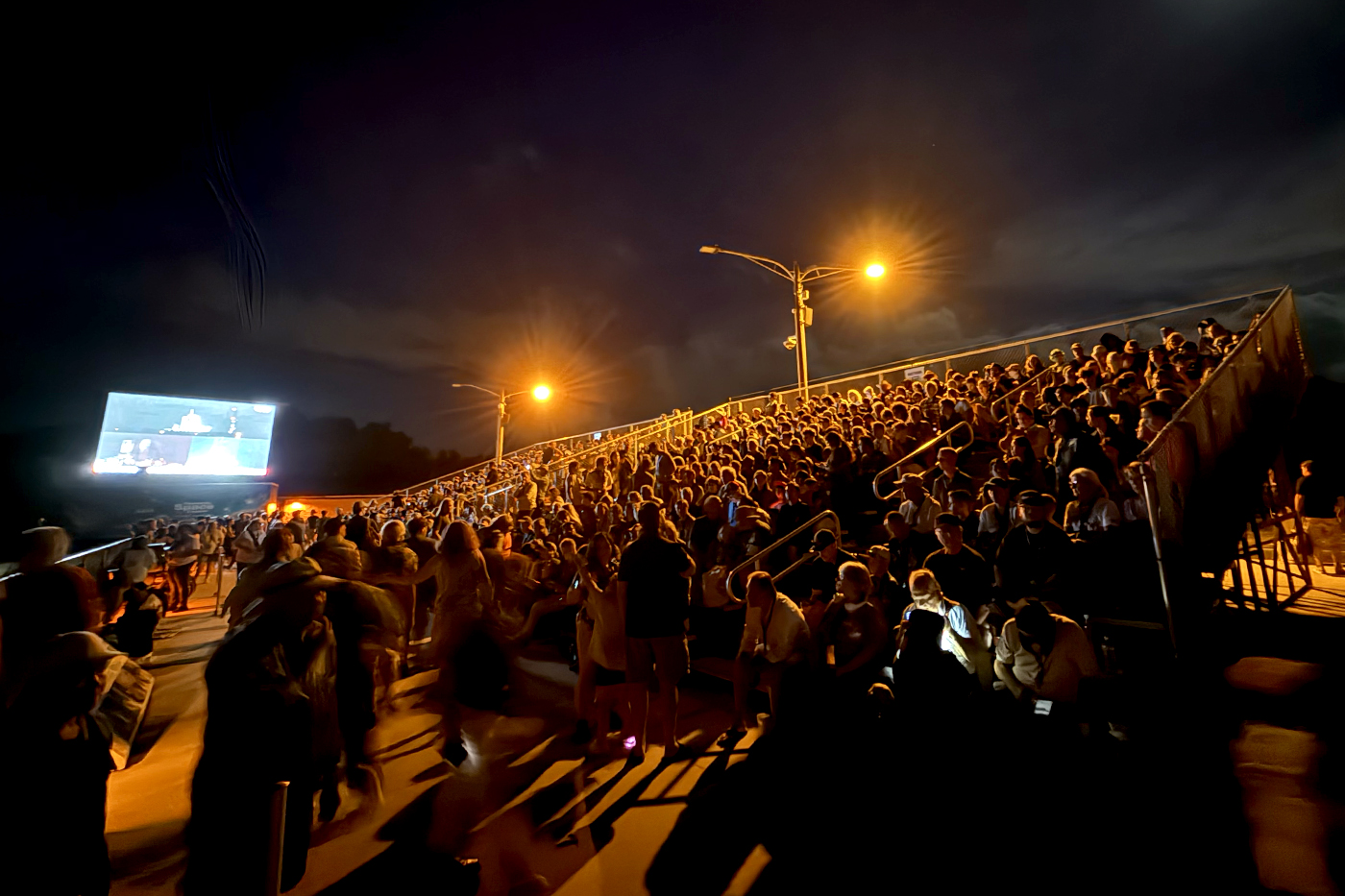
Even with T-three hours until liftoff, “everyone went into ‘excited child mode’,” Blazek said. Hundreds of spectators who filled the metal bleachers near the swampy Banana Creek passed the time watching the stars until the sun rose, talking about space and writing “Go Roman!” in the condensation accumulated on the windows of the nearby Apollo/Saturn V Center, which houses the largest rocket ever flown.
Anything can happen until the launch director says, “Go for launch.” There’s a narrow launch window to target the right orbit, and forecasted thunderstorms had threatened the timing, the cosmologists explained. But when those magic words were spoken 45 seconds before liftoff, the crowd erupted in cheers.
Roman the space telescope will spend at least five years in orbit alongside the James Webb Space Telescope, which launched in 2021 to conduct infrared astronomy and study the history of the universe. The data collected from each telescope will complement each other, according to information published by NASA.
Roman works like a camera with a wide-angle lens, equipped with a Wide Field Instrument – a 300-megapixel infrared camera enabling the capture of broad, crisp images of space – and a Coronagraph Instrument – a system of sensors, optics and mirrors that block glare from stars to see the faintest of light from older and colder worlds.
Webb, on the other hand, has a narrower field of view, similar to a point-and-shoot camera, that can zoom in and focus on a distant subject like a “grain of sand on the sky,” McCleary said.
“It’s a very, very big difference in scale and very big difference in cosmological volume,” McCleary said. “Roman is designed to probe a large volume of the universe.”
Roman will have a field of view 100 times larger and data-capturing speed 1,000 times faster than the Hubble Space Telescope, which launched in 1990 and helped make discoveries like the existence of supermassive black holes and a measurement for how quickly the universe is expanding. The Roman telescope’s first images will be published in early 2027, according to NASA, and it will send 1.4 terabytes of data each day available for anyone to use.
The telescope will be able to capture 80,000 supernovas or exploding stars; thousands of exoplanets, or planets beyond our solar system; hundreds of black holes; and billions of stars and galaxies, according to NASA.
With Roman data, Blazek will analyze the shape of galaxies to measure dark matter, the name for the mysterious mass that makes up just over one quarter of the universe. This analysis is two-fold, observing the intrinsic galaxy shapes influenced by their environment and light that is bent by gravity.
He is also helping to build software and analysis infrastructure that will turn images of galaxies into statistical measurements for modeling code that scientists and the community can use.
McCleary will test a technique she developed that quantifies the amount of intergalactic dust between the telescope and distant supernovas. A class of these exploding stars, called type 1a supernovas, help scientists measure how fast the universe is expanding.
“You look up at the night sky, you see pretty stars, you see planets and galaxies, but how far away are those things? It’s a surprisingly difficult question to answer,” she said.
This dust, made of silicates and carbon-based particles, can interfere with these distance measurements, potentially adding thousands of light years to calculations.
Seeing this rocket launch in person was just as much a professional goal as it was a childhood dream, the professors said.
McCleary decided to become an astrophysicist in the 5th grade after hearing a talk on astronomy. Blazek fondly remembers launching model rockets in the air in his youth.
“Most of our daily lives are answering emails or setting meetings or writing code,” Blazek said. “We don’t feel that direct connection to space or to rockets, the thing that a kid would have gotten into this for. But this reminds us about that.”


