Northeastern finalizes merger with Marymount Manhattan College, officially becomes Northeastern University – New York City
Northeastern University – New York City becomes the first out-of-state university to provide a full suite of programs in New York State.
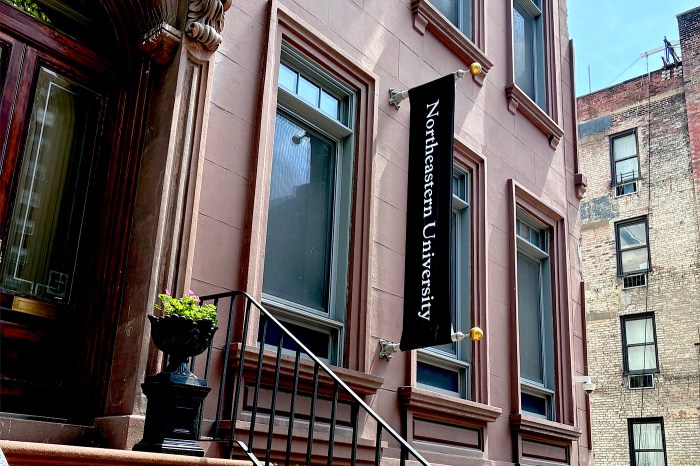

The merger of Northeastern University and Marymount Manhattan College in New York’s Upper East Side has been finalized, making Northeastern the first out-of-state university to provide a full suite of undergraduate programs in New York State.
On July 9, the U.S. Department of Education gave its final approval, and New York State converted Northeastern University — New York City’s provisional charter into an absolute charter, completing the final step of the merger process.
In May, 2024, Northeastern, a global research university and the world leader in experiential learning, and Marymount Manhattan College, a private liberal arts college on the Upper East Side of New York City, announced their agreement to merge. Over the past two years, the two institutions have worked diligently to map their curricula, create pathways for student mobility between campuses, and explore opportunities to expand research and experiential learning programs in the financial and media capital of the world. They also secured a range of necessary state and federal government approvals.
“The global university system does three things for us. It enables mobility for our students, it gives us a global research enterprise, and it dramatically expands our capacity to provide lifelong learning,” said Northeastern President Joseph E. Aoun in an interview with Northeastern Global News last spring.
Northeastern University — New York City is the 14th campus in the university’s global university system, which also includes locations in the U.S., Canada and the U.K.
“New York City is a logical and exciting place for us to have a campus within our global university system,” said Mary Ludden, Northeastern’s senior vice president and chief administrative officer who oversees strategy and implementation around mergers and acquisitions. “It’s one of the major economic drivers of industry, globally.”
With the merger now complete, current Marymount students and faculty joining Northeastern will gain access to the full Northeastern portfolio. That includes a network of U.S., U.K. and Canadian campuses, its signature co-op and other experiential learning programs that span 156 countries and more than 4,000 industry partners.


“The experiential learning opportunities and research programs that Northeastern University — New York City will be able to offer are unlike any in the world,” Ludden said. “The connections to Northeastern’s network, the research projects and career opportunities are, ultimately, unprecedented.”
The New York City campus includes 55 teaching spaces and two dormitories with 750 student beds. The 55th Street Residence Hall has 32 floors of student housing.
For the first time, Northeastern students have spent the 2025-2026 academic year at the New York campus as New York Scholars—a first-year undergraduate program that provided a pathway for students to matriculate to the Boston campus for their sophomore year.
New York City has long been a coveted destination for Northeastern students. During the 2025-2026 academic year, 717 students were hired in co-op positions at 325 companies, including global banking titans like Goldman Sachs, AI companies like Crewasis Corp and the luxury fashion brand Hermès.
Marymount’s suite of performing arts programs, including its dance programs, will continue to enroll students. Multiple other programs have been mapped with Northeastern’s curriculum. Northeastern is also actively exploring opportunities to add graduate degrees to the array of programs offered in New York City.
New York is one of the university’s biggest student recruitment sources in the U.S., and “having a Northeastern New York City campus is going to continue to boost our enrollment from the city and from the state,” Satyajit Dattagupta, chief enrollment management officer, executive vice chancellor and head of global expansion, said.
With the merger completed, approximately 1,000 students currently enrolled at Marymount will become Northeastern students. They will continue pursuing their studies and will not incur changes in their tuition. They will also receive personalized guidance from Northeastern advisors to ensure they are able to complete their degrees, as existing Marymount programs are mapped with Northeastern’s curriculum and graduation requirements.
These students can now take co-op prep classes previously only available to Northeastern students, and can participate in co-op and Northeastern’s other experiential learning programs.
In the fall, the second cohort of New York Scholars will also join the campus. The estimated 350 students will spend their first year in New York City before moving to Northeastern’s Boston campus. Another 155 to 160 students will spend all four years on the campus as part of the university’s first performing arts cohort in New York City, according to Dattagupta.
As such, Northeastern University — New York City will maintain an emphasis on the performing arts while connecting it with Northeastern’s innovative approach to fields like AI, engineering and business. The combination offers some inspired new programming opportunities, like robotics and music or physical therapy and acting, and a glimpse at the future of the liberal arts.
“Our ability and opportunity to leverage what is really strong about Marymount Manhattan College, which is the creative programming, the human-centered programming, underpinned by Northeastern’s programming in business, arts, media, design, tech and engineering, is really incredible,” Ludden said.


Editor’s Picks


A presence in New York City also creates opportunities for bringing in an entirely new array of partnerships with industry leaders who could provide more experiential learning opportunities for students, said Elizabeth Zulick, Northeastern senior vice chancellor for education innovation.
“Having a physical campus presence not only allows our partners to come to campus for recruiting, but also lets them build strong relationships with our students throughout their time at Northeastern,” Zulick said. “Our New York City campus, in particular, lets us engage more strategically with existing partners who also have offices or headquarters there, while we are actively growing our employer pipeline to provide more experiential learning opportunities to students across the network.”
According to Ludden, the university has received outsized interest from students, parents and industry partners who see it as an “unprecedented” opportunity at a time when the economic and higher education landscapes are shifting.
“It’s one of those cities where students can see themselves and their future, and that’s incredibly important for all our students,” Ludden said. “At times of such great economic upheaval, they view New York City as a place of opportunity.”


