Meet the faculty and staff running this year’s Boston Marathon
From a first-time marathoner to an experienced racer, here are the Huskies to look out for when cheering on runners in this year’s Boston Marathon.


On April 20, about 30,000 runners will assemble at the starting line of the Boston Marathon, 26.2 miles west of the city, to tackle the storied course. Among them will be several Northeastern faculty and staff who’ve spent months training for this day. Here are a few of their stories.
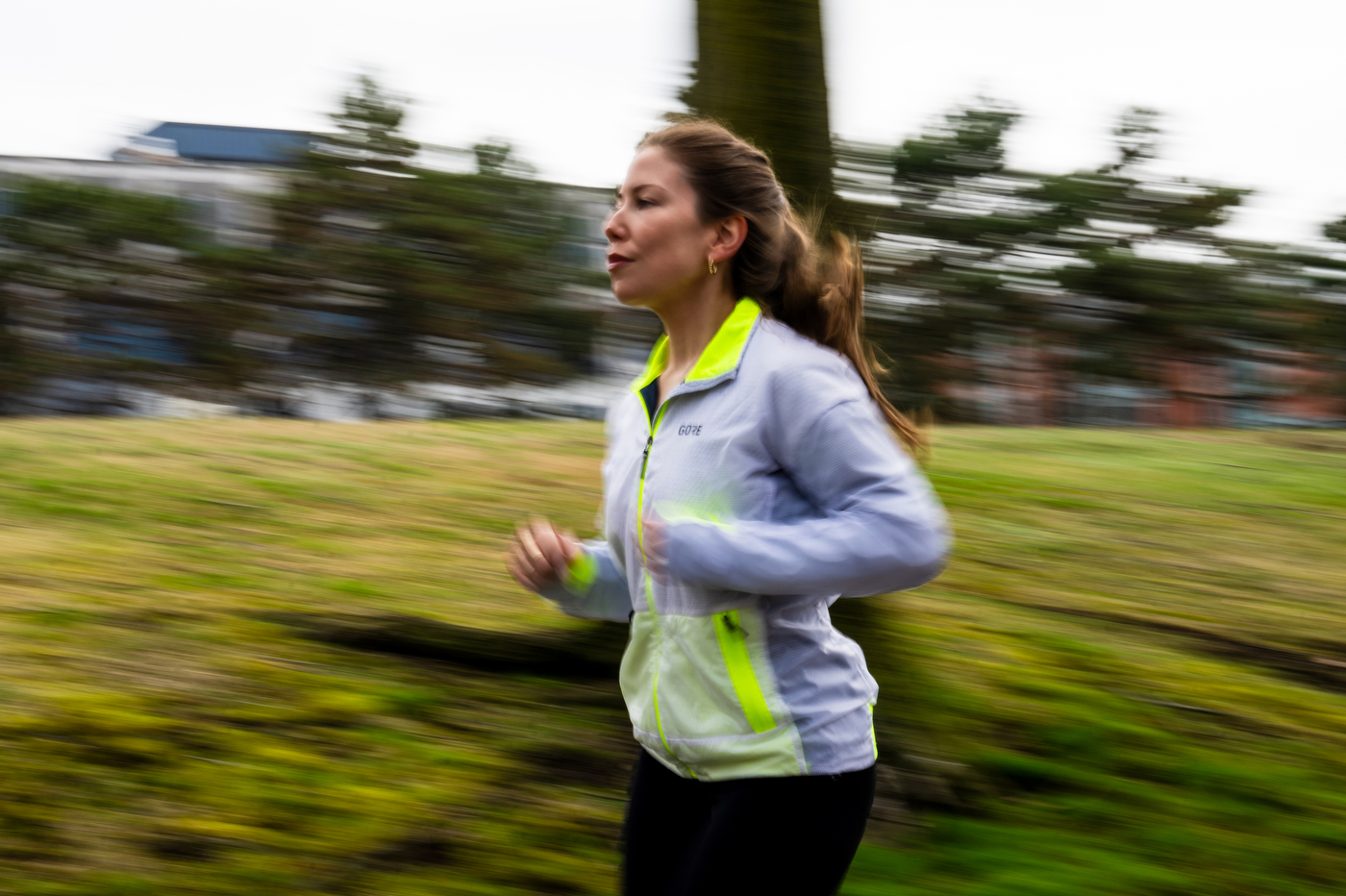
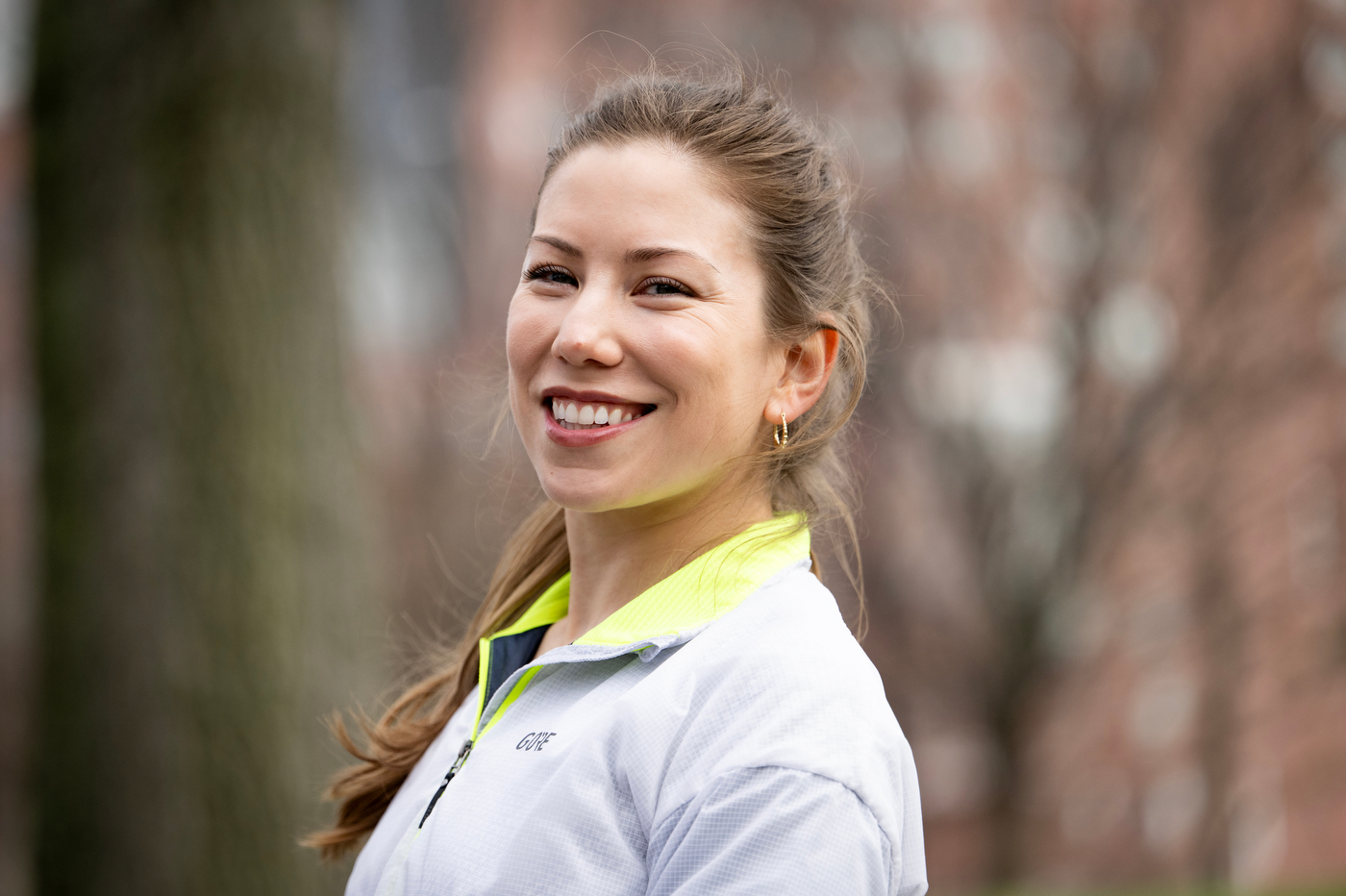
Megan Doe, undergraduate academic advisor in the College of Engineering
At first glance, Megan Doe may not appear to be the fiercest competitor, standing at 4’11”. But growing up playing defense and midfield in soccer, Doe, now an academic advisor at Northeastern, learned to put up a guard against larger players to protect the ball, darting up and down the pitch with her team.
Soccer taught Doe about her own physical and mental capabilities, as well as about the importance of teamwork and communication. She also learned about disparities in sports programming. Doe’s older sister, Katie, attended a high school without a girls’ soccer team. Instead, her sister played for (and eventually served as captain of) the boys’ team.
Luckily, Doe attended a different public high school that had a girls’ team for her to play on, but her sister’s experience showed her that not every school has the resources to provide a robust soccer program, especially for females.
“Soccer, for me, was…incredibly transformative,” Doe told Northeastern Global News (NGN). “But I certainly felt that barrier (through my sister’s experience).”
To ensure today’s youths have the opportunities to play soccer like she did, Doe is running the Boston Marathon to raise money for the Soccer Unity Project. (Northeastern is a long-standing partner of the group.) This organization provides free soccer programming to over 1,500 young people in the Boston area to address the prohibitive pay-to-play model where high fees are required to participate in club teams.
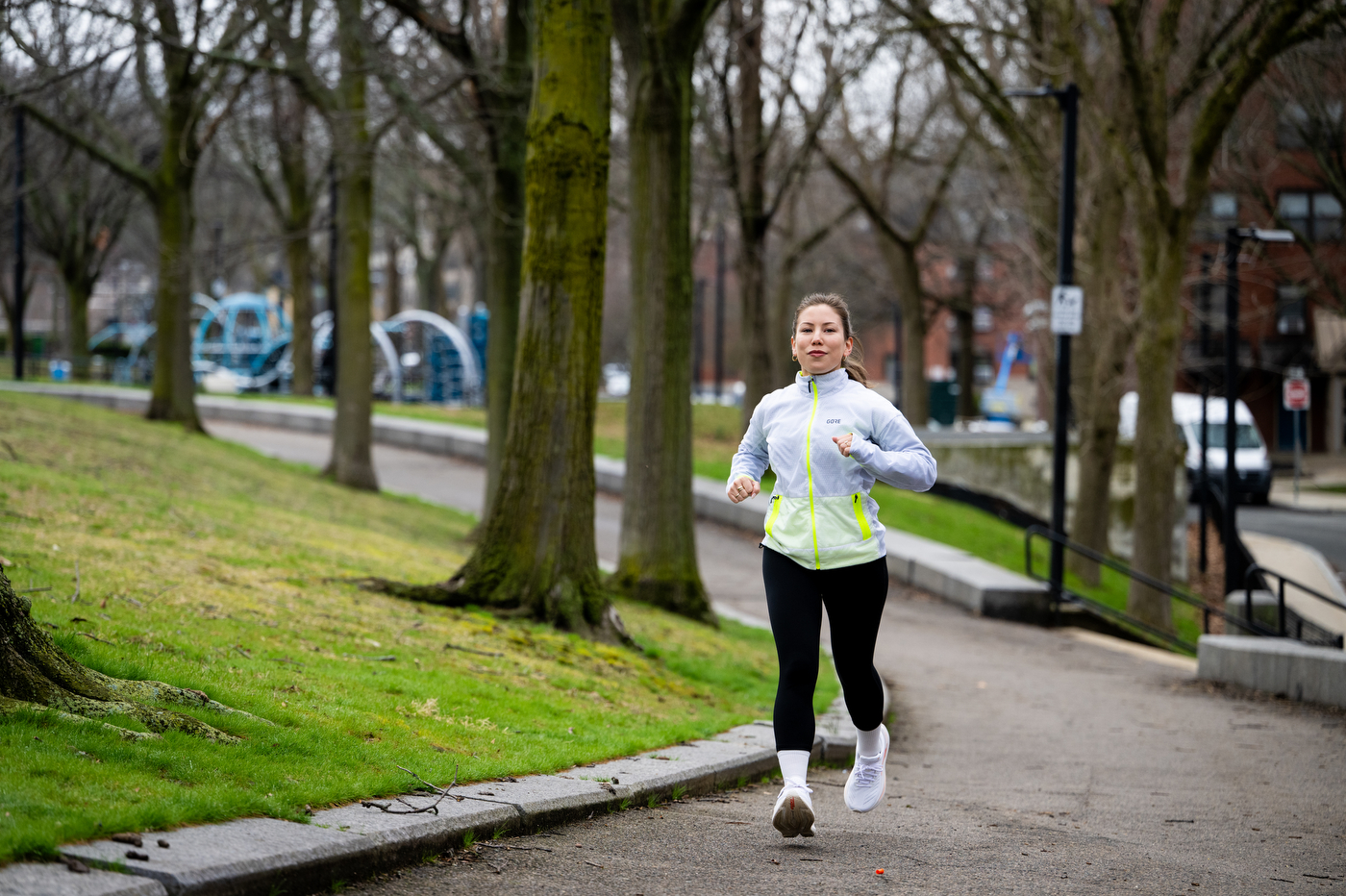
This will be Doe’s first marathon. As part of her training, she has been completing four runs every week, including a longer one of 10+ miles on weekends. Sometimes, she runs with others involved in the Soccer Unity Project or uses her workouts to catch up with her sister or fiance on the phone. Other times, her runs serve as a quiet break from her busy schedule working and studying as a doctoral candidate in education at Northeastern.
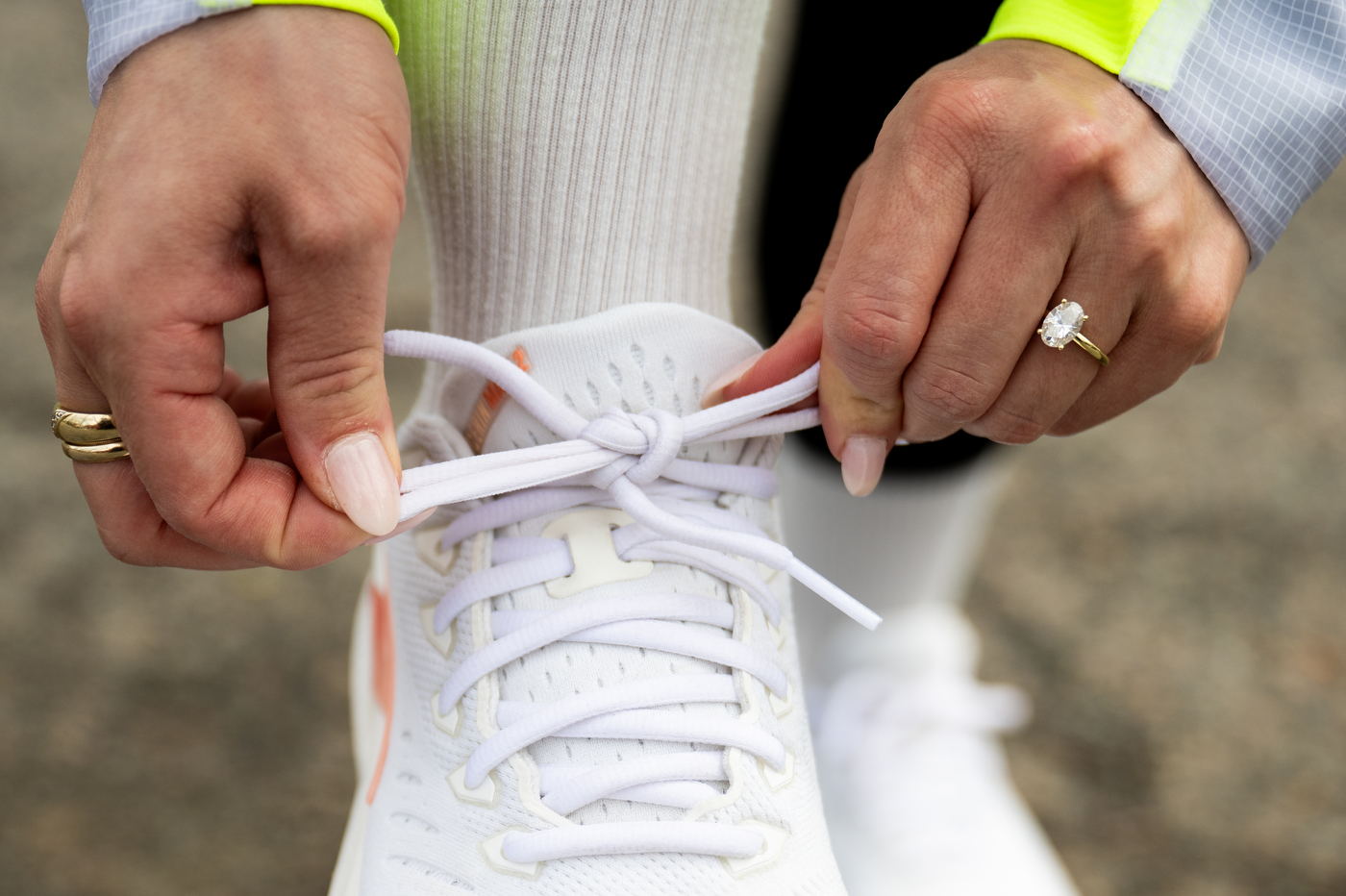
When she laces up her Brooks sneakers on race day, it will also be somewhat of a full-circle moment. This year marks a decade since Doe moved to Boston. She and her friends had since established a tradition of seeing the Red Sox play at Fenway Park before going to the marathon .
This year, Doe’s friends are skipping the game to cheer her on.
“It’s cool having the support of the community that I have built since coming here,” Doe said. “It’s going to be really special.”
Nancy Varney, associate teaching professor of civil and environmental engineering
Running may have gotten Nancy Varney her job at Northeastern.
In 2023, when a full-time teaching position opened up in the Civil and Environmental Engineering department, Varney, who was then teaching part-time, threw her hat in the ring.
While on one of her runs, Varney landed on an idea for the short lecture she was supposed to deliver as part of her application. The lecture was about the oft-misunderstood difference between cement (the fine powder, or ingredient) and concrete (the finished product from combining cement and water). But during her run, she thought of an analogy to liven up the topic, by likening it to the difference between flour and chocolate chip cookies.
She tailored her mini-lecture around this analogy, and it may have helped her land the job, she said.
The sport has been a way for her to free her mind since she began in the early 2010s. Since then, she has completed at least 20 marathons (she’s lost count of exactly how many), including several Iron Man triathlons where participants run 26.2 miles after a 112-mile bike ride and 2.4-mile swim and a French race where participants ran a total of 26.2 miles, but stopped to sample wines at various chateaus along the way.
The Boston Marathon holds a special place in her heart, however, thanks to the atmosphere it creates in the city.
“It’s something where…everyone’s excited about Boston…you feel left out if you’re not doing it,” Varney told NGN. “It’s the best day of the year.”
Varney is sticking to her usual training regimen for her fourth Boston Marathon. In the mornings, she throws on her Brooks sneakers and runs (sans headphones) about 10 miles from her home in Waltham, Massachusetts, to the Northeastern campus in Boston, making her workout her commute. At the end of the day, she cycles home. Sometimes she switches and bikes to work before running back.
Post-Marathon next Monday, Varney said she’ll go home and collapse on the couch. She’s due back on campus the following day for a final exam, so there’s not much time for celebrating. But if you’re watching the Marathon, know that she’ll be competing in a black and red singlet from the university run club to mark her first Boston Marathon as a faculty member.
Ronald Smith, associate music professor and music technology program coordinator
In 2020, Ron Smith was on sabbatical in Toronto when Covid hit and the border closed, leaving him stuck in Canada like many others.
While stranded, he joined a local running club. At that point, Smith was running 5 to 6 miles about three to four times a week.
All the other club members ran longer distances, so Smith challenged himself to increase his mileage. Thanks to his existing cardiovascular fitness from running and a bit of added strength training, he found that he could meet new goals.
The longer runs also helped him let go of stress.
“It’s meditative,” he told NGN. “When I do long runs by myself, it gives me time to touch base with myself and I enjoy that a lot.”
Editor’s Picks


By 2022, Smith was running marathons. He has now run the Toronto, Ottawa and Chicago marathons (he’s run Chicago twice). His finishing time in the most recent Chicago marathon in October 2024 qualified him for the Boston Marathon.
“It’s a really big deal…to take part in something like the Boston Marathon,” Smith added. “There’s really nothing like it in the world. Everyone who does any distance running knows the course.”
Preparing for this race has been more challenging, Smith said. He typically takes 18 weeks to prepare for a marathon, but an injury and a bout of the flu cut into his training by two weeks.
This winter’s heavy snowfall also meant more indoor runs on a treadmill. But Smith managed four runs a week in his Saucony or Adidas sneakers, mixed with stationary bike sessions, strength training and yoga. The variety also builds muscle mass throughout his whole body, which helps during long runs, he said.
In the days leading up to the marathon, Smith is planning on running the Boston Athletic Association’s Boston 5K, which is held the Saturday before the race, as a “shakeout run,” he said. On Marathon Monday, Smith will be joined by some running buddies from Toronto on the course. Spectators might spot Smith running in the iconic royal blue uniform of the Boston Athletic Association, his running club of choice, now that he’s back in the U.S. and armed with his favorite Maurten brand gels which offer 25 grams of carbohydrates to fuel him throughout the race.
“It’s going to be an interesting weekend,” he said of running back-to-back races. “We don’t have any plans immediately afterwards because (we’ll be) pretty exhausted. It’s an interesting feeling (post-race), because you still have this energy in your mind…even though your body’s tired. It’s hard to know how I’m going to feel.”