Potomac spill cleanup relies on natural more than manmade processes
Part of a major sewage pipeline in Maryland collapsed Jan. 19, causing more than 200 million gallons of untreated wastewater to spill into the Potomac River.
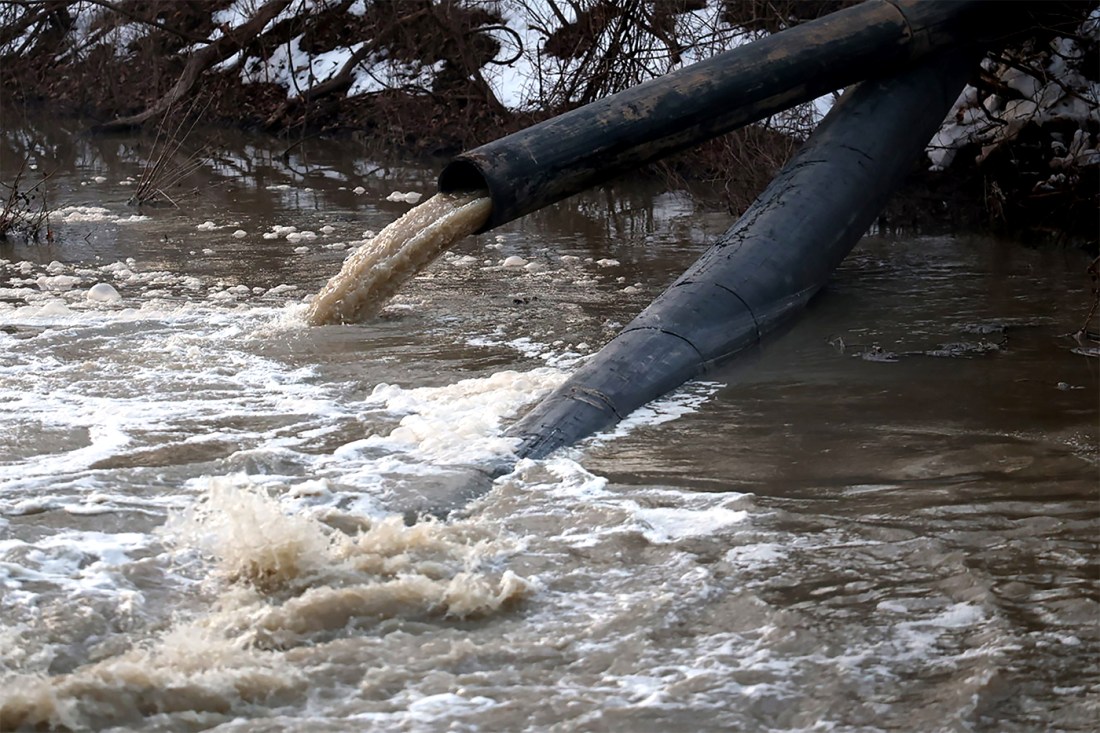

A massive raw sewage spill that dumped 243 million gallons of raw sewage into the Potomac River this winter will largely be cleaned up by Mother Nature and Father Time, experts say.
Part of a major sewage pipeline in Maryland managed by the D.C. Water utility company collapsed Jan. 19, causing millions of gallons of untreated wastewater to spill into the river in the ensuing days.
“At the volumes of water we’re talking about, you really can’t put a dent in anything beyond natural processes,” said R. Edward Beighley, distinguished professor and chair of civil and environmental engineering at Northeastern University. “Time will sort of take care of itself.”
Officials with D.C. Water said crews rigged up a system for the sewage to bypass the damaged pipe, and there have been no overflows of raw sewage into the river since Feb. 8. Officials announced that the river would be reopened to some recreation this week.
The cleanup from the spill, meanwhile, is estimated to cost $20 million for repairs and environmental remediation, news sources including the Chesapeake Bay Journal, and E&E News reported.
That pales in comparison to the roughly $2 billion spent to remediate the Exxon Valdez spill in 1989, and the $8.8 billion for cleaning the 2010 Deepwater Horizon spill in the Gulf of Mexico. (The total costs of the disasters, including fines and penalties and insurance payouts were markedly higher, approaching $40 billion for the Gulf of Mexico spill).
Even though spills released less volume of contaminants – 11 million gallons for Exxon Valdez and 134 million gallons with Deepwater Horizon – experts said there is a key difference between a sewage and a spill involving something like crude oil or gasoline.
“Something like oil, you can do things to actually take whatever the spill was out of the system,” Beighley said.
In contrast, sewage mixes with water.
“Anything that mixes into the water, once it’s mixed, then you’re really at the mercy of the system you’re dealing with,” Beighley said.
But as with oil spills, sewage spills bring environmental concerns.
Since the spill involved “anything that’s coming generally from a house, meaning paper products to whatever’s in the wastewater,” on its way to a treatment plant, according to Beighley, this raw sewage contained high levels of E. coli bacteria. These bacteria live in your gut or gastrointestinal tract and some types can cause infections such as gastroenteritis or, if they get there, infections in your urinary tract or bloodstream.
“If we’re going to drink the water, or eat something that essentially drinks the water, that’s when people could get sick,” Beighley said.
Editor’s Picks





So vegetables irrigated with the contaminated water, shellfish that filter that water, or ingesting the water directly from the river are all off the table, Beighley said, at least until the E. coli die off.
The advantage of the spill happening in a river like the Potomac is that the wastewater is flushed downstream and into the Chesapeake Bay.
“The reality is, once it hits the Bay and it starts mixing with that volume of water, even 200 million gallons of sewage is going to get diluted pretty quick, and there are natural processes that take care of bacteria.” Beighley said.
The levels of E. coli in the Potomac have already decreased significantly since the spill, according to D.C. Water data.
Beyond harmful bacteria, an overabundance of certain nutrients can also be a problem, a phenomenon known as nutrient loading, according to Annalisa Onnis-Hayden, teaching professor and vice chair for undergraduate studies in civil and environmental engineering at Northeastern.
Onnis-Hayden noted that wastewater treatment plants have limits on the amount of nutrients – specifically, nitrogen and phosphorus – they can release after treatment.
Algae found in freshwater rely on sunlight, carbon dioxide and nitrogen and phosphorus to grow. Too much of those nutrients, however, can result in algal blooms, Onnis-Hayden said, which can have several harmful results.
First, a mat of algae on the surface of a waterbody can block sunlight from reaching the depth of the water, alter growth of other organisms and change the ecosystem, Onnis-Hayden explained.
Some algae – for instance, cyanobacteria – also release toxins that can harm humans who come in contact with it, but can also be deadly for dogs and other organisms.
Finally, when the algae die, the microbes eating them consume oxygen, leaving little for other organisms like fish, Onnis-Hayden explains.
“Those are all things that we try to avoid,” said Onnis-Hayden. That’s why spills like this – an unregulated discharge – are significant and pose a significant threat to the ecosystem and water quality.”
But, again, Mother Nature has helped.
“It’s a good thing that it happened in the winter instead of happening in the summer,” Onnis-Hayden said.
Chemical and biological reactions are always subject to temperature – with warmer temperatures typically speeding up those processes while winter typically slows them, Onnis-Hayden explained. Moreover, humans and pets are less likely to use the river for recreation in winter, which means fewer interactions with contaminated water as well.
Onnis-Hayden said the big lesson of the Potomac spill is not just environmental but infrastructural, given that a dilapidated pipe started it all.
“This event is an opportunity to really have a critical understanding of where we are and what are the risks associated with not investing in repairing this infrastructure,” Onnis-Hayden said.