How social media and ‘diet culture coercion’ have helped create widespread disordered eating
Northeastern University research identifies the modern sociocultural causes behind disordered eating and why people afflicted by it don’t talk about their experiences.
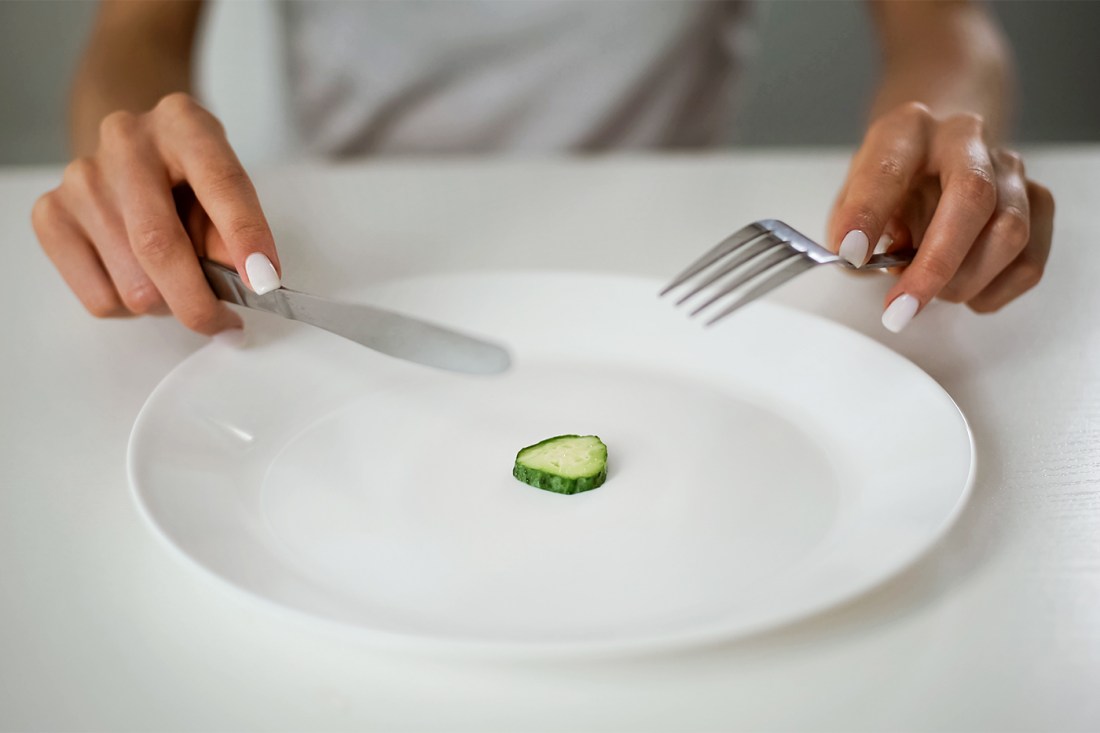

Approximately 30 million Americans will experience some form of disordered eating in their lifetime. These conditions, which include anorexia, bulimia and binge eating, also seem to affect about twice as many women as men, according to the National Eating Disorders Association.
Experts are still trying to figure out what might be driving people to such disorders, but importantly, how best to engage with those experiencing disordered eating to help them access treatment. “Psychology has done great work in this area, but there’s a real lack from a communication angle,” says Ashleigh Shields, a Northeastern University assistant teaching professor of communication studies and public health and health sciences.
Shields has been engaged in research that identifies some of the sociocultural factors that may be leading people to disordered eating and why these people often don’t disclose their experiences to family members or clinicians.
Because her work explores how certain forms of communication can either directly, or as part of a larger context, lead to disordered eating, Shields conducted interviews with 15 people with a history of disordered eating to learn more about the factors driving their behavior.
Social media emerged as one major culprit, she says. Highlighting trends that promote certain foods while problematizing others and celebrate certain body types over others can produce feelings of shame that create a cycle of disordered eating. For younger generations especially, who have spent their formative years online, the effects can be especially pronounced, she says.
Popular diet fads, both on social media and within friend groups or families, can also create a sense of pressure towards disordered eating. Shields calls this “diet culture coercion,” part of a larger trend that encourages not just dieting but unhealthy caloric restriction and overexercising, which can lead to injury and further self-image issues when one fails to meet their own expectations.
Seemingly offhand comments made by family and loved ones also seem to make an impact, the interviews revealed. “It’s amazing how some people still remember what someone said to them when they were 10 years old, and they’re in their 50s now,” Shields says. People with disordered eating may be using these comments, constantly back of mind, as fuel to continue their problematic eating patterns.
Editor’s Picks





Part of what makes disordered eating such an insidious problem is that those who engage in it often don’t disclose that they have a problem at all, Shields says.
Shields’ study participants shared that their reasons for being discreet often included shame around the disordered eating itself, not wanting to draw attention to themselves, or not thinking anyone would care. Shields also learned that when some people had lived with an eating disorder for a long time, it became part of their identity, and the idea of leaving it behind seemed frightening or even impossible, she says.
The problems also extend to the medical system. People with disordered eating don’t always meet the criteria for a formal diagnosis, Shields says, which could impact their ability to then get treatment or in getting their insurance to pay for treatment. And that’s in the case that someone seeks medical help. Often, “individuals don’t seek to get diagnosed,” Shields says, which also contributes to what are almost certainly underreported rates of eating disorders.
Even for those not seeking help specifically for their disordered eating, a doctor’s office could be a source of stigma. It isn’t always necessary to take someone’s weight, for instance, she says. Instead, “asking open-ended questions, such as ‘Would you like to know your weight?’” can make patients feel more empowered, Shields says.
Overall, she says, the trends she identified have to do with how we communicate about health and body image issues as a culture. “How we talk about stigmatized health topics with those close to us” is an important part of public health as a whole, she says.