Visit Mills College Art Museum — no plane ticket required
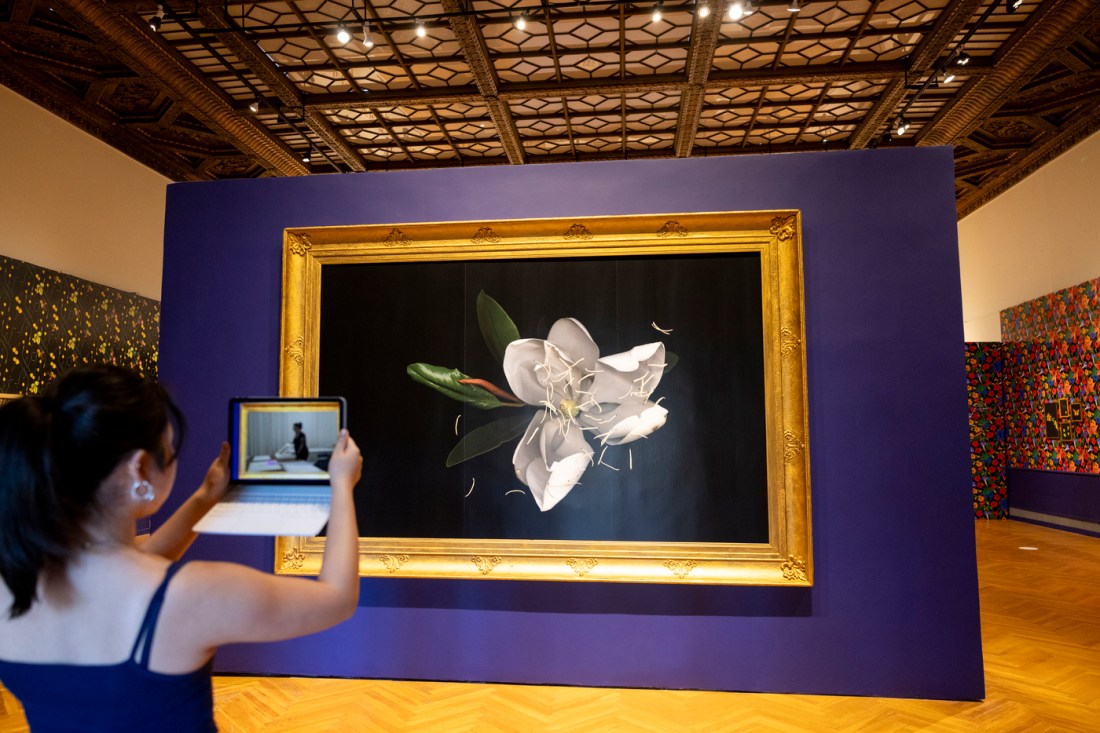
The Mills College Art Museum collection is now accessible through Bloomberg Connects, a digital library, 3D tours and virtual reality tours.

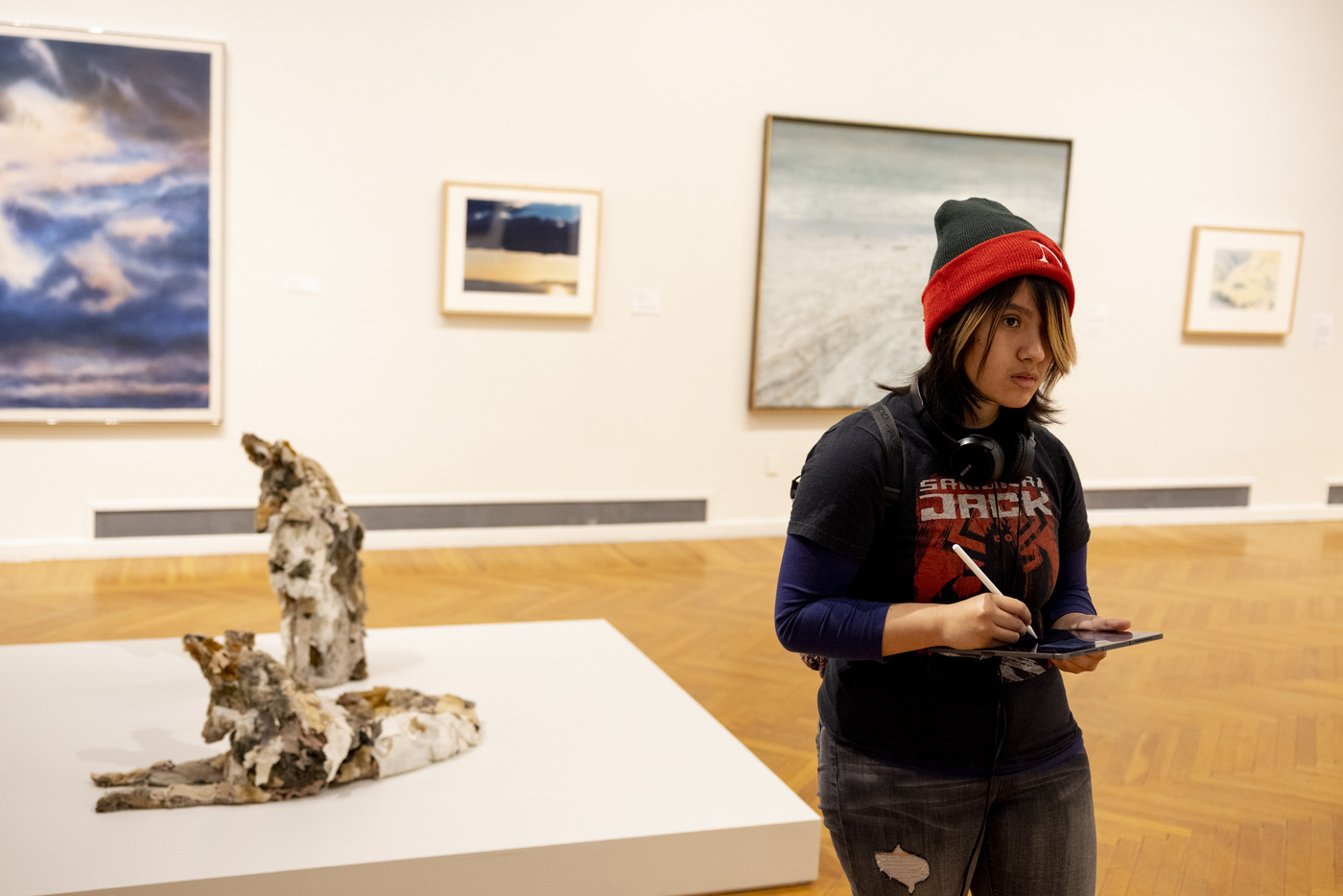
As the audio begins to play, Josselyn Trombly’s soft yet animated voice starts floating through what seems like a big open space, as she describes a gouache painting, “Plush Blush”, by Pakistani-American visual artist Shahzia Sikander.
“The absurdism of a woman riding a chicken first attracted me to this piece,” says Trombly, a first-year Northeastern University student on the Oakland campus and a gallery assistant at the Mills College Art Museum. “I could imagine either the chicken being the size of a horse, or a woman small enough to ride the chicken, and both make me smile.”
Trombly’s voice brightens and lifts as she ends her monologue, explaining why she is so passionate about the painting.
“Most of all, I love this piece because of its unapologetic femininity – the colors, the stylistic freedom and the softness, all bring me a joy I can only express by saying, ‘It’s pink!’,” she says.
Trombly’s recorded soliloquy is a part of the Mills College Art Museum’s new free digital guide on the Bloomberg Connects app, which features guides to hundreds of museums, galleries, sculpture parks, gardens, and cultural spaces. It is now accessible by anyone in the Northeastern global community and beyond, from anywhere in the world.
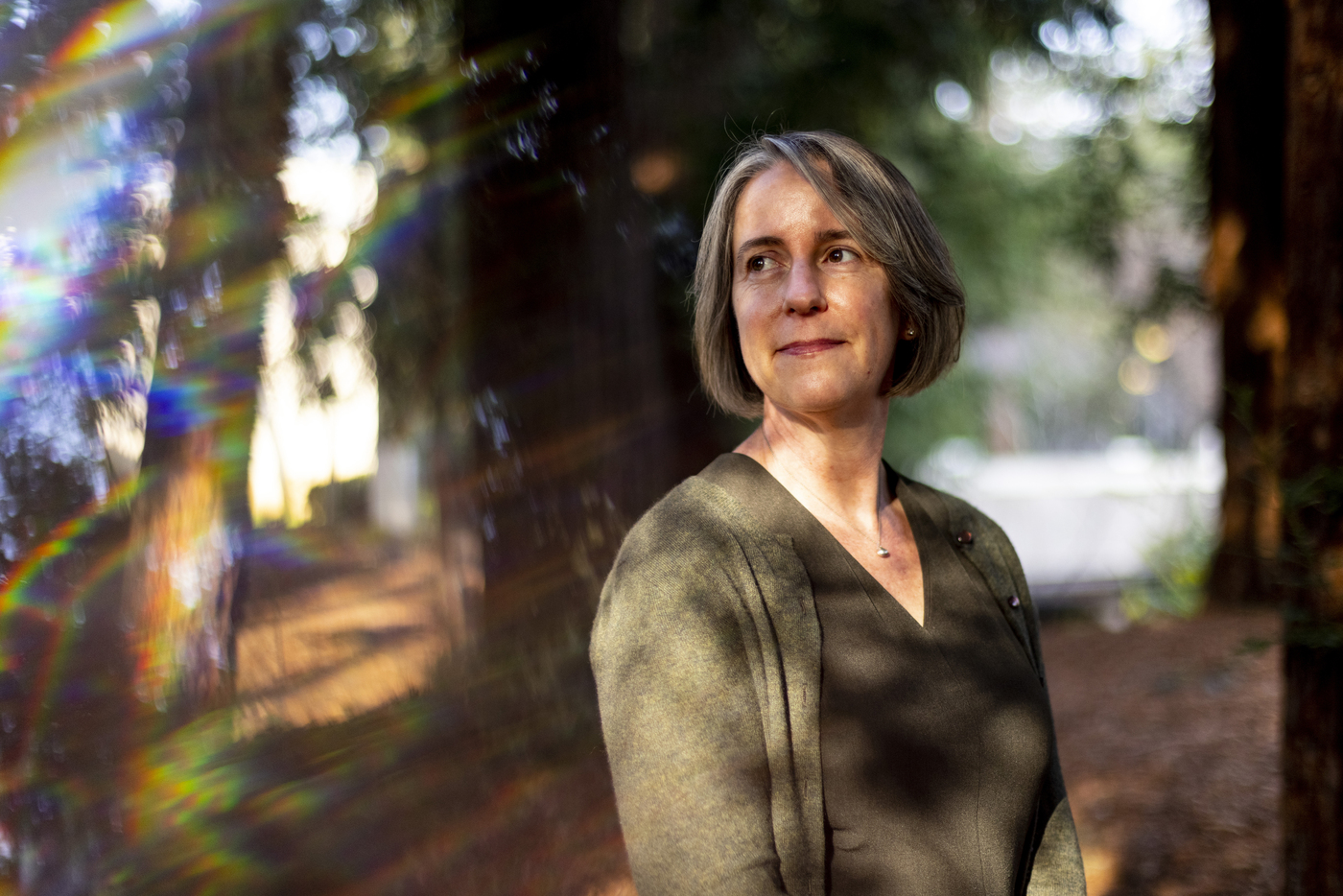
“What I love about the app is you don’t have to be at the museum in order to get all of that content,” said Stephanie Hanor, director of the museum. “It’s a way for us to be able to bring in curatorial voices, artists and students talking about work.”
With more than 12,000 works of art from a diverse range of cultures and time periods, the Mills College Art Museum has one of the largest permanent collections of any liberal arts college on the West Coast, including prints and drawings, photography, ceramics, textiles, Native American items and early 20th-century California paintings.
Bloomberg Connects was interested in adding the Mills College Art Museum to their platform because academic museums can produce a certain type of content that other types of museums can’t, Hanor said.
Northeastern Global News, in your inbox.
Sign up for NGN’s daily newsletter for news, discovery and analysis from around the world.
“Mainly that’s really putting forth and centering student voices within the guide itself,” she said.
The guide launched mid-January as the museum continues to celebrate its 100th anniversary with the “100 Years of Creative Visions” exhibition. Several student gallery assistants recorded audio responses about their favorite pieces currently on display.
“I had a great time researching each of the artworks before writing about them,” Trombly, who studies biochemistry and astrophysics at Northeastern, said in an interview with Northeastern Global News. “Learning about the artist and the history of the artwork before making a script about it gave it a lot more context.”
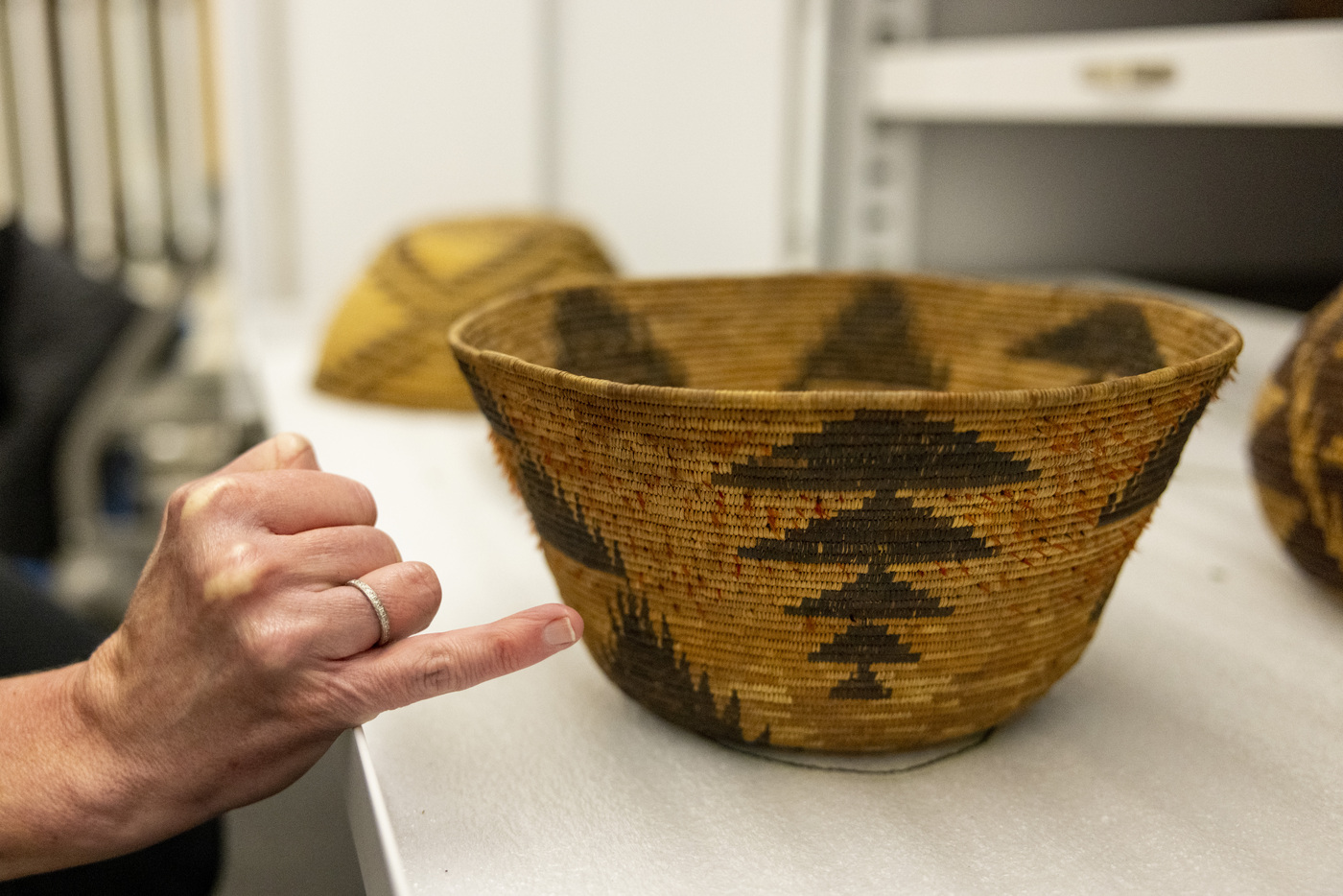
The guide also includes the museum’s history, current and past exhibitions and collection highlights.
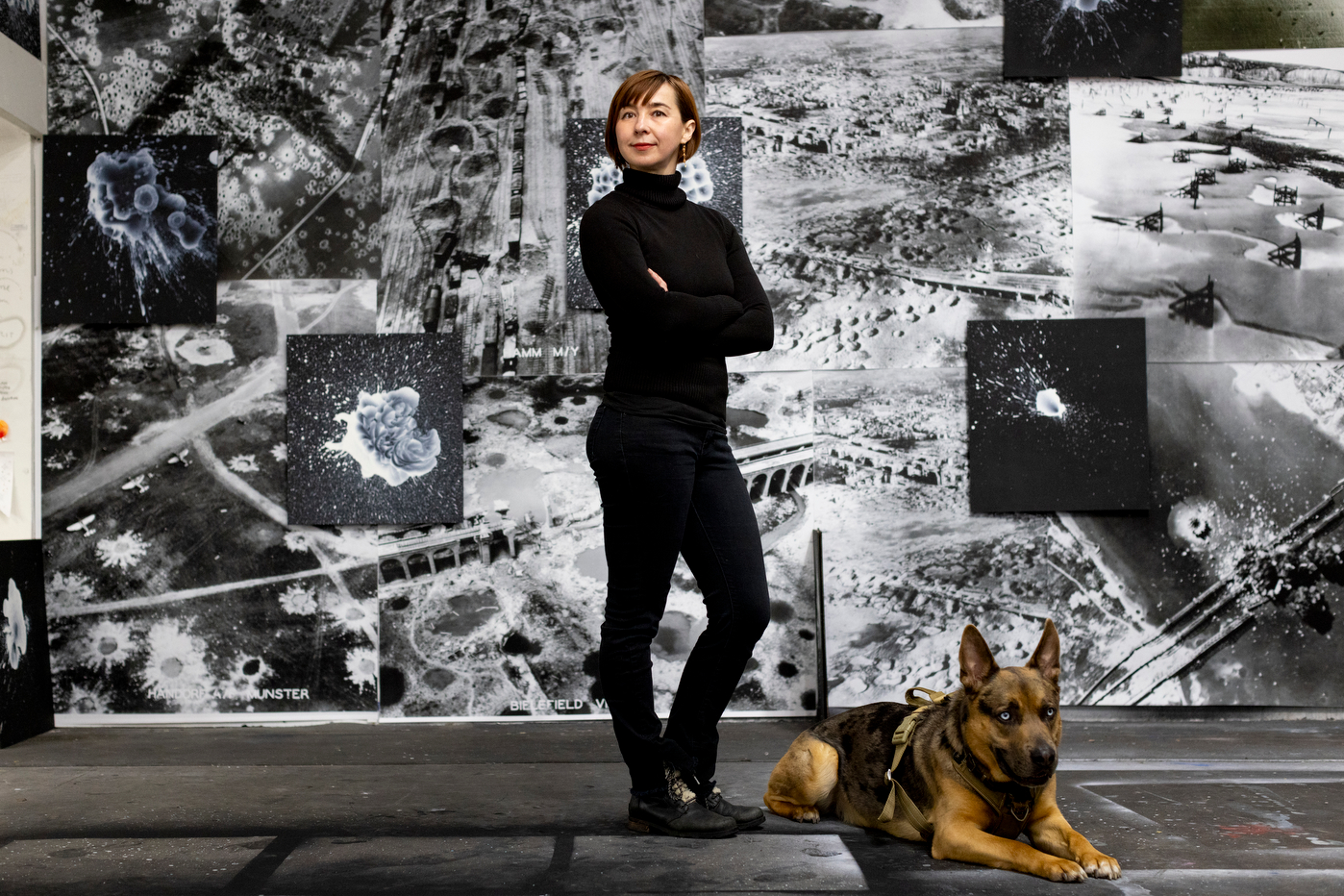
“As an educator, as an artist, I think it’s wonderful to have access to that history, to be able to see the images, to have sometimes curatorial or other texts that accompany the works and place them into historical context,” said Yulia Pinkusevich, Northeastern’s associate professor of art and design in Oakland. “That all really enriches the viewing experience and gives everyone a much deeper understanding of each artwork.”
Pinkusevich said she often uses the platform for research to view exhibitions from museums across the world or those that happened years ago.
Other digital access tools successfully introduced by the museum include a digital collection library; 3D tours, that are interactive digital replicas of physical spaces created with specialized cameras; and virtual reality tours, which require the use of a headset to become immersed in a 360-degree environment.
“We were serving one campus, and now we’re part of a global network of campuses, wanting to make sure that the digital assets that we have and that we’re producing are more accessible across Northeastern,” Hanor said. “They can be used by researchers, by faculty for classes and developing curriculum and by students … who might want to see an exhibition or work with our collection in different ways.”
The museum’s collection has been used by a wide range of faculty, she said, including professors of ethics, philosophy, international business and computer science.
For example, students in an international business class have been looking at the museum this semester through the digital business initiatives lens, testing out and giving recommendations on the use of its digital assets.
“They get to think of us as a business entity in a way, understand what a non-profit museum does, what our goals are and how we might be able to reach visitors more using technology,” Hanor said.
Students in a computer science practicum have partnered with the museum to analyze and catalog its digitized artworks using AI. They are developing tools that can identify visual content in the images and map those elements to the Getty Art and Architecture Thesaurus, a standard for cataloguing art, architecture and material culture. The resulting keywords will enhance the museum’s database, significantly improving online search and research capabilities for an institution that lacks in-house technical staff, Hanor said.
Pinkusevich also uses both the digital and physical collection of the museum to teach and inspire students.
This semester, she asked students to browse the museum’s digital collection and select two to four works that are not currently on view but that they would like to see in person.
Kaiya Alger, a Northeastern business administration and design student, said she explored the digital collection extensively for this assignment and had fun applying different filters and looking at various pieces.
“I found it fairly easy to sort through, and there’s a lot of different options for filters,” she said. “I personally really enjoy sorting based on where the art pieces were created and seeing how the different mediums and styles differ between the countries in Europe versus the Americas or Asia.”
After spring break, the students will go to see their selections in person and work on a range of projects, including analyzing artists’ visual language, methodologies and specific choices, as well as creating original artwork inspired by the pieces.
“These are freshmen students. They’re just trying to figure out who they are, what they want to talk about,” she said. “This is a nice way to look at people who’ve been doing this their entire life and engage deeply in art scholarship.”
Alger chose two pieces titled “Earth birth” by Judy Chicago, a screen print of a female figure on black paper exuding blue, yellow, orange and green waves, and “A poet’s cloud” by Katherine Porter, an abstract etching of concentric circles and lines.
“When you have the opportunity to look at it in person or in the digital collection, you can see all the details, all the brushstrokes and everything that goes into this art piece that makes it look the way it is,” she said.