These educators wanted to learn more about AI. Northeastern was there to help.
Lead by Learning, a center of Northeastern Oakland, offered a research-based professional development program for 17 Oakland educators who wanted to learn about AI.

As a teacher librarian for the Oakland Unified School District in California, Samantha Solomon helps students and staff navigate new technology, including artificial intelligence. Sometimes, she’s found, their perception of it can be slightly incorrect.
“I’ve talked to kids about it and sixth graders will say things like ‘AI is a robot that knows everything,’” Solomon told Northeastern Global News, (NGN). “There’s an assumption that because kids are digital natives, there’s an understanding where there isn’t. I want them to have the information and make a decision that’s correct for them at this juncture.”
To do that, Solomon wanted to get a better grasp of AI herself.
So she signed up to be one of the 17 educators, part of AI Together, a four-part professional development program offered through Northeastern Oakland’s Lead by Learning Center and supported by the Kapor Center that provides local educators with research-driven professional development.
Last semester, the center hosted its first cohort of AI Together, with the goal of teaching participants more about AI.
Jennifer Ahn, executive director of Lead by Learning, said the center has a strong partnership with Oakland’s public schools and has found that educators want to integrate AI into their work, but need help figuring out ways to do that.
“We think the educators are best situated to drive change and they need structures and systems that help them build the conditions, capacity and collective will to do so,” Ahn told NGN. “Our initiative is trying to support teachers and educators who then support students.”
The research-based professional development program encouraged Oakland educators to learn about AI through asking questions, collecting data and then using that to solve problems.
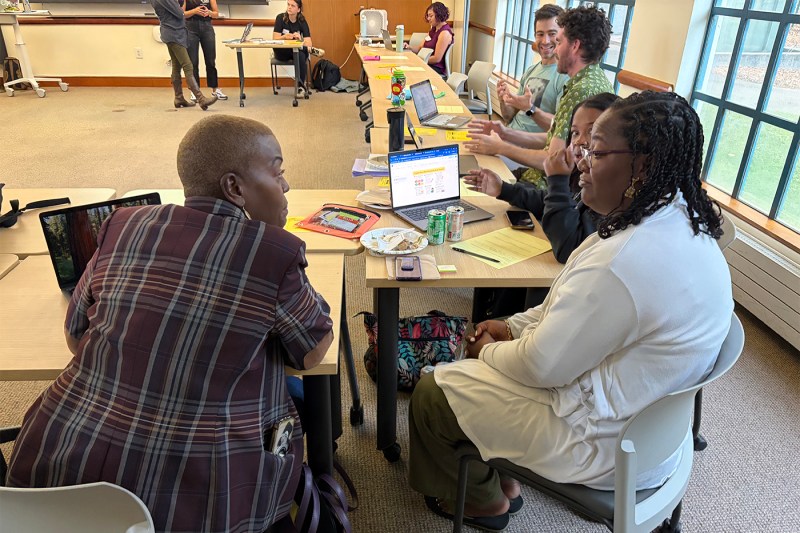
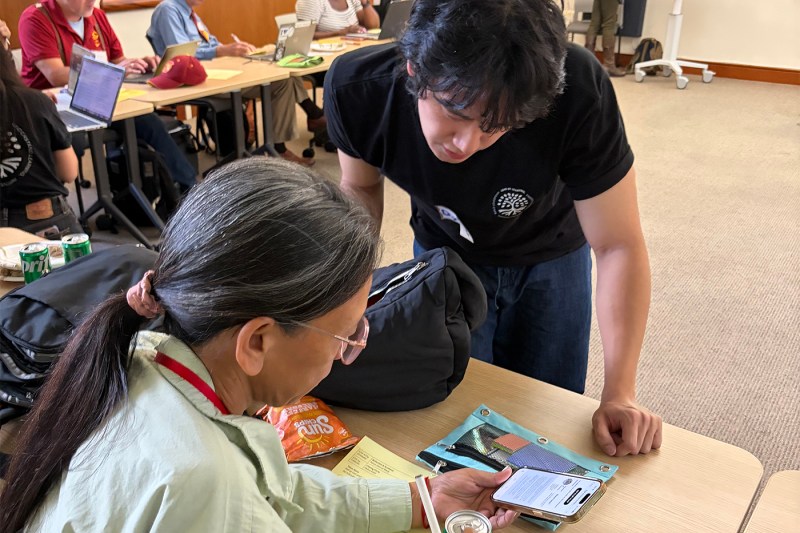
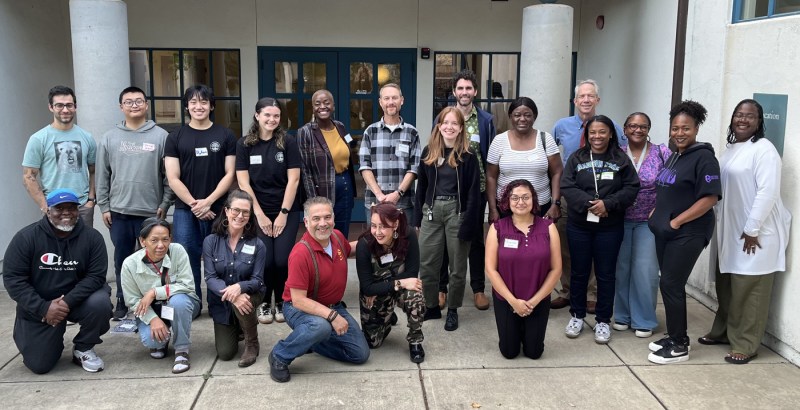
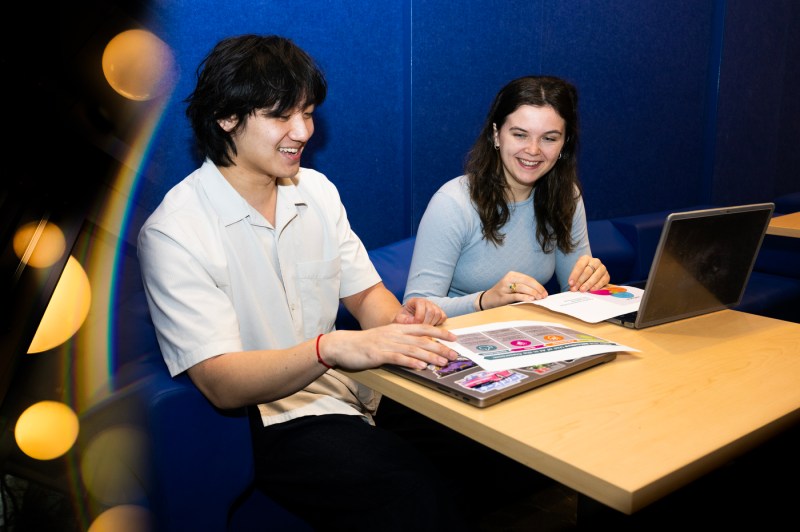
The curriculum for the program was co-designed by assistant teaching professor of computer science Rasika Bhalerao and two co-ops from the Boston campus – psychology student Lucy Paolini, 21, and computer science student Dylan Kao, 21, both in their third year.
“We’re trying to figure out how AI is useful, if at all, in secondary education,” Bhalerao told NGN.
Northeastern Global News, in your inbox.
Sign up for NGN’s daily newsletter for news, discovery and analysis from around the world.

The students also benefited from their input to the program. Kao said he was able to use what he has learned about AI as a computer science major to help the educators understand how these AI models “work under the hood” when it comes to privacy and security.
“Coming in, a lot of the teachers were very biased against AI,” Kao said.“Our goal … was to demystify AI. It wasn’t to tell them AI is good, use AI. It was more like ‘here’s all the facts about AI … you can draw your own conclusion.’”
The students said they led sessions on prompt engineering which focuses on how to get the desired output from AI. This, they added, helped participants realize they could use AI in ways that supplemented their work, rather than relying on AI to do their work for them.
Editor’s Picks





“I noticed in the last session they were a lot more comfortable using it,” Paolini said. “By the end, they were coming in with student work and specific goals they wanted to accomplish with the AI which wasn’t the case in the beginning for most of them.”
Solomon said AI Together allowed her to learn about what data AI could be collecting when she uses it and what biases might be at play. She said she appreciated learning from others with a range of experiences.
“It helped me think a bit more about what is possible,” Solomon said. “I don’t want AI to write my lesson plans but what is the range of things it can do to help me make better lesson plans using my expertise and experience?”
Ahn said the educators provided comprehensive feedback, emphasizing that the program made them feel more confident about using AI, whether understanding what prompts to use or verifying the information relayed.
Bhalerao said the goal is to broaden AI Together to include other educators in the Bay Area, as soon as this spring, and possibly educators around the country by offering the program online.
The hope is that the California educators become champions within their own school districts and “exemplify what is possible and what to be careful of for their colleagues,” Ahn said.


