Fossil fuel industry wins, public loses with repeal of greenhouse gas endangerment finding, experts say.
Northeastern University experts called the rescission of a 2009 finding that greenhouse gases pose a public health risk “concerning for public health” and a handout to the auto and fossil-fuel industries.
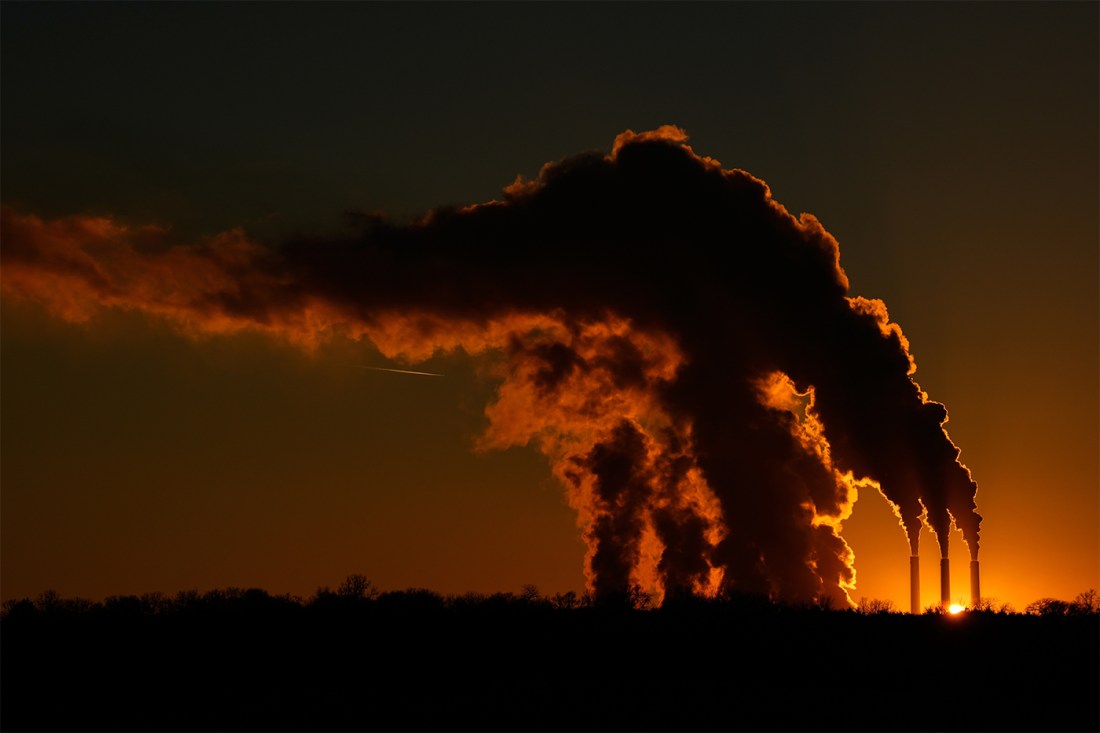

Trump administration officials called their recent walkback of a 2009 Environmental Protection Agency (EPA) finding over the public health risks of greenhouse gases “the single largest act of deregulation in the history of the USA,” and estimated it would save $1.3 trillion.
Northeastern University experts, however, called that move “concerning for public health” and a handout to the auto and fossil-fuel industries.
“It’s not a public health decision,” said Julia Varshavsky, assistant professor of public health and health sciences at Northeastern. “It’s a fossil-fuel industry decision.”
Sharmila Murthy, professor of law and public policy and the faculty co-director of Northeastern’s Center for Public Interest Advocacy and Collaboration, agreed.
“Basically what they’re doing is they are shifting the massive costs of climate change away from the producers of greenhouse gases – such as car manufacturers and power plants and others – and onto you and me, the actual American public,” Murthy said.
In 2009, after extensive scientific study, the EPA declared that greenhouse gases like carbon dioxide and methane are heating the Earth and that the resulting warming threatens public health and welfare. The “endangerment finding,” as it has been called, meant that greenhouse gases would be regulated under the Clean Air Act and set the basis for rules that set emissions standards for cars and trucks and require emissions reporting by fossil fuel companies.
The endangerment finding is a “foundational determination,” Murthy said, of the role that greenhouse gases play in exacerbating air pollution and also serves as “the legal basis” for regulating motor vehicles and, by extension, power plants and other sources of greenhouse gases.
For those reasons, however, the rule has also long been targeted by fossil-fuel industry and conservative lawmakers who view the regulations as burdensome and expensive.
In March last year, the EPA announced it would “reconsider” the endangerment finding, claiming the 2009 analysis was “flawed” and “unorthodox.”
“We are driving a dagger straight into the heart of the climate change religion to drive down cost of living for American families, unleash American energy, bring auto jobs back to the U.S. and more,” EPA Administrator Lee Zeldin said in a news release at the time.
Editor’s Picks




Zeldin announced in July that the administration would “rescind” the finding, citing a Department of Energy-commissioned report from five scientists, at least three of whom have publicly rejected the scientific consensus that human activity – particularly fossil fuel use – is the dominant driver of climate change.
Murthy worked with a group of Northeastern students to submit a comment opposing the repeal during the public-comment period that followed the July announcement. Other students, alumni and faculty signed on as well. That public-comment process yielded 571,673 comments, according to the Federal Register. The regulations.gov website blatantly solicits “ideas for deregulation.“
Despite all the conversation around the proposed rule, the White House announced the rule’s rescission on Thursday, Feb. 12, claiming that the Obama-era policy “had no basis in fact” and “no basis in law.”
Northeastern’s experts disagreed that the 2009 finding was flawed in science. “This should not be a political issue,” Murthy said. “This is a matter of science.”
Varshavsky noted how several studies have shown how greenhouse gases can impact health.
Air pollution, for instance, has been linked to respiratory issues like asthma, cardiovascular disease, pre-term birth and even neurodegenerative diseases like Alzheimer’s disease and dementia.
The repeal of the endangerment finding, they said, was monumental.
“(The rescission) has the potential to undermine a lot of U.S. climate policies,” Varshavsky added. “What that would mean for public health is that we would be sprinting towards the worst-case scenario in terms of accelerating climate change rather than doing what we really need to be doing at this point, which is making efforts to slow the progression of climate change.”
Murthy added that while the administration said that the repeal would allow consumers to have greater choices among cars and trucks, one cannot choose to be exempt from the public health and climate effects of greenhouse gases.
“I don’t have a choice when there’s flooding in my area, I don’t have a choice when there’s extreme heat that’s killing my neighbors, I don’t have a choice when climate change is allowing infectious diseases to spread in unexpected ways,” Murthy said. “They’re celebrating deregulation as sort of just an abstract concept that is always somehow good without realizing that the reason that those regulations exist is to protect you and me,” she said.
Environmental groups are already on the case to challenge the EPA’s action, but such litigation “brings significant risks,” Murthy said, particularly with the conservative majority on the Supreme Court and recent rulings against environmental regulation.
“If the Supreme Court determines that the Clean Air Act does not give the EPA the authority to regulate greenhouse gases, then that not only harms us now,” Murthy added. “[I]t will tie the hands of any new administration in 2029 unless Congress acts.”