He went to work at the National Archives and wound up investigating JFK’s assassination
A co-op at the National Archives unexpectedly led Ray Shurtleff to work on the Warren Commission’s investigation of Kennedy’s assassination as a 21-year-old college student.
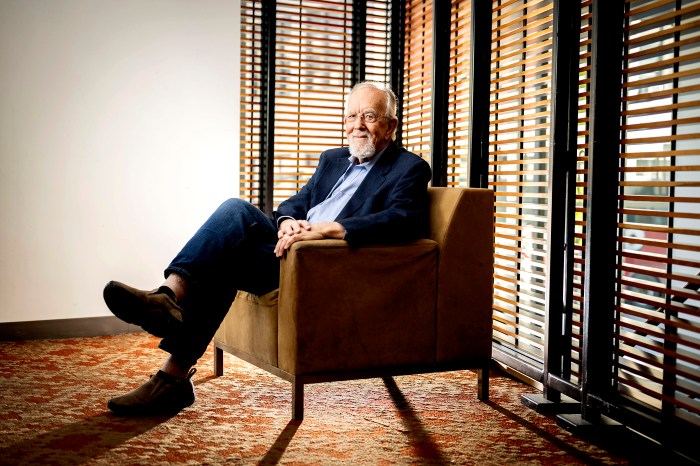

On Nov. 22, 1963, Ray Shurtleff was standing in front of Ford’s Theatre, where President Abraham Lincoln had been shot almost 100 years earlier.
A student at Northeastern University, Shurtleff had just started his co-op at the National Archives and was taking in Washington, D.C., history during his lunch break. Little did Shurtleff know that he was about to become a part of history himself.
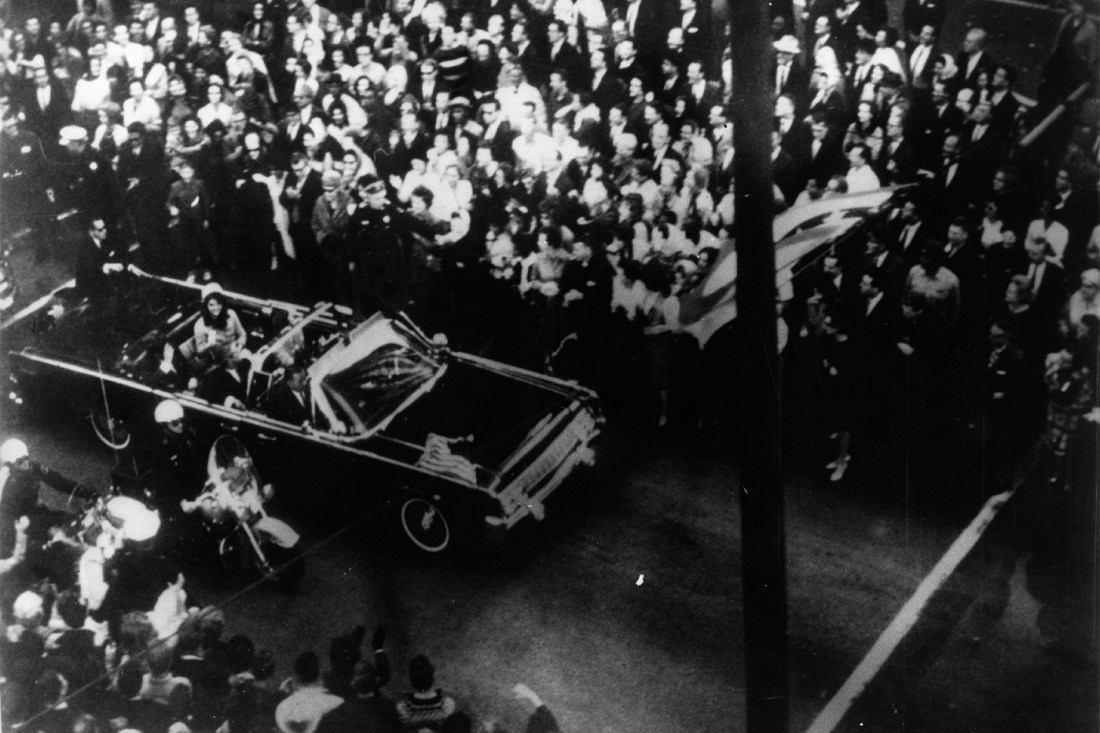
When he got back to the archives, the news had just broken that President John F. Kennedy had been shot and killed in Dallas.
”All the federal employees were released,” Shurtleff said. “I rode on a bus going by the White House and the flags were at half-staff. It went down pretty quickly.”
What followed was a whirlwind journey that took Shurtleff from the archives to the center of one of the most important events in modern U.S. history. At 21 years old, before he had even completed his bachelor’s degree, he became the youngest staff member of the Warren Commission, the government body set up to investigate JFK’s assassination.
For the soft-spoken Boston native, it was just another day at the office.
“My name is in the Warren Commission report as a staff member,” he said. “I knew how important it was historically, but I just went into it and I just did my job.”
However, Shurtleff admits his path to the Warren Commission was surprising.
On Nov. 24, Shurtleff woke up at 2 a.m. to stand in line at the Capitol Rotunda with thousands of other people to view Kennedy’s casket. Two days later, the Supreme Court, under Chief Justice Earl Warren, requested a document from his office at the National Archives. Warren wanted a copy of the resolution that had been adopted after Lincoln’s assassination.
Not long after, on Nov. 29, President Lyndon B. Johnson established the President’s Commission on the Assassination of President Kennedy, informally known as the Warren Commission because of its chair, Chief Justice Warren. The commission’s goal was ostensibly to collect witness testimony and evidence to issue a report on the president’s assassination.
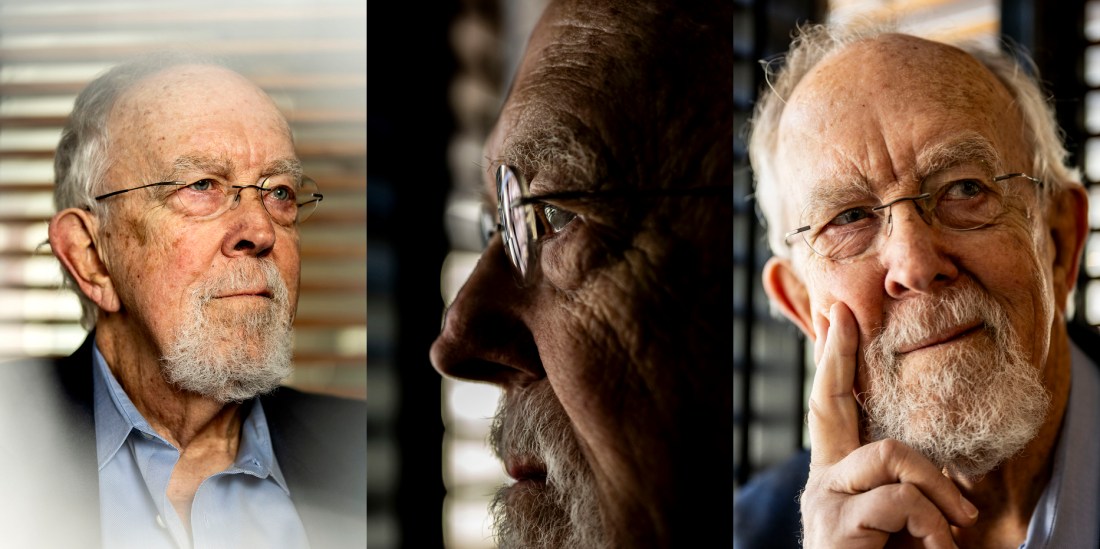
Just as the commission was starting its work, Shurtleff left D.C. to resume his life as a Northeastern student. However, he returned to Washington in April 1964 for a second co-op in the National Archives’ Office of Presidential Libraries. Within a few weeks, he was one of six National Archives employees tapped for a Warren Commission task force.
Shurtleff’s chief responsibility was to take files from all the government agencies related to each person of interest and create cross-reference files that combined all that information.
“At that time, a number of those reports were actually top secret, and they were changed to confidential so that everyone could look at them,” Shurtleff said.
By the end of April, the commission transferred Shurtleff from the archives to the commission’s offices. There, he was responsible for running the file room where nearly every document related to the commission’s report was held. He quickly became indispensable.
“One of the things that I did was as I filed things, I looked at them quickly, so, the end result was they kept me there because I knew where everything was in the file system,” Shurtleff said.
Shurtleff essentially was the commission’s filing system, which created some complications both for him and the commission down the road. After details of assassin Lee Harvey Oswald’s diary and Oswald’s killer Jack Ruby’s testimony to the Warren Commission leaked to the press, the government launched an investigation. It led them to Shurtleff.
“I was one of the very few people who had access to the general files, so I was back in school living at 111 Jersey St. and the FBI interviewed me,” Shurtleff said. “I knew nothing, but it was fascinating to be interviewed in my apartment.”
The Warren Commission issued its 888-page report on Sept. 24, 1964, but the contents and details of its investigation had been dogged by skepticism from the beginning. Historians, journalists and academics have all pointed out flaws in the investigation, including the commission’s reliance on the work of the FBI, not an independently conducted counter-investigation.
When it comes to the government workers on the commission, Shurtleff is quick to defend their work.
“My experience was there were a lot of hard-working people there that worked long hours,” Shurtleff said. “They weren’t covering up anything. They were too busy working.”
Subsequent work by journalists and historians revealed that the investigation itself was heavily influenced by forces much higher on the chain of command than government workers.
Editor’s Picks


“What’s been fairly well documented is that both [FBI Director] J. Edgar Hoover and LBJ assumed that there was a conspiracy that involved either Cuba or Russia,” said Peter Fraunholtz, an assistant teaching professor in history and international affairs at Northeastern University. “They both assumed that and this posed, in the most generous way of explaining it, a grave foreign policy and security problem for Johnson.”
In his 1966 book “Inquest,” investigative journalist Edward Jay Epstein found that the commission’s chief adviser, J. Lee Rankin, had preordained the lone gunman theory as the report’s outcome. Several Warren Commission members later criticized Hoover’s influence on what information was or was not given to the commission.
Still, Shurtleff’s co-op experience left an indelible mark on him, even as he’s gone on to have a long and storied career as an educator. A “Triple Husky,” he also received his master’s and Ed.D. from Northeastern, working as a teacher in Sharon, Massachusetts, from 1967 to 1970 before making his mark as the director of the experimental Cambridge Pilot School.
Housed in Cambridge Rindge and Latin School, a public high school in Cambridge, Massachusetts, the Pilot School offered an alternative high school experience. For 22 years, he gave his young students, including the likes of Matt Damon, Ben Affleck and Bill de Blasio, the kinds of experiential learning opportunities that had defined his Northeastern experience.
Although the Pilot School would shut down in 2000, Shurtleff’s experiment in high school education gave students unprecedented freedom. They could choose their own classes and follow their passions. They could go on wilderness trips and get real-world work experience through community-based learning programs.
Brad Waugh, who attended the Pilot School from 1977 to 1981, still remembers Shurtleff roaming the halls with his long hair, beard and Benjamin Franklin-style spectacles. A shy student, Waugh recalled how Shurtleff’s educational approach pushed him well outside his comfort zone. As part of the Pilot School’s program, he ultimately volunteered at the New England Aquarium, giving 45-minute lectures to hundreds of people on top of the aquarium’s central tank.
“He turned me into a leader and allowed me to come out of my shell,” Waugh said.
Even as an educator, Shurtleff’s experience on the Warren Commission cast a long shadow. Waugh recalled running into Shurtleff in the hallway on March 30, 1980, the day President Ronald Reagan was shot.
“He said, ‘You know, whether the person is a Republican or Democrat, they’re our leader and assassination is by no means something that should be looked at as a way to create change,’” Waugh said.
After leaving the Pilot School in 1993, Shurtleff worked in various Boston-area public school districts as a human resources director. He still works as an education HR consultant for schools throughout Massachusetts. For Shurtleff, education is still the best way to affect change, in ways both big and small, and give young people the chance to have a voice and say in the next major historical moment, just like he had.
“So much of what we do is a learning experience, a commitment to community, a commitment to being a good listener and a commitment to understanding the different experiences that people bring to a school setting,” Shurtleff said. “The bottom line is helping young people become good people.”