How Black women lead the way in nontraditional tech paths at Northeastern
Black women like Promise Owa and Tamiyoo Desir are breaking into tech through Northeastern’s Align program, overcoming barriers and inspiring others.


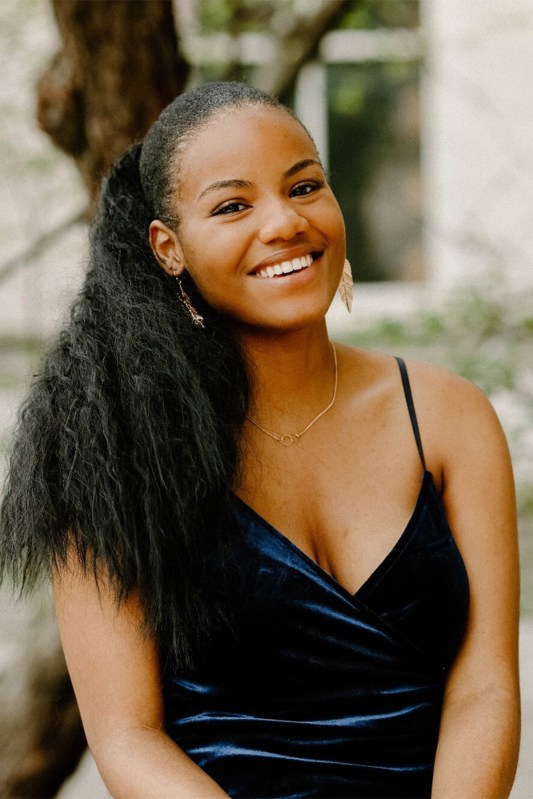
Promise Owa decided to pivot her career after teaching kindergarten for a few years. She was known as a “computer” person among her colleagues back in Abuja, Nigeria, helping everybody with their technical difficulties, so she decided to transition to tech.
That’s why she attempted to learn the foundations of coding herself, first scouring X (formerly Twitter) for useful information and enrolling in a boot camp prior to applying to Northeastern University in pursuit of a master’s degree.
Owa said she struggled with immense self-doubt and imposter syndrome, especially because she didn’t see many individuals who look like her in the classrooms or industry events.
“One of my biggest challenges being in the master’s program is just thinking I’m not good enough, I don’t deserve to be there,” said Owa, who is currently studying computer science in the graduate Align program on Northeastern’s Arlington campus.
Women represent less than a third of the tech workforce in the U.S., according to Accenture, and Black women hold just 3% of computing roles.
“I had to overcome that whole thing, reminding myself that if they are here and I’m here too, in the same room, I didn’t smuggle myself inside. I was literally invited into this room,” Owa said this week during a virtual event titled “Black Voices in Tech: She Codes the Culture,” organized by the Koury College of Computer Sciences.
Northeastern’s Align master’s programs help creative thinkers coming from non-technical backgrounds launch their careers in tech with concentrations in computer science, artificial intelligence and cybersecurity in as little as two and a half years.
Owa now serves as a Khoury graduate recruitment ambassador, sharing her personal journey at Northeastern with prospective Align students.
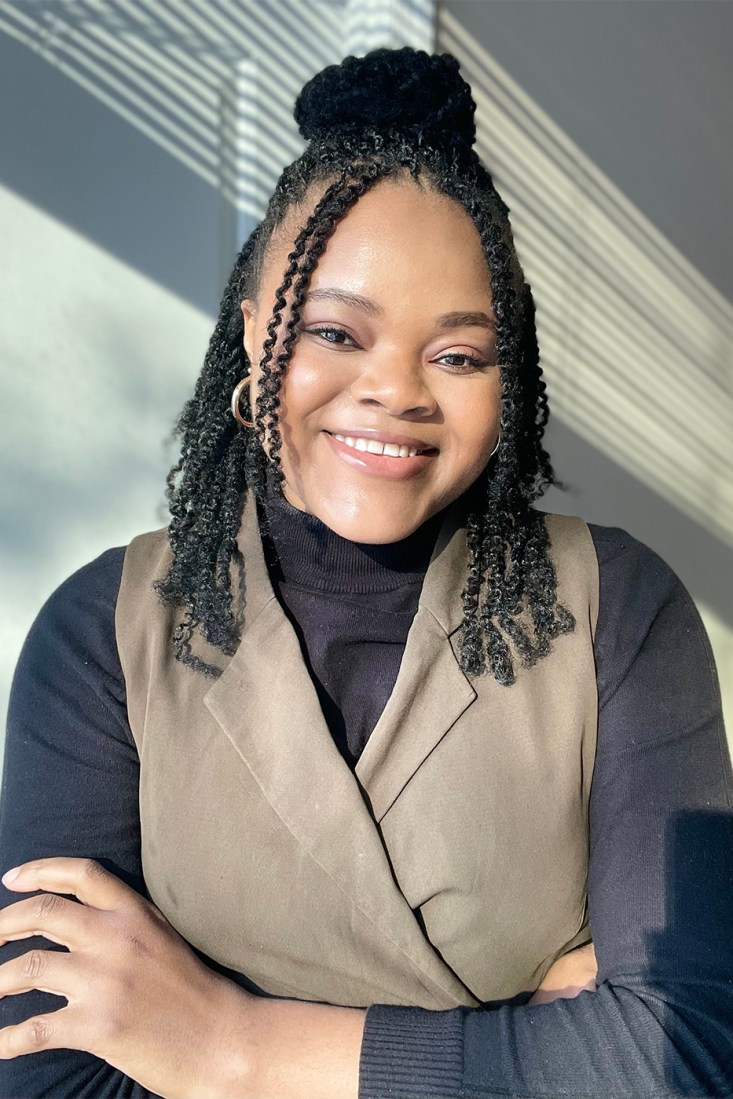
Another Align ambassador, Tamiyoo Desir, a Haitian American student currently working toward her computer science graduate degree on the Boston campus, agreed that representation played an important role in attracting more Black women into tech. Desir said she felt uncomfortable on her first day of classes and worried that asking a question in her intensive foundations of computer science course would make other students think she was ignorant because she lacked a technical background.
Once she saw that the professor teaching her class was a Black man, she immediately experienced relief, she said. As a recruitment ambassador, she noticed that Black women interested in the Align program seemed more comfortable going to her for advice and honest feedback about being a woman in tech.
“I appreciate that, because it makes me understand how comfortable it is to speak to another woman of color when it comes to these things, so I’m really glad I can become a safe space for these women,” Desir said.
Desir also emphasized that the problem of underrepresentation of women in tech is partially because computer science, unlike nursing, for example, is not advertised to young girls or women compared to boys and men.
“So it’s hard to get into it, too, because of the way that it’s not being promoted to us,” she said.
The tech industry needs more women, Owa said, simply because a lot of technology and software is currently being developed from the male perspective.
Editor’s Picks





“It can’t be made for everybody, if only men are making it,” she said.
Non-technical background can be especially valuable because it provides a different perspective and a viewpoint — an advantage that Northeastern professors emphasize to students like her, she said.
“Because tech is versatile. It spans many fields,” Owa said. “And it’s really not only for men, it’s for us, too.”
Owa and Desir agreed that there should be more programs supporting women of color in technology, as well as more research opportunities geared toward them.
“We could talk more about creating platforms that cater to women,” Owa said. “We can gather not just to hang out and have fun, but we also build stuff, make our voices heard and known.”
Desir admitted that pivoting to tech with a bachelor’s degree in English and creative writing made her feel, for a long time, as if she failed.
“I struggled to understand that changing my path doesn’t necessarily mean that I’m a failure,” she said. “That means I deserve to be here. I belong here.”
With time, she learned to be proactive about reaching out to people in the industry and attending professional events.
“Don’t be afraid of inserting yourself into certain spaces. I’m talking about going to conferences, career fairs and even coming to this panel is such a step forward for you,” Desir said. “When I think back to days where I was pivoting into tech, one of the main pieces of advice I would give myself is to stop being shy and connect with people because … the worst that could happen is that they don’t match you on LinkedIn.”


