Warming Antarctic waters come with a cost for the normally ‘robust’ rockcod
Researchers investigated the potential impact of warming waters in the Southern Ocean on a common species of fish. What they found could be catastrophic for fish populations in the region.
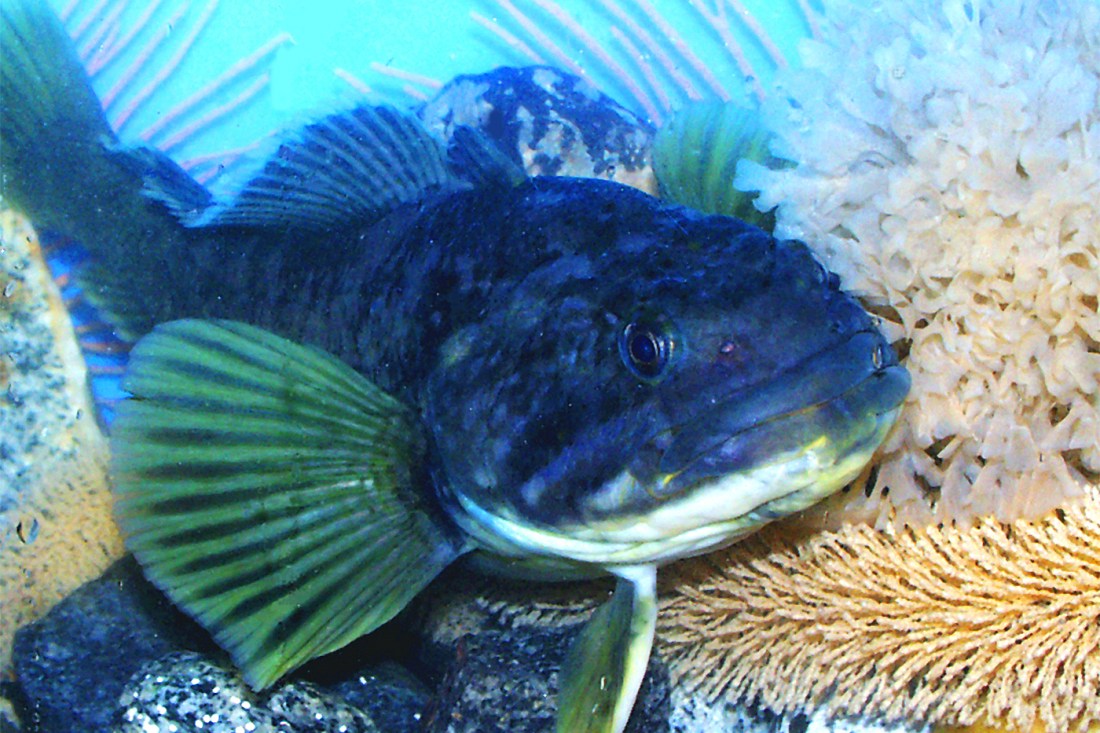

Around 10 million years ago, Antarctica’s Southern Ocean started to get so cold that it scared away most fish in the region. Among the fish that stayed were what are now known as black rockcod, part of a famously sturdy family of Antarctic fish.
But the black rockcod’s future could also now be in jeopardy as Southern Ocean temperatures are projected to shift in the opposite direction due to climate change. Researchers recently found that black rockcod raised in warmer waters hatched faster, smaller and with birth defects that could seriously impact their ability to survive in Antarctic waters.
The implications threaten to be far-reaching. While the black rockcod is only one species of fish in a remote part of the world, the damaging effects of warming waters are a growing global concern. High-end estimates from the Food and Agriculture Organization of the United Nations put climate change-induced declines in fish populations at 30% by the middle of the century.
Researchers are only able to predict so much right now, but what they saw with black rockcod is a warning sign, said H. William Detrich, a researcher at Northeastern University’s Marine Science Center.
“We can make a prediction that things are going to change, but we don’t know exactly how,” Detrich said. “I would say the changes are unlikely to be beneficial to the planet.”
For Detrich and the researchers involved in this study, the black rockcod, commonly known as the Antarctic bullhead notothen, was the perfect test subject. It is a famously “robust” species of Notothenioid fish, Detrich said. If they found warmer waters impacted this fish, chances are the effects would be even more extreme for some of the Southern Ocean’s more sensitive creatures.

For six months at Palmer Station, a U.S. Antarctic research station, Detrich and the research team raised 45,000 black rockcod embryos in two very different conditions. They submerged one half of the embryos in water set at a “normal” Southern Ocean temperature, zero degrees Celsius. The other half sat in a tank of water at 4 degrees Celsius, a projected reality for the Southern Ocean in the next 100 to 200 years, Detrich said.
The developmental differences in the embryos kept in warmer waters were immediately noticeable.
“For one thing, when they hatched, they were considerably shorter than the normal embryos at zero degrees,” Detrich said. “That means that the embryos at four degrees were spending more of their energy just trying to stay alive.”


These fish showed clear signs of being starved for oxygen while developing in-embryo, Detrich noted. They also hatched with more body malformations like bends in their spinal column and eye and mouth defects. About 60% of the warm-water black rockcod showed these developmental issues, compared with about 20% of those kept at 0 degrees Celsius.
All of these physical abnormalities affect a black rockcod’s ability to swim properly, which, in turn, makes it more difficult to evade predators. Sandwiched on the Antarctic food chain between smaller fish and predators like seals and killer whales, a rockcod population with increasing physical challenges “could have impacts on higher levels in the food web as well as lower,” Detrich said.
Warmer waters also shortened the development period for black rockcod. The warm-water embryos hatched after only about 100 days instead of around 155 days. In the wild, those 50 or so days could make a huge difference, Detrich explained.
These rockcod, which were already placed under intense stress during embryonic development, would hatch off-season in the middle of winter. At that time, their main food source, tiny phytoplankton, would not be available, further endangering the growth of these fish and their overall population.
“What we are showing is that there may be future problems in timing reproduction of the species so that they can produce enough embryos that are able to develop to normal adulthood and continue providing embryos that will stock the future population of adults and continue the population as a whole,” Detrich said.
By virtue of where they live, the black rockcod is not a focus for commercial fishing. But the same climate change-induced forces that are warming waters in the Southern Ocean will hit aquatic life and food economies globally over the next 200 years, according to the U.S. National Science Foundation.
An earlier study funded by the NSF found that some of the world’s predominant fish species will shift away from the waters they’ve historically inhabited. Fisheries will follow suit, although the new areas they move to will not be nearly as abundant, according to the NSF.
While Detrich and his team can’t exactly predict the future, he said what they saw with black rockcod is indicative of an ecosystem-level change that scientists are still trying to understand before it’s too late.
“All we can say is that the fish of the Southern Ocean and all of the other species in the Southern Ocean, they’re going to be impacted somehow,” Detrich said. “Maybe the sea urchins are impacted in one way. Maybe the kelp is impacted in another. Maybe the krill is impacted in a certain way.”