Jesse Jackson recalled for empathy, listening and Northeastern visits
The Rev. Jesse L. Jackson, who died Tuesday at age 84, visited Northeastern on several occasions.
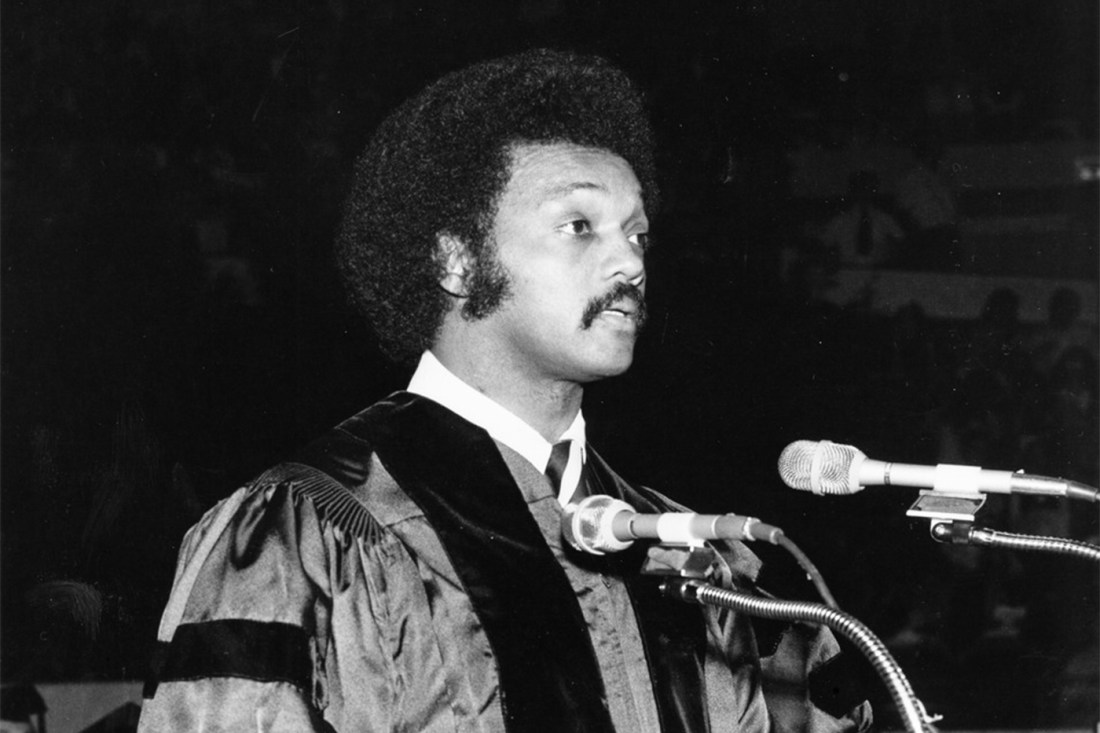

He was a protege and successor of the Rev. Martin Luther King Jr., a two-time presidential candidate and a longtime leader of the Civil Rights Movement.
The Rev. Jesse L. Jackson, who died Tuesday at age 84, was also an honored guest of Northeastern University, where he called for civil rights and social justice as a commencement and campus speaker.
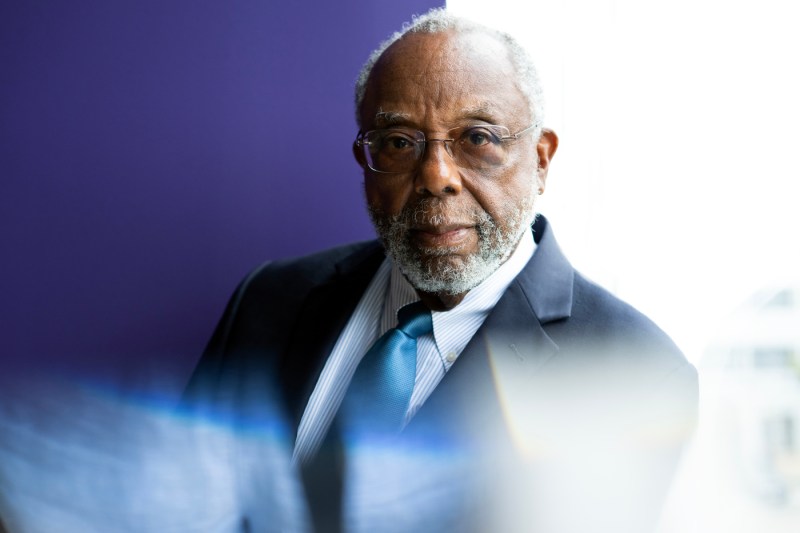
“Rev. Jackson’s influence on college campuses in particular has helped to mobilize and inform younger activists, and I was among those who were inspired by his leadership and ability to be resilient, particularly after the loss of Dr. King,” said Ted Landsmark, distinguished professor of public policy and urban affairs at Northeastern and a longtime civil rights activist. “He was able to translate theories into direct action and was inspirational, particularly for emerging leaders who sought guidance on the tactics of achieving social change.”
Jackson was born in Greenville, South Carolina, in 1941, and rose to prominence while marching with King, his mentor and friend. He was by King’s side when the civil rights leader was assassinated in 1968 in Memphis, Tennessee. He subsequently spearheaded the Civil Rights Movement and social justice movements through his voter registration drives, 1984 and 1988 presidential runs, and founding of the Rainbow PUSH Coalition, a progressive, international social change organization.
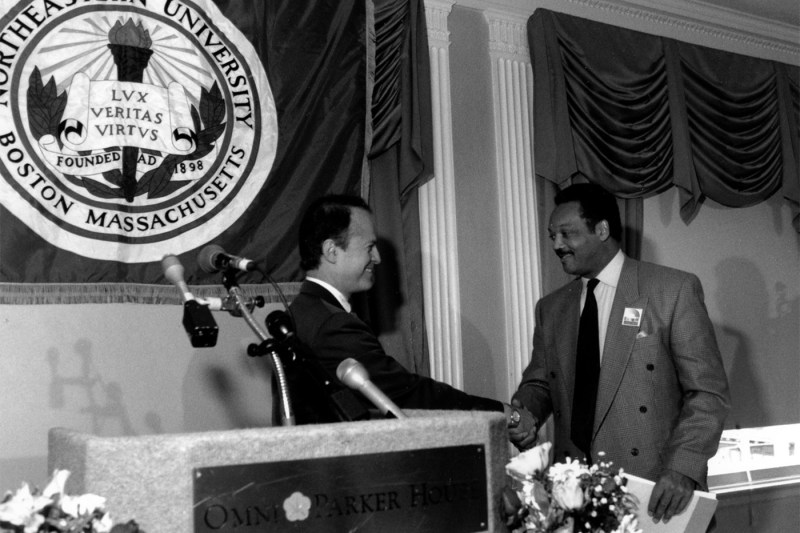
Jackson visited Northeastern on several occasions.
He was a speaker for the 1978 commencement, where he called for “pursuit of a greater generation,” and urged the audience to fight for “progressive social change and a revolution in values as well,” according to coverage in The Boston Globe.
Jackson also received an honorary Doctor of Humane Letters degree during the ceremony.
Editor’s Picks





He also spoke on campus in 1987 during his second presidential campaign, when he criticized the Reagan administration for its response to the AIDS crisis.
“(It is) the responsibility of government and community to work together to save lives,” Jackson said in the speech, before proposing steps to address the epidemic. “We must reach out to people with AIDS to assure them that they have adequate health care and a decent life.”
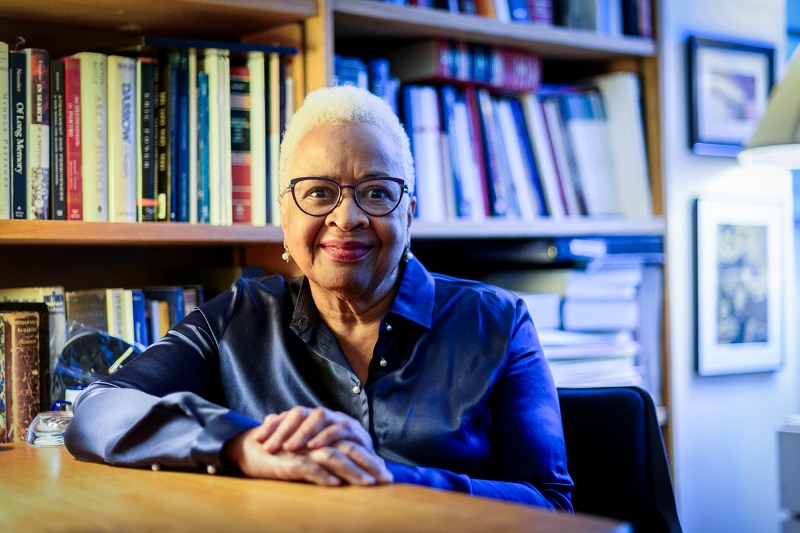
The speech exemplified what Margaret Burnham, university distinguished professor of law, hailed as a lasting contribution.
“His enduring gift, as was true with Dr. King and other civil rights leaders of that era, was his ability to empathize with and thereby empower people from all corners of the world who aspired to equality and freedom,” said Burnham, who was among several community leaders who met with Jackson in a 1990 visit to Roxbury.
Richard O’Bryant, chief belonging officer at Northeastern, similarly described Jackson as “incredibly charismatic and engaging.”
“After he finished speaking, he would stay around after and talk with students on a personal level,” said O’Bryant, who met Jackson while a student at Howard University. “His words were very moving for us as college students. His message of ‘Keep Hope Alive’ was truly inspirational.”
But Jackson didn’t just inspire students. Students were among those who provided the motivation for Jackson and his policies.
“He never lost his ability to hear what affected people really thought of and different potential solutions for the problems trying to address,” Landsmark said. “He articulated for others policies that could truly address their needs because he had listened closely to what beneficiaries of those policies felt they needed.”
Most importantly, Jackson translated what he heard into action – a lesson Landsmark said future civil-rights leaders can emulate to ensure Jackson’s legacy continues.
“Jackson was very approachable and charismatic and a great speaker who could mobilize crowds as well as being persuasive in small policy-making settings,” Landsmark said. “That’s a set of skills that we still draw upon in trying to implement policy changes on behalf of the dispossessed and the underrepresented.”


