She channelled her competitive juices into the fastest-growing sport in America
Cynthia Tow McPherson has already lived one athletic lifetime. A former Division I tennis standout, college coach and brief pro, she knows exactly what it takes to compete at the highest levels.
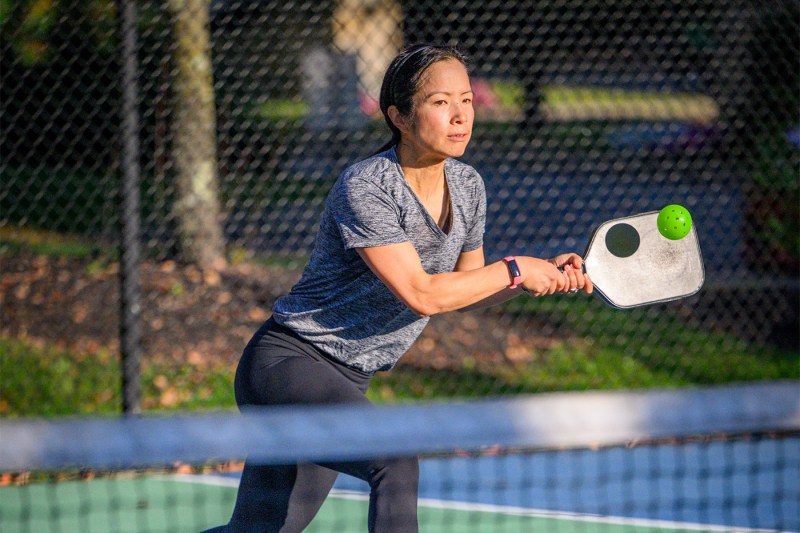

Cynthia Tow McPherson has already lived one athletic lifetime. A former Division I tennis standout, college coach and brief pro, she knows exactly what it takes to compete at the highest levels.
McPherson, who directs the private sector in the Center for Co-op and Career Development at Northeastern University’s School of Law, received a full scholarship to play Division I tennis before a brief career on the professional circuit.
But as any tennis player knows, the sport eventually grinds down the body. She graduated in 2001, and as she was about to board an international flight to compete in a tennis tournament in South Africa, the Sept. 11 attacks shook the nation. After some reflection, she decided it was time to put down the racquet and focus on other things.
Ten years went by. She had two kids; she went to law school at Northeastern (one of the most unique programs in the country, she said). She said she didn’t work out at all.
Now, at 46 and with a chronic partially torn bicep tendon — a result of having to reach for “too many high forehands” during her playing days, she said — McPherson found her second act in what many cite as the fastest growing sport in America: pickleball.
“Pickleball is deceptively simple,” McPearson told Northeastern Global News. “You think you’re just hitting a little ball around, but it’s fast, competitive and addictive. Once you start, you can’t stop.”
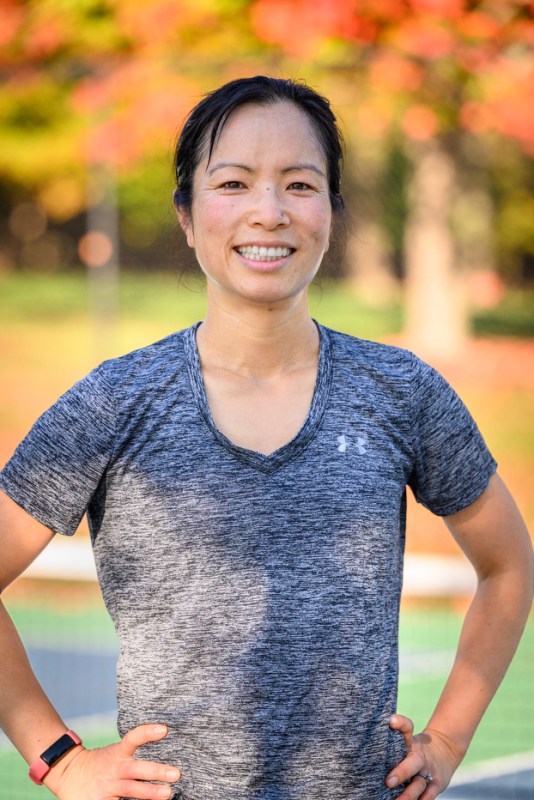
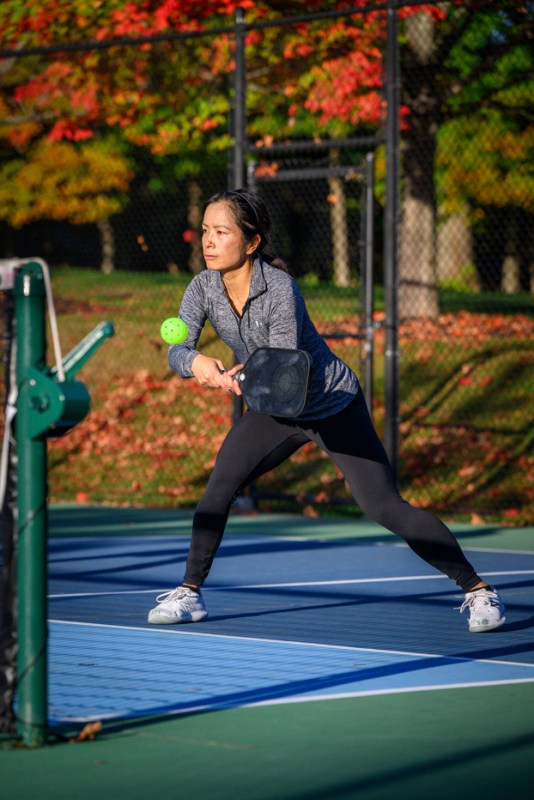
McPherson first picked up the pickleball paddle during a family “Olympics” driveway event in the beginning of the COVID-19 pandemic. It was an easy way to get some exercise and feed the competitive juices, all while keeping to the socially distanced protocol.
But that family gathering on Martha’s Vineyard, Massachusetts, would be just the start of a headlong plunge into a sport she now plays, teaches and competes in with the same gusto she once brought to her tennis playing days.
Editor’s Picks




“It’s a typical path for many pickleball players,” McPherson said. “You think, ‘oh, this is really fun.’ It’s really easy compared to tennis. I know I can’t get on the tennis court right now. I’m a little out of shape. But I can get around on the pickleball court.”
That’s because pickleball courts are about a quarter of the size of a full tennis court. Unlike tennis players, who require a level of fitness to cover about 2,800 square feet of asphalt, picklers stay closer to the action and rely on a soft but measured shot called a “dink” to keep their opponents off balance and guessing.
To the uninitiated watching the sport gain notoriety — perhaps on ESPN, which now airs tourney play — pickleball can look like a dinkfest, with the occasional attacking shot or smash. McPherson said the sport is constantly evolving and has recently received a surge of interest as more former tennis pros officially cross over, including Andre Agassi, Jack Sock, Eugenie Bouchard and others.
Accompanying that influx of eyeballs, of course, is money. And unlike much of her competitive tennis career, McPherson has found that pickleball can actually be lucrative. She regularly competes in what are known as “money balls,” which are informal but highly competitive tournaments in which players pay into a prize pool and winners take home cash.
The sums aren’t life-changing, but they add up. Local and regional events can net a few hundred dollars at a time, and McPherson said she has already earned more in prize money from pickleball than she did during her brief stint on the pro tennis circuit. She doesn’t keep the medals — those, she joked, are “just pieces of tin and plastic” — but she happily stashes away the winnings.
“I’ve worked hard for my career,” she said of her 12 years at Northeastern’s School of Law. “But I still need that competitive outlet. And pickleball gives me that.”