Co-op brings student up close and personal with a lioness
Ryan Sewell completed a co-op at Lilongwe Wildlife Trust, which works to protect Malawi’s wildlife from threats such as deforestation, poaching and the pet trade.
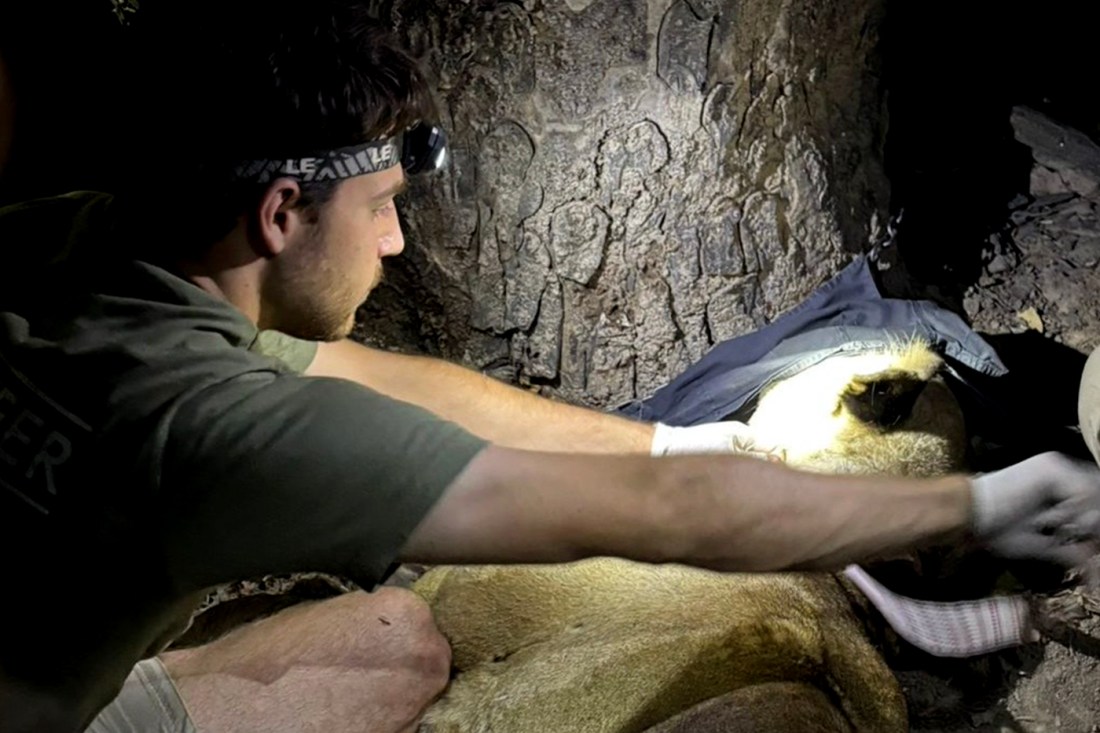

It was nighttime on the plains of southeastern Africa, and Northeastern student Ryan Sewell could see the eyes of members of a lion pride staring back in the distance.
That wasn’t the most intimidating part. Sewell’s team had just tranquilized lioness LF6, “a rough and grumpy old lady,” as Sewell described her, and he had a job to do.
“I was tasked with removing LF6’s collar, which I’d say was more terrifying to me even though she was asleep, just because of her reputation,” Sewell said.
Sewell, a fourth-year ecology and evolutionary biology major at Northeastern, recently completed a co-op at Lilongwe Wildlife Trust, an organization that works to protect the southeastern African country of Malawi’s wildlife from threats such as deforestation, poaching and the pet trade.
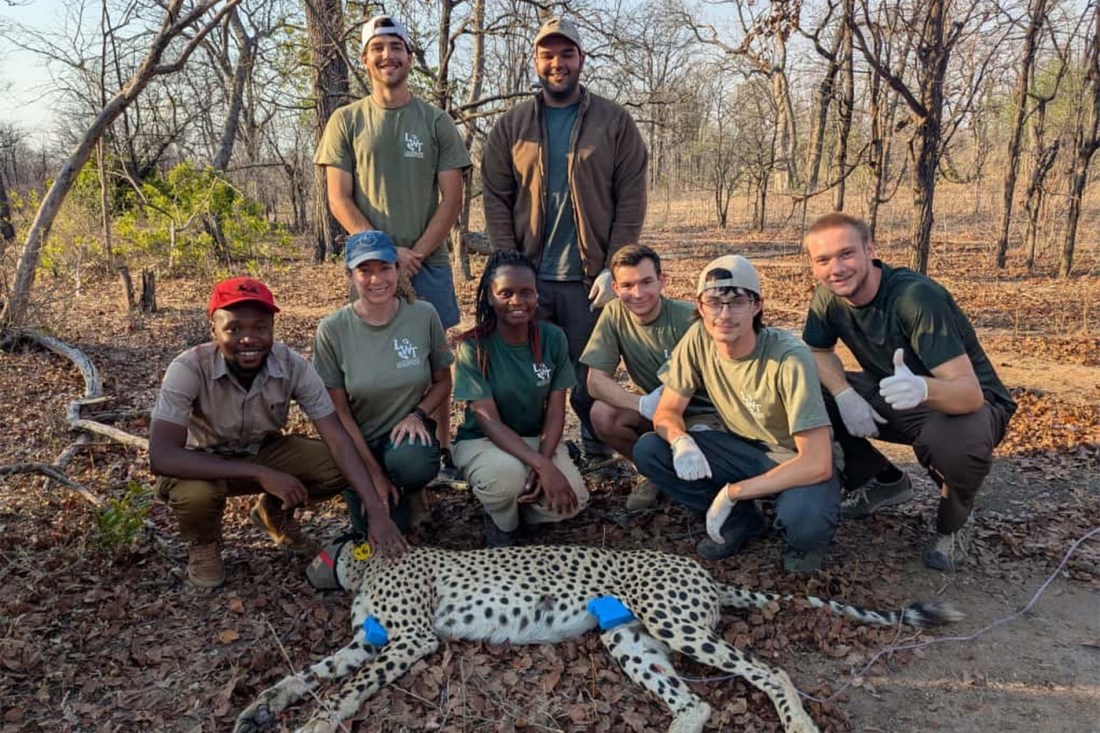
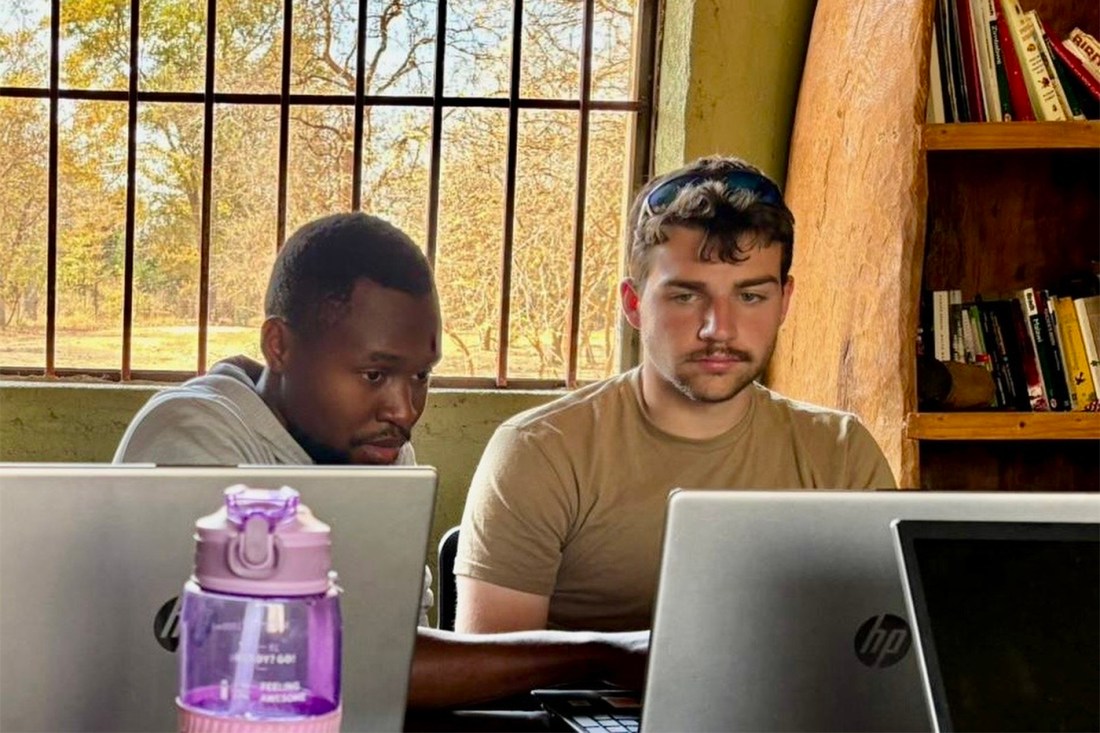
During his co-op, Sewell worked for a few weeks at the organization’s wildlife sanctuary doing “basic animal husbandry stuff” such as feeding and preparing meals for the resident animals. But the majority of his time was spent at Liwonde National Park on a research team monitoring main predator populations such as lions, cheetahs and wild dogs.
“Basically, we’re recording data on where these animals are, what they’re doing, who they’re with — which is especially helpful for the lions because they’re social animals,” Sewell said.
The monitoring is important because wildlife faces several challenges in Malawi, Sewell explained.
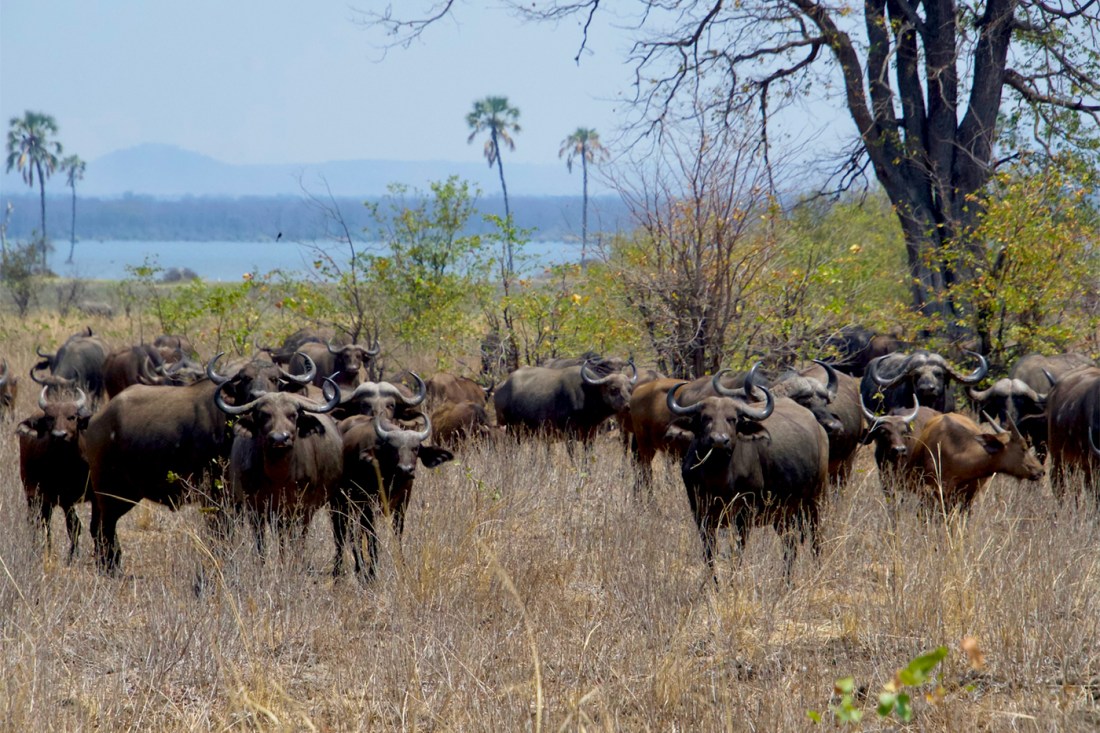
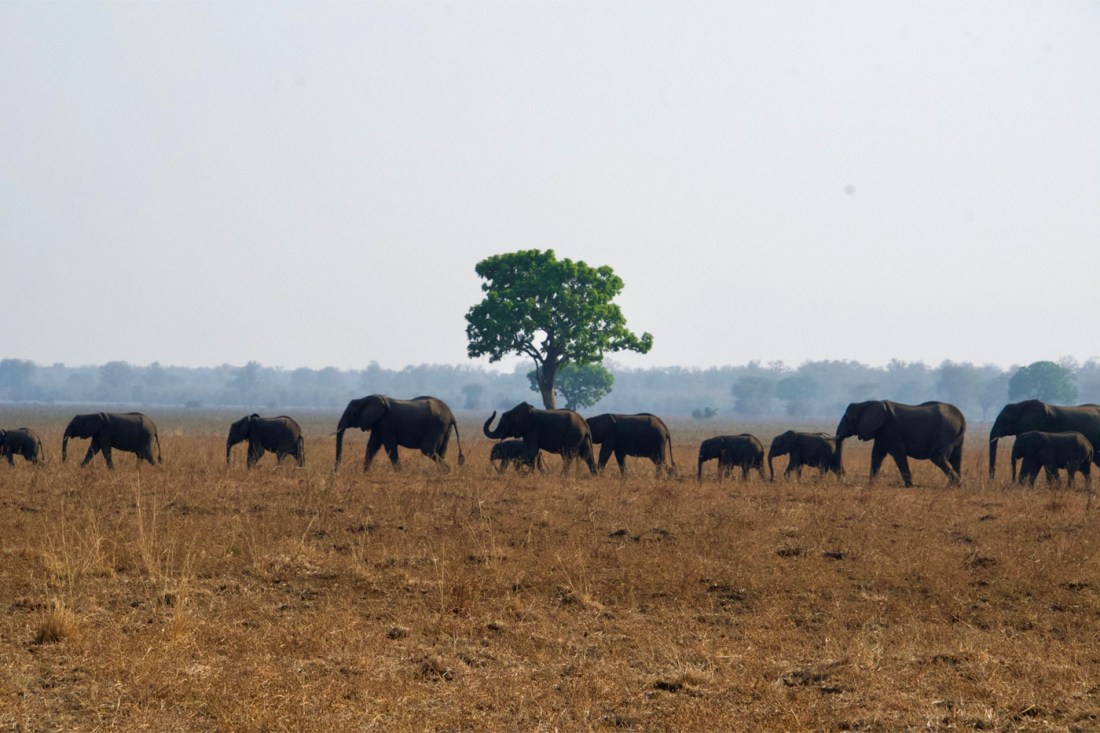
Liwonde National Park encompasses 212 square miles and it is fenced, but more than 1 million people live within 3.5 miles of the park boundaries, Sewell said.
“There’s a good amount of human wildlife conflict, mostly in the form of poaching because Malawi is so poor that people don’t have a lot of livestock or access to meat, and this drives people to go into the National Park and set traps or snares or go out and hunt,” Sewell said.
Editor’s Picks




The lack of resources also makes conservation projects difficult in Malawi compared with many other African nations.
“Malawi is a country that people don’t really hear about,” Sewell said. “All these other countries have so many resources and are getting so much from ecotourism, and Malawi’s not that way at all.”
But those challenges appealed to Sewell.
“I thought how unique of a challenge that is to maintain a healthy ecosystem with all these big animals that can cause problems with humans and having humans living nearby,” Sewell said. “I felt like I was gonna be making at least a little more of a difference going somewhere like Malawi than I would going to Kenya or South Africa.”
He made a difference.
Lonjezo Mwale and Wanangwa Phiri, a research technician and a field research coordinator at the wildlife trust, respectively, described Sewell as “a highly committed member of the team.”
“His contributions will be remembered, and his supervisors are confident he will excel in his career in conservation,” Mwale and Phiri wrote.
Sewell said that the experience fulfilled his longtime ambition of going to Africa to work with wildlife.
And he described the research experience he received during the co-op as “getting a foot in the door” for master’s and Ph.D. programs in wildlife conservation.
“I never wanted to really do anything that didn’t involve animals in some sort of capacity,” Sewell said.
Even animals like LF6.
“Thankfully, she didn’t wake up while I was removing the collar, but I remember being struck by how big she was up close,” Sewell said. “They estimated she weighed around 160 kilograms (350 pounds).”