Jousting is central to ‘A Knight of the Seven Kingdoms.’ But is it accurate?
The latest ‘Game of Thrones’ spinoff focuses on a jousting tournament that has “absolutely wowed” medievalists and renaissance fair performers in terms of its accuracy.
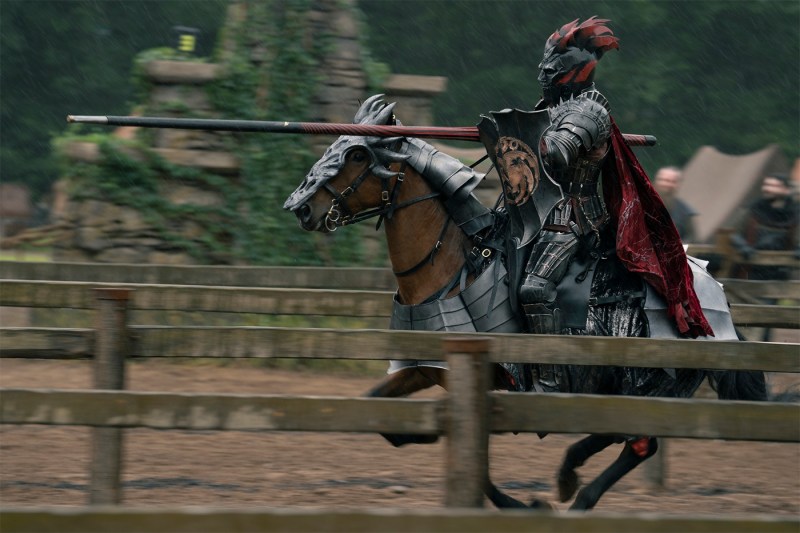

“A Knight of the Seven Kingdoms,” the latest entry in the “Game of Thrones” franchise, is a fantasy show, but it is shockingly realistic in one key area: its depiction of jousting.
Much of medieval history is arcane to the general public. But jousting, a medieval martial sport in which two horse riders charge at each other in an attempt to strike, or unhorse, their opponent with a lance, has managed to transcend a historical niche and hit home with contemporary audiences. That’s thanks in part to fictional representations of the period in Renaissance fairs, movies like “A Knight’s Tale,” and now “A Knight of the Seven Kingdoms,” which puts jousting front and center.
The show trades the dragons, ice zombies and political backstabbing of “Game of Thrones” for a week in the life of Ser Duncan the Tall, a traveling knight looking to make a name for himself in a jousting tournament.
“In many ways, ‘Game of Thrones,’ ‘House of the Dragon’ and ‘Knight of the Seven Kingdoms’ are often more accurate than many dramatizations of medieval history in its dynamics, in its texture,” said Hugh Doherty, a medievalist who consulted on “A Knight of the Seven Kingdoms.”
Part of the show’s attention to detail with jousting can be attributed to the author of the source material, George R.R. Martin, being a student of medieval history. But showrunner Ira Parker bringing on medievalists like Doherty as consultants also proved vital.
“What I liked was that he [Parker] was up for detail. The more detail the better,” Doherty said.
One of the most important elements of jousts that Doherty wanted the show’s creators to capture was how dynamic and dramatic medieval tournaments were. For Kirk Simpson, a Renaissance fair performer who portrays King Richard XI at King Richard’s Faire, the jousting sequences on the show match the intensity of seeing these events play out in real life.

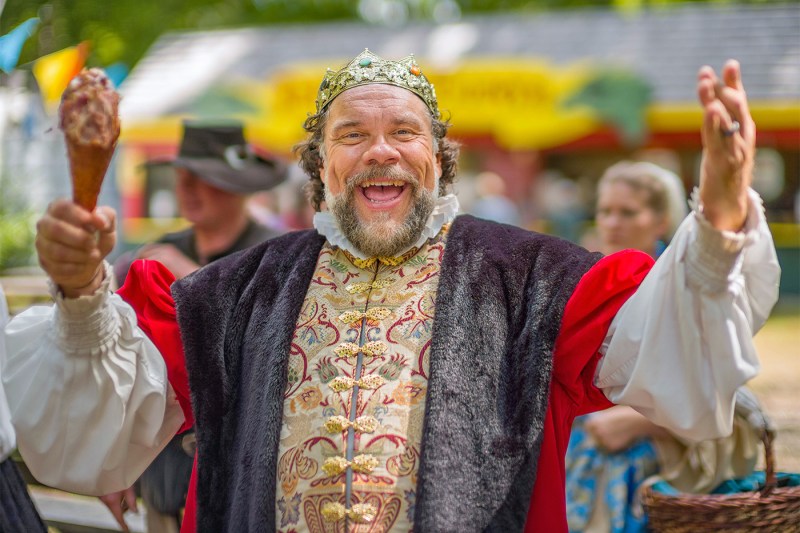
Renaissance fairs are some of the only places that modern audiences can still see jousting take place. From his place on the throne, Simpson said it’s apparent that jousting plays to a crowd more like modern sporting events than a relic of the past.
“I’ve played king for many, many fairs, and it is one of the most thrilling parts of the day when you’re in that moment and there are thousands of people cheering those knights on,” Simpson said. “They’re fighting for honor, they’re fighting for some kind of moment, and to see it all happen in real time is thrilling.”
Beyond the entertainment offered by jousts, “A Knight of the Seven Kingdoms” pays tribute to how important these events were for people of all classes, not just the aristocracy.
“If you weren’t a noble in 14th-century England, life was hard,” said Kathleen Coyne Kelly, a medievalist and English professor at Northeastern University. “It was a way to make a living too because people were bringing goods to sell: food and ale.”
Editor’s Picks



“A Knight of the Seven Kingdoms” even goes so far as to include a puppet show, a common form of entertainment at these tournaments, that proves vital to the plot and its historical accuracy. The puppet show in question features a warrior slaying a dragon, which happens to be the symbol of the kingdom’s ruling family, the Targaeryans.
“These shows also were often a transgressive space,” Kelly said. “You were far enough from real life that you could critique, say, the king who’s overtaxing.”
Like in medieval history, the tournament in “A Knight of the Seven Kingdoms” is about more than just entertainment.
In the show, the tournament is a chance for Westeros’ rulers, the Targaeryan family, to display power and prestige and for knights to prove their martial prowess. Real medieval tournaments served a similar but more functional goal: training for war.
During the Hundred Years’ War between England and France, which lasted on and off from 1337 to 1453, tournaments were used by the English to recruit and train soldiers.
“When there’s a lull in the fighting, when there’s a truce, especially in the 1380s and 1390s, there’s a renewed interest in the tournament,” Doherty said. “All of these men can’t fight, so how do they practice? How do they train up? How do they maintain their skills? Well, they tourney and they joust.”
“A Knight of the Seven Kingdoms” gets much of the history right, but that doesn’t mean it’s a historical docudrama. Ultimately, it’s a fantasy, albeit a grounded one. But Kelly said that doesn’t preclude stories like this from offering a glimpse into the medieval past or commentary on the current moment.
“What literary scholar Hayden White says is history is after the true, but fiction is after the real,” Kelly said. “I think that is what [George R.R.] Martin is after, not necessarily the true but the real.”