These librarians are trying to get people reading again
Book clubs and a reading challenge help get staff, faculty and students reading more
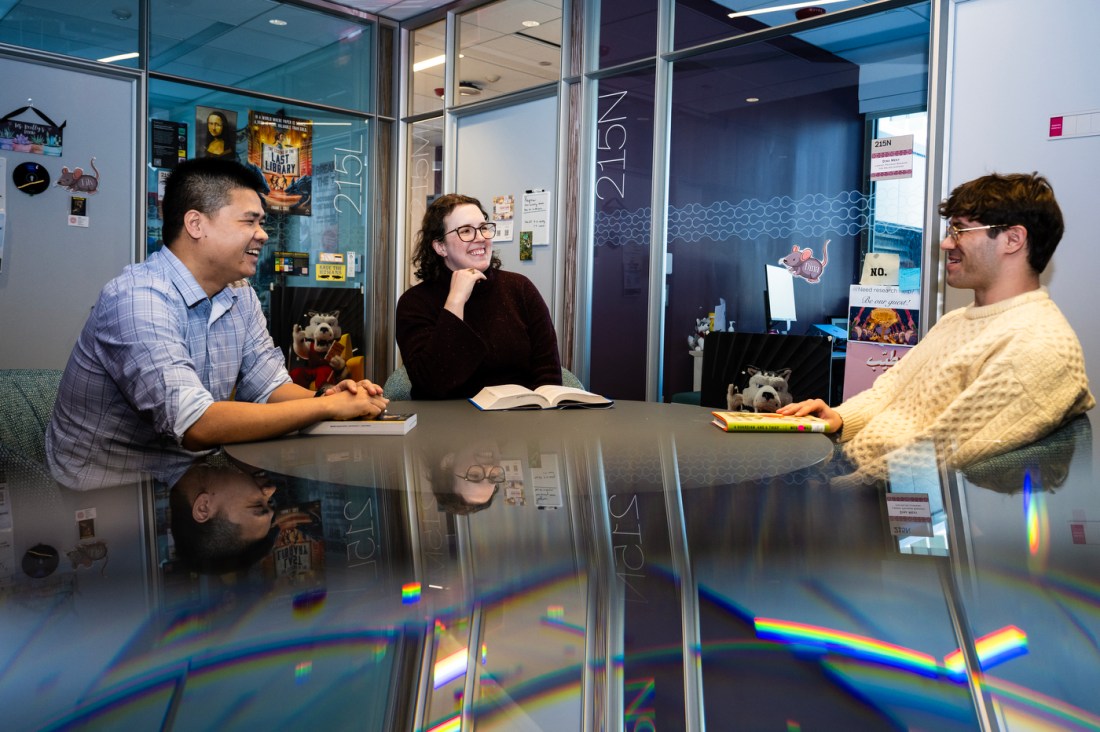

“You are Here,” a novel by David Nicholls about two divorcees forced together on a 10-day hike, had been gathering dust on first-year graduate student Alexander Walulik’s bookshelf since he bought the 2024 release.
But it was the Snell Library’s 2026 reading challenge for the Northeastern University community that finally motivated him to pick up the book.
Reading for fun is becoming increasingly rare among adults: a 2022 survey from the National Endowment for the Arts found that fewer than half of all American adults read one book that year. But Northeastern University and its librarians are trying to change that through a reading challenge and book clubs designed to get more students, faculty and staff picking up books for pleasure.
“Students are just excited about putting down the textbook and picking up something that they’re interested in, or something that they might not have ever read and having something fun you can dive into,” said Kerri Vatour, the Snell Library’s marketing and communications manager.
The reading challenge stemmed from the Mass Center for the Book, the Massachusetts affiliate of the Center for the Book in the Library of Congress. Northeastern was a partner in the Mass Center for the Book’s 2024 reading challenge that gave readers a prompt each month for a different type of book to read.
“That was the first recreational reading thing we started doing,” Williams said. “Students were just hungry for books. A lot of students, I found, really just want to talk about books with someone. I’ve had students tell me they want to get back into reading.”
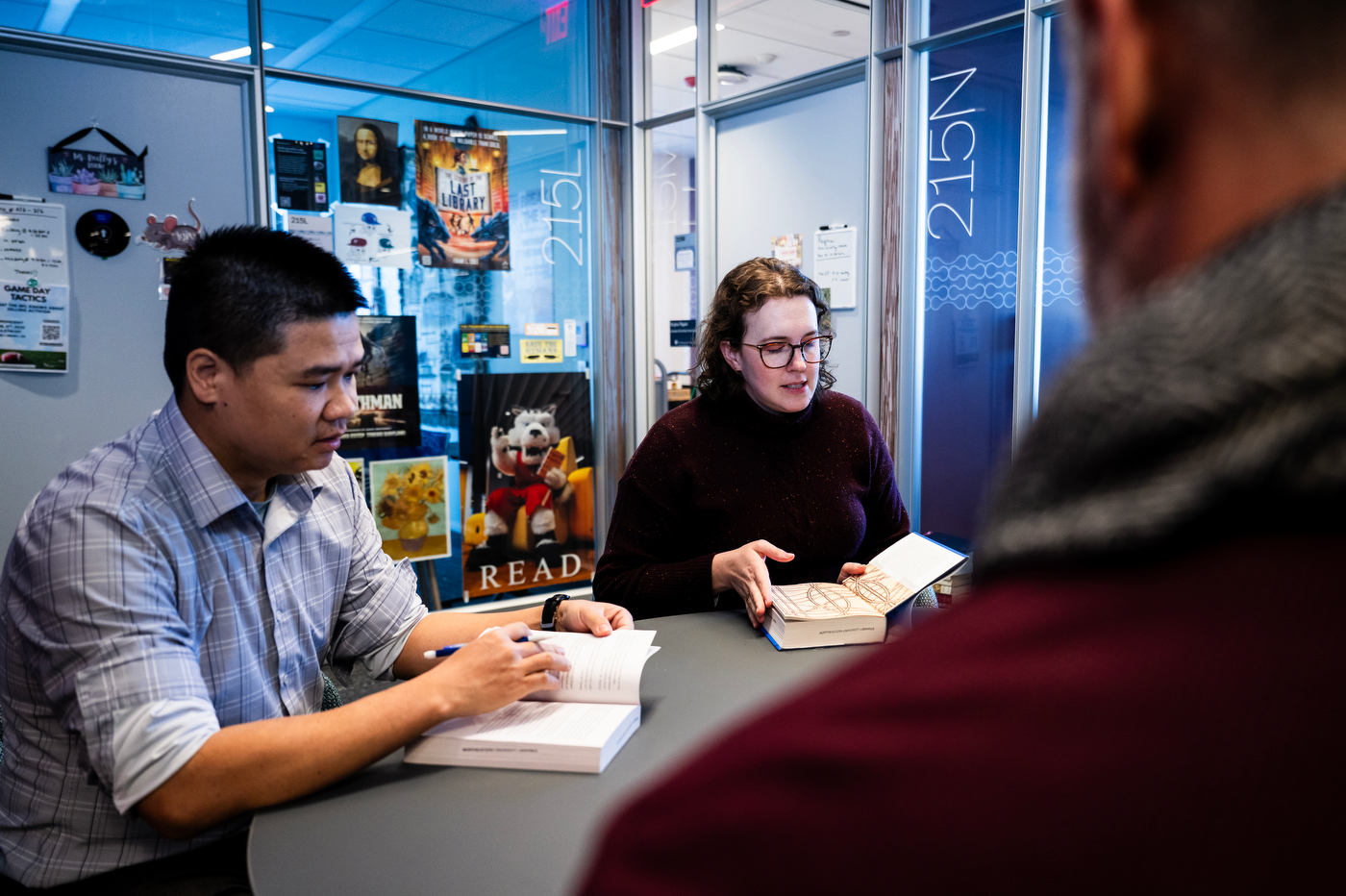
Williams said the library had a great response to the first reading challenge, but found some of the prompts were Massachusetts-based, which didn’t work considering Northeastern’s global campus structure. So Williams said the library created its own Northeastern reading challenge with prompts that apply to the university’s 13 global campuses. Participants can enter what they read for the chance to win a prize such as a gift card to a local bookstore or a finals week care package.
This year’s prompts include reading a book by an author local to your campus, a book recommended by a librarian and a book set on a college campus. In January, readers were encouraged to read a book about a journey, a prompt that motivated Walulik to finally pick up “You are Here,” after coming across a tabling event at the library encouraging students to join the reading challenge.
“I’ve been meaning to read it,” the 23-year-old communication studies student. “I just hadn’t gotten around to it. Coming across the reading challenge was a great time to pick this up and read it. Any sort of motivation when it comes to reading, I’ll always take up.”


For those craving a more social reading experience, the library also runs several book clubs. The Fusion Book Club, co-sponsored by the College of Science, meets monthly to discuss fiction and non-fiction books that highlight diverse voices in STEM. The club attracts a mix of graduate students, faculty and staff, said Jodi Bolognese, library program manager for engineering at Northeastern.
The library also began a banned book club in October under the helm of Steph Barnaby, who is involved with the Intellectual Freedom Committee of the American Library Association.
“It’s a passion of mine and I thought it’d be a good thing for Northeastern to have,” Barnaby said.
The Banned Books Club has met twice and has plans to begin meeting online through Teams to expand access for participants. The first book the club read was “1984” by George Orwell.
“That one was really well attended and we had some students that were really engaged in the parallels between ‘1984’ and the present day,” said Katie Donnelly, evening coordinator of the Snell Library’s Information Delivery and Access Services.
For February, the club is reading “The Handmaid’s Tale” by Margaret Atwood, followed by “The Perks of Being a Wallflower” by Stephen Chbosky in March.
Library staff said a book club that focuses on rural public health is also underway.
Students involved in these initiatives say they’ve helped them get back into reading. Quoc Hung Le, a master’s student studying data analytics for engineering, has been involved with the challenge for six months now and said each month has helped him pick up books and genres he might not have explored otherwise.
“I was feeling the weight of graduate coursework and wanted something that would keep me grounded and inspired outside of numbers and code,” he said.
“I’ve grown more reflective, more patient with ambiguity (a skill that surprisingly helps in data analysis too), and more confident in carving out time for things that feed my soul instead of just my resume,” he added.