Does Emerald Fennell’s ‘Wuthering Heights’ lose the plot of the novel?
The trailer for the film adaptation says it’s “inspired by the greatest love story of all time.” But is Wuthering Heights really romantic?
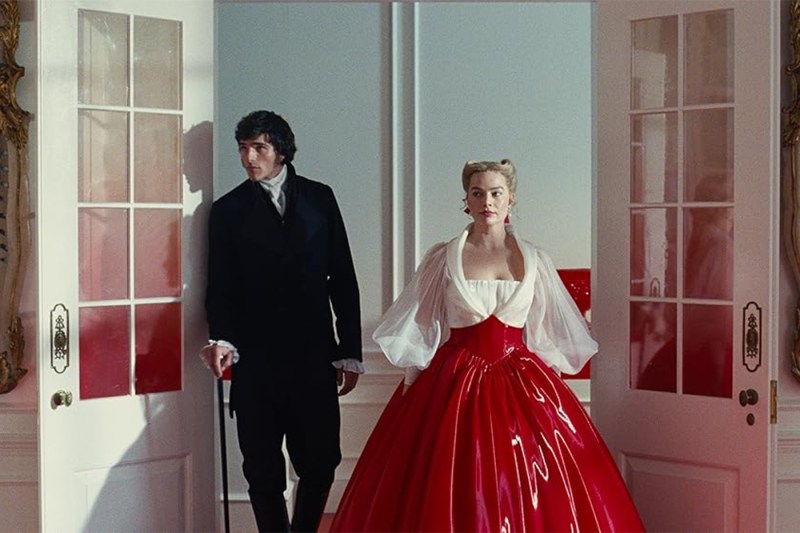

The trailer for director Emerald Fennell’s adaptation of “Wuthering Heights” teases a love story.
The promotional video for the new movie, which is being released Feb. 13, is filled with clips of actors Jacob Elordi and Margot Robbie, who play Cathy and Heathcliff, gazing longingly at each other in the lush English moors. Text reading “be with me always,” “take any form” and “drive me mad” pop up on the screen and advertise the film as “inspired by the greatest love story of all time.”
However, passion is only one part of “Wuthering Heights.” The 1847 novel by Emily Bronte goes further, experts told Northeastern Global News, exploring themes of race, class, intergenerational trauma and revenge — just to name a few. But some of this is missing from this adaptation, based on early reviews of the film.
“The power of the landscape and the passion between these two characters is attractive for film,” said Lori Lefkovitz, a professor of English and Ruderman professor and director of Jewish Studies at Northeastern University. “But there is so much (more) to it. I would urge people to read the novel because of its literary complexity and deep exploration of psychological and social issues. (It has) a depth that may or may not be in the film.”
“Wuthering Heights” follows Catherine, or Cathy, the daughter of a wealthy family that owns an estate called Wuthering Heights, and Heathcliff, the young boy whom her father brings home one day.
The pair grow close but Catherine’s brother, Hindley, tortures Heathcliff. The latter flees Wuthering Heights after Catherine becomes engaged to their wealthy neighbor, Edgar, choosing him and his wealth over love. Heathcliff later returns to Wuthering Heights a wealthy man and seeks revenge on those who harmed him.
From the start, Fennell’s casting of Elordi (who she said looked like the depiction of Heathcliff on the first copy of the book she ever read) stirred controversy, per online reactions. Elordi is white, but Heathcliff is described as racially ambiguous in the book, which Tarushi Sonthalia, a visiting teaching professor of English at Northeastern, says is a crucial part of the story.
“That’s a core part of the outsider status,” she said. “It was a very intentional part of the transgression of the love that existed between him and Cathy and you’re losing out on that with Jacob Elordi.”
Fennell said in an interview with the L.A. Times that she “wanted to make her own version” of the story. She also said that, like many other directors, she opted out of adapting the second part of the novel, which follows the children of Catherine and Edgar and how Heathcliff seeks revenge on them.
But in doing so, Fennell also misses out on showing how Heathcliff’s abuse leads to trauma in the next generation, which is eventually stopped by the end of the novel.
“It’s a story of child abuse,” Lefkovitz added. “The fact that it’s intergenerational and you have a third generation (that breaks the cycle), that gives you hope.”
At the time it was released, reviewers called “Wuthering Heights” brutal and cruel, said Lawrence Evalyn, a text mining specialist and part-time lecturer in Northeastern’s English department who specializes in 18th-century literature, particularly Gothic and women’s writing. Bronte originally published the novel under the name “Ellis Bell” and people were further shocked when her sister later revealed her identity as a woman.
Editor’s Picks


“It made an impression for being very strange and not like nearly anything else,” Evalyn said. “It had really, almost shockingly, thrown off a lot of the conventions of the Victorian novel to create something that people recognized as having reality to it. But it felt uncomfortable to see that.”
But this early reaction contributed to its staying power, Evalyn added. “Wuthering Heights” is still taught in literature classes (including by Lefkovitz) and has been adapted for television and film many times dating to 1939. A 1967 BBC adaptation of the novel inspired singer Kate Bush to write her debut single, “Wuthering Heights.”
Evalyn said that some of the enduring appeal is in the choice Catherine is forced to make between two men who offer very different things.
“It’s this bind with no right answer,” he added. “It can boil down to the choice between high risk, high reward and low risk, low reward. The feeling that there’s a lot of pressure that one of those is the right answer, even though it’s not the one that makes you actually feel excited, resonates.”
Based on the trailers and early reviews, Fennell’s adaptation seems to play on this choice and the romance between Catherine and Heathcliff, who Sonthalia describes as selfish, obsessive and violent. Throughout the novel, both characters abuse those around them and each other both physically and emotionally.
“It definitely doesn’t feel romantic in the sense that we understand romance,” she said. “There are a lot of the worst impulses of people concentrated in that novel. But then there is also that element of that obsession, showing a deeply human aspect. We all feel obsessions. We all feel impulses that we’re ashamed of. It’s just concentrated there and not hidden by a veneer. I don’t think they’re redeemed at the end of the novel and I think that’s what’s brilliant about it.”


