What is the controversy with the Olympic figure skater using a ‘Minions’ medley?
Spanish figure skater Tomàs-Llorenç Guarino Sabaté’s licensing woes highlights a larger issue with figure skating music at the Olympics.
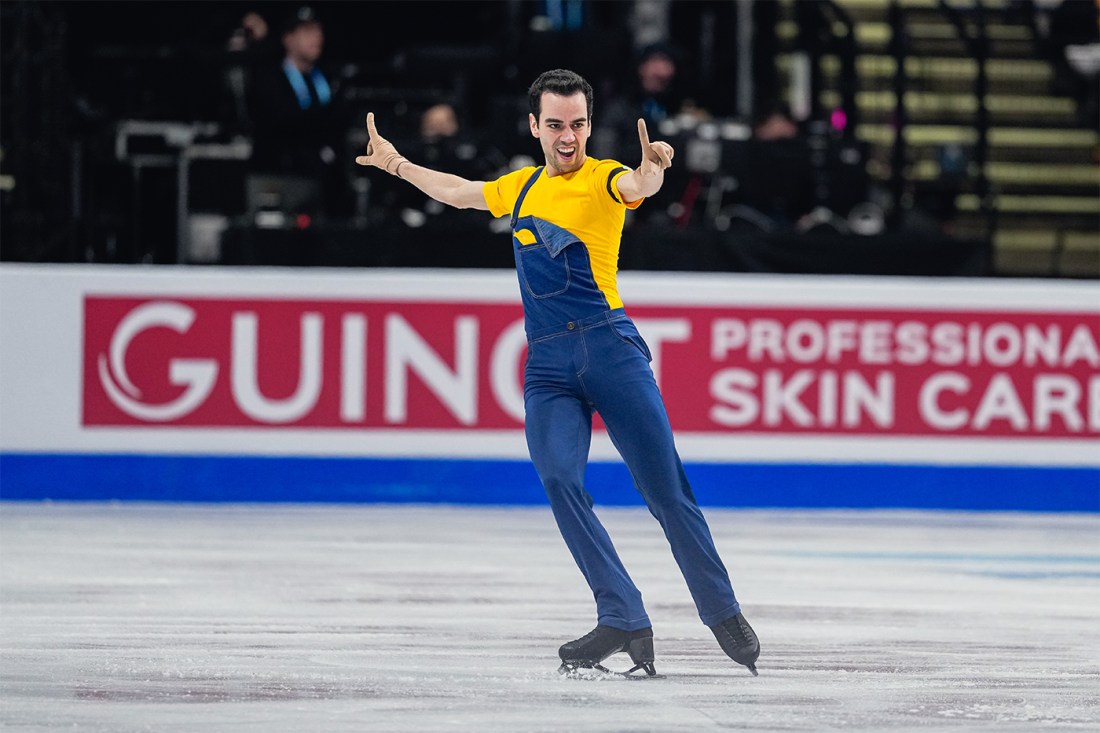

Spanish figure skater Tomàs-Llorenç Guarino Sabaté spent the 2025-2026 season skating to a medley of songs from the animated Minions movies while wearing the distinct yellow T-shirt and overalls these characters sport.
But a copyright issue nearly prevented Sabaté from taking his Minions-inspred performance to the men’s single figure skating competition in the Olympics after there was a holdup obtaining licensing for one of the four songs in his medley.
Sabaté announced via Instagram that he had received the necessary license, but he’s not the only figure skater facing licensing issues. Musician Sebastian McKinnon, also known as CLANN, took to social media questioning the use of his song “The Return” in a free skate by American figure skater Amber Glenn. These two complaints come after a lawsuit stemming from the 2022 Olympics in which a pair of U.S. figure skaters settled with an artist whose song they used in their routine.
Alexandra Roberts, a leading expert on intellectual property and social media and a professor of law and media and faculty director of the Center for Law, Information and Creativity at Northeastern University, broke down why Olympic figure skaters have been plagued by these copyright issues lately. Answers have been edited for length and clarity.
Why are copyright issues coming up with figure skating routines now?
Up until about 10 or 12 years ago, skaters were mostly using music in the public domain. This international use in the context of the Olympics, using songs with lyrics with rights holders who are alive and enforcing their rights, is really pretty new. We don’t have a lot of precedent and these questions are untested.
What are some of the complications around music copyright and licensing?
The first complication is who are the actual owners of the copyright. It is often not the recording artist. The owners are likely going to be the songwriters, the composers, and the publishers.
(Then) the artists don’t necessarily understand the scope of their rights, and assume that their permission is required or that they should get paid in particular circumstances. Sometimes the answer is actually the license in play.
What are the types of licenses available for music?
There are two kinds of licenses. A sync license is what you need if you want to pair music with multimedia content. A performance license allows the music to be played or sung or broadcast in public. If you’re the owner of a bar and you want to play music in the bar, you need a performance license. The first category is more likely to pay the recording artists and the second is tied to the record labels and the songwriters. If you are a performer who’s handed some music and lyrics, and then you sing the song, you’re less likely to have that control.
Editor’s Picks





The Olympics is considered a live event. It’s not considered synchronization because the video isn’t synchronized with the song in time. The video is just capturing the performance and it’s the performance that’s synchronized in time. But the Olympics are broadcast live, then they’re rebroadcast. Then you have clips that go out on the web. So there might be an argument to be made for requiring sync rights.
Tomàs-Llorenç Guarino Sabaté is not just skating to a Minions medley, but is wearing a distinct Minions costume. Is this use of imaging also a potential copyright issue?
There could be. We could consider this a derivative work. The copyright owner of the Minion movies (Universal Pictures has an exclusive financing and distribution partnership with Illumination, the company behind the films), (may have) the exclusive right to create derivative works, so spin-offs and different uses of the imagery. There is a plausible fair use defense in play because this is creative and not a commercial use. It’s certainly not going to harm the market for the Minions. But there could be an assertion of copyright infringement based on both the use of the music and the use of the costumes.
This is a fairly new issue for the Olympics to face. How do you anticipate this playing out over the next few years?
I’m sure everybody involved would love to see some more certainty. U.S. Figure Skating works with (performance rights organizations) ASCAP and BMI to secure a blanket performance license so they then have this huge set of songs that’s covered. The International Skating Union recommends that skaters use this third-party platform called ClicknClear, which ostensibly negotiates sports performance licenses for thousands of songs from a lot of rights holders. But under that, record labels and publishers have the discretion to approve or deny the use of their music and set license fees. License fees can range tremendously, so that might impact choice.
The most important thing, probably, is to get that clarity so you don’t have skaters panicking before they compete in the Olympics. You probably need this group of stakeholders to get together and work through a way where the licensing situation can be more straightforward. We’re dealing with all these different countries because the Olympics take place in and are aired in all these different countries and all these different countries have different rights holders. There’s a lot of international issues to work through to get to a place where there can be confidence.
Northeastern Global News, in your inbox.
Sign up for NGN’s daily newsletter for news, discovery and analysis from around the world.