Northeastern’s support of health nonprofit benefits patients and the next generation of caregivers.
“Northeastern has been an incredible, incredible cultivation place for this program,” said Dr. Alister Martin, CEO and founder of A Healthier Democracy.
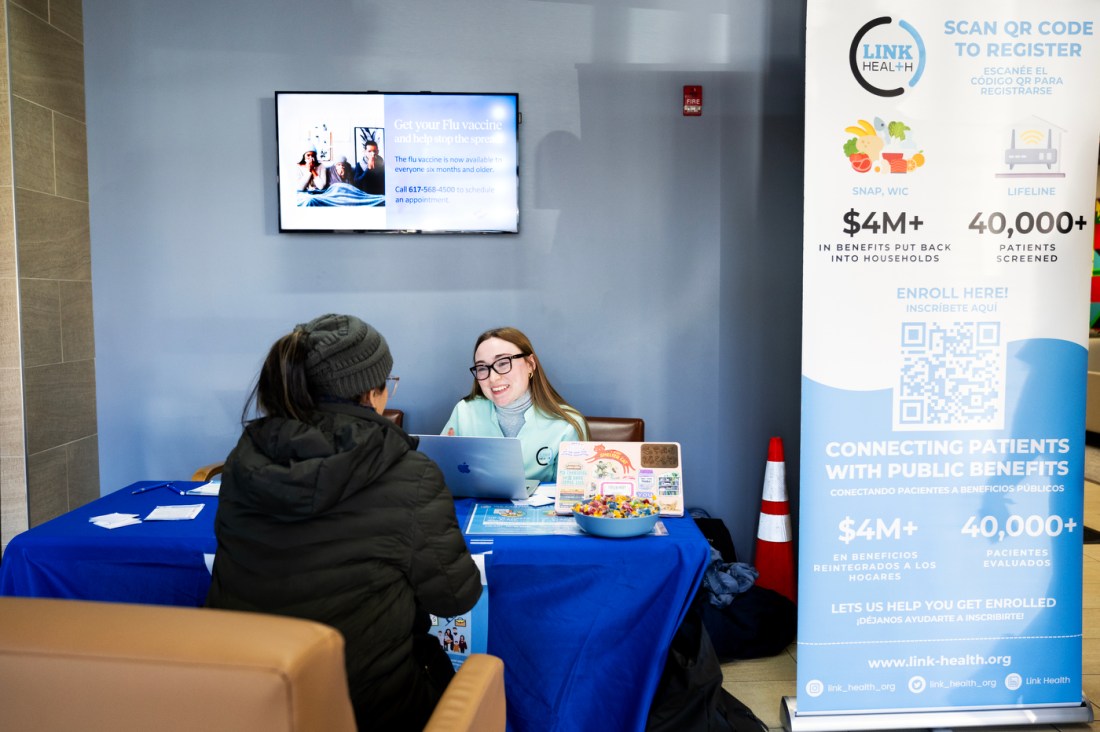

NeighborHealth, an East Boston-based health center, was busy at their Maverick Square location on a Friday afternoon in December.
Patients steadily entered the lobby, announced with a rush of cold air and the blast of heaters from above the doors. Couches and chairs were full, many occupants huddled in winter jackets and blankets. Patients peered at the eyeglasses on display in the optometry office or lined up in the pharmacy
Meanwhile, Mary Katherine “MK” Hartigan had a lot to celebrate.
“Technically, I think I graduated today,” Hartigan said, explaining that she had earlier in the day completed the last requirement for her undergraduate degree in cell and molecular biology from Northeastern University.
Hartigan was also excited for another reason. She and her team of patient navigators with the Link Health program had signed up at least eight people at the health center for public benefits.
“We usually get a lot of rejections,” said Hartigan, a senior patient navigator with Link Health. “Today was busy, busy, busy — one of the busiest days of our cohort.”
Link Health is a program of the nonprofit organization A Healthier Democracy. It works to ensure equitable access to cash-assistance benefit programs that help patients address food insecurity, housing insecurity, childcare costs and more.
The nonprofit was founded on the recognition that poverty can be a common diagnosis for health problems, according to Dr. Alister Martin, CEO and founder of A Healthier Democracy.
“What ends up happening most in my job in the emergency department when somebody comes in for things like homelessness or starvation, lack of resources, etc., is they’re struggling with poverty,” said Martin, who is also an emergency department physician at Massachusetts General Hospital and a faculty member at Northeastern, but he will be on leave from those roles as he was recently announced as the 45th commissioner for the New York City Department of Health and Mental Hygiene.
“Poverty is the real issue, and I felt as a physician, incapable, really helpless, to address what was quite often the real problem,” Martin said.
Martin felt such frustration that in 2021 he left his practice to work as a White House fellow. There, he headed a project to encourage people to enroll in the Biden-era Affordable Connectivity Program, which subsidized the internet or phone connections of low-income households.
It was not necessarily health care, but it was inspiration.
“What I was thinking about was, you know who really needs to be on this road? My patients.” Martin said.
Fast forward four years, and Link Health partners with 13 health centers across the state, including five in the city of Boston, and health systems in Texas, attracting students from Northeastern and other area universities for experiential work placements, volunteer opportunities and more.
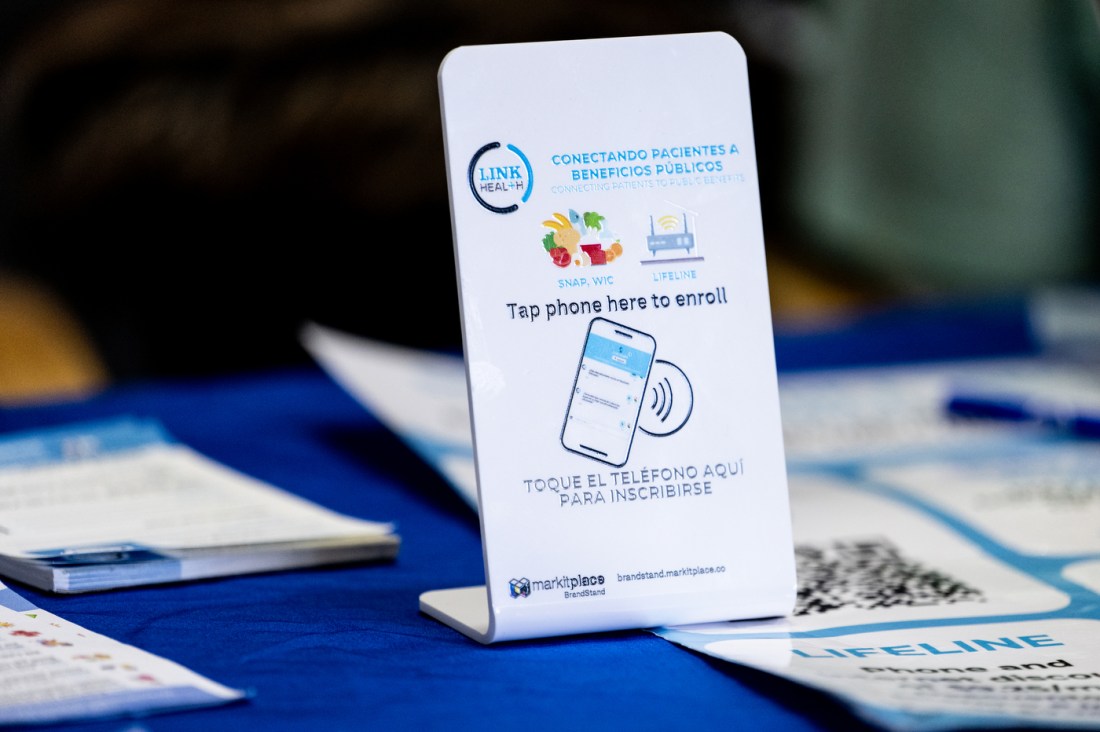
Every day, a team of volunteer patient navigators with Link Health visit one of the five Boston health centers to enroll patients in public assistance programs such as the Supplemental Nutrition Assistance Program, SNAP, which helps low-income persons purchase food; WIC, which offers nutritional benefits for women, infants and children; MassHealth; Lifeline, which helps subsidize phone and internet service; fuel assistance, and more.
“We’re kind of like the middleman between the patient and the actual benefit program,” explained Annamarie Rapa, a fourth-year student in the Health Sciences and Master of Public Health PlusOne program at Northeastern, who recently completed a co-op with Link Health. “We do the bulk of the application process so that patients don’t have to worry about confusing paperwork or wording that doesn’t make sense.”
In just over two years, the program has screened more than 45,000 individuals for benefit programs, disbursed nearly $5.5 million in funding and helped 4,000 families get assistance, Martin said.
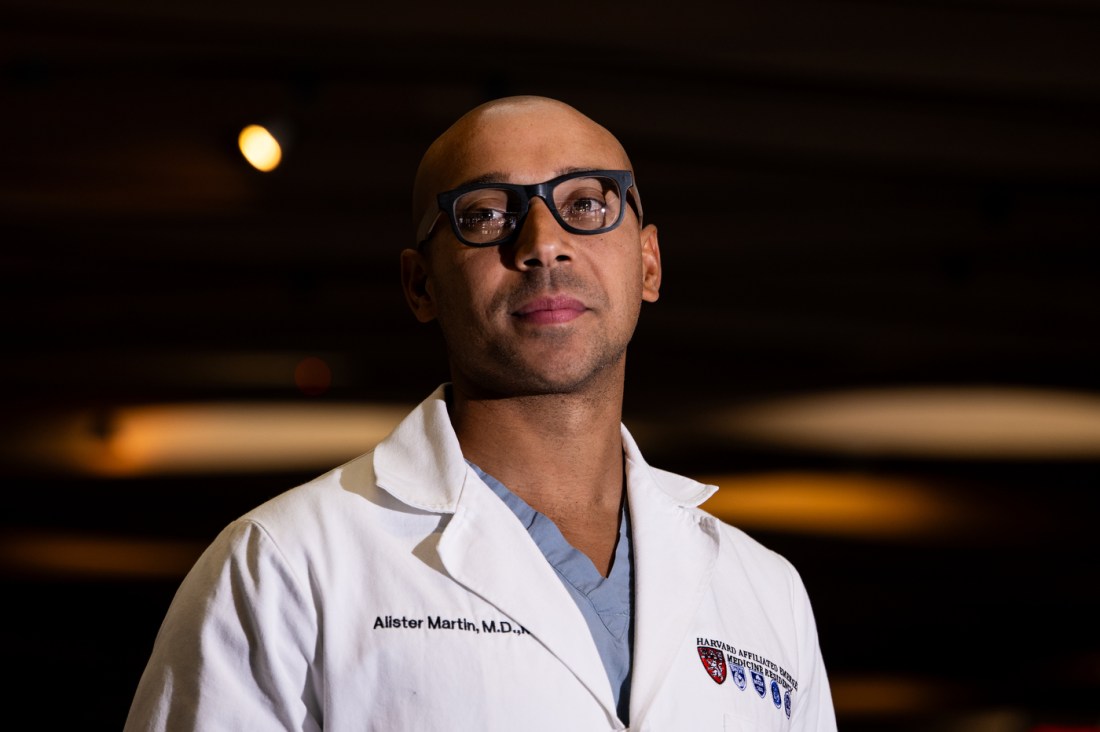
But Martin hasn’t grown Link Health alone.
“Northeastern has been an incredible, incredible cultivation place for this program,” Martin said, explaining that the university has played three major roles.
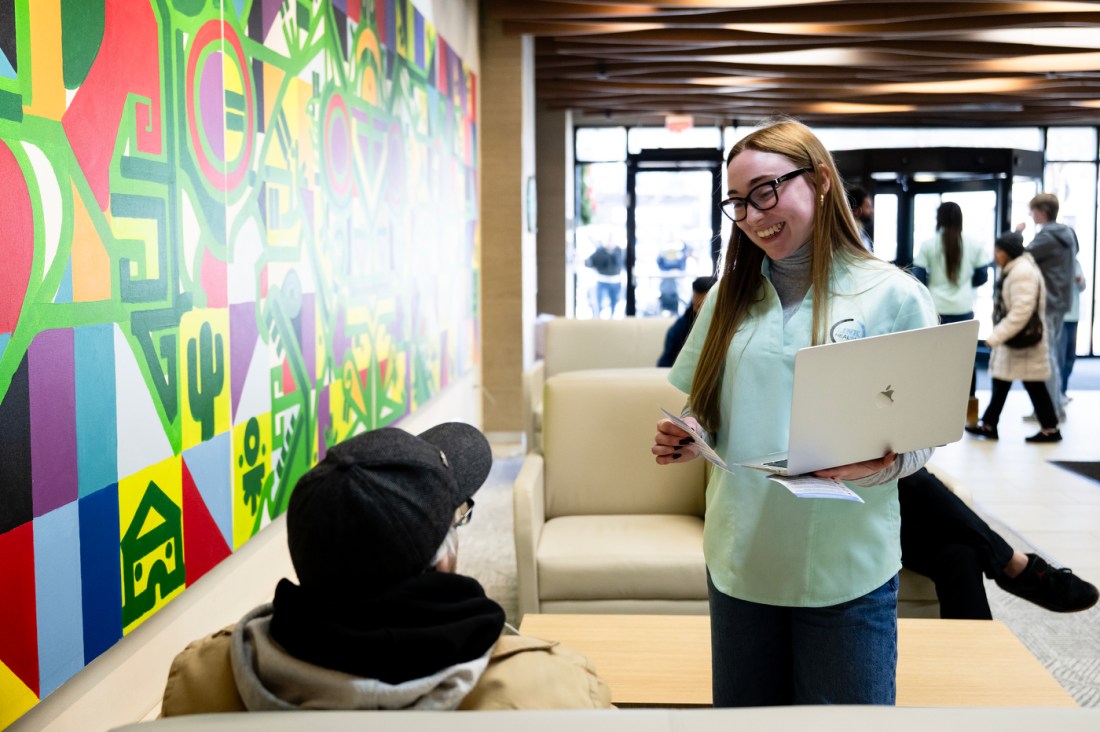
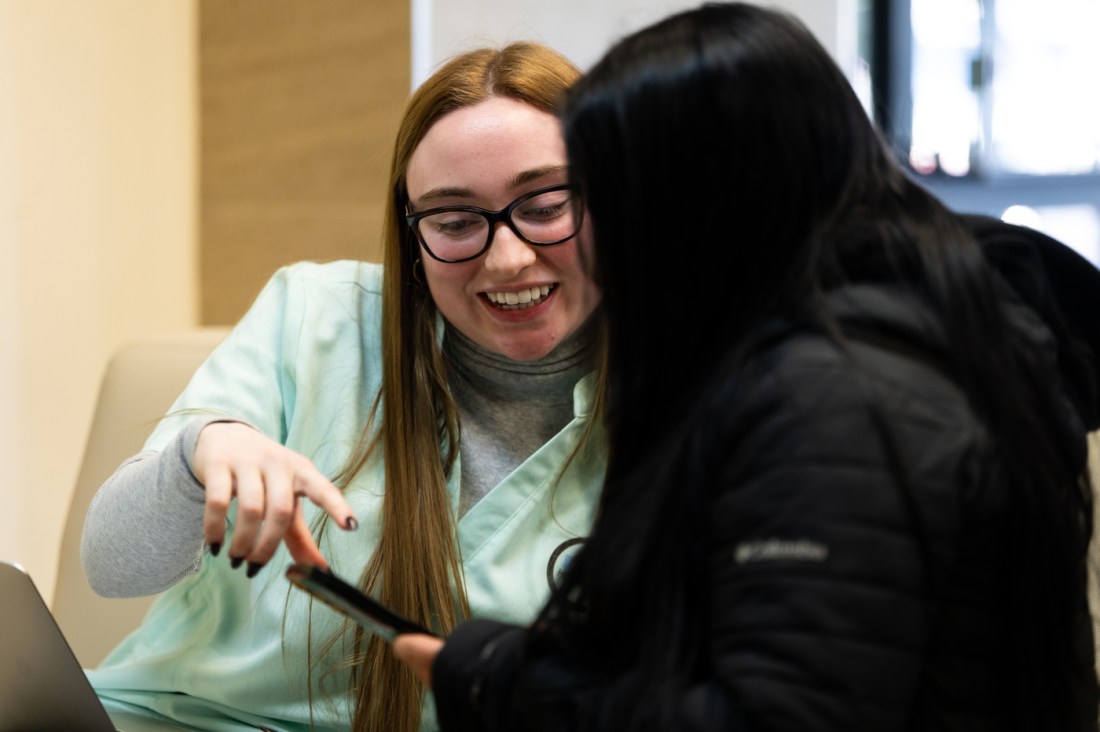
Like Hartigan, pre-medical students, nursing students and school of public health students at Northeastern and other area universities volunteer as patient navigators. They are the initial point of contact — approaching potential patients with a laptop in hand to explain benefit options and help fill out applications. The volunteers get firsthand clinical exposure and public health experience.
“When you work with a patient and sit down next to them and understand their situation, it’s very fulfilling to give them a solution and have them leave with something tangible,” said Meera Shukla, a third-year student at Northeastern who is studying neuroscience and volunteers with Link Health. “Even if they aren’t eligible for any programs, maybe you connect them with a resource like a local community food bank or a homeless shelter if they need that sort of resource, and you feel pretty fulfilled — like, ‘Hey, I actually did something for this patient.’”
Patient Francis Dias Henriquez said through a translator that she was grateful for the help. She was worried about putting food on her family’s table during a recent period of unemployment. The clinic suggested she connect with Link Health to submit a SNAP application.
The co-ops also provide leadership opportunities for Northeastern students.
Last semester, Rapa trained patient navigators, analyzed data and best practices at each of the sites and incorporated lessons learned into training. She also wrote opinion pieces for local publications about Link Health, the challenges that cuts to public benefits could have, and more.
“It felt like a perfect match,” Rapa said, of her co-op. “All of the values and everything that Link Health stands for align with my personal public health values. Improving access and promoting healthy lifestyles is something that I am very passionate about.”
At the clinic, Rapa explained the setup for the day as she observed the scene.
She pointed out several volunteer students who were manning a table with handouts and — of course, snacks — in one corner of the lobby. Meanwhile, she watched as patient navigators calmly but confidently approached patients who were waiting among the couches and chairs.
Rapa said that the applications for different programs vary in complexity. Reduced internet and phone service benefits can take 5 to 10 minutes, she said. The SNAP application “can take a little bit longer,” Rapa said, often involving multiple follow-up calls over several weeks to collect supporting documents and “case management” by the patient navigators.
So, patient navigators have to be knowledgeable, professional and organized as well as compassionate and able to build a quick rapport with a patient.
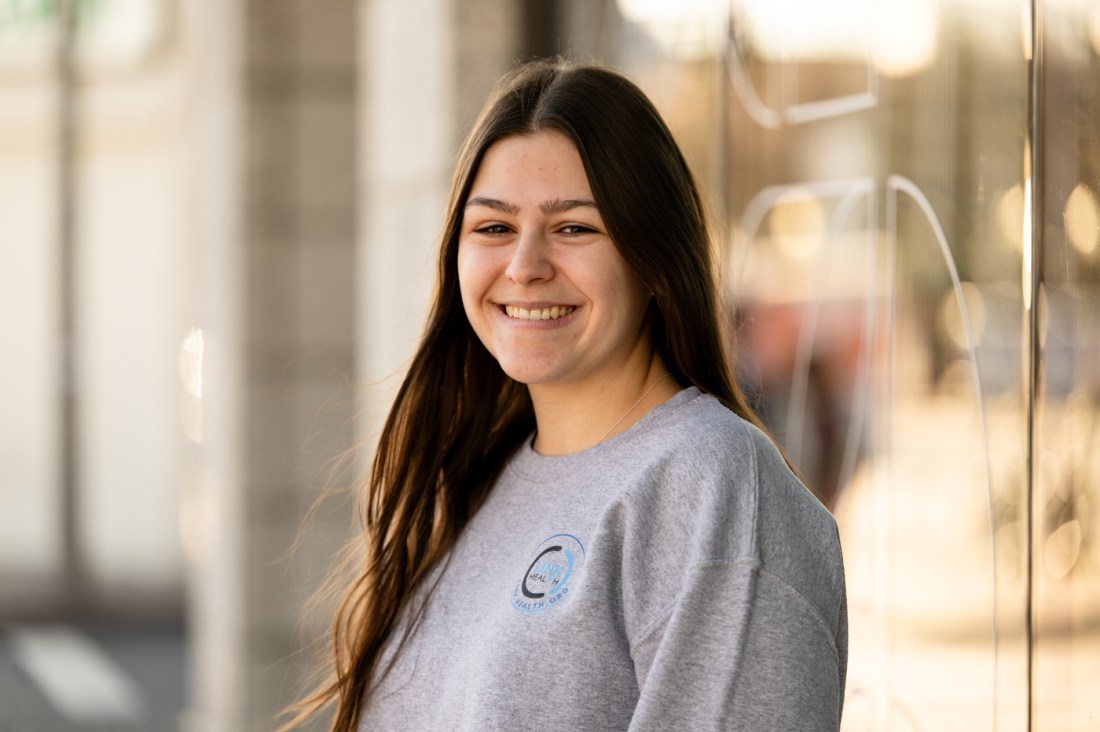
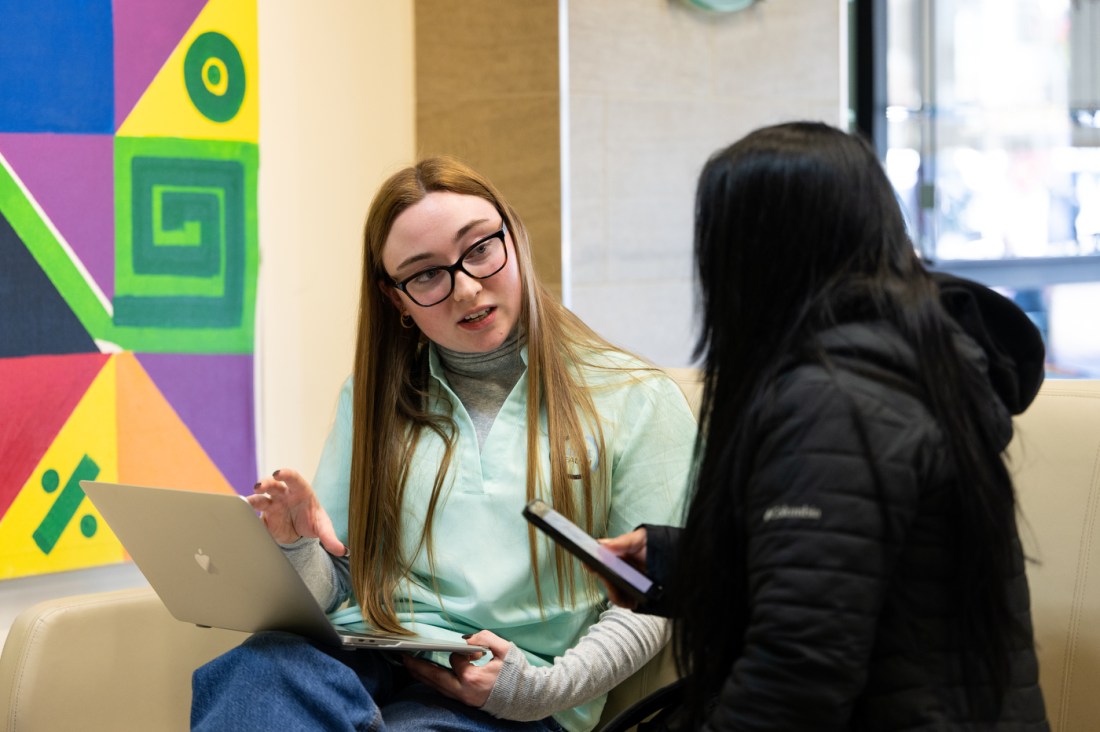
As Hartigan approached a young female patient who was huddled in a blanket in the lobby, the woman — who requested to remain anonymous for patient privacy reasons — seemed a little wary. But when the patient navigator introduced herself in Spanish and explained her role, the woman smiled. She told Hartigan that she was pregnant with her first child. Hartigan beamed as she took down the woman’s information to sign up for the WIC program.
“I had no idea there were so many options,” the woman said.
Northeastern’s focus on technology has facilitated Link Health’s growth.
“I came to Northeastern 2½ years ago with the express intent of having Northeastern help us apply artificial intelligence to everything we do at A Healthier Democracy so we could do it better,” Martin said.
Students with Northeastern’s AI for Impact program developed an artificial intelligence agent called “Leo” to help patients enroll in benefits through their phones.
“What do you do when somebody comes in at 6:30 p.m. and needs SNAP or rental assistance?” Martin said. “This is where artificial intelligence is really, really important for us.”
Most recently, Emir Durakovic, a third-year computer science student at Northeastern, completed a co-op focused on improving Link Health’s online enrollment process.
“Health care is, in my opinion, lagging behind technology and technological advancements,” Durakovic said. “There’s more potential in health care where you can use computer science skills.”
It is a good time for innovation in health care.
Editor’s Picks


The 2025 One Big Beautiful Bill Act cuts more than $1 trillion over a decade from federal health care and food assistance, through changes including more stringent work requirements for many able-bodied adults and new eligibility rules for Medicaid and SNAP.
This fall, SNAP was also suspended then reduced during the government shutdown.
“It’s definitely a scary time,” Martin said. “But the bright side is, this is why we exist as Link Health — we literally trained a whole army of people to help cut through administrative red tape.”
Mimi Gardner, vice president and chief equity officer at NeighborHealth, which operates the East Boston clinic, said she “couldn’t be happier” with the relationship that has developed among Link Health, the clinic and the students.
“Dr. Martin’s working with them, developing them and giving them an understanding of the community healthcare needs and they get to see this firsthand — which is not book knowledge — but this is actually being out there doing the work,” Gardner said.
“These are the people who are our tomorrow,” she said.