As measles cases are soar, US may lose its elimination status if disease is reestablished
South Carolina measles outbreak eclipsing Texas cases
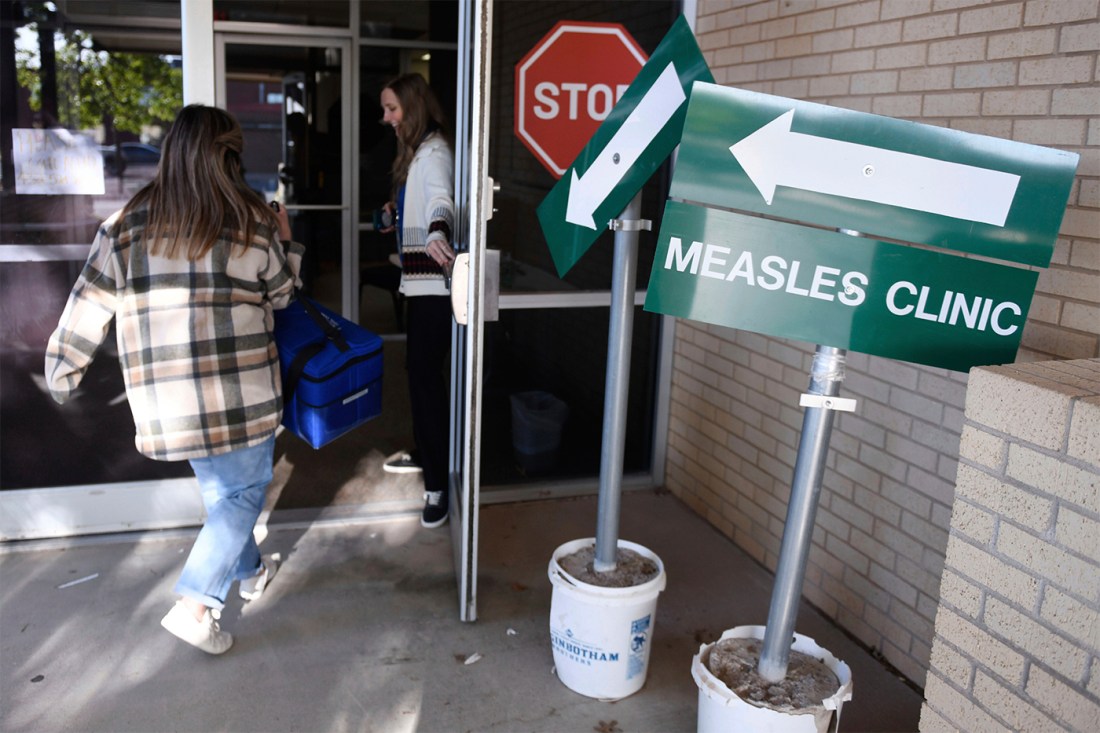

Public health officials say last year was a bad year for measles, and 2026 is promising to be even worse for the spread of the highly contagious disease.
As of late January, the U.S. had recorded 588 measles cases in just that month, according to the Centers for Disease Control and Prevention, surpassing 25% of the total number of cases for all of 2025, which reached 2,267.
Outbreaks are occurring in several states, including California, where a Disneyland visitor with measles is raising concerns about the potential spread of the disease.
Most alarming to public health officials is an outbreak in South Carolina that has exceeded the one in Texas that began just over a year ago. There have been 876 cases in South Carolina reported since October, according to the South Carolina Department of Public Health.
The developments mean it’s possible that the United States could lose the “measles elimination” status, granted by the Pan American Health Organization, or PAHO, it has held for a quarter-century, Northeastern health experts said.
Elimination status means going 12 months without a continuous outbreak. The U.S. has held the status since 2000.
“For a country like the United States to lose that status, given our health care and public health infrastructure, would be really striking,” said Neil Maniar, Northeastern University director of the practice and director of the master of public health program.
If the U.S. loses that status, it would mean the virus is considered re-established in the U.S. and would be seen internationally as a preventable setback.
Maniar said the U.S. had the highest number of measles cases in 2025 since the elimination status was achieved. The PAHO will hold a meeting with officials from the U.S. and Mexico in April to discuss the threats to the measles elimination status and efforts to control outbreaks and vaccinate people against measles.
“Where we may lose the elimination status is if they determine that the outbreak in South Carolina is due to a linked transmission to the outbreak we had in Texas last year,” said Brandon Dionne, a Northeastern associate clinical professor in pharmacy and health systems sciences and expert in infectious disease.
Editor’s Picks




The status could also be withdrawn if public health officials don’t do enough to get the outbreaks under control, he said.
The current spread of measles is attributed to the growth of anti-vaccination sentiment, Maniar and Dionne said. South Carolina requires two doses of the measles, mumps and rubella vaccine for schoolchildren, but allows exemptions for medical and religious reasons.
The Center for Infectious Diseases Research and Policy, CIDRAP, says the South Carolina outbreak is centered in Spartanburg County, where the virus has spread in elementary and middle schools, many of them private Christian academies with “largely unvaccinated student bodies.”
Measles is a virus that can remain suspended in the air for up to two hours, which contributes to its standing as one of the most contagious diseases around, said Richard Wamai, a Northeastern professor of cultures, societies and global studies.
“In a room environment, people may come in and go and still be exposed when that initial case has left the room,” Wamai said. He said the infection rate is 90% among unvaccinated people exposed to the measles virus.
Most people recover from the runny noses, fevers and red rashes that are the hallmarks of the measles virus, but children are particularly vulnerable to severe effects, including pneumonia, Wamai said.
Two children died in the West Texas measles outbreak last year that sickened 762 people. There is no cure for measles; patients who are hospitalized receive supportive care, including intravenous fluids, Dionne said.
In regions of Africa where health care systems are disrupted by war, thousands of people die from measles due to lack of vaccination and supportive health care, Wamai said.
But he said that overall measles cases and deaths are declining on the African continent due to increased vaccination, while Europe and regions of the Americas are seeing cases rise as vaccination rates decline.
The United Kingdom and Canada recently lost their measles elimination status, Wamai said. “Countries go in and out of elimination status,” he said.
The Trump administration is sending mixed signals on vaccination, Maniar said. While the CDC continues to recommend the MMR on the childhood vaccination schedule, the federal health agency says on its web page that studies have not ruled out “the possibility that infant vaccines cause autism,” a statement that flies in the face of scientific consensus.
What public health officials don’t want to see is a situation that occurred in 1990, when a lack of strong leadership and vaccination infrastructure caused measles cases to balloon nationwide to 27,808, up from 3,410 in 1988.
The surge resulted in dozens of deaths and the rapid rollout of vaccination clinics. Wamai said he hopes that public health officials are doing what they can to curb the increase in cases in South Carolina and elsewhere, including doing contact tracing of cases.
The outbreak in South Carolina is “expanding much more rapidly than we saw in Texas, and that is concerning for sure,” Maniar said.