A new elephant trunk-like robotic arm may offer reprieve from dishwashing
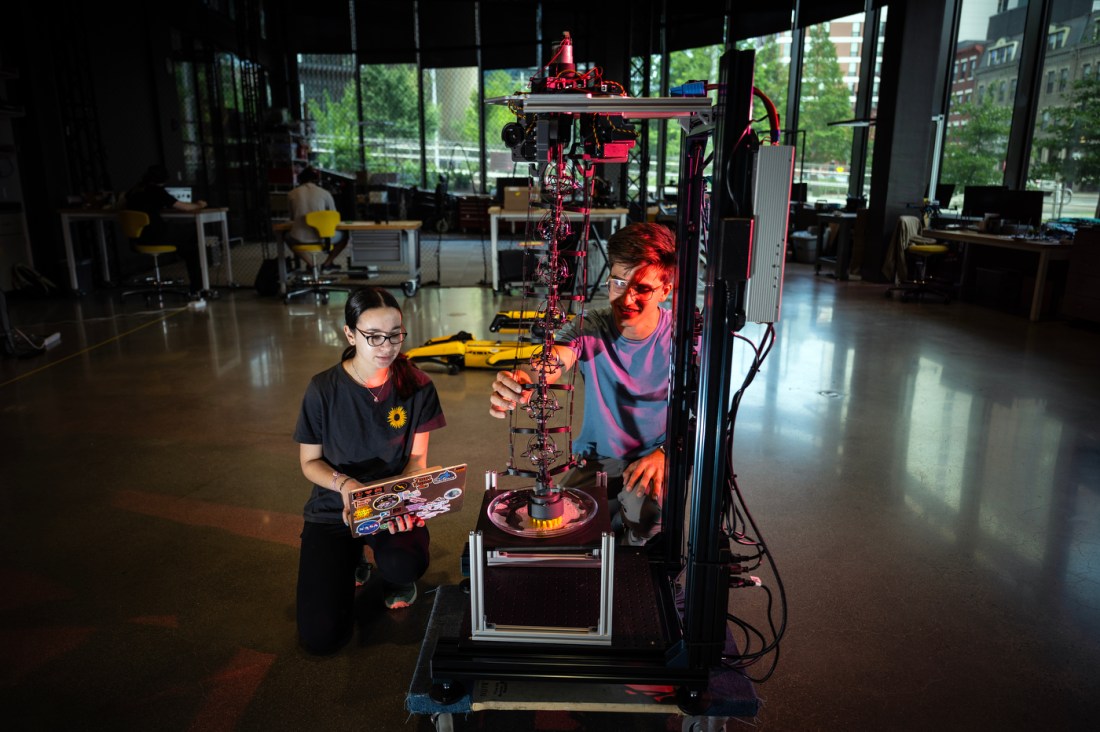
A new robot arm called SCCRUB has a novel design that makes it an ideal candidate as a dishwashing robot.

There’s a reason doing the dishes consistently ranks highly among the list of chores people hate doing.
The task can be dull, requires you to get dirty and, if you’re at the sink for a long time or often, could cause some health issues.
A new robotic arm that moves like an elephant’s trunk from Northeastern University’s Transformative Robotics Lab may offer a solution to escape the chore.
Research from the lab shows the device, aptly named SCCRUB, cleaning up to 99.7% of contaminants from a single dirty glass plate.
SCCRUB, which stands for Surface Cleaning Compliant Robot Utilizing Bristles, is far from the first cleaning robot.
For years, humanoid robots and mobile manipulators (robots that have a mobile base and a single arm that is capable of completing tasks) have been shown spraying and wiping down surfaces. There’s also of course Roomba’s line of cleaning robots and similar devices like it.
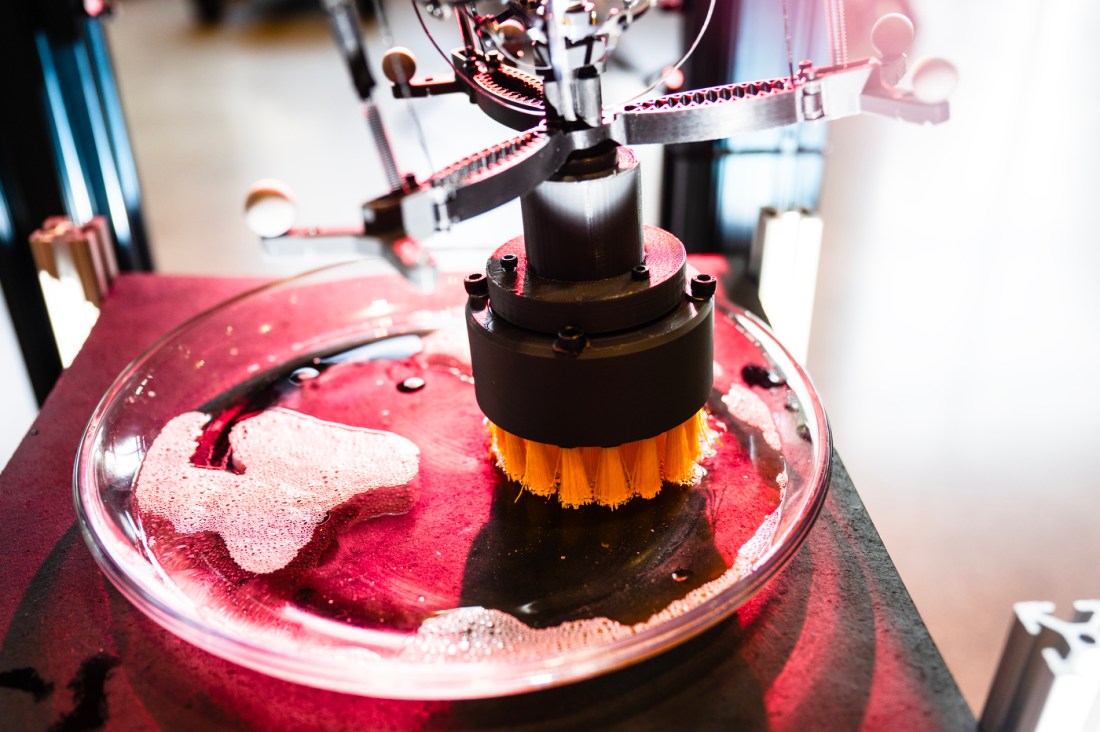
But SCCRUB has a unique design for a robot arm and features a series of mechanical connections known as TRUNC, or torsionally rigid universal coupling, cells that make it capable of applying the high and consistent level of torque, or the twisting force, needed for scrubbing down surfaces.
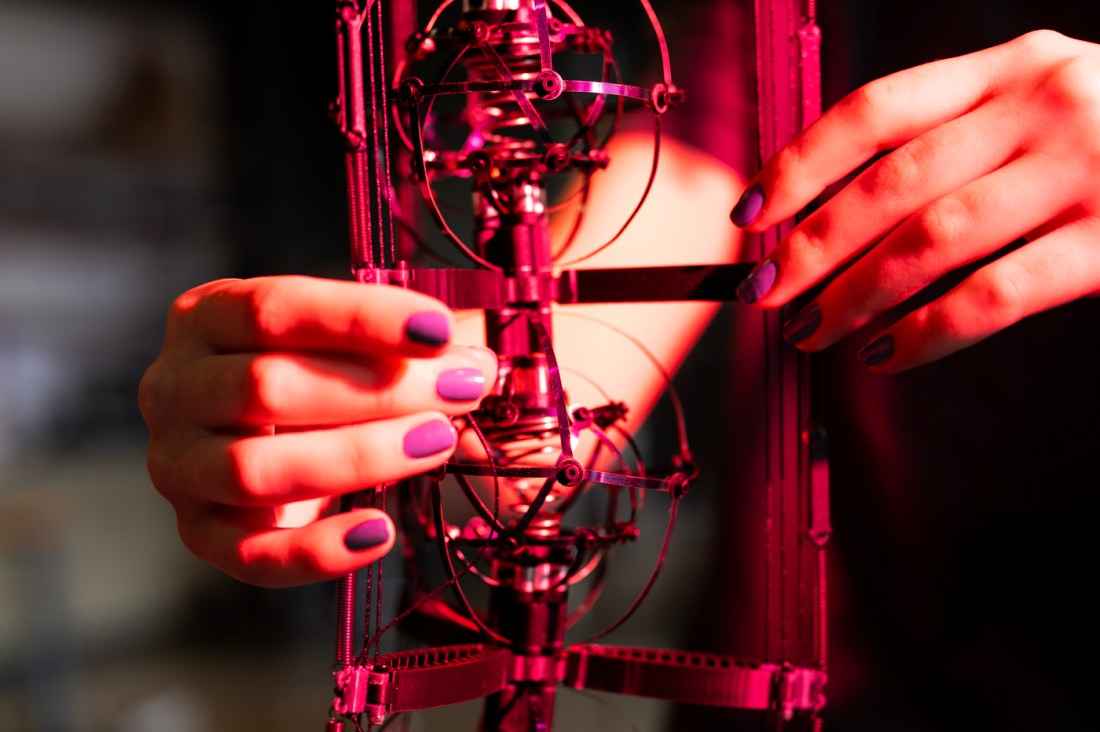
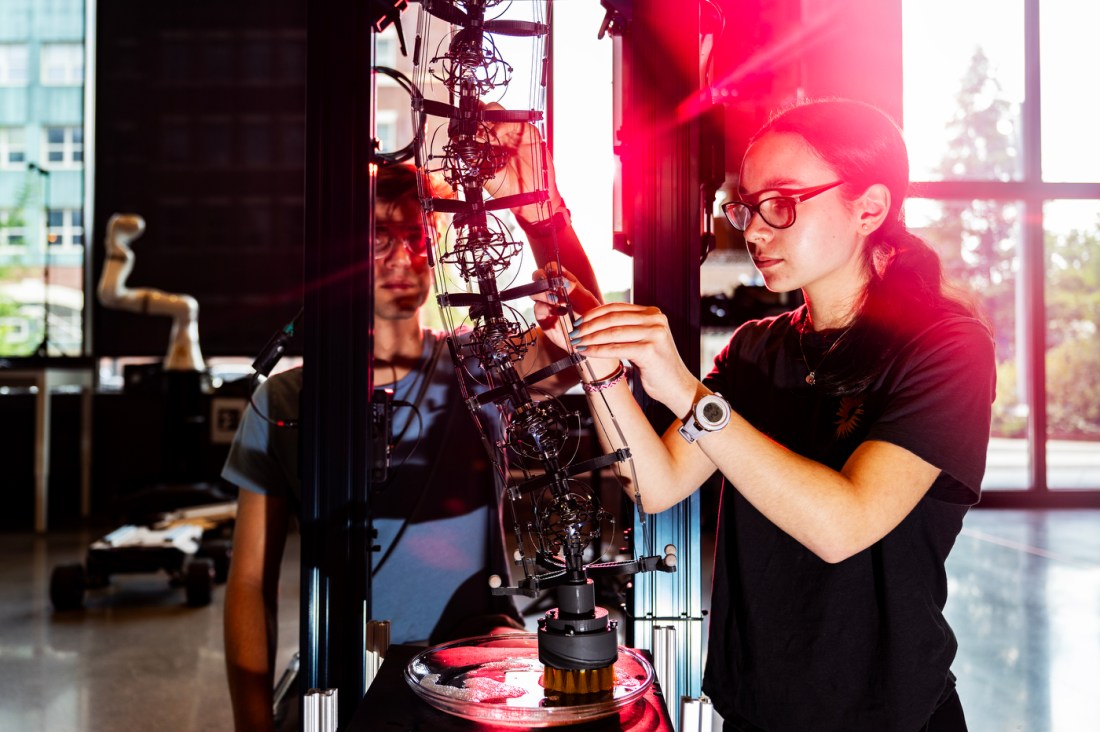
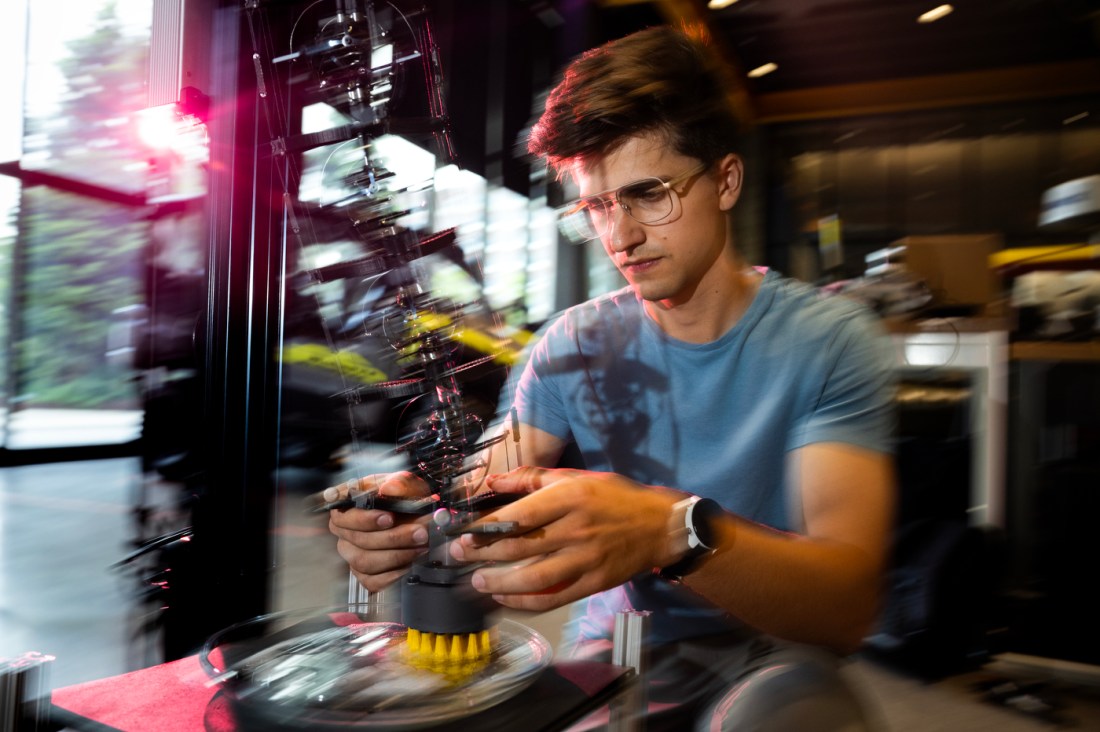
“TRUNC cells are actually something we’ve developed in our lab,” says Jakub Kowalewski, a mechanical engineering doctoral student at Northeastern and one of the main designers of the robot. “Using that, we’ve been able to build this arm that kind of mimics an elephant’s trunk or an octopus’ arm,” he says.
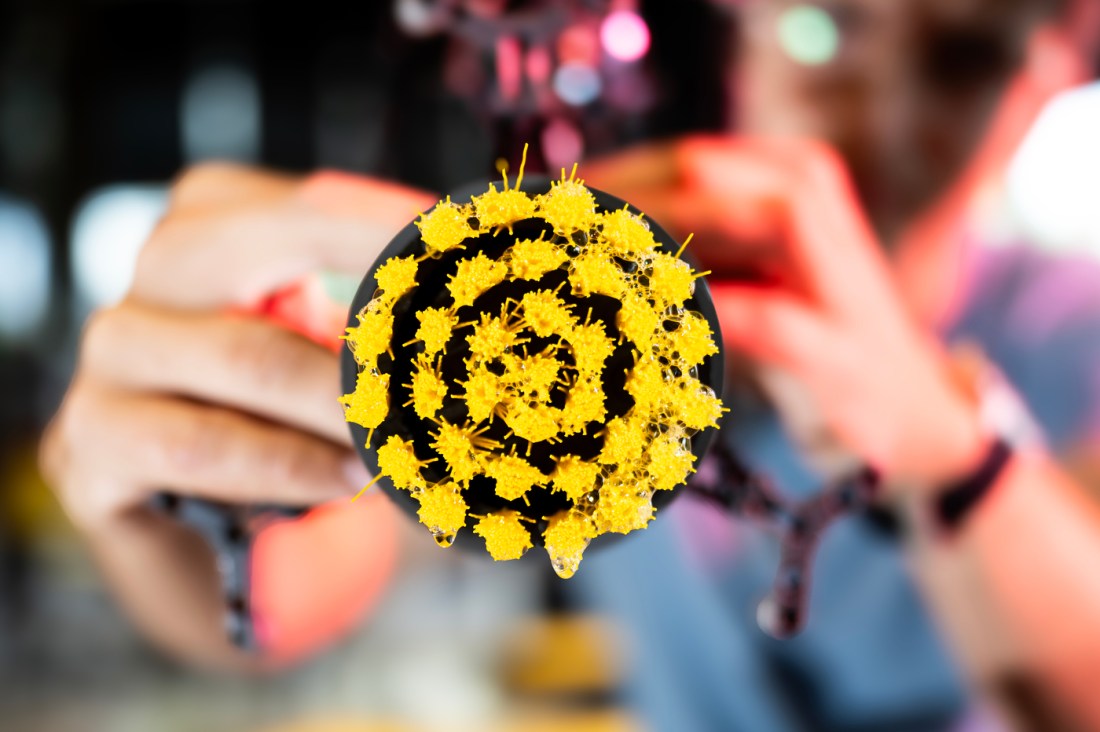
At its end of the robot arm is a counter-rotating scrubbing brush, which the researchers also designed in the lab.
The brush features a specialized mechanical system called a planetary gearbox that allows the brush/scrubber to “press into a surface while resisting the frictional force of the scrubbing,” says Alyssa Ugent, a high school student at Gann Academy in Waltham, Mass. who interned at the Northeastern lab.
To test the robot arm, the researchers had it scrub two different surfaces — a glass plate with burnt ketchup and a toilet seat that had been splattered with a fruit preserve.
Editor’s Picks




In the glass plate experiment, the robot arm cleaned 99.7% of the contamination off the plate compared to 32% of just soaking and rinsing the plate by hand.
The robot arm did similarly with the toilet seat, cleaning up 99.8% of fruity mess compared to 64% from spraying and rinsing by hand.
There are many potential real-world applications for the current version of SCCRUB, from a household dishwashing assistant to more industrial settings like in detailing vehicles, Kowalewski says.
Jeffery Lipton, a mechanical engineering professor at Northeastern and the head of the Transformative Robotics Lab, says the TRUNC cells can be made from a wide range of materials and a wide range of sizes,” which means that other versions of SCCRUB could be much smaller or much larger, depending on the use.
“We have a whole family of robots we could generate from this technology,” he said.
Researchers will present SCCRUB at IEEE-RAS International Conference on Soft Robotics in Japan in April.