From childhood lessons to global impact, Nikos Passas stands for integrity
Nikos Passas, shaped by early lessons in honesty, has spent decades fighting global corruption while mentoring the next generation of leaders.


Nikos Passas, 67, learned the meaning and the cost of integrity early in life. One Christmas, Passas and his younger sister received only a small cartoon book, while many of their friends unwrapped more expensive gifts. Passas understood that his parents loved them deeply but could not afford more.
He also admired his father’s unwavering honesty. A commercial marine captain for a major Greek shipping company, his father refused to accept bribes or benefit from turning a blind eye to smuggling, drug trafficking and other illegal activities some crew members sought to engage in.
“Some of his peers did exactly that and eventually became ship owners and millionaires,” said Passas, a professor of criminology and criminal justice and co-director of the Institute for Security and Public Policy at Northeastern University. “His honesty, even during economic hardship, and generosity have never left my mind and my heart.”
That moral compass has guided Passas throughout a nearly four-decade career as a renowned scholar and global expert on anti-corruption as well as financial and organized crime. Recently, he received the 2025 International Anti-Corruption Excellence Award from the Rule of Law and Anti-Corruption Center in Qatar, a strategic partner of the United Nations Office on Drugs and Crime.
“Being recognized in this type of context is a high honor, and it’s extremely satisfying and encouraging,” he said. “It’s nice to see that someone gives you a pat on the shoulder and says, ‘We see all this, and thank you for that. And if you want to do more, we’re here to assist.’”
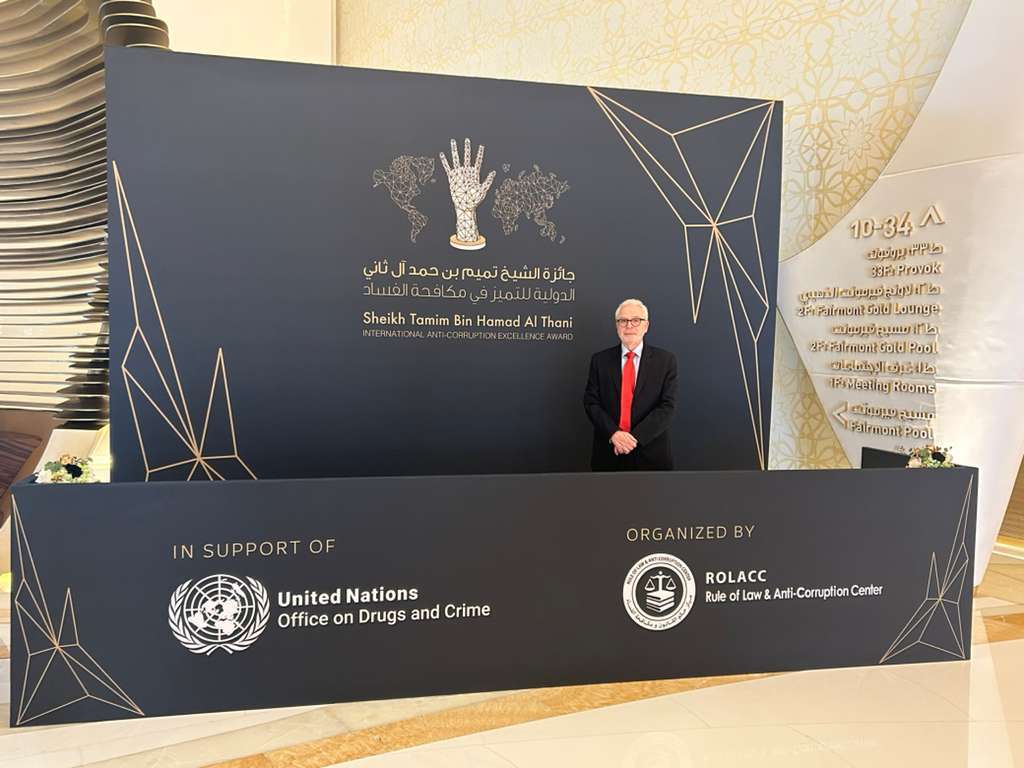

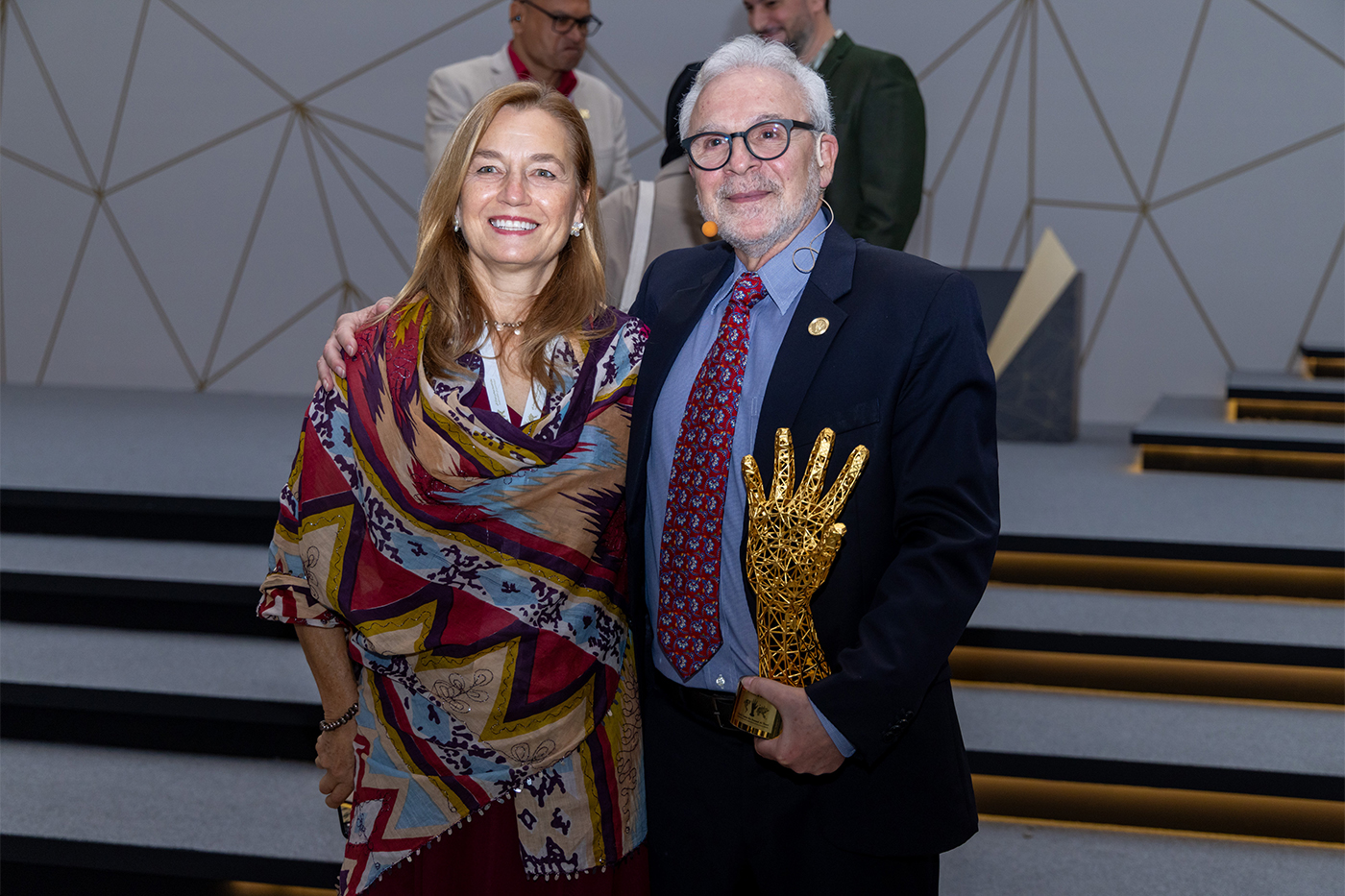
As a young lawyer, Passas was motivated by a strong commitment to justice, fairness, meritocracy and the rule of law, he said. His long-standing concern has been that essential public services that citizens rely on are often accessible only through informal payments or bribes. He observed that in Greece, when people sought employment, health care and education opportunities.
“The devastating effects of corruption on societies — particularly its corrosive impact on public trust, economic development and human security — compelled me to dedicate my professional life to addressing this issue,” he said.
John Brandolino, acting executive director of the United Nations Office on Drugs and Crime, said Passas has been a part of the anti-corruption movement since its early days, contributing significantly through research, writing and public presentations.
Passas has provided expert analysis for major corruption cases, including the 1991 Bank of Credit and Commerce International fraud scandal, involving money laundering, bribery, arms trafficking and illegal control of major banks. He also investigated a significant European Union subsidy fraud case in which criminals used bogus companies and fake invoices to claim EU funds.
“Professor Passas is known for his unwavering commitment to the fight against corruption, his outstanding scholarship and indefatigable efforts to help countries and institutions build a capacity to combat corruption wherever it is found,” said Yvon Dandurand, professor emeritus of criminology and criminal justice at the University of the Fraser Valley, British Columbia.
Passas has worked with civil society organizations and anti-corruption agencies across Europe, Africa, Asia and Latin America to reinforce integrity mechanisms and expand citizen engagement. His research has informed policies, legislation and prosecutions in more than a dozen countries, including the United States, Greece, Australia, Mexico, France, India, Brazil, China and Rwanda.
He has helped develop international standards and guidelines through collaboration with the United Nations, the World Bank, the Organization for Economic Co-operation and Development, the European Commission, the Council of Europe, the International Monetary Fund and other international organizations.
Editor’s Picks




Passas is currently involved in the 2023 Tempi train crash case in Greece, a collision that killed 57 people. For the past two years, he has voluntarily analyzed court records, advocated for victims, coordinated legal action, given seminars and called for justice reform.
“The Tempi case involves dozens of officials and corruption in the handling of substantial EU funds for railroad upgrades and safety systems, recklessness, misleading advertising, fraud and negligence on many levels,” he said.
Passas’ professional journey has often been lonely. At times, he was traveling constantly across continents, doing much of his work pro bono. He has faced challenges to his professional and physical safety.
He has also experienced periods of frustration and demoralization over backsliding in anti-corruption and democratic processes.
Yet, he focuses on “examples of shining light” — individuals and leaders who demonstrate integrity.
“Even in places with embedded systematic corruption, there are people who show the way,” he said. “We are operating in certain circumstances that were not of our choosing, but we do have a role in making a difference going forward. We may not have a perfect society in the end, but we can and should strive for a better society.”
Passas also sees his mission as preparing younger generations for the fight for a better world, equipping them with skills, concepts and positive attitudes.
“Professor Passas has unique expertise in financial crimes and corruption that is critical as we prepare students to understand a broad range of national and global challenges and risks,” said Amy Farell, director of Northeastern’s School of Criminology and Criminal Justice.
Students, meanwhile, see him as more than a teacher, but also a mentor, a father figure and a source of support.
“He genuinely cares about each student’s well-being, ability to grasp material, and success inside and outside of the classroom,” said Nadia Daly, a criminology and criminal justice student. “Seeing someone care as much as professor Passas does about the betterment of society is what drives the younger generation to make change in the world.”