Trump says he takes high-dose aspirin. What does the science say about the use of this medication?
Responding again to questions from the press about his visible bruising, Trump noted on several occasions that he takes 325 milligrams of daily aspirin. Is it recommended?
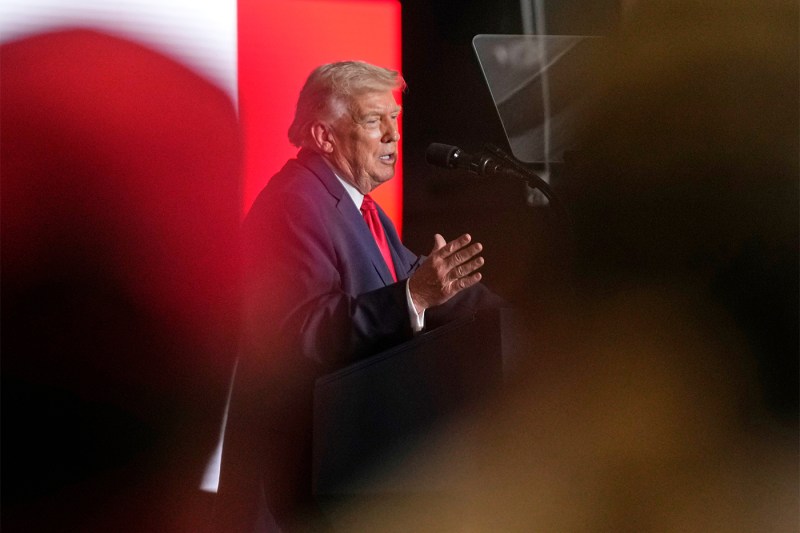

President Donald Trump has, for many months, been seen with bruising on his hands while speaking publicly about the cardiovascular benefits of aspirin, a commonly used over-the-counter medication whose side effects can include increased bleeding or bruising.
The White House attributed the bruising to the president’s frequent handshaking and use of aspirin. Aspirin has been used for decades as a cornerstone therapy in the prevention of heart attacks and strokes, particularly among patients with established cardiovascular disease, according to the Mayo Clinic.
“This is one of the early medications that has been around for a long time,” said Adam Woolley, a clinical professor and director of assessment at the School of Pharmacy and Pharmaceutical Sciences at Northeastern University.
This month, responding again to questions from the press about his visible bruising, Trump noted on several occasions that he takes 325 milligrams of daily aspirin, which is four times the 81 milligrams — often referred to as low-dose, or “baby” aspirin — that doctors typically recommend for cardiovascular disease prevention in the United States for certain patients.
Renewed focus on the president’s aspirin use has prompted questions about how the drug works, and whether it’s more effective at larger doses
How does aspirin work?
Aspirin reduces the risk of heart attacks and strokes by interfering with the early steps of blood clot formation, Woolley said. The drug acts on platelets, or small blood cells that clump together when a blood vessel is injured, preventing them from sticking together to form clots that can obstruct blood flow throughout the body.
“Aspirin works by irreversibly inhibiting cyclooxygenase enzymes, which are involved in platelet activation,” Woolley said.
By blocking those enzymes, the drug prevents the formation of thromboxane, a chemical signal that tells platelets to aggregate. Aspirin suppresses that function for the entirety of the platelets’ lifespan — about a week to 10 days — even if a patient stops taking the drug, he said.
Is a higher dose more protective?
Large clinical studies have found that higher doses of aspirin do not appear to offer greater protection against heart attacks or strokes than low-dose aspirin for most patients, while potentially increasing side effects, Woolley said.
The ADAPTABLE trial, for example, found no significant difference in effectiveness or rates of major bleeding between the two doses in patients with established cardiovascular disease. Patients assigned to the higher dose were more likely to switch to the lower dose or discontinue aspirin altogether.
“So if there’s no difference in safety or efficacy, you could reasonably ask whether a lower dose might be preferable,” Woolley said.
“People should talk with their doctor to assess their own risks and benefits,” he said.
While the 81-milligram dose is most commonly recommended in the United States, clinical guidelines allow for a range of dosing, and some patients are prescribed higher amounts based on individual risk factors.
“It depends very much on the patient,” Woolley said.
The benefits and risks of aspirin, including bleeding and bruising, depend heavily on dose, underlying health conditions, and whether a patient is taking other blood-thinning medications, Woolley said. But the difference between 81 milligrams and 325 milligrams, in terms of the cardiovascular benefits, is an exercise in splitting hairs, he said.
Editor’s Picks





Trump’s bruising explained
While aspirin’s cardiovascular benefits are well established for secondary prevention, meaning in patients who have had a heart attack or stroke or who have established atherosclerotic cardiovascular disease, the medication is also known to increase the risk of bleeding and bruising. That includes both unexplained bruising and bruising as a result of injury, Woolley said.
But experts have cautioned that visible bruising can have multiple causes and is not, on its own, enough to draw firm conclusions about a patient’s medication regimen.
“I can’t speculate about specific bruises, but aspirin does increase the risk of bruising,” Woolley said. “Some literature suggests 325 milligrams may increase that risk more than 81, though evidence is mixed. Bruising isn’t well quantified in most studies.”
Despite the bruising, publicly available data suggests that Trump, 79, is otherwise healthy.
It was revealed last year that he suffers from chronic venous insufficiency, a condition in which veins primarily in the legs do not efficiently circulate blood back to the heart. His family history of hypercholesterolemia, a condition marked by elevated levels of low-density lipoprotein, or “bad” cholesterol, is well controlled with medication, according to a White House memorandum issued last year.
After the president was evaluated for “minor swelling” in his ankles, Trump underwent an ultrasound of his lower extremities. The president’s physician, Dr. Sean Barbabella, noted in a separate memorandum that the condition was benign.