Ashwagandha is having a moment. These researchers opened the door to more life-altering benefits
Ashwagandha, a popular supplement, is known for its effect on stress and sleep. Researchers recreated its compounds in yeast, making a potential factory for its many benefits.


Ashwagandha is a small shrub that’s having a big moment.
Used in traditional Indian medicine for thousands of years, ashwagandha is now one of the most popular herbal supplements in the U.S. because of its professed benefits for sleep and stress. In the U.S. alone, ashwagandha was the third-most purchased herbal supplement, with sales totaling $144 million in 2024, according to the American Botanical Council. It’s also one of the precious few medicinal herbs that has received the National Institutes of Health’s stamp of approval.
Northeastern Global News, in your inbox.
Sign up for NGN’s daily newsletter for news, discovery and analysis from around the world.

But researcher Jing-Ke Weng thinks ashwagandha can do even more. It just took cracking the plant’s genome to figure that out.
Alongside graduate student and lead author Erin Reynolds, Weng, a professor of chemistry, chemical biology and bioengineering at Northeastern University, bioengineered a way of producing withanolides, the compounds responsible for ashwagandha’s benefits, in yeast. Published recently in Nature Plants, it’s a “revolutionary” finding, Weng said, that creates a maximally efficient withanolide factory and opens the door to tapping into ashwagandha’s true potential.
“In the future, we can foresee that we don’t have to grow the plants to get withanolides,” Weng said. “We can simply engineer and optimize this yeast strain to produce the very precise analog we want. Then it really opens the doors for all kinds of drug discovery research in the future.”
The research-backed benefits of ashwagandha include lowering stress and anxiety and improving sleep, according to the NIH. But Weng said it also has the potential to reduce inflammation and assist with cancer therapy.
Cracking open one of the secrets to ashwagandha’s unique properties is the result of seven years of work for Weng and his lab. It required sequencing the plant’s entire genetic blueprint, or genome, which led to the discovery of six new enzymes, macromolecules like proteins that operate as catalysts for bioactivity.
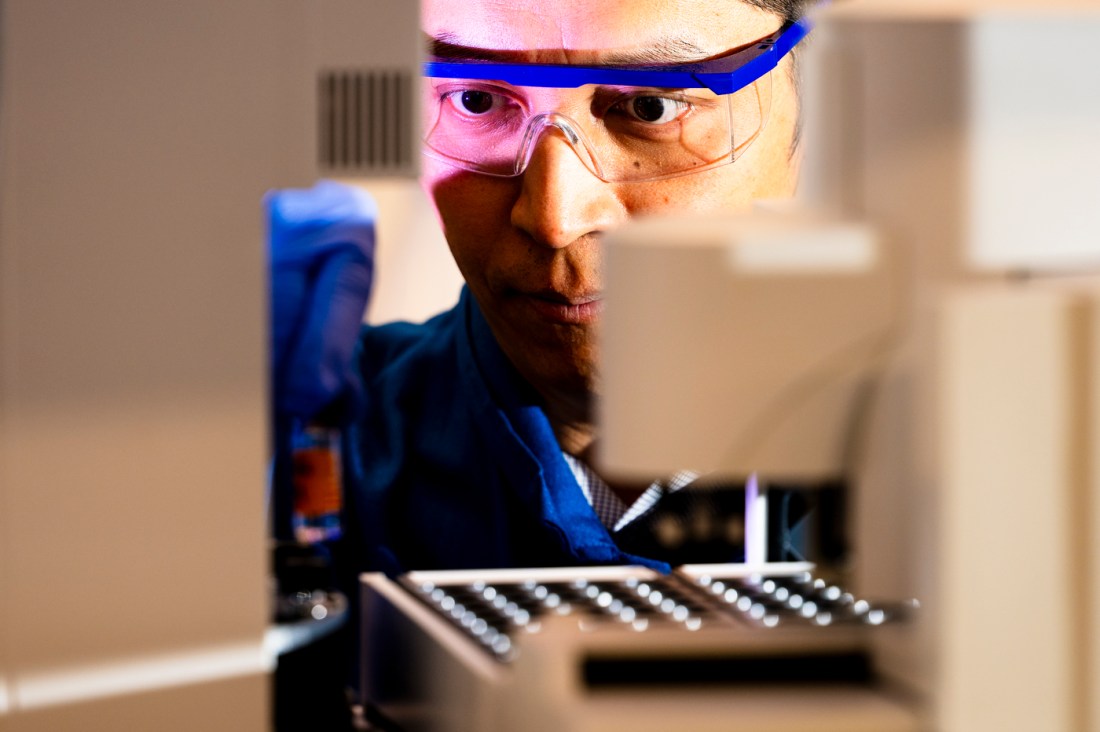
Those six enzymes create a biological pathway that ultimately creates withanolides in ashwagandha. Finding that pathway involved some clever bioengineering, Weng said, and an unlikely test subject: yeast.
“Yeast and plants diverged a billion years ago, but when we put these six genes in the yeast genome, the yeast basically starts to make withanolides,” Weng said. “We were actually very surprised it worked.”
Editor’s Picks


The more common method would have been to change genes in another plant. But he and his team wanted to take advantage of yeast’s ability to rapidly propagate and release energy during fermentation, Weng explained. Their idea ultimately paid off.
“It’s orders of magnitude more efficient” to get withanolides through biosynthesized yeast since they could tailor it to produce only the withanolides that were most beneficial. It’s also much faster. The yeast produced withanolides within a few days or a week, as opposed to the long process of planting, growing and harvesting ashwagandha.
“We not only discovered the pathway through this yeast engineering approach but by the end of this paper we have a prototype yeast strain that can be industrialized to produce withanolides,” Weng said.
Scaling withanolide production beyond ashwagandha opens the doors to explore the potentially life-altering benefits of these compounds, Weng said. His lab is already hard at work figuring out ways to create individually biodesigned withanolides that could take ashwagandha’s benefits to the next level, easing insomnia or even protecting against neurodegeneration.
“We essentially have no effective drug for treating Alzheimer’s,” Weng said. “If you have a new set of molecules that show efficacy in protecting neurons long term … that would be huge.”