The Arctic: global commons or geopolitical battleground?
Experts said that it’s not just Greenland but the entire Arctic region whose future is contested.

The focus was supposed to be economics, but as the global elite recently gathered in Davos, Switzerland, attention was on an icy, sparsely populated island over 2,300 miles away.
It’s not just Greenland, however, but the entire Arctic region whose future is contested, Northeastern University experts said. Moreover, the experts said the outcome of that contest may change everything from supply chains to international alliances to the impact of climate change.
“There’s a very strong interest in wanting countries to be cooperative and in following the standards set for global commons around the world,” said Mai’a Cross, dean’s professor of political science, international affairs and diplomacy as well as the director of the Center for International Affairs and World Cultures at Northeastern. “But certain countries are really wanting to, or threatening to, make it much more of a competitive geopolitical space.”
There was an important caveat, experts said.
“Operating in a place like that is so hard,” said Gretchen Heefner, chair and professor of history at Northeastern who studies the history of the U.S. military in Greenland.
The future of Greenland, an autonomous territory within the Kingdom of Denmark, dominated the World Economic Forum’s annual meeting last week as President Donald Trump faced global leaders for the first time since ramping up his calls for the United States to take over the world’s largest island. European leaders have rejected any threats to Greenland’s sovereignty.
Trump ultimately ruled out using military force toward the annexation goal. Citing “a framework of a future deal,” with North Atlantic Treaty Organization Secretary General Mark Rutte, Trump also backed down on tariff threats of European allies unsupportive of a sale of Greenland.
Trump told CNBC on Jan. 21 that the U.S. and European allies will work together on the Golden Dome and mineral rights in Greenland as part of the possible deal.
But experts said that although Greenland may be in the headlines, the Arctic as a region has been seeing renewed interest for years.
Heefner noted that during the Cold War and before intercontinental ballistic missiles and long-range aircraft, the Arctic attracted attention from both the United States and the Soviet Union because the North Pole was the shortest distance between the two superpowers.
“People thought that’s where war would be fought,” Heefner said.
But climate change has heightened interest in the region, experts said.
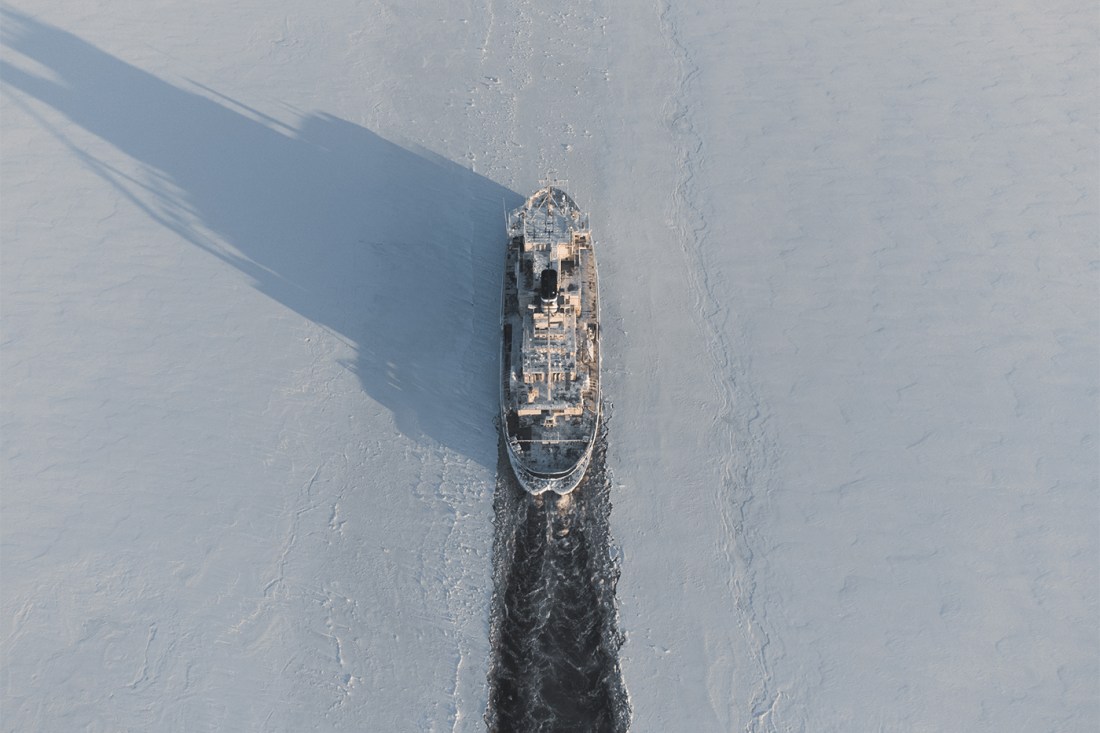
Melting sea ice is predicted to potentially open up new shipping lanes such as the Northern Sea Route (along Russia’s coast) and the Northwest Passage (north of North America), said Nada Sanders, distinguished professor of supply chain and information management at Northeastern.
“Arctic routes can cut Europe-Asia shipping distances by 30% to 40% compared to going around the Suez Canal,” Sanders said. “This means less fuel, faster transit times, and potentially lower emissions per voyage.”
Warmer temperatures and more access to the region also could enable greater access to natural resources, such as oil and natural gas in the Arctic National Wildlife Refuge and critical minerals in Greenland.
There is also the environmental value of protecting the Arctic, experts said.
Editor’s Picks


“There’s really serious implications for Greenland’s ice melting that go far beyond strategy in the immediate sense,” Heefner said.
She noted that the sea level will rise 24 feet with the melting of the island’s ice sheet, and the influx of fresh water may change ocean currents.
But access to resources also raises concerns about control.
“There’s concern for NATO that if they don’t organize around access to the Arctic, other countries like Russia and China will make a grab for that access and then it will be very, very difficult for other countries to also travel that route,” Cross said.
Together, these interests suggest a future in which the Arctic could be the next geopolitical battleground.
Not so fast, experts said.
The Arctic has highly unpredictable and volatile weather, and shipping routes are only available a few months per year, Sanders notes.
Ships often require ice-class hulls, specialized crews, icebreaker escorts and higher insurance premiums — costs that “can wipe out distance-based savings,” Sanders adds.
Limited infrastructure, such as a lack of ports, repair facilities and search-and-rescue capabilities, could also be problematic.
“The hurdles are real, expensive, and slow-moving, which is why Arctic routes remain niche despite all the hype,” Sanders said, calling such routes “a nightmare” from a risk-management perspective.
Heefner also cited these factors as hurdles to accessing minerals.
“Regular things don’t function there,” Heefner said, noting that oil lubricant becomes “like molasses” in the cold and causes machines to seize up.
“Even if you could open a mine there, who would work it?” she added, noting that an island more than three times the size of Texas has only approximately 57,000 residents.
She added that Greenland’s residents have also shown no indication they want to be taken over by the United States, nor has Copenhagen indicated it has any interest in selling the island.
“This is not normal,” Heefner said, criticizing news reports that treat it as such. “No U.S. president since the early 1900s has so boldly claimed that it is OK to threaten the sovereignty of another nation.”
And as for a major military installation, Heefner said the U.S. had more than a dozen bases in Greenland in World War II and the early years of the Cold War and, in 1951, signed the Greenland Defense Treaty pursuant to NATO that enabled it to gain permission to build more. Now there is just one base.
Heefner described trying to reopen bases on the island as “a costly and quixotic affair.”
Finally, Arctic geopolitical concerns are already being addressed.
A United Nations treaty establishing a framework to govern and safeguard the “high seas” (areas of ocean outside any single country’s jurisdiction) as a global commons went into effect on Jan. 17, allowing open shipping in the region.
Meanwhile, the Arctic Council was established in 1996 among eight nations, including the U.S. and Russia, as an intergovernmental forum to promote “cooperation, coordination and interaction among the Arctic States, Arctic Indigenous Peoples and other Arctic inhabitants on common Arctic issues.”
That being said, although Trump ultimately backed down, the recent saber-rattling about Greenland has exposed how precarious the Arctic may be.
“Even though we can all breathe a sigh of relief, European leaders still remain quite on edge just because of how far this went or how far it could go,” Cross said after Trump’s announcement of a deal. “It’s not like we’re out of the woods.”


