He spent thousands of hours playing ‘Monster Hunter.’ Now he’s working on the next game
Northeastern student Bryan Wu co-oped at Tencent as a combat designer on “Monster Hunter Outlanders,” the latest game in the massively successful video game franchise. Now, he’ll be working there full-time.
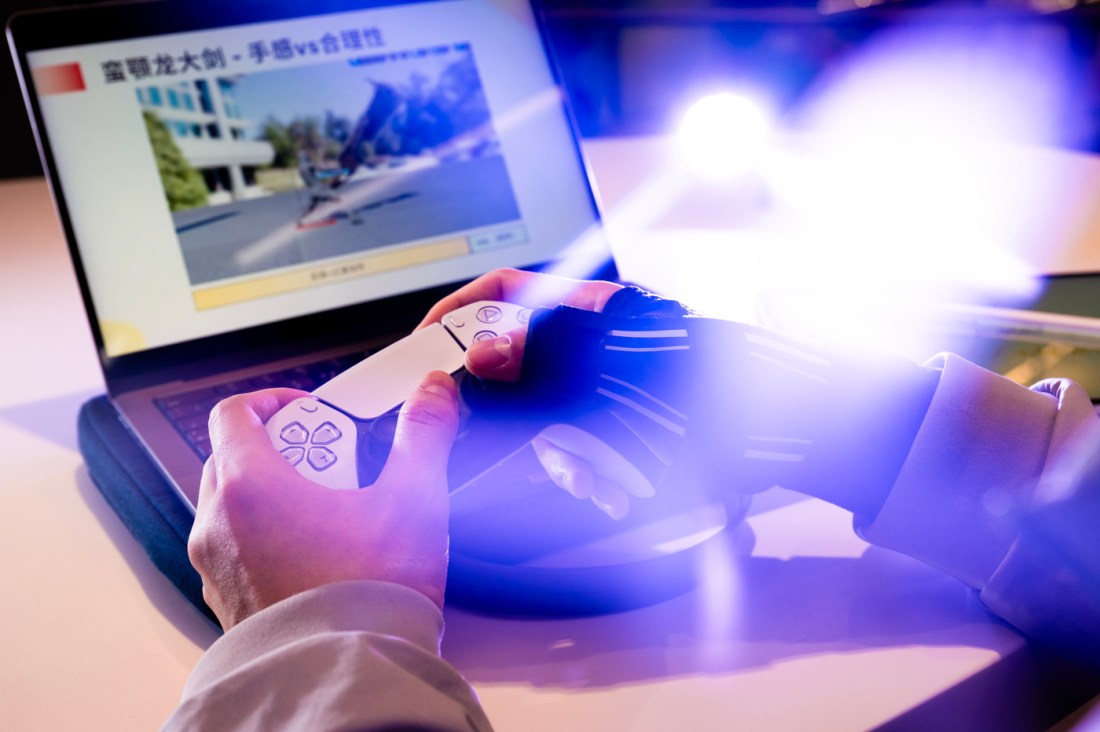

Bryan Wu has spent a lot of time hunting monsters, but he never thought it would become a career.
First, he was a fan of “Monster Hunter,” having played thousands of hours of Capcom’s hit action video game series. Soon, thanks to his time as a Northeastern University co-op working at gaming giant Tencent on the upcoming mobile game “Monster Hunter Outlanders,” he will be working full time on his favorite game series.
“I saw the news that they were making a mobile game of it, so I was like, ‘I wish I could [work on that]’ because it was one of my favorite game titles,” Wu said. “I wanted to be part of this.”
For years, Wu, who will graduate from Northeastern in May with a bachelor’s degree in game design, had dreamed of making his mark on a game that had already left such an indelible mark on him. And he’s far from the only superfan.
“Monster Hunter,” as the name implies, is all about the act of the hunt. Players go out on missions to hunt and kill massive beasts. Players must track down their quarry and take it down using their weapons and wits. After each fight, players harvest parts from monsters to turn into better armor and weapons that will improve their chances in future hunts.
The “Monster Hunter” series, which kicked off in 2004, essentially invented a subgenre of action games and created a true monster hit for Japanese gaming titan Capcom, according to Bob De Schutter, a game design professor at Northeastern University.
“The series has been a massive social phenomenon in Japan for years with folks hunting monsters together before it broke through in the Western market about a decade ago,” De Schutter said.
Western audiences fully embraced the franchise with “Monster Hunter World” in 2018, and since then, the series has been a massive, global hit. “Monster Hunter World” has sold more than 21 million copies to date, according to Capcom, while “Monster Hunter Wilds,” which came out in 2025, sold 8 million copies in four days, becoming the fastest-selling game in series history.
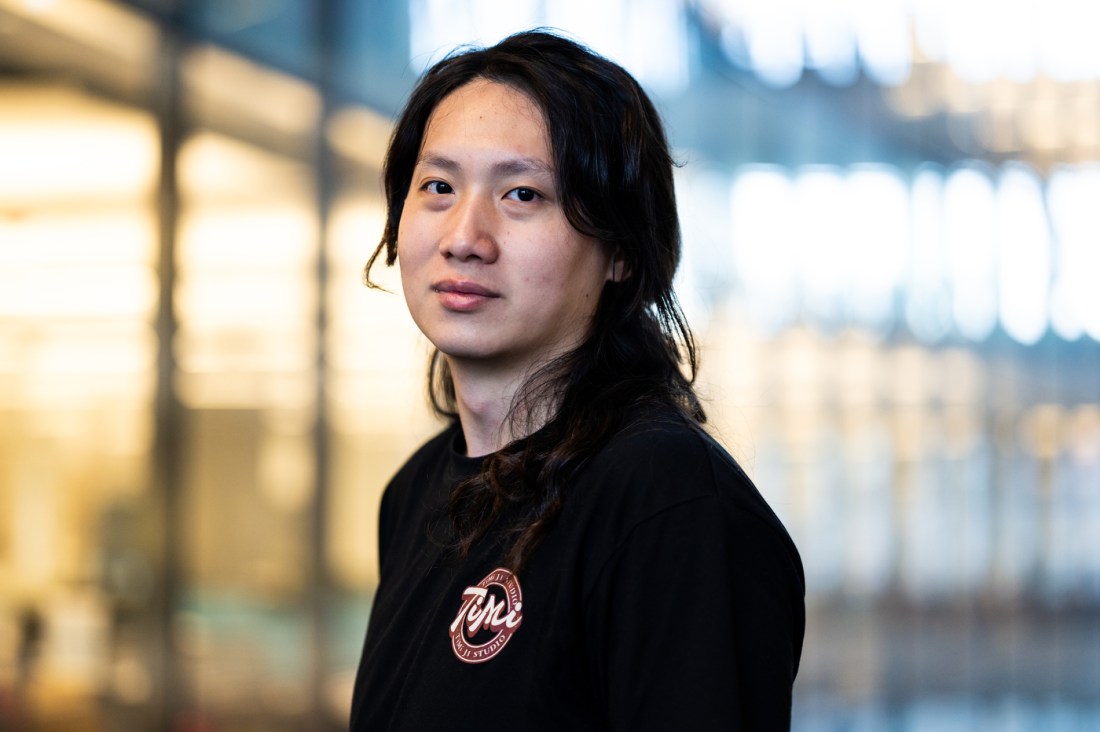

Wu found “Monster Hunter” at a time when he desperately needed a distraction. In 2020, he was assigned to work as an assistant therapist at the Institute of Mental Health for his mandatory military service with the Singapore Armed Forces.
At age 19, he found himself offering support to patients suffering from post-traumatic stress on a daily basis.
“That was definitely too much for me, so I started to play all types of games on [Nintendo] Switch, and I even bought a PlayStation 4 at that moment,” Wu said.
Eventually, he found “Monster Hunter World,” which helped him not only deal with the stress but also connect with his friends through the game’s multiplayer component. He subsequently spent thousands of hours playing the game, he said.


At Northeastern, Wu honed his skills as a game designer, and when he saw the opening for a designer at Tencent for a “Monster Hunter” mobile game, he leapt at the opportunity.
Wu ultimately moved to China and spent his six-month co-op working as a combat designer on “Monster Hunter Outlanders” at TiMi, a subsidiary of one of the biggest video game companies in the world, Tencent.
A combat designer is one of several specialized design roles in a game development studio. For games like “Monster Hunter” that involve combat, someone has to make sure that when the player character swings a sword, fires a bow or shoots a gun, the animation, sound design and character personality all feel just right.
It’s an integral part to many mainstream games, one that players will notice if it’s done extremely well or poorly.
“For example, if I’m swinging a longsword or a greatsword, it’s very different,” Wu said. “The longsword is skinny and long, so the swing should be slightly quicker than a greatsword because that’s pretty heavy. But the sound will be much lighter because it’s a lighter sword.”
A ton of blood, sweat and tears goes into designing animations and actions that players will see hundreds of times, he said. The timing between when a player presses a button and the character on screen takes an action is so key that nanoseconds can make all the difference.
Sound and visual effects also can make or break how a combat system “feels” to play, Wu explained. A powerful fire spell in a fantasy game should look and sound apocalyptic, not like a campfire.
Wu found that all that time he had spent playing “Monster Hunter” paid off. He came into the project familiar with the franchise’s weighty, varied and demanding combat. And when it came to TiMi’s key performance checks for employees, like playing 200 hours of “Monster Hunter Wilds” by a certain date, he was ahead of the game.
His co-op gave him the chance to not only work on his favorite game series but also learn about how the games industry works from the inside, Wu said. That will be even more helpful for him as he prepares to work for Tencent full time after he graduates in the spring.
“My career path was literally shaped by this co-op, and I would say saved by this co-op because a position at Tencent does help a lot, and then ‘Monster Hunter’ has a big reputation,” Wu said.


