Iranian students and faculty at Northeastern face anxiety as contact with loved ones falters
For many Iranians living and studying abroad, the continual lack of contact and uncertainty has led to a sense of desperation.

When Safa Jamali, a Northeastern assistant professor of mechanical engineering, was finally able to reach his mother in Iran during the recent weeklong internet blackout, the two spoke for less than a minute.
Jamali could tell she was choosing her words carefully.
“She basically said, ‘I’m fine,’” Jamali, who teaches on the Boston campus, said on Friday. “But I’m not sure I believe her.”
Jamali, 40, said he received the call from a landline phone, which is how many Iranians living in the Middle Eastern country are able to speak with their loved ones during the events of the last week, which have seen a massive wave of anti-government protests across the country.
He now hopes to hear from his 50-year-old brother, an emergency room physician who works at two separate hospitals in Sari, a city in northern Iran.
“I’m sure he’s been dealing with a lot of the aftermath of these protests,” Jamali said.
Iranian authorities imposed a blackout of the global information superhighway on Jan. 8, cutting off internet connectivity in an attempt to suppress the widespread dissent.
Reporting from multiple media outlets suggests that by Friday, Jan. 16 much of the unrest had been quelled.
But for many Iranians living and studying abroad, the continual lack of contact and uncertainty has led to a sense of desperation — a feeling of isolation they described as feeding a “collective anger” at the reported brutality of the Iranian government’s crackdown.
For Melika, a Ph.D. student on Northeastern’s London campus, the events have exacted a heavy emotional toll.
“It’s a very sad and complex situation,” she said. “And the problem of not being able to connect with our families makes the situation that much more difficult.”
She’s only been able to briefly text with her father and brother throughout the week. She said the only way she has been able to communicate with them is through various good Samaritans with access to virtual private networks, or VPNs, which allow users to bypass internet restrictions.
“I know that they are in a safe place,” she said. “But you are never sure that it is safe enough.”
Editor’s Picks




The latest explosion of protests follows a series of uprisings in Iran dating back decades — each rooted in the fight against political repression, economic hardship and demands for basic rights.
“There are lots of political and economic issues that my people are experiencing, and this is leading to a collective anger, which has become, at this point, a kind of collective grief,” Vafafar said.
Like other Iranian members of the Northeastern community, a 28-year-old materials science student, who declined to share her name out of fear for her safety, has had only a precious few seconds on the phone with her mother.
“I couldn’t talk to her for five days because of the shutdown,” she said.
The fear among many Iranians, she said, is that Iranian authorities have tapped phones, as they monitor communications for any signs of opposition.
The international telecommunications provider Starlink has helped activists on the ground in Iran bypass government internet shutdowns by providing satellite-based access that avoids state networks, allowing information to reach the outside world despite widespread censorship, Northeastern experts have said.
An only child, now a fourth-year Ph.D. student, she got involved in Northeastern’s Iranian Student Association as a way to connect with fellow Iranian students and tighten existing bonds. The student group has existed since 2007 as a way to foster “a sense of community among Persian students and faculty, as well as any members of the university community who exhibit interest in our culture,” according to its website.
Rojin, a 29-year-old engineering student, who declined to give her last name for fear of her safety, has been intimately involved with the Northeastern student org, describing it as “the glue that keeps us all together.”
Having lived in Iran until the age of 23, her entire family — save one uncle — still lives in Iran. She’s come to rely heavily on her Northeastern family.
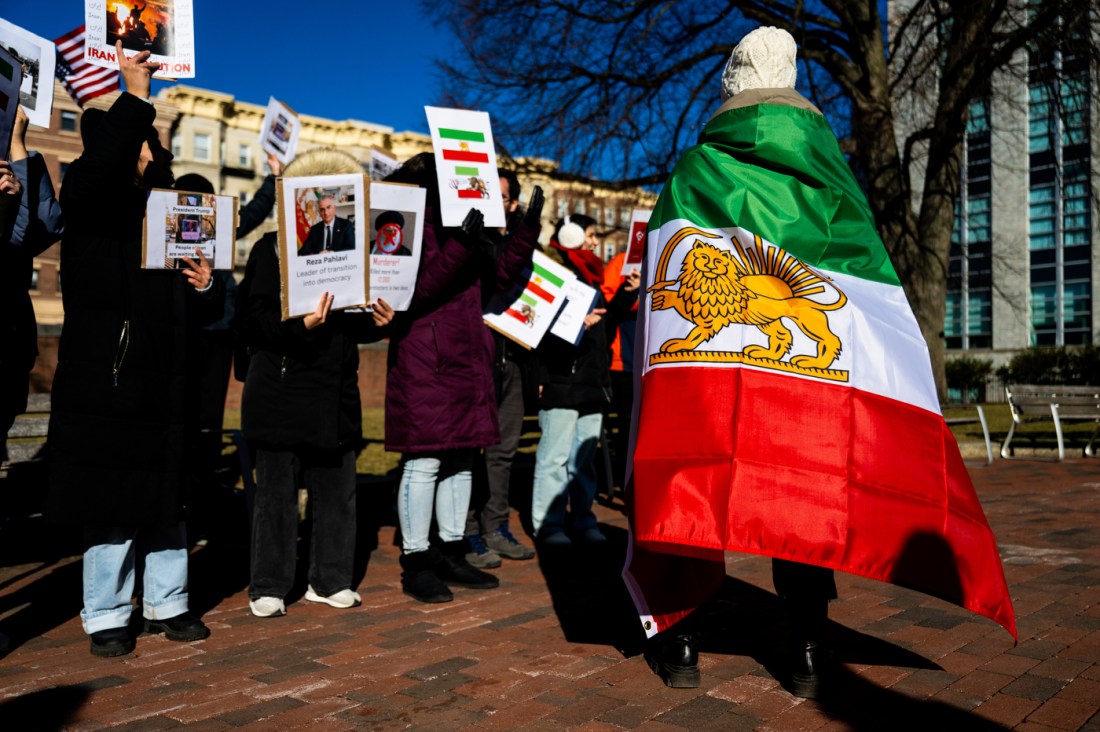
“We try to gather together and do different things, whether a celebration or a rally,” she said.
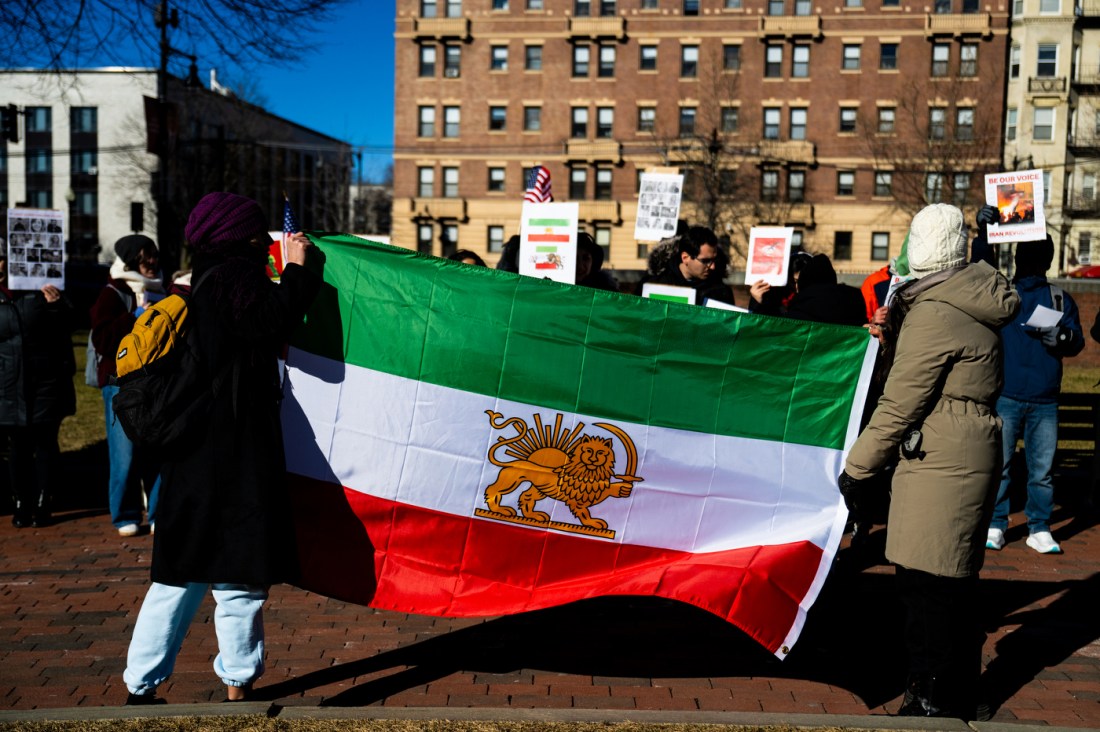
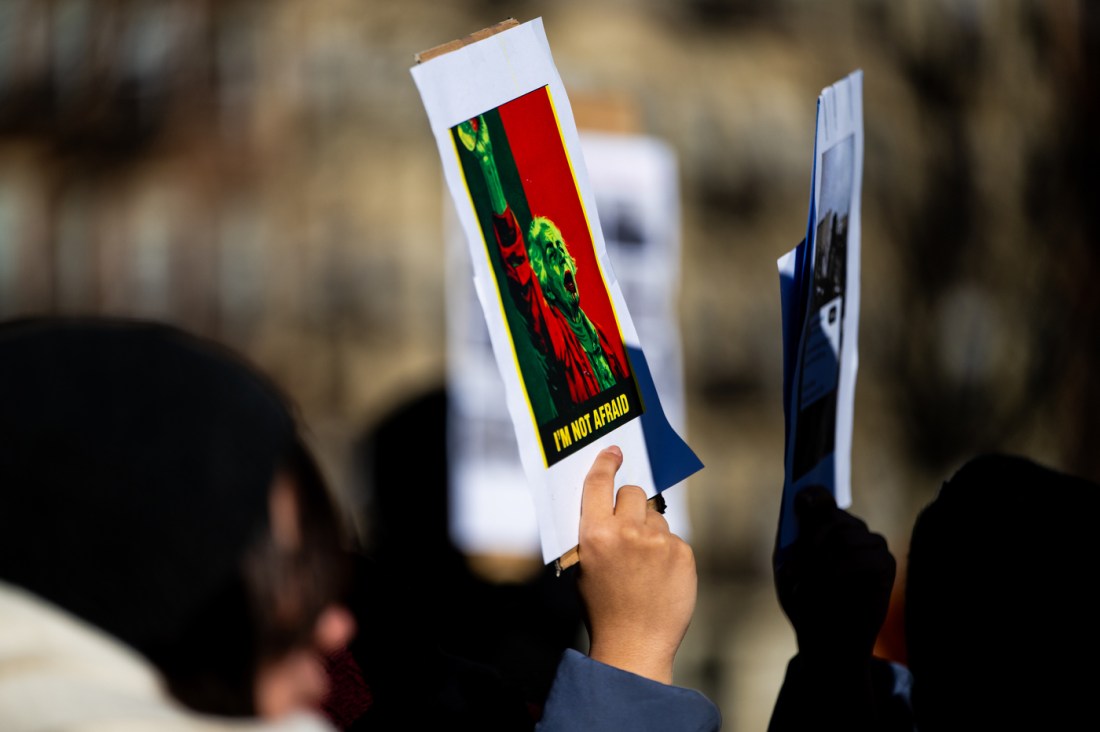
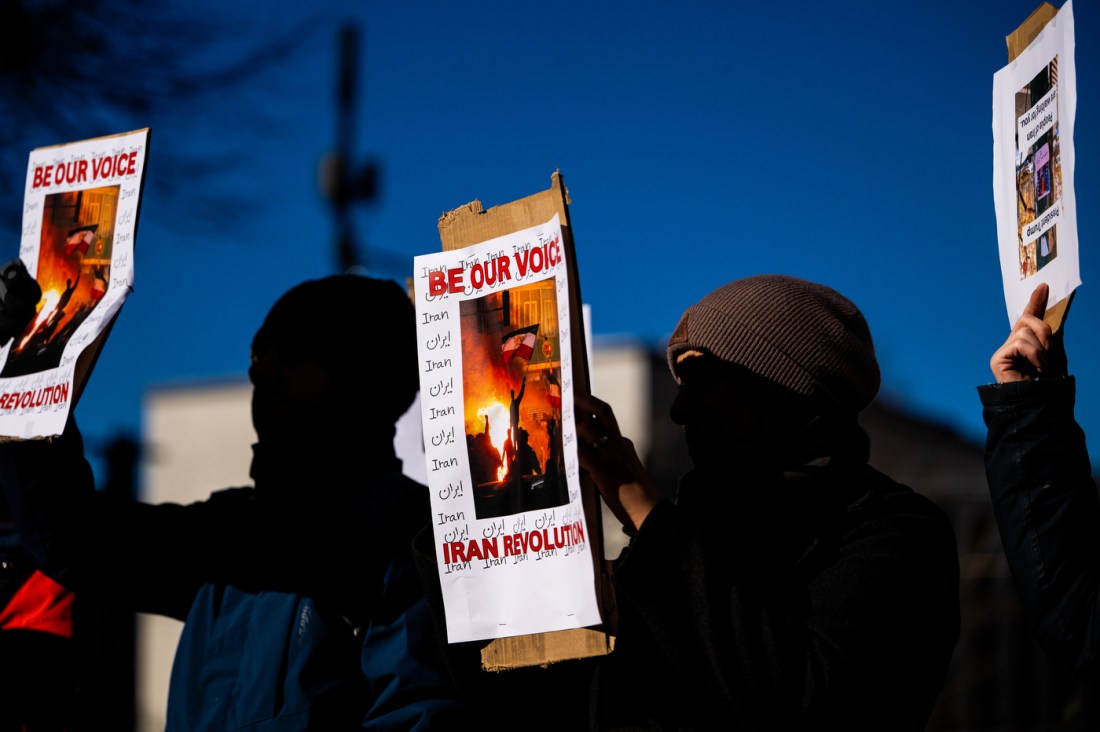
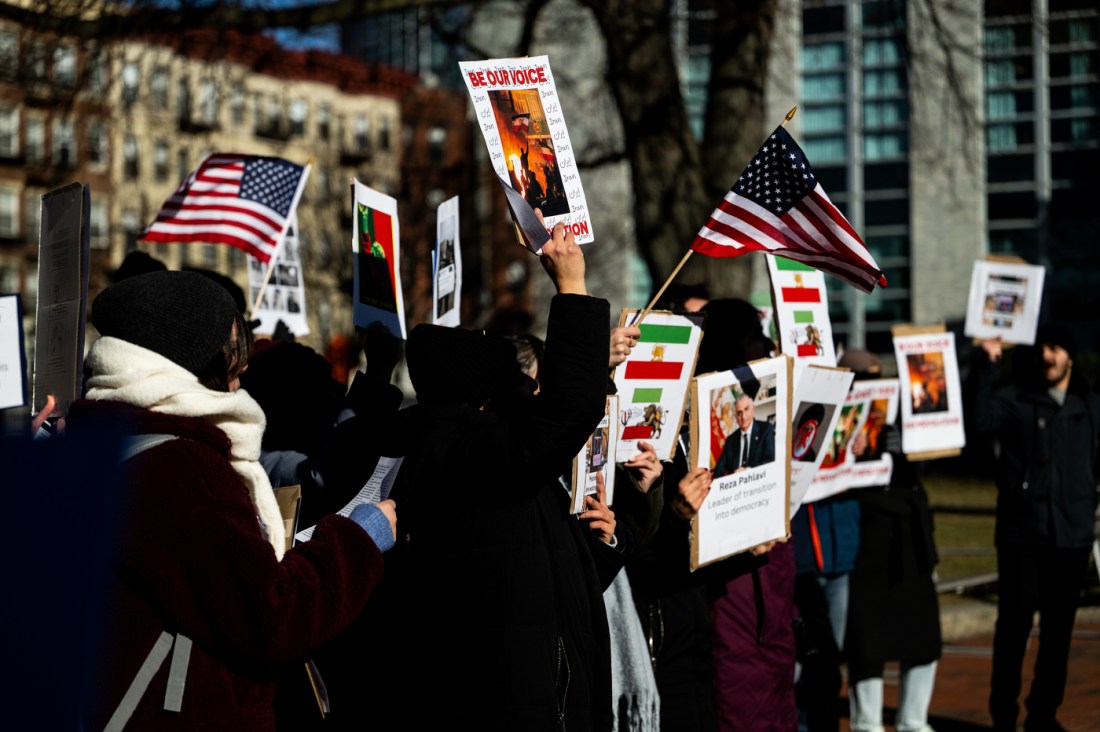
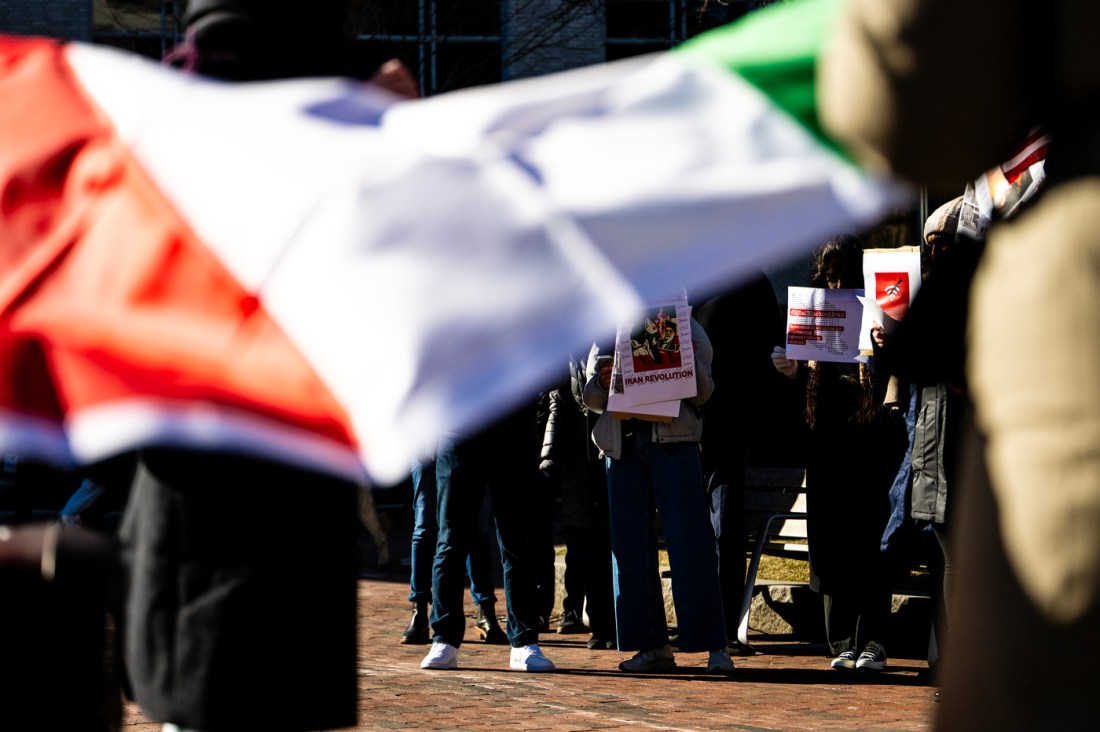
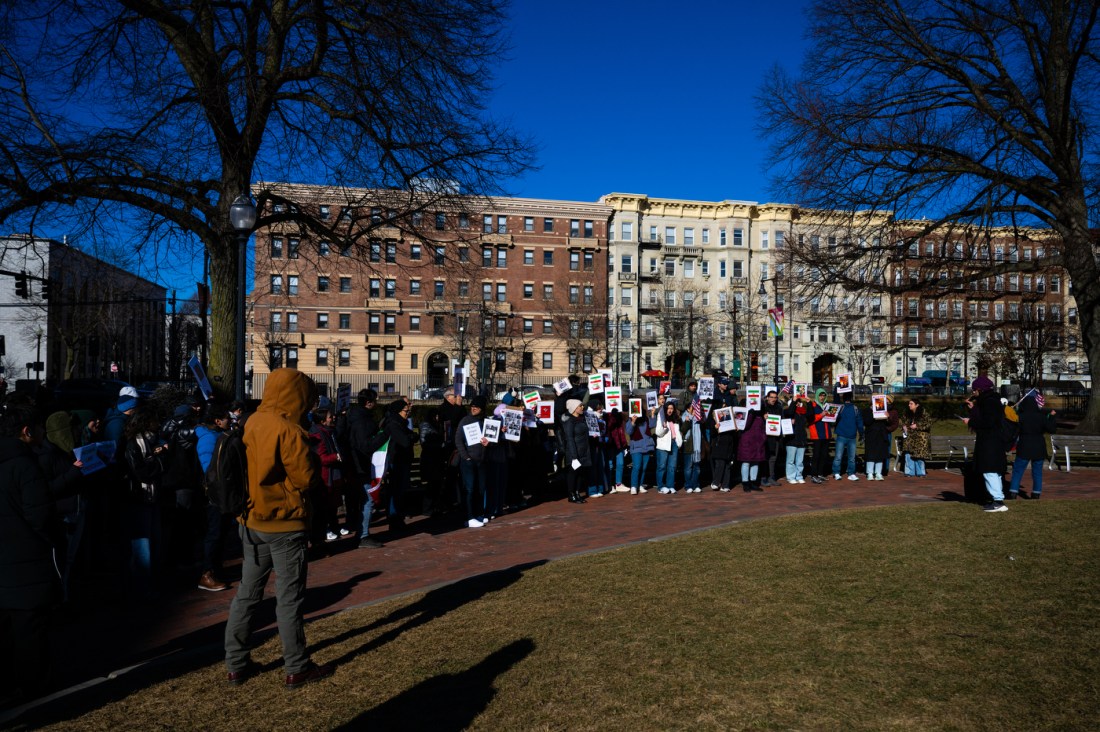
Students, faculty and other community members gathered at Krentzman Quad on the Boston campus on Friday to express their solidarity with protestors in Iran.
According to the latest data from Iran Human Rights, a nonprofit human rights organization, at least 3,428 protesters have been killed and thousands more injured during the week-long crackdown. Many news outlets, including Northeastern Global News, are unable to independently verify the exact number of those killed.
“You take comfort in knowing that you’re not the only one going through this,” Jamali said. “I do my best to make myself available to students and see what I can do to help him.”


