Elmer Freeman, lifelong champion for health equity in Boston, dies at 77
As director of the Center for Community Health Education Research and Services, Freeman built bridges between academia and communities to get people the care they deserve.
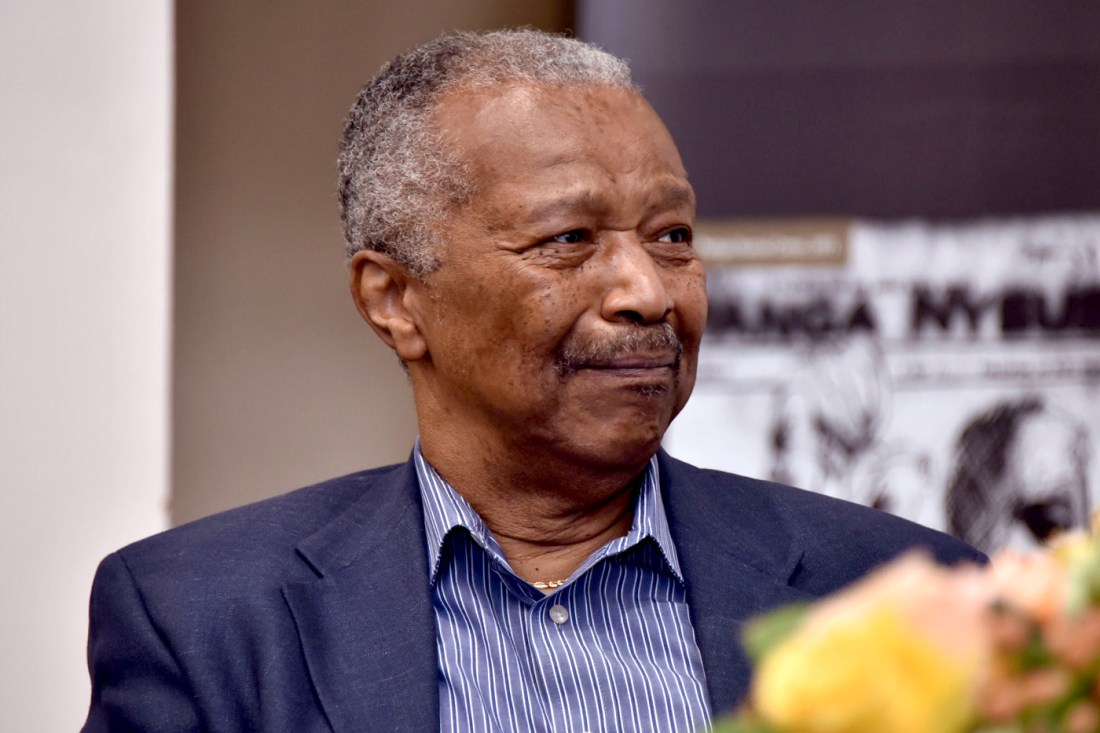

Elmer Freeman, dubbed by many the godfather of the fight for health equity in Boston for his work uniting the city’s academic institutions and community health centers, to get people the care they deserve, died Dec. 28, 2025. He was 77.
A tireless champion for the health care needs of the marginalized, Freeman spent much of his life creating a network of support aimed at getting the health care system to work for those it had left behind.
For 25 years, he served as executive director of Center for Community Health Education Research and Services, or CCHERS, a partnership between Boston’s academic institutions, including Northeastern University, and community health centers that aims to reform education in the health professions to better serve communities in need. He also served as director of urban health programs and policy at Northeastern’s Bouvé College of Health Sciences.
He spent 17 years as the executive director and CEO of the Whittier Street Health Center, expanding access to care in Roxbury and throughout the city. His work beyond the city, too, includes serving as co-chair of Critical MASS, a statewide coalition fighting health disparities, and a position on the National Institutes of Health Director’s Council of Public Representatives.
Despite the many hats he wore, all of Freeman’s work came back to community service, family, colleagues and acquaintances said.
“I don’t think he knew how to say no to the community,” said Cynthia Brown, the finance and administration manager for CCHERS who worked with Freeman for more than 25 years. “I think he really had a vision for the community and what services he expected them to get. … He fought for the rights of people.”
Freeman was born Aug. 7, 1948, in Brooklyn, New York, to Elmer and Annie Mae Bolden Freeman. His early years were defined by his family’s Southern roots and regular visits to his grandfather’s farm in Fountain Inn, South Carolina, where he witnessed the inequities and discrimination of Jim Crow and segregation. A child of the civil rights movement, Freeman learned about injustice, race and who was and wasn’t granted humanity early on.
Growing up, his family always thought he would be successful. From a young age, he was the one “leading the pack, leading the group, making the decisions, calling the shots,” his niece, Ashley Freeman, said.
Fueled by his mother’s words, “No one can take education away from you,” he entered Northeastern with the intention of becoming a pharmacist. But after seeing shelves lined with medicine that the community couldn’t afford, he was drawn to social work and community health advocacy.
“When you see injustice, it’s really hard to sit and watch,” said Linda Sprague Martinez, a CCHERS board member and one of many health equity advocates who Freeman mentored. “My sense is Elmer wanted the system to work for everybody. He was really thinking about who’s most marginalized, what’s going on and how do we make this work?”
Freeman ultimately received his bachelor’s degree in health services administration from Northeastern in 1977. He later completed the doctoral coursework in law, policy and society also at Northeastern.
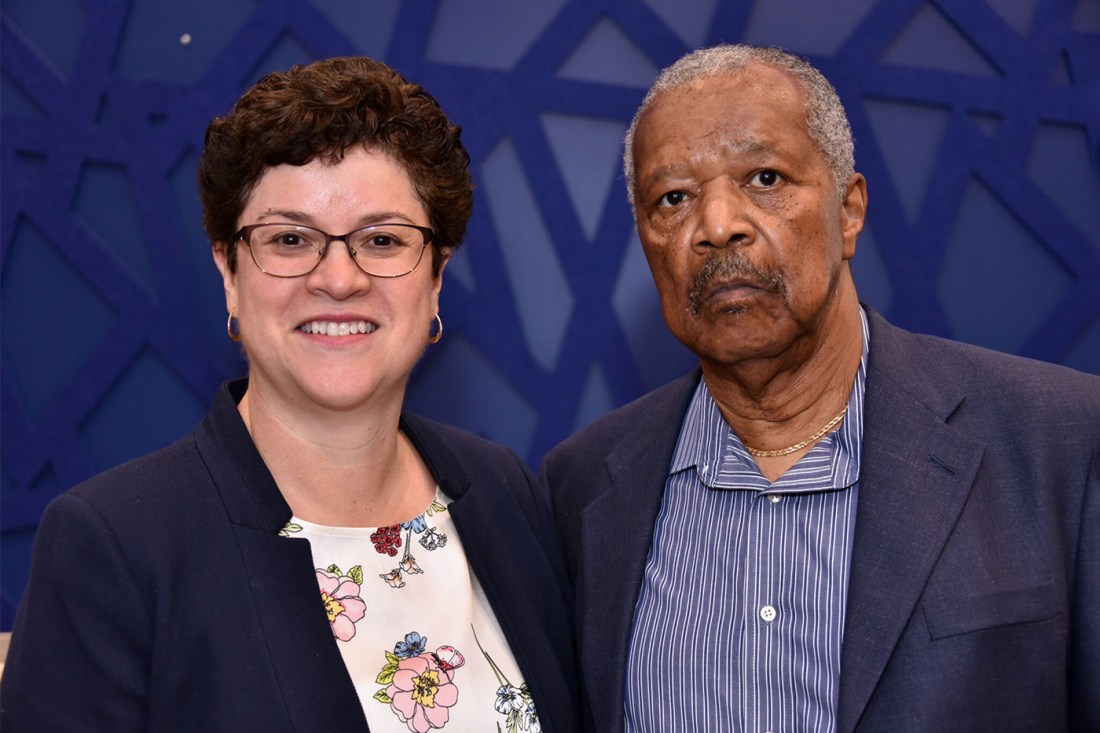
Across a 50-year career, Freeman left an impact on Massachusetts, Boston, Northeastern and community health that “cannot be overstated,” Carmen Sceppa, dean of Northeastern’s Bouvé College of Health Sciences, said in a statement.
He was a health provider, a public health practitioner, an educator and mentor who wanted to build “bridges where others saw divides” between institutions and communities, Northeastern’s John D. O’Bryant African American Institute said in a statement. Through his work at CCHERS, he pioneered the concept of academic community health centers, which are spaces where universities and community health centers collaborate to improve the delivery of health care and eliminate healthcare disparities.
“Everyone knew that Elmer was out there doing the work,” said Tom Kieffer, former board chair for CCHERS and a longtime friend of Freeman’s. “Even the mayor and city council and politicians knew not to mess with Elmer because he was passionately committed to those things.”
As a leader and a mentor, Freeman was known to be a straight shooter who didn’t mince words and expected the best from the people he worked with, Sprague Martinez recalled. But he was also “the ultimate Santa,” the kind of person who always brought gifts, listened when someone needed a shoulder to cry on and gave people what they needed to succeed, she said.
Editor’s Picks


“He [was] extremely committed to investing in people,” Brown said.
Even as he found himself on boards and in rooms that put him closer to the center of power, Freeman stayed grounded. He would refer to himself as “Elmer from the block” and, despite all the titles and accolades he collected over the decades, he often shunned the spotlight, said family and friends.
Freeman’s niece only learned years after her time in Catholic school that her uncle, known as Ray among his family, had helped pay for her tuition and had even paid for another family member’s rent for a whole year.
“He’s just that type of person, of never really needing credit or recognition for doing something,” Ashley Freeman said. “He just did it because it was the right thing to do.”
Outside his work, Freeman still found time to relax at home with his family and nature. An avid bird watcher, Freeman could often be found in his sunroom scoping out the half dozen or so bird feeders he’d set up in the back yard of his home in Jamaica Plain.
Despite facing health challenges later in life, Freeman still found joy in taking care of his yard and nurturing both orchids and the next generation of health equity leaders. With some nudging from her uncle, Ashley Freeman now works in her uncle’s field as the stakeholder outreach and engagement manager for the Patient Advocate Foundation.
“When we talk about equity work or anything that has to do with impact, you want to make sure that longevity of it doesn’t end when a person who spearheaded it, unfortunately, passes away,” Ashley Freeman said. “But now it’s the responsibility of everyone around them and everyone around them who loved them to carry that.”
Freeman leaves behind his wife, Carlene Chisom-Freeman; daughter, Jacqueline Freeman; grandson, Jakhari Freeman; siblings Gail Freeman, Brenda Montgomery, and Darlene Montgomery; and niece Ashley Freeman.