Tracking glucose is tough. This Northeastern app is making it easier through the power of gaming.
When a Northeastern professor’s son was diagnosed with Type 1 diabetes, she and her Ph.D. student took to the lab to find a way to help young adults manage the disease.

Like many 17-year-olds, Will Coleman was a bundle of energy, playing competitive soccer while juggling classes as a high school junior. So when he started feeling so tired that he wasn’t even able to help his dad move furniture without needing a break, he and his family knew something was wrong.
Coleman’s father suspected Type 1 diabetes, based on his son’s symptoms and a family history of the disease. A doctor confirmed the suspicion. Coleman’s blood sugar was so low that he was at risk for serious organ damage. He was immediately admitted to the pediatric intensive care unit at UMass Memorial Medical Center in Worcester, about 40 miles west of Boston.
“I remember he was like ‘I feel like I’m half a second late to everything,’” said Leanne Chukoskie, Coleman’s mother and an associate professor at Northeastern University with a joint appointment in the departments of art and design and physical therapy, human movement and rehabilitation sciences. “It was this extra dampening on everything, and we didn’t know how bad it was.”
The family found that there were not many resources for teens juggling life with a glucose monitor. When Coleman was released from the ICU, he was given a Pink Panther coloring book to explain Type 1 diabetes. The family applied for a teen kit from a juvenile diabetes organization for more aid and received the same coloring book.
Chukoskie was discussing this with one of her Ph.D. students, Sundararaman Rengarajan, who is in his fifth year of pursuing his doctorate in human movement and rehab sciences. The pair has worked together for years, with most of Rengarajan’s work focused on why symptoms of autism manifest the way they do.
“It came as a surprise when (Coleman) was diagnosed,” said Rengarajan. “Type 1 means you need to take insulin shots and be mindful of what you eat, how much sleep you get, how much exercise you do, and understand how these affect your glucose variability. Even though Leanne was in the field, it was difficult for them to adapt.”
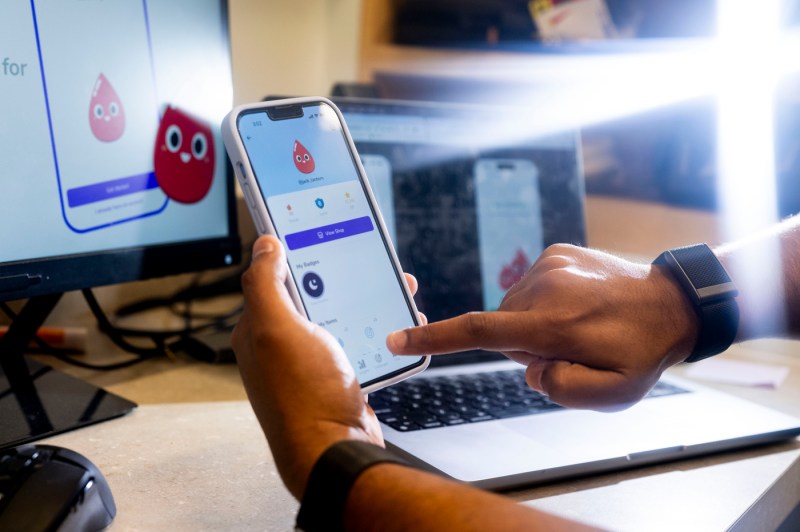
In the summer of 2023, the two came up with an idea. What if they created an app where young adults can track their biometrics to help predict their glucose levels so they can better manage the disease?
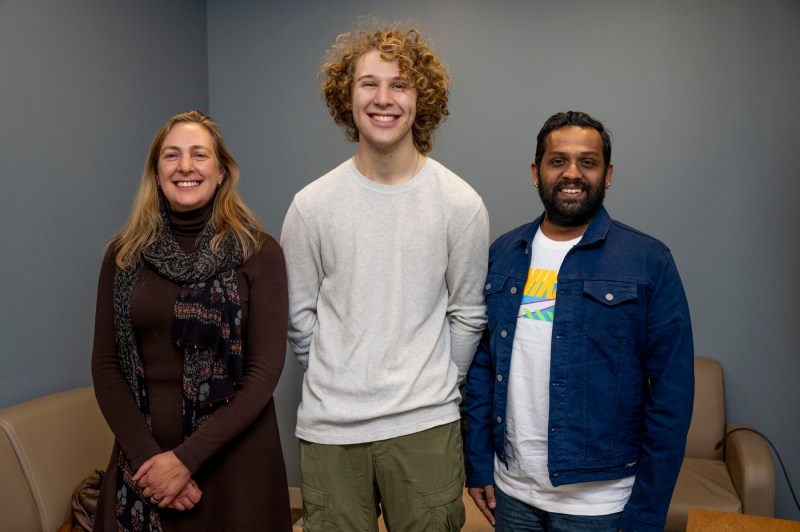
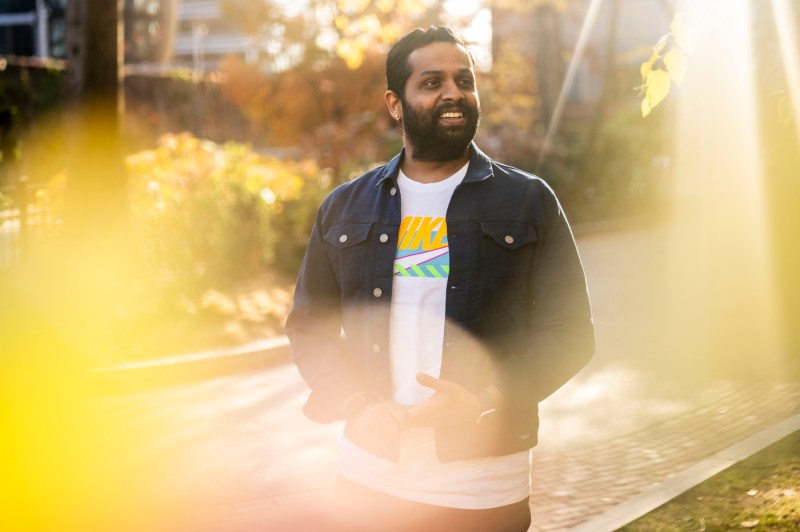
Thus Sugar Slay was born, an app that uses health data, machine learning and gamification to help young adults track and predict their glucose levels. It started as a summer project, but Rengarajan now has plans to work on the app full-time when he finishes his degree.
Type 1 diabetes is usually diagnosed in adolescence between the ages of 4 and 7 or 10 and 14, according to the Mayo Clinic. At 17, Coleman was a bit beyond this; he was preparing to leave home for college while learning to manage his health. And his parents were trying to let go while also making sure their son was able to manage his health.
“Even with an extreme level of trust from my parents, it was really rough,” said Coleman, now 19 and a sophomore at Northeastern University studying physics and philosophy.
Managing diabetes is a mental and physical challenge, according to Kat Lucas, director of marketing at The Diabetes Link, a nonprofit that offers support and resources for young adults with the disease. This is especially the case for young adults like Coleman who are trying to come into their own while also managing a serious health concern.
“When you consider the transitional stage of life young adults are in and the complexity of managing a very nuanced disease, it can often lead to gaps in care,” Lucas said. “They may receive the very best clinical advice on paper, but what happens when they feel frustrated by a well-meaning parent who is blowing up their phone about that stubborn high blood sugar? Navigating these challenges is paramount to positive health outcomes, yet they’re rarely discussed in the clinical setting.”
Rengarajan and Chukoskie hoped to help bridge this gap with Sugar Slay. Once they realized the app had potential, they relied on Northeastern’s Center for Research Innovation and the Bouve College of Health Sciences’ entrepreneurship program. They received $50,000 from CRI’s Spark Fund, which helps bring ideas to life, and participated in I-Corps Site, a National Science Foundation program that trains students and researchers in business so they can bring their prototypes to market. They also received $36,000 from the state of Massachusetts in the form of the Acorn Innovation Grant and an invitation to present at MALSI Day, the state’s premier life sciences innovation event.
Editor’s Picks



The team also collaborated with WHOOP, a Boston-based fitness tracker, so people can use their data from their WHOOP band on the app. The app can also sync with a user’s glucose monitor.
With this support, Rengarajan created a “very basic prototype” of the app. Considering the target audience, he decided to take a gamified approach to encourage engagement through “missions” assigned to users, where they can win badges if they track their data for a certain number of days. Users need to input their food and their mood while their other biometrics come in from other trackers.
“It helps you build that healthy habit because you have to do this every day,” Rengarajan added. “These are gamified elements to attract youngsters (because) it’s a little harder to get into this lifestyle.”
Sugar Slay is currently in the testing phase and is being used by members of the Northeastern community. The goal is to eventually expand membership to the public. Regarajan and Chukoskie are also trying to get a copyright for the app, which also has a companion app that lets young adults share their data with a trusted adult.
The hope is to help young adults like Coleman. Now nearly three years out from his diagnosis, both he and his parents have learned how to manage his diabetes and trust him with his own care, though not without some growing pains — like the time Coleman’s father showed up at a friend’s house because he saw his son’s glucose levels were low and panicked.
“(Will’s) a pretty responsible young person,” Chukoskie said of her son. “It was an awakening. My husband and I are not helicopter parent types … (but) we were pumping the brakes and wanting to make sure he was safe. … I wish we’d had it early on instead of the Pink Panther.”