Trump eyes Greenland — but does the US actually need it for national security?
Some experts argue that a deal involving Denmark selling or ceding territory to the U.S. would be costly and unnecessary, particularly since the U.S. already has extensive access to Greenland.
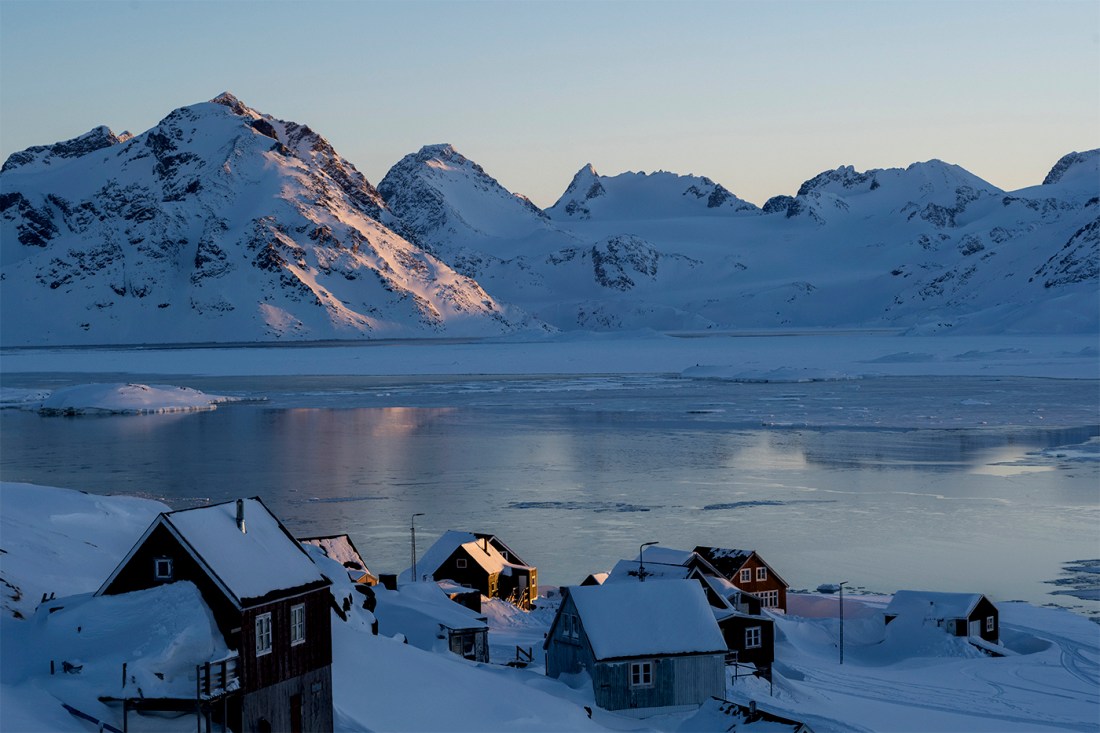

President Donald Trump’s first floated the idea that the United States should acquire Greenland, a massive, ice-covered territory controlled by Denmark in the Arctic, in 2019.
Now, after what his administration touted as a successful covert operation to apprehend and arrest Venezuelan President Nicolás Maduro, Trump doubled down on his desire to bring the world’s largest island into America’s orbit, with the White House saying the territory is vital to U.S. national security interests.
However, some experts argue that a deal involving Denmark selling or ceding territory to the United States would be costly and unnecessary, particularly since the U.S. already has extensive access — both militarily and economically — to Greenland through a Cold War-era agreement.
“The door is already wide open,” said Mai’a Cross, dean’s professor of political science, international affairs and diplomacy at Northeastern University, and an expert on international relations, space diplomacy and European security. “The U.S. has an open invitation to increase the size of its military base and potentially have other military bases there.”
It’s through that agreement, called the Defense of Greenland Agreement, that the U.S. can widely deploy forces and equipment to provide for the “collective defense” of the territory, as well as the broader North Atlantic Treaty region — a defense network that includes the U.S. mainland.
The 1951 pact requires that the U.S. respect Danish sovereignty and allow for the free movement of Greenland’s inhabitants, while giving U.S. officials the authority to prepare and upgrade areas for military use; build, operate and secure bases and support infrastructure; station and sustain U.S. personnel; control military-related air and maritime movements in designated areas; and improve ports, harbors and access channels to support operations.
For that reason, Cross is skeptical that a Trump-style deal could be worked out that would radically alter the status quo, which she said involves close cooperation over shared security goals, investments in Greenland’s natural resources sector and ongoing trade more broadly. The Danes have long welcomed business cooperation in its mineral and economic sectors while insisting that the U.S. respect the sovereignty of the 57,000 residents, she said.
The Trump administration and Danish officials are set to meet next week to open a dialogue over the future of Greenland. If anything, Cross said the sides might just strengthen the existing agreement, giving the United States greater operational authority on the island without infringing on the sovereignty of Greenland’s local government.
Trump’s statements about Greenland leave open the possibility of coercion, or use of force, as a means of acquiring the island to serve U.S. national security interests. Trump has noted that Russia and China have expanded their presence in the Arctic. U.S. Secretary of State Marco Rubio said this week that the administration is looking to buy Greenland from Denmark.
White House officials have echoed Trump’s position that the island is of strategic national interest, citing its location along critical Arctic and North Atlantic sea lanes; its role in missile warning and space surveillance; and its importance to U.S. and NATO early-warning and defense infrastructure. They said the president is weighing “a range of options” to bring Greenland into the fold.
A deal for the United States to purchase the territory likely isn’t in the cards, Cross said. Greenland’s prime minister, Jens-Frederik Nielsen, has repeatedly stated that Greenland is not for sale, adding in the wake of Trump’s latest statements that the territory’s future will not be shaped by debates on social media.
Nielsen stressed this week that Greenland operates within a democratic framework, and that its officials have the authority and freedom to make their own decisions. “Our rights and our status are firmly grounded in international law,” he said.
But should the two sides work up a consensus agreement, the deal wouldn’t need to be approved by any international body, according to Fiona Creed, associate professor at Northeastern University who formerly served as executive director of the United Nations Association of Greater Boston. That includes any potential transfer of territory.
Editor’s Picks





“While no international approval process exists, any deal must respect the binding principles of the UN Charter, particularly Article 1 on self-determination,” Creed said.
Article 1 of the UN Charter on self-determination would prohibit the transfer of Greenland without Greenland’s consent, a rule that Creed said Denmark is bound by. Additionally, the parties have obligations under NATO Treaty’s Article 1, which requires peaceful dispute resolution and forbids the threat or use of force.
Given the parties’ stated positions, there could be significant hurdles to any deal, Creed said.
“The fundamental challenge is that, regardless of any applicable legal framework, the question of self-determination for Greenland’s people and their potential pursuit of independence has now been influenced by U.S. territorial ambitions,” she said. “It will make it difficult for any negotiations on independence between Greenland and Denmark’s central government to ignore this broader geopolitical context.”
Any deal would need to be approved by Denmark’s parliament, which would likely include a constitutional amendment, Creed said, and potentially a public referendum. Additionally, the U.S. Congress would need to ratify any new pact.
If the U.S. had planned to purchase a portion or all of the territory, that money would have to be appropriated by Congress, said Jeremy R. Paul, a professor of law and former dean of the Northeastern University School of Law.