Starfish are dying from a mysterious disease. She hunts for answers
Sea stars are a little-understood but vital part of the ecosystem, but wasting disease is decimating them. Northeastern’s Angela Jones is leading the charge to uncover more about the deadly disease on the East Coast.
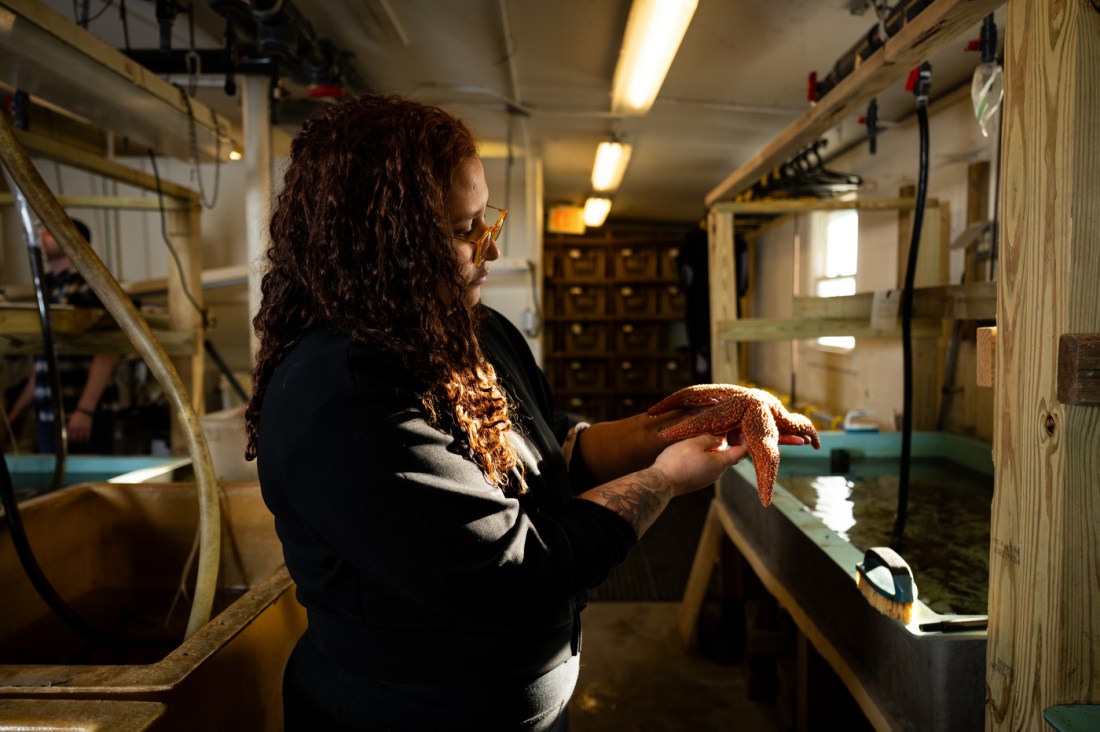
Angela Jones, a PhD candidate at Northeastern, is studying the devastating yet mysterious sea star wasting disease. Photo by Alyssa Stone/Northeastern University
Angela Jones grew up alongside starfish. She has fond memories of searching tide pools for sunflower stars, the largest species in the world. But now, they really are just memories.
The sunflower star, once common on the West Coast of the U.S., is nearly extinct. The culprit? Sea star wasting disease.
Over the 10 years, what scientists call the Decade of Death, it’s estimated that 5 billion sea stars on the West Coast have died from the disease, including about 90% of the sunflower star population. It’s the first sea star to be placed on the International Union for Conservation of Nature’s critically endangered list.
Decades later, Jones is still searching for sea stars, but she does so to save their lives. Now a Ph.D. candidate at Northeastern University’s Marine Science Center in Nahant, Massachusetts, Jones has become a leading sea star researcher. She’s trying to understand an animal about which shockingly little is known and a disease that, at least on the East Coast, is even more mysterious.
“Here we are, and even the scientists don’t know that there’s sea star wasting here,” Jones said. “It’s something that no one is talking about.”
Northeastern Global News, in your inbox.
Sign up for NGN’s daily newsletter for news, discovery and analysis from around the world.
On the West Coast, sea star wasting disease started to appear in 2013. The ensuing decade decimated sea star populations across the coast. The disease itself is brutal: The animal’s arms fall off and what’s left melts into a diseased goo.
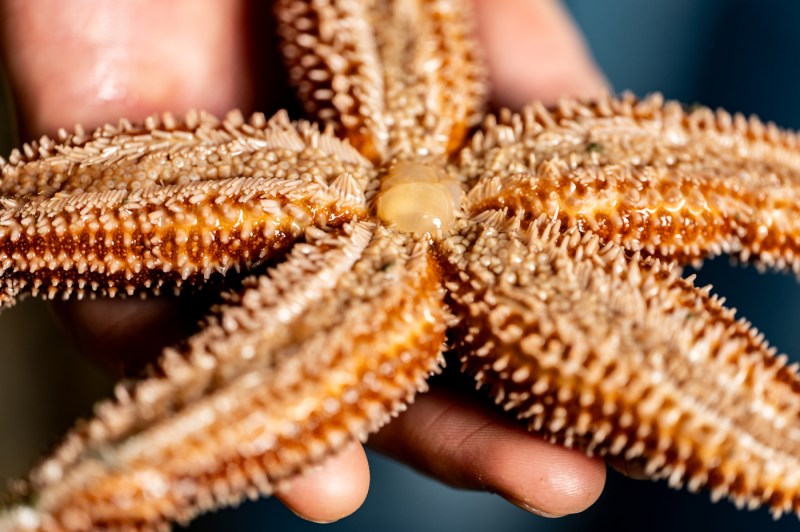
For years, Jones was focused on studying sea star diversity, specifically variation in the small, sea urchin-like spines on their bodies. Her groundbreaking work, assisted in part by state-of-the-art microscopes from the Ocean Genome Legacy, has revealed significant spine variability among sea stars.
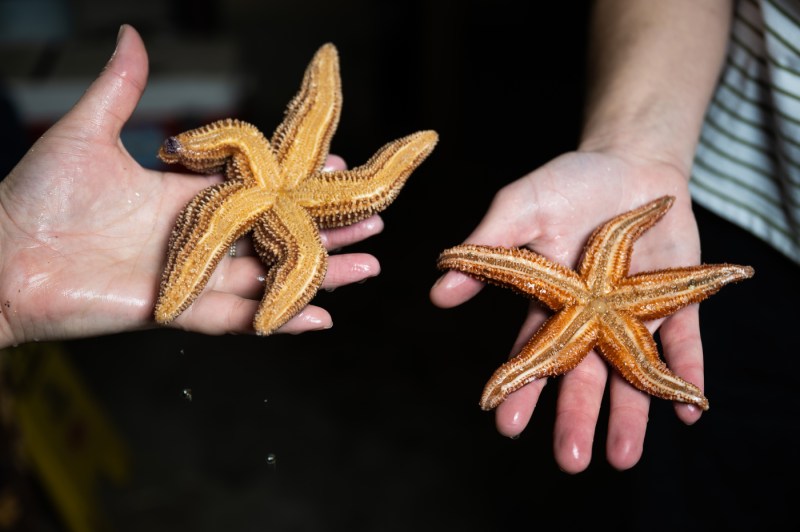
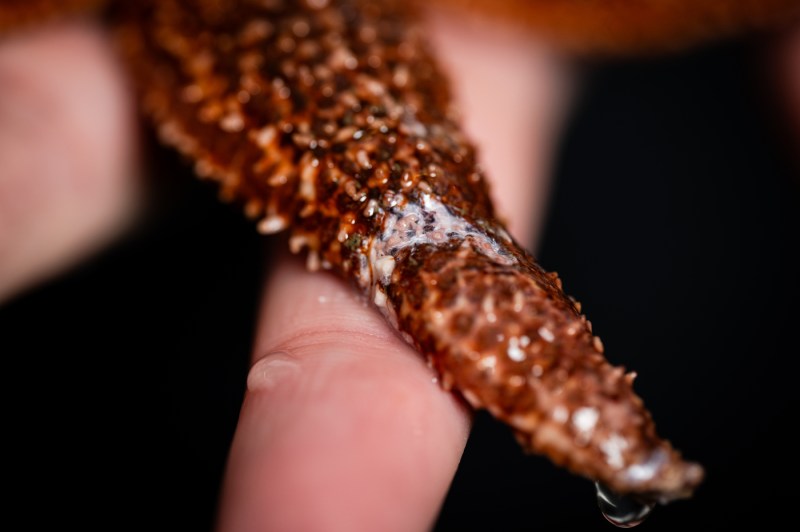
She grew to not only love, but to understand and appreciate “our close invertebrate cousins,” she said. She observed their remarkable regenerative ability and high resilience. Sea stars can force an arm off, or the arm can “choose to walk away,” Jones said. Some sea stars can regrow their lost limbs or even entire bodies as long as one limb survives.
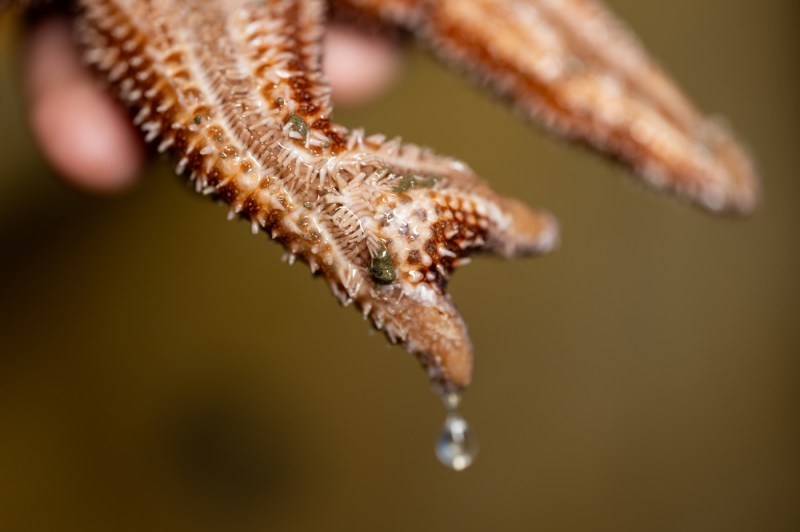
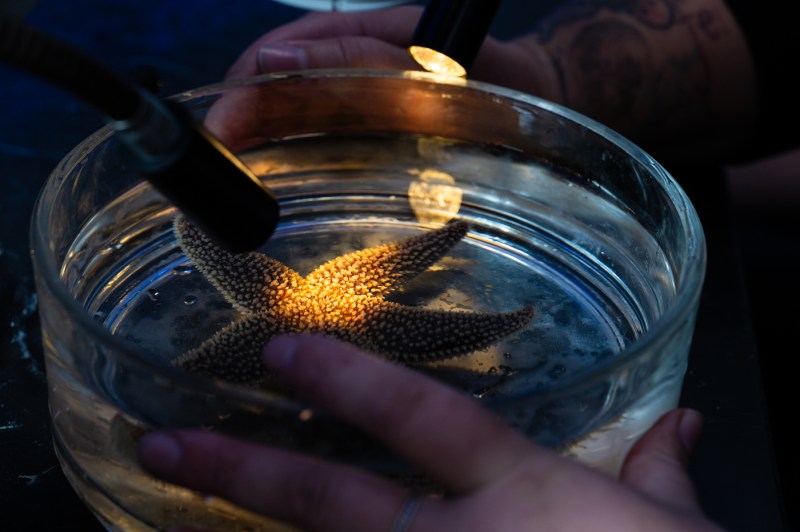
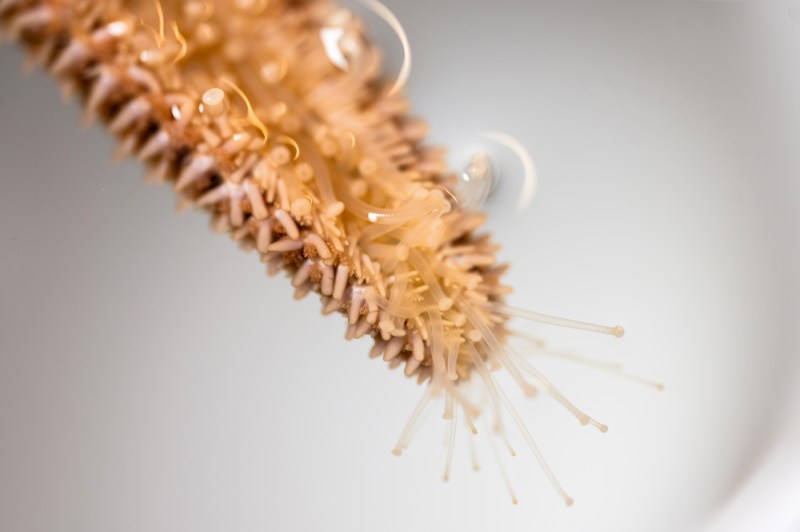
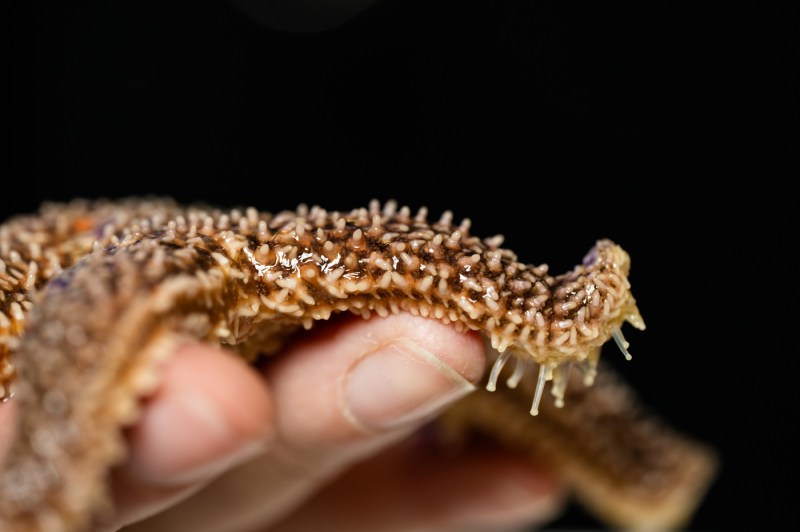
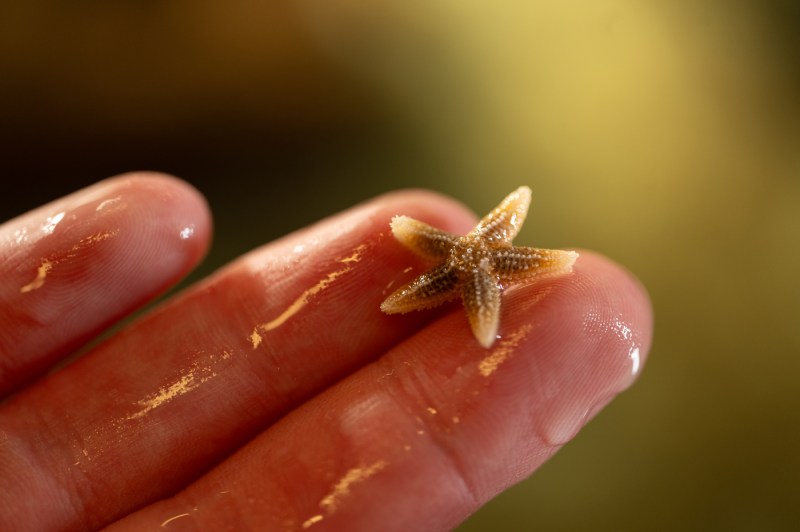
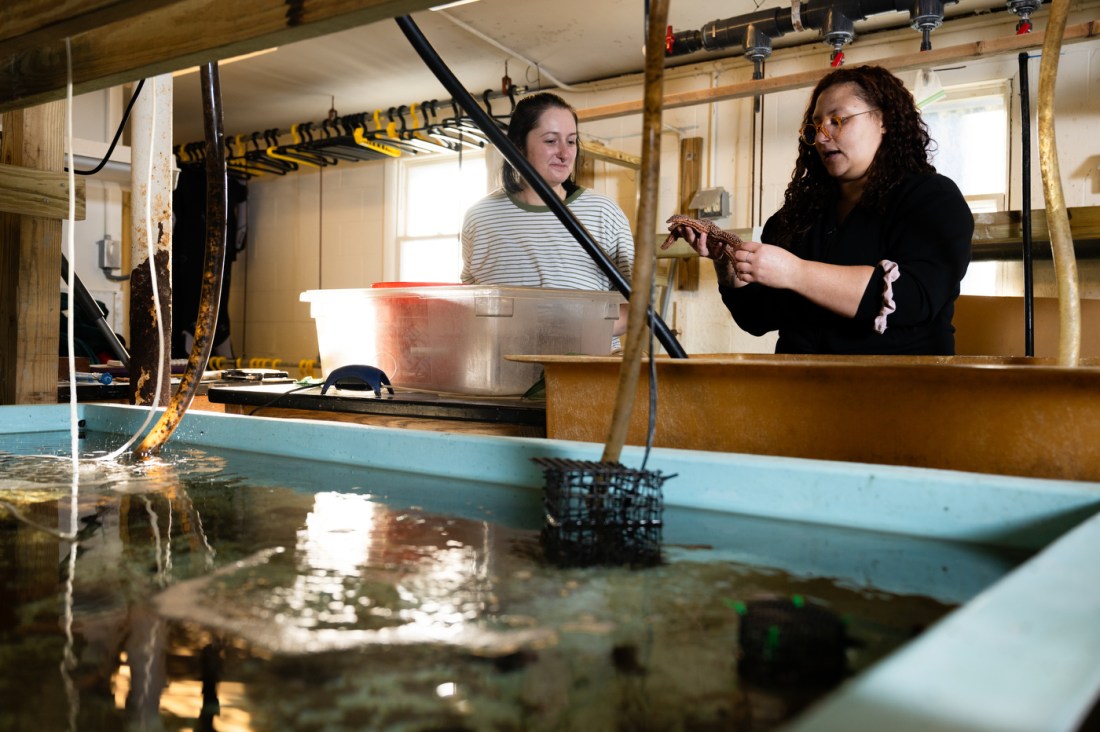
12/18/25 – BOSTON, MA – Angela Jones, a PhD candidate in marine and environmental science at Northeastern, is studying the Common Sea Star and the Forbes Sea Star at Northeastern’s Marine Science Center in Nahant on Thursday, Dec. 18, 2025. Jones is joined by Mica Weld, lead graduate researcher, and Andrew Robertson, a masters in environmental science and policy graduate at Northeastern. Photo by Alyssa Stone/Northeastern University12/18/25 – BOSTON, MA – Angela Jones, a PhD candidate in marine and environmental science at Northeastern, is studying the Common Sea Star and the Forbes Sea Star at Northeastern’s Marine Science Center in Nahant on Thursday, Dec. 18, 2025. Jones is joined by Mica Weld, lead graduate researcher, and Andrew Robertson, a masters in environmental science and policy graduate at Northeastern. Photo by Alyssa Stone/Northeastern University12/18/25 – BOSTON, MA – Angela Jones, a PhD candidate in marine and environmental science at Northeastern, is studying the Common Sea Star and the Forbes Sea Star at Northeastern’s Marine Science Center in Nahant on Thursday, Dec. 18, 2025. Jones is joined by Mica Weld, lead graduate researcher, and Andrew Robertson, a masters in environmental science and policy graduate at Northeastern. Photo by Alyssa Stone/Northeastern University12/18/25 – BOSTON, MA – Angela Jones, a PhD candidate in marine and environmental science at Northeastern, is studying the Common Sea Star and the Forbes Sea Star at Northeastern’s Marine Science Center in Nahant on Thursday, Dec. 18, 2025. Jones is joined by Mica Weld, lead graduate researcher, and Andrew Robertson, a masters in environmental science and policy graduate at Northeastern. Photo by Alyssa Stone/Northeastern UniversitySea stars have remarkable regenerative qualities. They are capable of losing a limb and not only regrowing the lost limb but having the lost limb develop into an entirely new sea star. Photos by Alyssa Stone/Northeastern University
“They’re just such incredibly adaptable, malleable organisms that can thrive basically anywhere,” said Mica Weld, a master’s degree student and research assistant working with Jones in the Helmuth Lab. “It’s incredible, and I can’t think of really any other species that has such plasticity, such adaptability.”
As Jones saw the impact of sea star wasting disease playing out in real time, she shifted focus. She moved away from the biodiversity research she was doing in the Helmuth Lab and started focusing on monitoring sea star wasting disease on the East Coast.
Sea stars are what’s called a keystone species, an organism that plays an outsized role in maintaining an ecosystem’s delicate balance. Highly resilient and voracious predators, they keep sea urchin populations in check, which helps maintain kelp forests and, in the process, biodiversity.
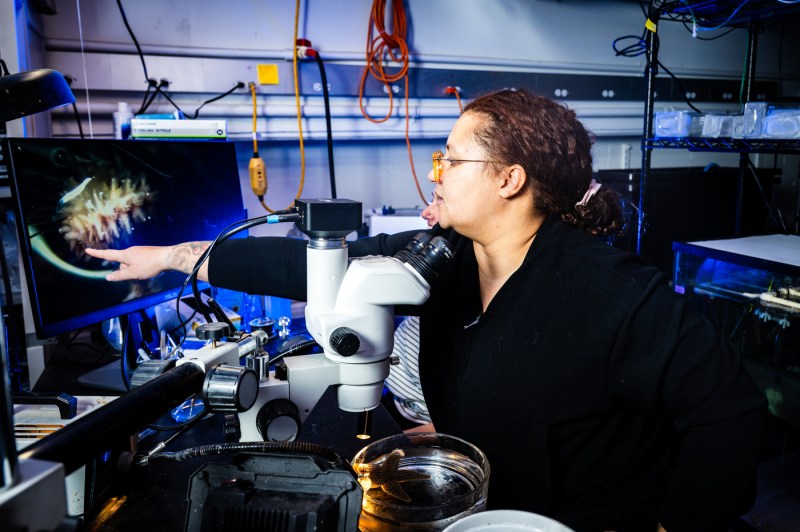
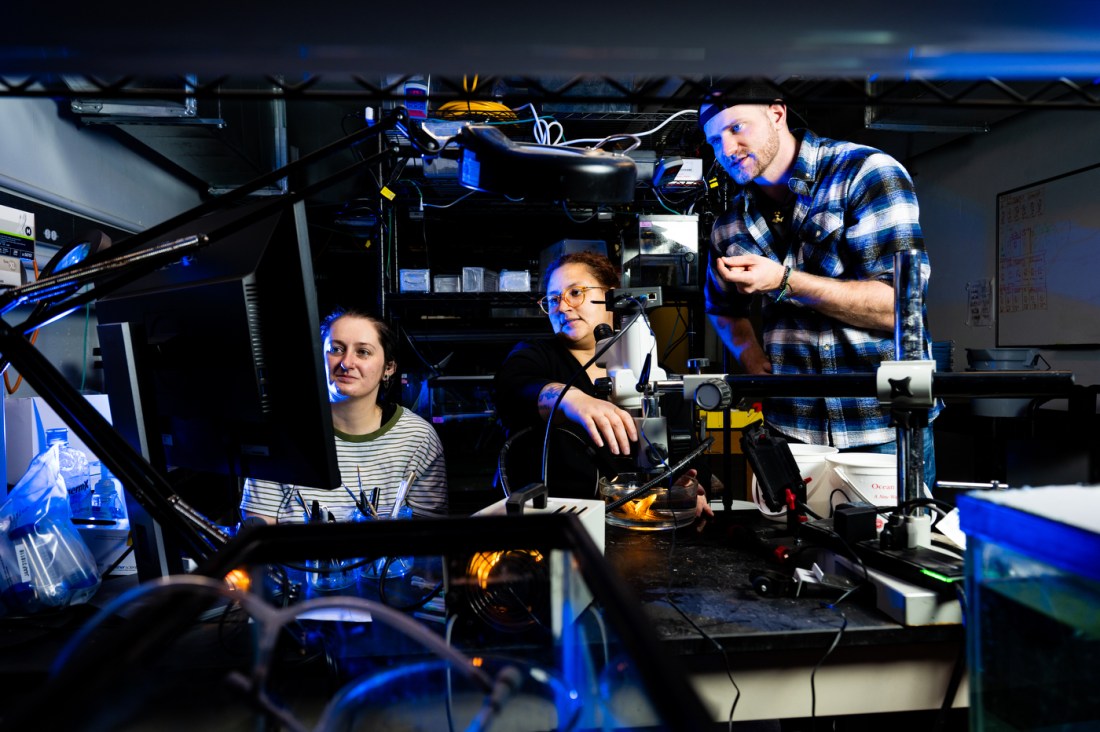
12/18/25 – BOSTON, MA – Angela Jones, a PhD candidate in marine and environmental science at Northeastern, Mica Weld, lead graduate researcher, and Andrew Robertson, environmental science and policy masters graduate, look at various Sea Stars under a microscope at Northeastern’s Marine Science Center in Nahant on Thursday, Dec. 18, 2025. Photo by Alyssa Stone/Northeastern University12/18/25 – BOSTON, MA – Angela Jones, a PhD candidate in marine and environmental science at Northeastern, Mica Weld, lead graduate researcher, and Andrew Robertson, environmental science and policy masters graduate, look at various Sea Stars under a microscope at Northeastern’s Marine Science Center in Nahant on Thursday, Dec. 18, 2025. Photo by Alyssa Stone/Northeastern University12/18/25 – BOSTON, MA – Angela Jones, a PhD candidate in marine and environmental science at Northeastern, is studying the Common Sea Star and the Forbes Sea Star at Northeastern’s Marine Science Center in Nahant on Thursday, Dec. 18, 2025. Jones is joined by Mica Weld, lead graduate researcher, and Andrew Robertson, a masters in environmental science and policy graduate at Northeastern. Photo by Alyssa Stone/Northeastern University12/18/25 – BOSTON, MA – Angela Jones, a PhD candidate in marine and environmental science at Northeastern, is studying the Common Sea Star and the Forbes Sea Star at Northeastern’s Marine Science Center in Nahant on Thursday, Dec. 18, 2025. Jones is joined by Mica Weld, lead graduate researcher, and Andrew Robertson, a masters in environmental science and policy graduate at Northeastern. Photo by Alyssa Stone/Northeastern University12/18/25 – BOSTON, MA – Angela Jones, a PhD candidate in marine and environmental science at Northeastern, Mica Weld, lead graduate researcher, and Andrew Robertson, environmental science and policy masters graduate, look at various Sea Stars under a microscope at Northeastern’s Marine Science Center in Nahant on Thursday, Dec. 18, 2025. Photo by Alyssa Stone/Northeastern UniversityAngela Jones, a PhD candidate in marine and environmental science at Northeastern, Mica Weld, lead graduate researcher, and Andrew Robertson, environmental science and policy masters graduate, have access to incredibly powerful miscroscoptes at Northeastern’s Marine Science Center in Nahant, Massachusetts. Photo by Alyssa Stone/Northeastern University
The West Coast has already seen what happens when that keystone goes missing: The entire ecological arch collapses. Sea urchins started spreading like wildfire, eating everything in their wake. Beaches turned purple with all the sea urchins washing up on shore.
“It can be absolutely detrimental to the system,” Jones said. “We’re learning that, and in a perfect world we wouldn’t have to.”
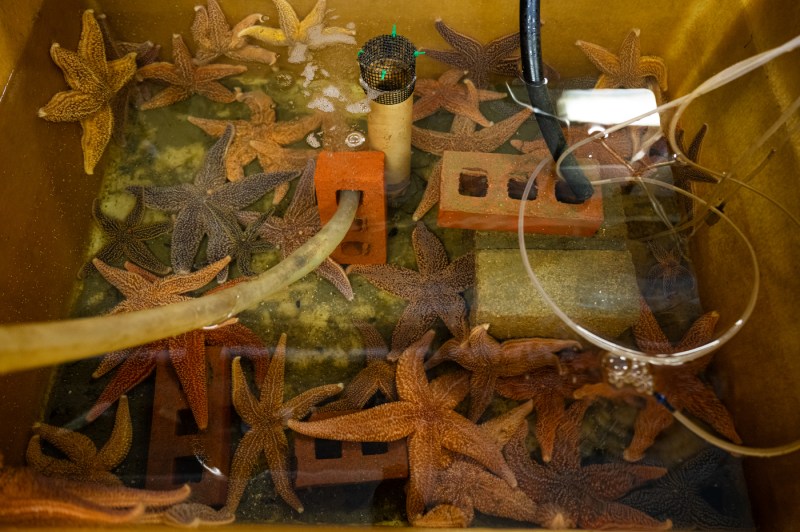
12/18/25 – BOSTON, MA – Angela Jones, a PhD candidate in marine and environmental science at Northeastern, is studying the Common Sea Star and the Forbes Sea Star at Northeastern’s Marine Science Center in Nahant on Thursday, Dec. 18, 2025. Jones is joined by Mica Weld, lead graduate researcher, and Andrew Robertson, a masters in environmental science and policy graduate at Northeastern. Photo by Alyssa Stone/Northeastern University12/18/25 – BOSTON, MA – Angela Jones, a PhD candidate in marine and environmental science at Northeastern, is studying the Common Sea Star and the Forbes Sea Star at Northeastern’s Marine Science Center in Nahant on Thursday, Dec. 18, 2025. Jones is joined by Mica Weld, lead graduate researcher, and Andrew Robertson, a masters in environmental science and policy graduate at Northeastern. Photo by Alyssa Stone/Northeastern University12/18/25 – BOSTON, MA – Angela Jones, a PhD candidate in marine and environmental science at Northeastern, is studying the Common Sea Star and the Forbes Sea Star at Northeastern’s Marine Science Center in Nahant on Thursday, Dec. 18, 2025. Jones is joined by Mica Weld, lead graduate researcher, and Andrew Robertson, a masters in environmental science and policy graduate at Northeastern. Photo by Alyssa Stone/Northeastern UniversityAngela Jones hopes that the work being done at Northeastern’s Marine Science Center will reveal just how widespread sea star wasting disease is on the East Coast. Photo by Alyssa Stone/Northeastern University
Researchers only recently discovered the cause of the sea star wasting disease: a strain of Vibrio pectenicida, a family of bacteria that is commonly associated with deadly and disturbing disease.
There’s such a gap in knowledge before conservation efforts could even start on the West Coast, scientists had to learn the answers to very basic questions. What are the life stages of a sea star? What do they eat? How can humans raise them? That lack of information delayed recovery efforts by about five years, Jones said.
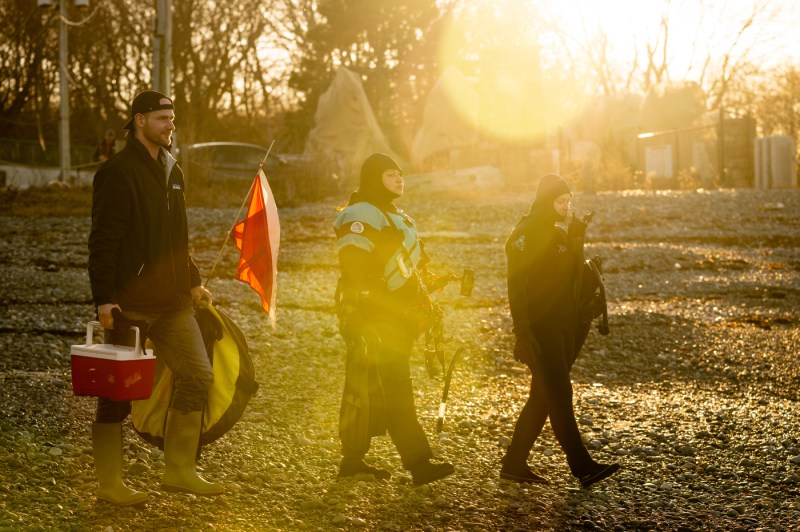
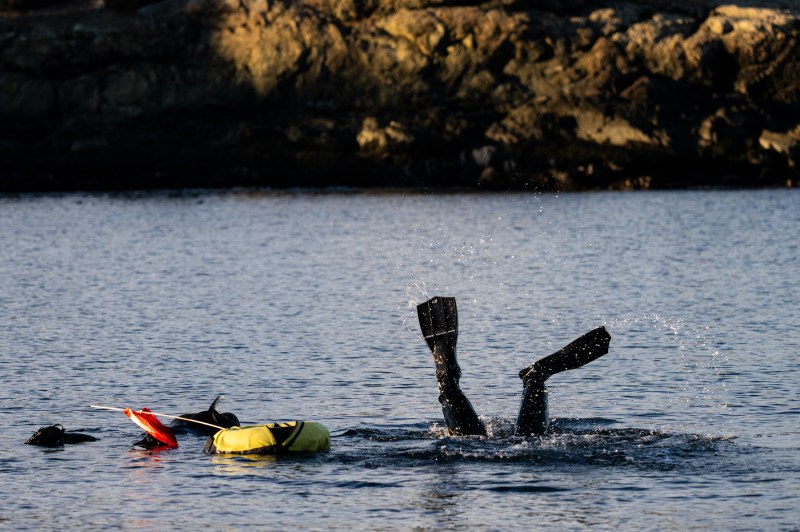
12/18/25 – BOSTON, MA – Angela Jones, a PhD candidate in marine and environmental science at Northeastern, and Mica Weld, lead graduate researcher, head down to Nahant Beach to snorkel at Northeastern’s Marine Science Center in Nahant on Thursday, Dec. 18, 2025 while Andrew Robertson, a recent masters in environmental science and policy graduate, collects mussels to feed the sea stars on land. Photo by Alyssa Stone/Northeastern University12/18/25 – BOSTON, MA – Angela Jones, a PhD candidate in marine and environmental science at Northeastern, and Mica Weld, lead graduate researcher, snorkel at Nahant Beach at Northeastern’s Marine Science Center in Nahant on Thursday, Dec. 18, 2025. Photo by Alyssa Stone/Northeastern UniversityAngela Jones and her fellow researchers will often find the sea stars for their lab in the waters around Nahant. Photo by Alyssa Stone/Northeastern University
“We don’t have as much historical data to know what the populations were, so we can’t say, ‘They’ve decreased this amount since then,’” Weld said.
At the Helmuth Lab, Jones is collecting sea stars like she used to on the West Coast, only this time she has more resources.
Jones is focused on the two most widely found species on the East Coast: the common star and the Forbes sea star, two of the most common sea star varieties in the North Atlantic. By studying sea stars from beaches around Nahant, Maine and Rhode Island, Jones and the team at the Helmuth Lab are working to grade species and areas on the East Coast that are more susceptible to sea star wasting disease.
She is also trying to establish one of the conservation tools that proved invaluable on the West Coast: citizen science.
“There was a lot of community science that happened where people were reporting, where they were taking pictures,” Jones said. “There’s no reporting mechanism here on the East Coast. We don’t know how bad it is. … I’m hoping that the community really gets more involved. If you see any star, healthy or not, post a picture of it.”
For those interested in reporting East Coast sea star findings, Jones and her team have developed a project on iNaturalist where they encourage people to post.