How a ‘caricature’ of a brain scan could lead to better treatment outcomes
New research removes task-based information from resting-state MRI scans, leading to more individual diagnoses and better predictions.
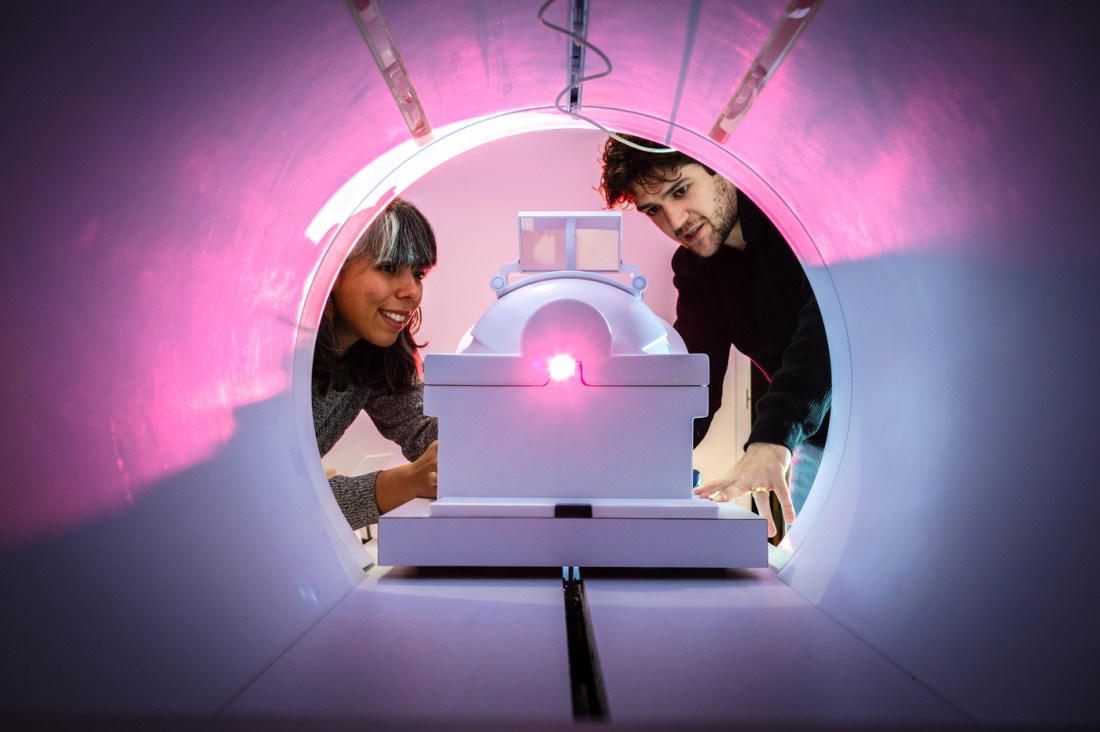

New research suggests that simplifying how brain imaging data are analyzed could make functional MRI scans far better at predicting individual health outcomes, a counterargument to the “just in case” MRI.
According to the Journal of Magnetic Resonance Imaging, elective, preventative MRI scans are often rife with false positives, which can be costly in both a financial and emotional sense.
In a typical functional magnetic resonance imaging study, or fMRI, you’ll be asked to lay down in an MRI scanner while either remaining at rest or performing a specific task. A new paper from Stephanie Noble, assistant professor of psychology and bioengineering at Northeastern University, and visiting Ph.D. student Raimundo Rodriguez, identifies signal information characteristic of performing tasks. By removing this information from resting-state models, their research finds that resting-state brain maps produced by fMRI highlight individual differences and become better suited to predicting information about the subject.
With further research, these simplified maps could mean earlier predictions of mental disorders like schizophrenia and an increased understanding of which treatments would best suit particular patients.
Connecting over connectomes
Whenever you think, areas of your brain flush with blood. MRI machines measure the blood flow, which Noble says is like a movie of brain activity, to build interlinking maps of the brain called “connectomes.”
These maps contain huge amounts of data and are “very complex, very high-dimensional,” Rodriguez says. The maps are so complex and information-rich, in fact, that researchers are still discovering ways to use them.
Rodriguez says that functional MRI experiments are undertaken with subjects in one of two states: either resting or involved in a simple task of some kind, like pushing a button in response to stimuli or working memory exercises, he says.
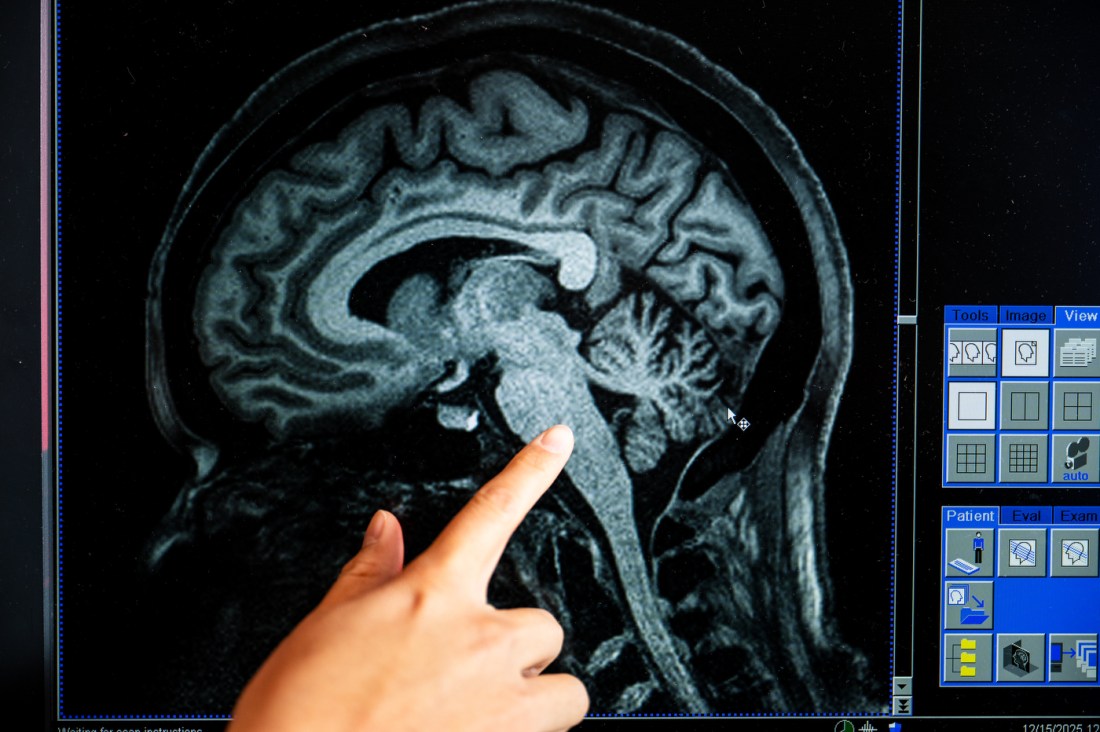
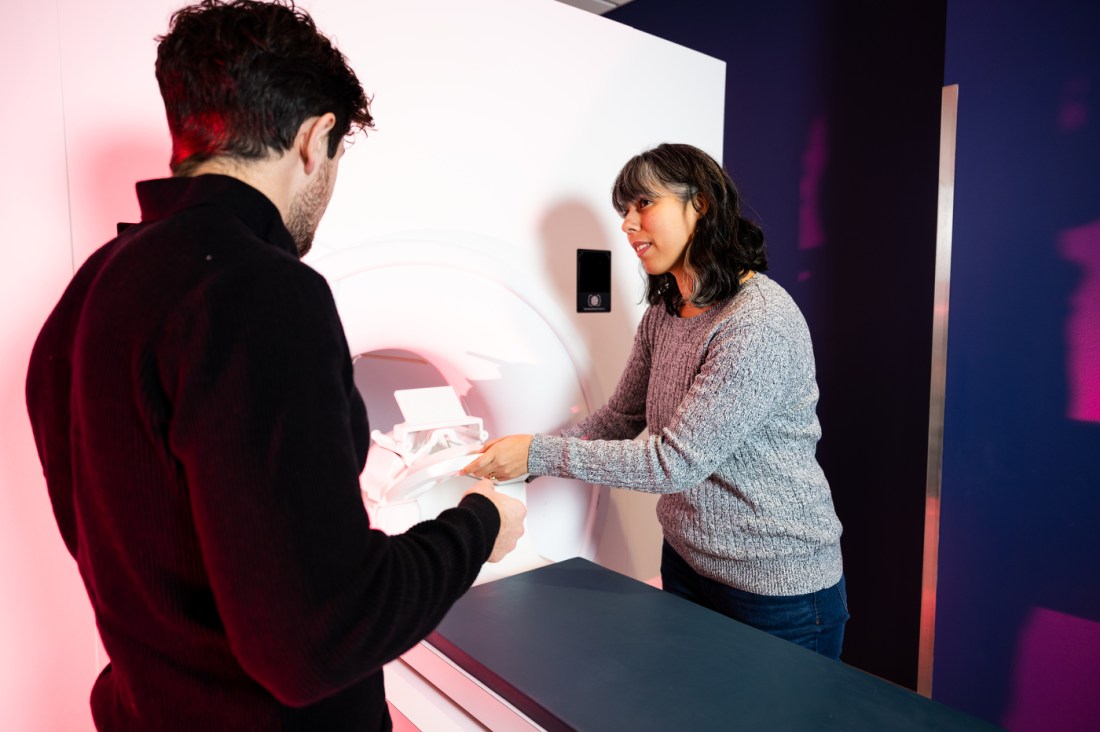
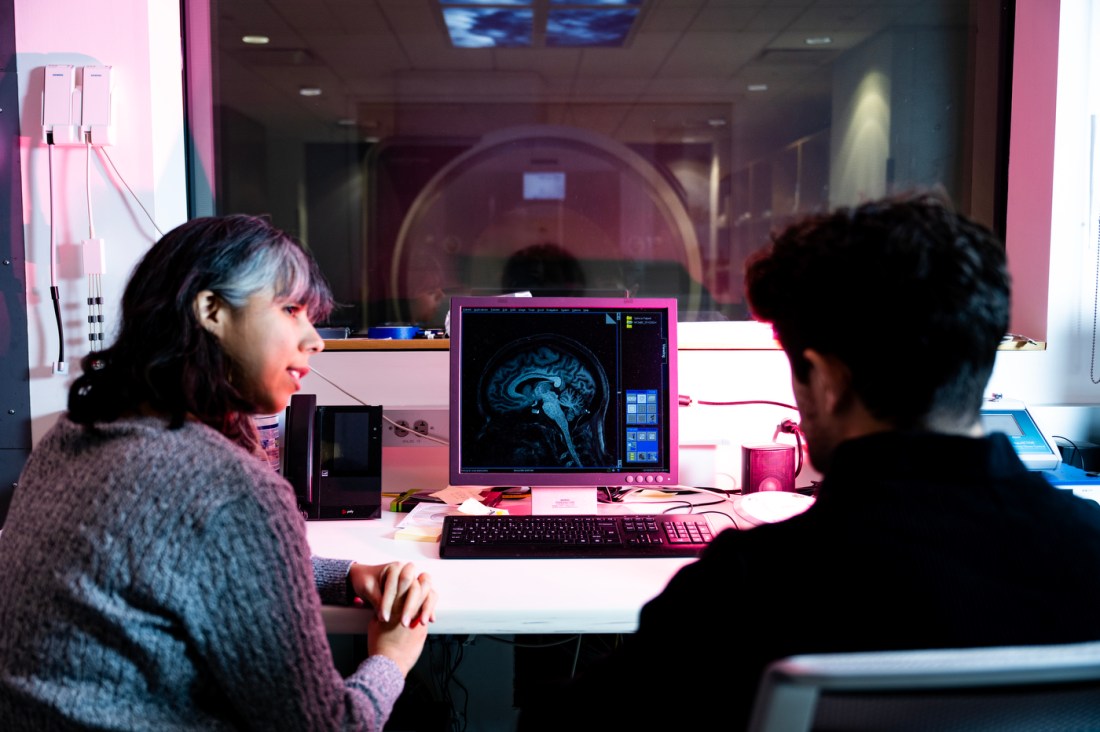
The task-based scans, especially, show the human brain in action. But even at rest, the brain is active and contains information that looks similar to task-based signals.
Previous work, he continues, noted that task-oriented connectomes, across multiple subjects, contain the same patterns of information. But what at first appears to be purely task-based data also appears, quite prominently, in resting states as well.
Rodriguez’s idea was to remove the common, task-oriented information from the resting-state connectome to potentially reveal some of the brain’s intrinsic architecture.
Caricaturing the brain
What Rodriguez proposed was to create “caricatures” of the classic fMRI connectome. By removing task-based data from the resting-state images, Rodriguez and Noble can remove common generalities in favor of highlighting individual details, much like a caricature artist does.
From the same brain scan, then, researchers can now have all the data originally captured in a connectome alongside the difference-highlighting caricature that Rodriguez and Noble have brought to the table. This new, specifics-highlighting brain map can be used to identify patterns previously obscured by the more information-laden connectomes.
Editor’s Picks




The underlying structure of the brain should, the theory goes, also become more legible.
“If you can make people look really different from each other, that has the potential to increase your ability to find relationships between people and outcomes you care about,” Noble says. While researchers would love to be able to look at these maps and know exactly what someone is thinking, she continues, that isn’t possible with today’s technologies.
But what might be possible, and what Rodriguez and Noble’s discovery brings us closer to, are better predictions of patient outcomes.
Use cases
Noble and Rodriguez state that their caricatures have already proved better at making certain predictions about their subjects than the standard connectome. In their experiments, the caricatures are better at predicting a subject’s age, BMI, sex and even their IQ, the researchers say.
Of the measures they tested, Rodriguez says that the traditional connectome was only better at predicting borderline personality disorder.
Rodriguez notes that the standard connectome will likely remain better at certain clinical and research tasks, but the caricature methodology adds to the arsenal of tools at researchers’ and clinicians’ disposal.
“What people are really interested in is looking into some level of brain activity and seeing if we can use that to, say, predict whether someone will convert to schizophrenia,” or other neurological disorders, Noble says of the potential clinical use cases. And if a good treatment is found to work in a subject with a particular kind of brain architecture, maybe that treatment will work well for others with the same pattern.