From blank canvas to brain health: These Northeastern students found therapy and social connection in art
The class is part of the expressive therapies minor now available for Northeastern students interested in exploring the role of art in “wellness, counseling, community development and expression.”

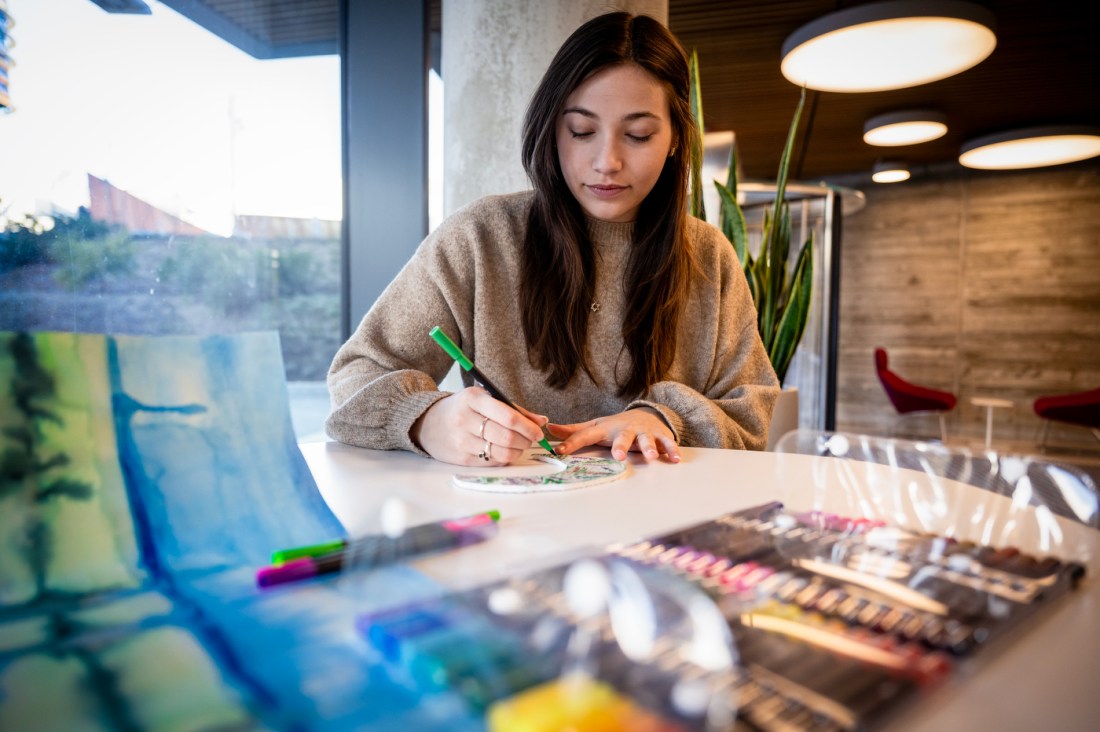
Chloe Smith didn’t think of herself as an artsy person at first.
That was her first thought when she was considering whether to take “Introduction to Art Therapy,” a new course offered on Northeastern University’s Boston campus.
Ever curious about herself, Smith, who is studying psychology and human services, wanted to venture out of her comfort zone, and learn more about a class she knew combined therapeutic expertise with the innate playfulness of artmaking.
“I’d never taken an art class before, so I was kind of nervous,” Smith said.
She discovered over the course of the semester that she wasn’t the only person concerned about a limited exposure to art. Part of the class is designed to push through those insecurities by getting hands-on with a variety of materials — watercolor, oil pastel, clay and charcoal, to name a few — and just make stuff.
“A lot of our assignments asked us to just begin,” Smith said.
Sometimes the students would be asked to work on a blank canvas with their eyes closed, or with only one hand.
“We did exercises about the different sides of the brain and how they respond,” Smith said. “Those were really interesting.”
The course, taught by art therapist and licensed mental health counselor Emily Natale, centers on the expressive and generative aspects of artmaking rather than technique. There is debate in the field, though: Natale said some art therapists believe in developing the skills toward mastery much as an artist would.
Others, including Natale, say you don’t need them to reap the benefits.
“The focus is more about moving from your heart versus having those technical or fine art skills,” Natale said.
Art therapy, in theory and in practice, is premised on the idea that the creative process itself is inherently therapeutic, Natale said. Simply engaging with materials can help shift the brain into more of a healing state, quieting negative self-talk and supporting emotional regulation. Even without verbal processing, she notes, making art promotes “brain integration,” which is part of the foundation for mental wellness.
Brain integration refers to practices that help better connect the emotional, sensory and cognitive regions of the brain, leading to better emotional regulation, clearer thinking and healthier responses to stressors.
“Art is just really good for brain health,” Natale said.

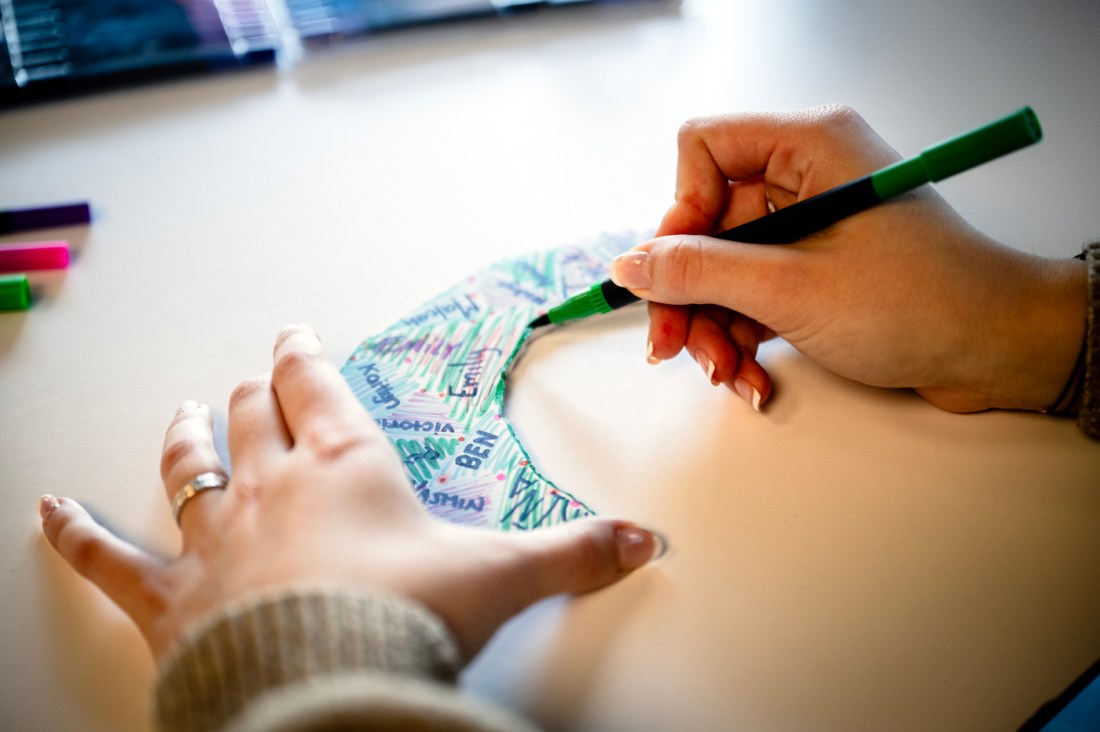
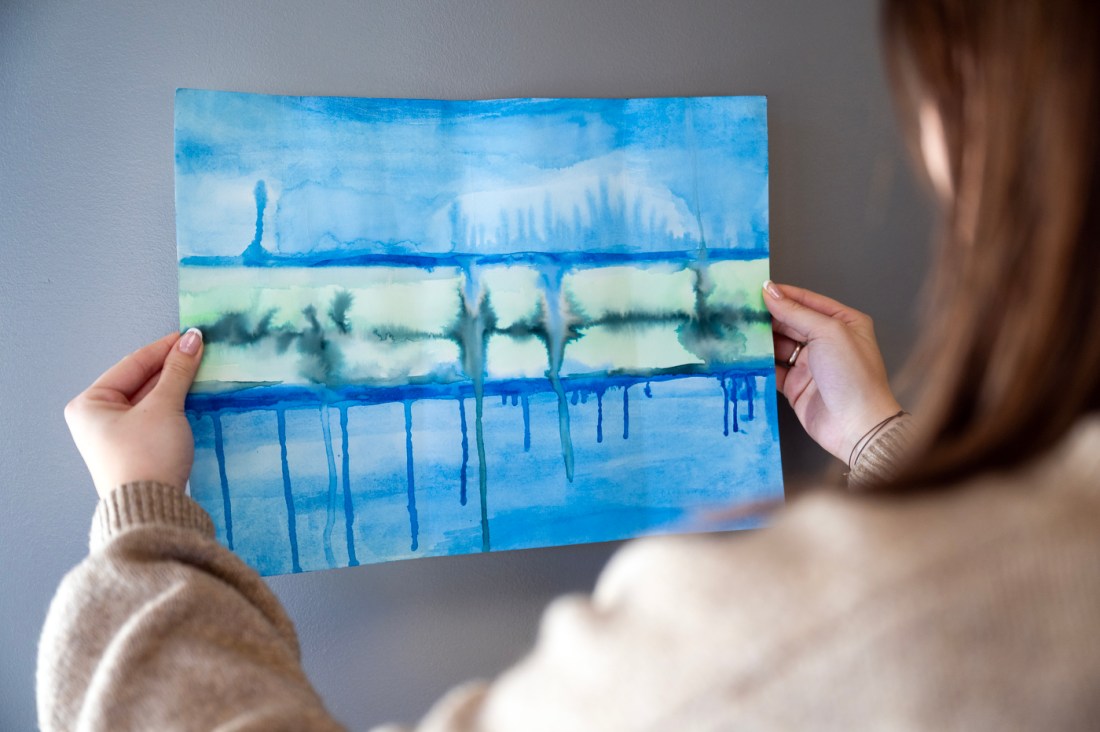
The class was informational and experiential in equal parts, Natale said. It consisted of some lecture material and writing that focused on the scientific contexts — biological, neuroscientific and anthropological — undergirding art therapy as a discipline. That was combined with hands-on practice, helping students understand what’s happening in their brains and bodies while also feeling it through experience.
The imaginative and sometimes playful exercises invite students to broaden their expressive and cognitive range, Natale said.
The class is part of Expressive Therapies minor now available for Northeastern students interested in exploring the role of art in “wellness, counseling, community development and expression.” Art therapy focuses specifically on the visual arts, while “expressive art therapy,” as an umbrella, can encompass music, drama, movement, writing and other creative forms.
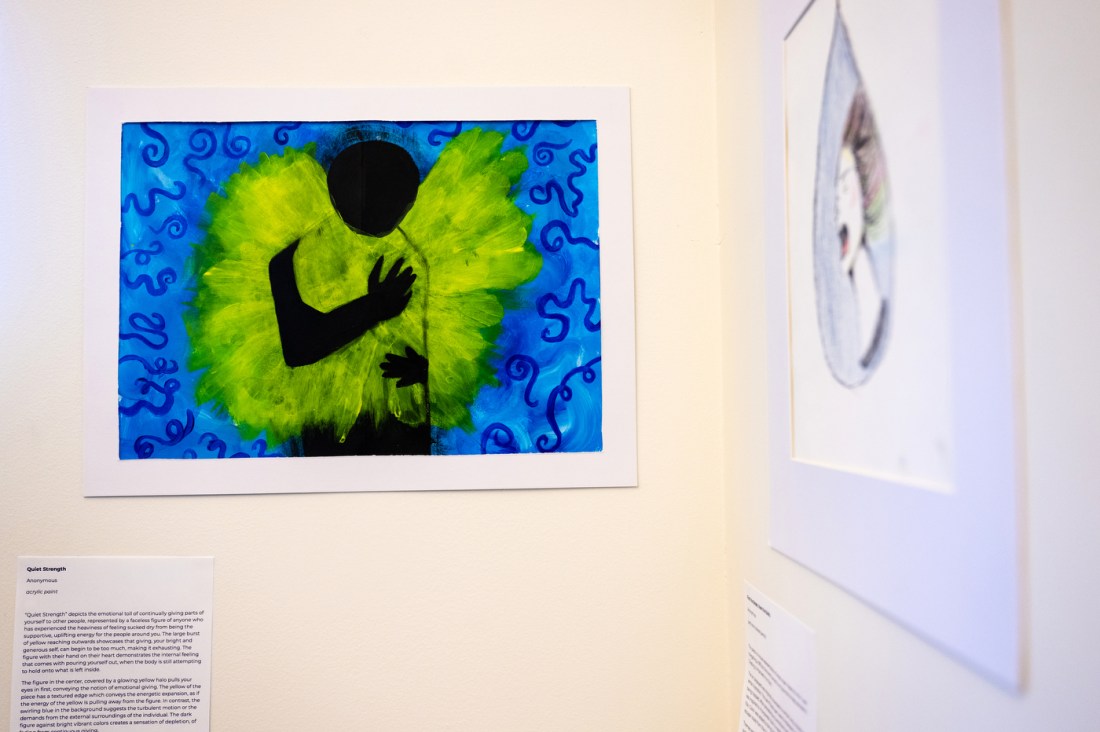
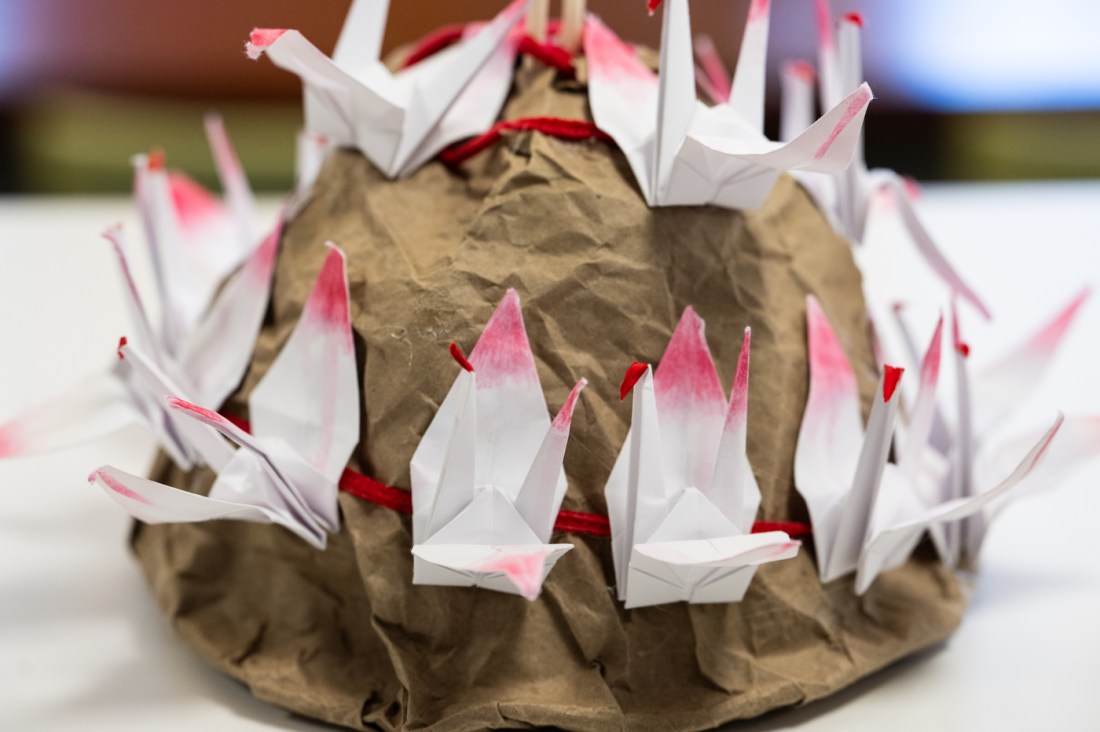
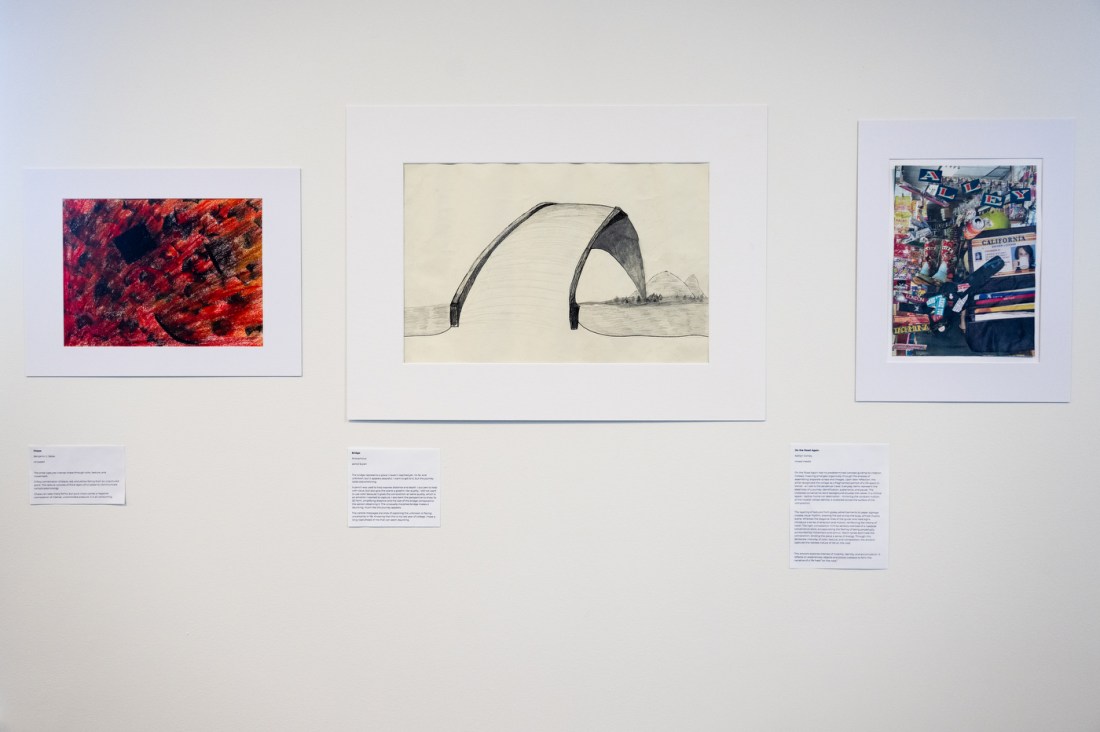
The combined output of the class was put on display on the third floor of Northeastern’s Renaissance Park. Selections included a variety of pieces — from yarn dolls and clay figures, to watercolors and mixed-media collages and photography.
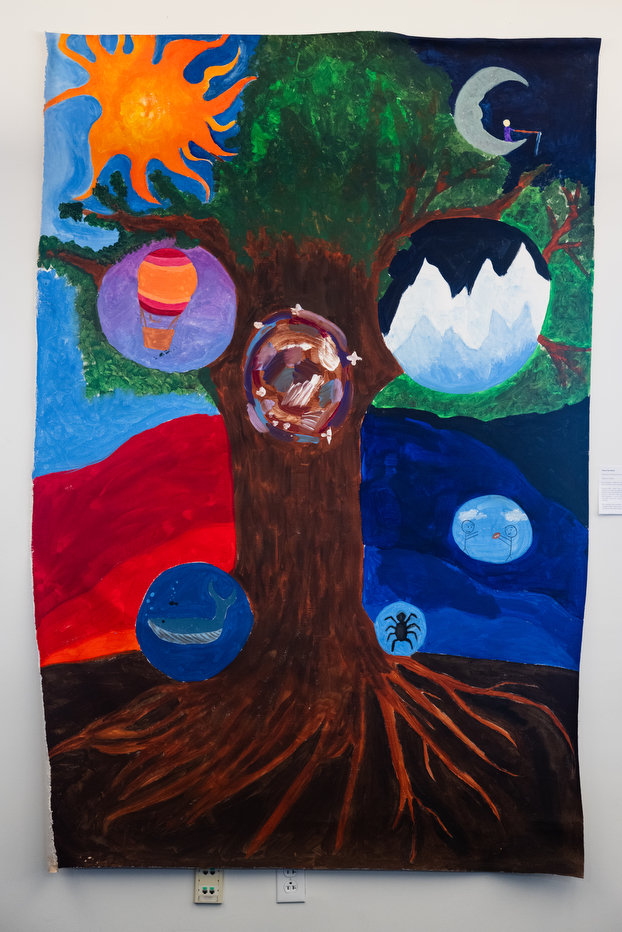
The class culminated in a collaborative group mural that spanned an entire wall, depicting a large tree with surreal undertones and symbolism that seemed to encompass a whole spectrum of human experience.
It was meant to capture the “hopes and dreams” of the class for the future of the world.
The exhibit went live on Nov. 19, lasting a little more than two weeks.
“Halfway through the semester, I thought to myself, ‘We need to do a showcase,’” Natale said. “The art was fabulous.”
Maleah Lin, a Northeastern student studying on the Boston campus, helped curate the class art show alongside Natale. Although she had some exposure to art shows in high school, this would be her first time acting in a curatorial capacity.
“We thought carefully about the layout, the order of the pieces, color balance, heights and thematic connections between works,” Lin said.
A psychology major, Lin said she is considering becoming an art therapist. Her experience in the class gave her a new perspective on how art can be used for self-care and mental health — a way to slow the frenetic pace of campus life.
“Many students started as very concrete thinkers,” Natale said. “Over time, they became more imaginative and open. Watching them blossom that way has been wonderful.”