American athletes are rare on Japan’s “Ninja Warrior.” He proved they can compete with the best
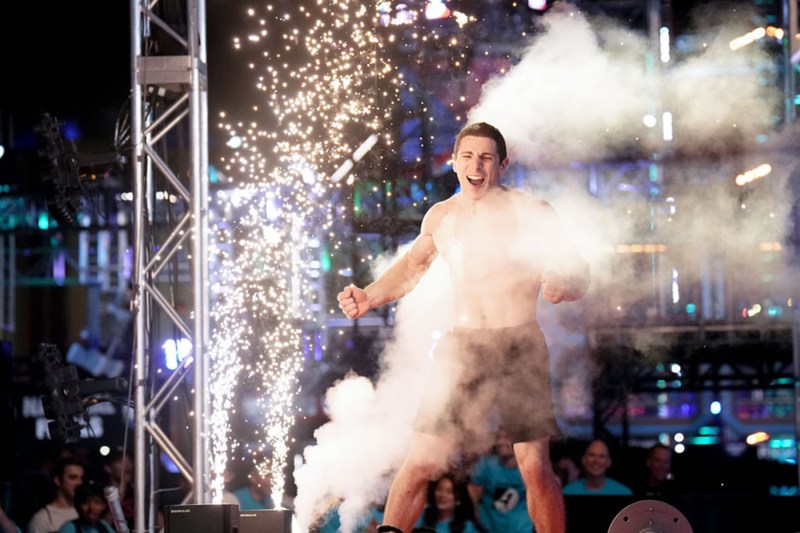
After competing on “American Ninja Warrior,” Josh Levin became one of a select few international athletes to compete on the most recent season of the original Japanese show, “Sasuke.”


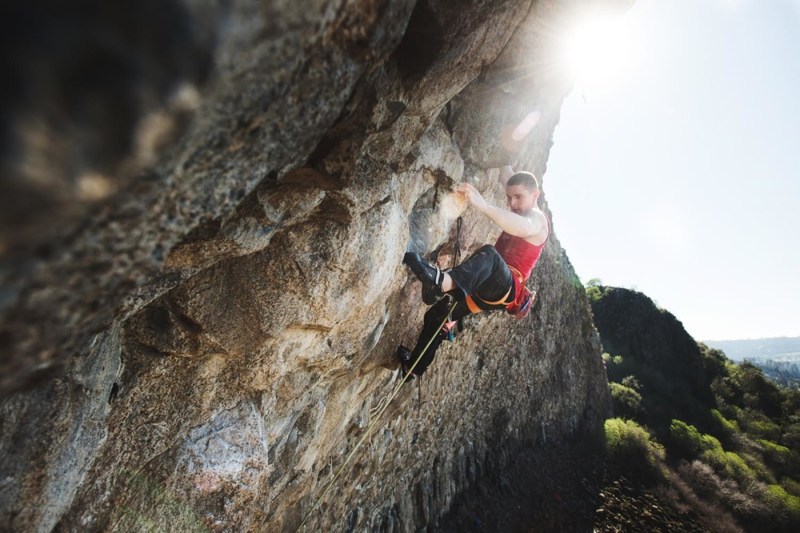
Josh Levin, a veteran of reality competition show “American Ninja Warrior” and a decorated rock climber, defied the odds, landing in the top three of the original impossible-obstacle show, Japan’s “Sasuke,” or “Ninja Warrior.”
International competitors are a rarity on “Sasuke.” But for the show’s 43rd season, the producers opened the doors to 22 international athletes, in addition to 100 Japanese competitors. Levin, a Northeastern University-trained mechanical engineer, was one of five Americans to compete this year. He made it further than any other international competitor and only one other person made it farther in the four-stage obstacle course than him.
“It’s a rare opportunity,” Levin said. “It’s a huge honor.”
Competing on “Sasuke” is a proving ground for any athlete, but for Levin, it’s been a lifelong dream. Appearing on the show was rewarding and surreal in equal measure. He was able to compete alongside the man who originally inspired him to take on the challenge: Makoto Nagano, aka the World’s Strongest Fisherman.
“It was cool to have that full circle moment for me as a fan, as a contestant, and coming back to why I got into it in the first place,” Levin said.
On “Sasuke,” the only way to win is by completing all four stages of a notoriously difficult obstacle course that involves climbing, running, swinging on ropes and jumping across platforms. The most iconic “Ninja Warrior” obstacles are simple yet demanding, like the Warped Wall, a towering, steeply curved wall that contestants must climb to the top of. The ultimate goal is to achieve Kanzenseiha, or total victory, by completing all four stages. Contestants on the show aren’t competing against one another; they are competing against the course itself. Only four people, including Nagano, have ever scored a total victory in the show’s 28-year history. Levin embodies that spirit as an athlete and competitor.
“Josh is humble, enormously talented and his mental game is crazy strong, but most of all he is a good friend who is fighting the [course] and not you as [a] competing athlete and always wants the best for others,” said Joel Mattli, a Swiss “Ninja Warrior” competitor and training partner and friend of Levin’s.
After competing on “American Ninja Warrior” four times, most recently in 2022, Levin, a rock climber with 19 National Championships under his belt and a mechanical engineer’s eye for physics, knew it was time to jump in the deep end.
The reality that he would be among a select few international contestants didn’t sink in until he got on set and started filming. The entire season was shot in one grueling 22-hour day that left Levin battered, bruised and beaming.
“It was one of the craziest days of my entire life for sure,” Levin said.
The obstacles were the most challenging he’s ever encountered, but, as an engineer, their dastardly creativity was stunning.
On “American Ninja Warrior,” the obstacles are purely mechanical. On “Sasuke,” they include motorized components that move and behave in ways that are designed to mess with competitors. The course ends up looking like “something out of a mad scientist’s invention shop,” Levin said.
“You’ve got this one shot, and you have to be mentally prepared for various scenarios to react as quickly as possible,” Mattli said.
Editor’s Picks




One challenge that Levin dreaded was the Fish Bone. It’s seemingly simple: Competitors must balance and jump across a series of pedestals without falling off to make it to the end. Meanwhile, rotating bars spin above the competitors’ heads and threaten to knock them off balance.
Levin made it past the Fish Bone in stage one, but not everyone was so lucky.
Only 12 out of the 122 contestants who started the show made it to stage two of the obstacle course. Levin was one of 10 to advance to stage three.
He made it all the way to an obstacle called the Cliffhanger, a thin ledge that contestants have to navigate using narrow handholds. It should be a dream for an experienced rock climber. Instead, it was Levin’s literal downfall.
On “Sasuke,” the obstacle has moving ledges that the contestants have to jump to. At one juncture, Levin had to transfer from ledge to ledge, twisting 180 degrees in mid-air to catch himself on a handhold small enough for only his fingertips to grasp. Ultimately, Levin mistimed his jump and fell, splashing into the water below.
“It’s the combination of I made it really far and felt really good about my performance and I was bummed I didn’t go further, especially on an obstacle I think played to my strengths,” Levin said.
Although Levin didn’t achieve total victory, he still sees “Sasuke” as the pinnacle of his life on and off the obstacle course. He got to compete alongside his hero, Nagano, and even got a “good luck” from the man himself in a pinch-me moment that would have made Levin’s 15-year-old self faint.
As rewarding as the experience was, for Levin, the show was always about more than just an obstacle course. He firmly believes his appearance on the show is proof of what people can do when they work together, even if it is just throwing themselves at a foam wall.
“We have to be able to say, look, people who are different from you, let’s bring us together, celebrate our differences and actually use our strengths and our backgrounds in different areas to figure out how to overcome these particular obstacles,” Levin said. “That’s true for any challenge that we find ourselves facing in the future.”


