The mass shooting playbook guiding city leaders in the aftermath of tragedy
After a mass shooting, city leaders often feel lost. The Mass Shooting Playbook, a resource developed by faculty and students at Northeastern University that is now in its second edition, gives them direction.

Former Dayton, Ohio, Mayor Nan Whaley had heard the horror stories.
At meetings for the United States Conference of Mayors, the then-mayor of Dayton, Ohio, would hear other officials share their experiences responding to mass shootings in their communities.
“I always just got the sense that this would be awful, and you would just think, ‘It’s so random. It’s not if but when,’” Whaley said.
On Aug. 4, 2019, that hypothetical became a reality for Whaley and her city. In the early morning near Dayton’s Ned Peppers Bar, 24-year-old Connor Betts opened fire with an AR-style rifle, killing nine people and wounding 17.
At 4 a.m., Whaley awoke to a knock at her door and a text on her phone, at which point she knew something was wrong. After hearing the news, she stood in the shower, preparing for the days ahead, trying to “put her head together” about everything she needed to do, she said. She thought about the advice she had heard from all those mayors that she hoped she’d never have to use.
Years later, that information is freely and widely available to city leaders like Whaley, tasked with the seemingly impossible: responding to and recovering from a mass shooting. Created by faculty and students from Northeastern University’s Public Health Advocacy Institute, the “Mass Shooting Playbook” has provided guidance to countless city leaders at a time when they and their community felt lost.
“We think it’s all over when the police kill or apprehend the killer, but no, it’s only just beginning,” said Sarah Peck, co-founder and director of the Public Health Advocacy Institute’s nonpartisan initiative, UnitedOnGuns. “Now you’ve got people who are traumatized. You’ve got families who need to be reunited with their loved ones.”
The playbook, which was updated this year, includes interviews with city and law enforcement officials, tabletop exercises and detailed case studies of how cities around the U.S. have responded. It’s the kind of resource many local leaders wish they had in their community’s time of need.
“I told my late police chief who I was very close with, ‘You had mass shooter training, and I never did,’” said Dee Margo, former mayor of El Paso, Texas, who served during a 2019 shooting at a Walmart that killed 23 people. “It was flying by the seat of my pants with just a lot of prayer.”
Peck’s work on the playbook is personal. In 2012, while working for the State Department, Peck recalls watching a nearby TV broadcasting news about a mass shooting in Newtown, Connecticut’s Sandy Hook Elementary School that left 26 dead, including 20 children. She has relatives who live in Newtown that worked in and attended local schools.
“That really got me thinking about, someday, somehow can I do something about these mass shootings?” Peck said.
A year after the 2018 shooting of the Tree of Life synagogue in Pittsburgh, she met with then-Mayor William Peduto and asked him a question that’s come to define her work: “What did you not have that day that you needed?”
“He said, ‘I could have used a protocol to help me understand my role,’” Peck recalled.
Peck, who earned her J.D. at Northeastern’s School of Law, collaborated with Emily Nink, then a researcher at the Public Health Advocacy Institute. Together they interviewed city officials and law enforcement agencies to understand how governments respond in the wake of tragedy. They ultimately published the insights from those interviews in the first edition of the “Mass Shooting Playbook” in 2020.
According to data from the Associated Press/USA TODAY/Northeastern University Mass Killing Database, mass shootings make up about 1% of all gun deaths in the U.S., claiming on average between 100 and 200 lives per year. Mass killings more generally hit a two-decade low in 2025. However, when they do happen, they tear into communities, causing pain and trauma at an unimaginable scale, Peck said.
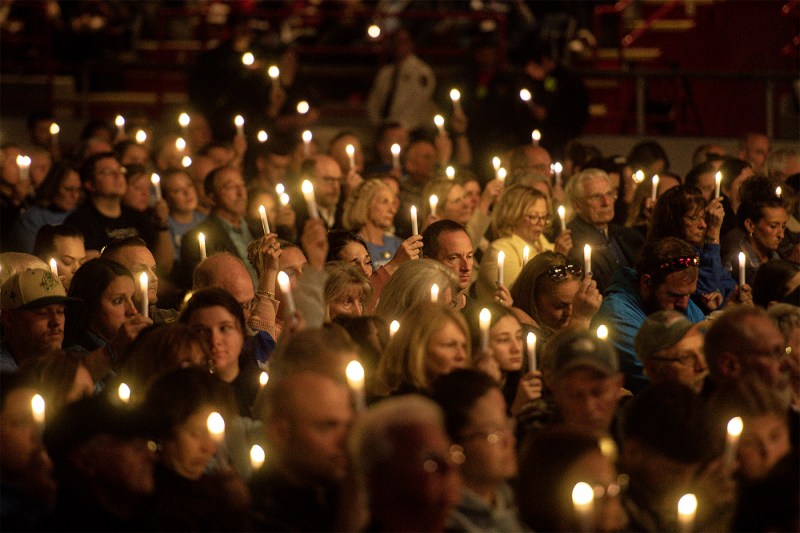
The playbook guides mayors and city officials through every part of the response and recovery process, from crisis communication on the first day to vigil and memorial organization in the ensuing weeks and years.
Since then, the playbook has been used by local leaders responding to mass shootings across the country, including in Highland Park, Illinois; Nashville, Tennessee; and Minneapolis. Peck confirmed that local leaders in Rhode Island contacted her to get copies of the playbook in the aftermath of the Dec. 13 mass shooting at Brown University.
Mayors who have used the playbook have also become invaluable parts of a growing network of local officials who have had to navigate their communities through mass shootings. Whaley shared the playbook with Highland Park Mayor Nancy Rotering within 45 minutes of the 2022 parade shooting that killed seven and wounded 48.
“We had this silly idea that we could be the last mass shooting,” Whaley said. “This is really one of the hardest things a lot of us have ever experienced in our life, I hope to ever experience in our life. How can we make that easier for the people leading?”
The first 24 hours after the Highland Park shooting were too overwhelming for Rotering to even look at the playbook. However, in the following days and weeks, Rotering turned to the playbook to help her strategically communicate with her constituents and even plan a vigil.
“I still remember the first day afterwards, my city manager and I saying, ‘OK, now we need to get this memorial figured out within a year,’ and then recognizing from the book, no, that’s not the case,” Rotering said. “It’s absolutely not supposed to be sped up, and you need the community’s engagement.”
Five years after publishing the playbook, things have changed for Peck and her team, and it has become necessary to update it quite dramatically.
“The first time the playbook had been established, cities hadn’t been using [it],” said Alexis Weldner, a 2025 Northeastern graduate who worked on revising the playbook during her co-op. “We were able to talk to Highland Park and Nashville city officials to be able to hear about how they used the playbook, what critiques they had and really just kind of get a better gauge of how the resource was being used.”
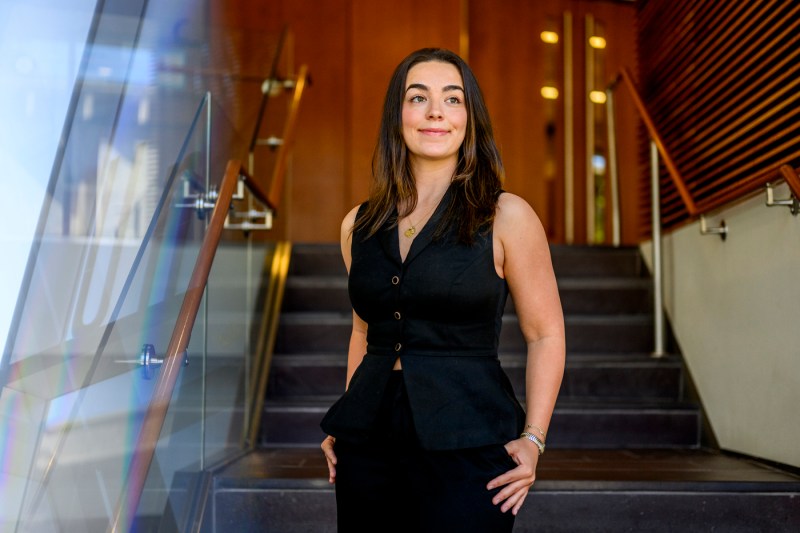
Weldner assisted Peck in expanding the playbook to include information on not only how to respond in the wake of a mass shooting but how to prepare for one. The second edition now addresses both proactive measures and reactive response strategies, with each chapter split between preparedness and recovery.
“We really wanted to get that preparedness element because that’s really how the most deaths can be prevented at this point,” Weldner said.
Beyond preparation, the playbook now includes a greater emphasis on law enforcement training and victim services.
Editor’s Picks





The latter is especially important, Peck said. Transporting injured people who need immediate attention gets complicated in most areas of the country where trauma centers are few and far between. City leaders might not think about those vital logistics until there’s a tragedy at their doorstep. It then becomes vital to figure out which medical centers first responders can use to patch up victims on their way to a trauma center, Peck said.
The final piece of the playbook, one that has become a centerpiece of the discourse around mass shootings, is what can be done to prevent shootings in the first place. The playbook now includes information about red flag laws and behavioral threat assessment protocols. The goal is to identify people who are in crisis, get weapons out of their hands and offer them resources so they don’t turn to violent action.
“This risk is frequent, and as a result, it’s incumbent on all of us to recognize those who are really feeling isolated, feeling bullied, feeling that they need to make a statement,” Rotering said. “We’ll never cover everybody, but we can certainly mitigate some of the pain that’s existing.”
Unfortunately, prevention is currently much less of a realistic expectation than preparation in many communities. The “Mass Shooting Playbook” is not intended to be a silver bullet, but Peck and Weldner hope it can be a first port of call for city leaders navigating the horror of a mass shooting.
“You can only assume that this could happen in your community, and you have to be prepared because if you’re not, then people are going to die that didn’t have to die otherwise,” Peck said.