‘It just kept getting worse.’ Northeastern medic assesses Jamaica’s worst-ever storm
After Hurricane Melissa devastated Jamaica, Northeastern’s Joshua Merson joined Team Rubicon to assess the damage and medical needs of the island.

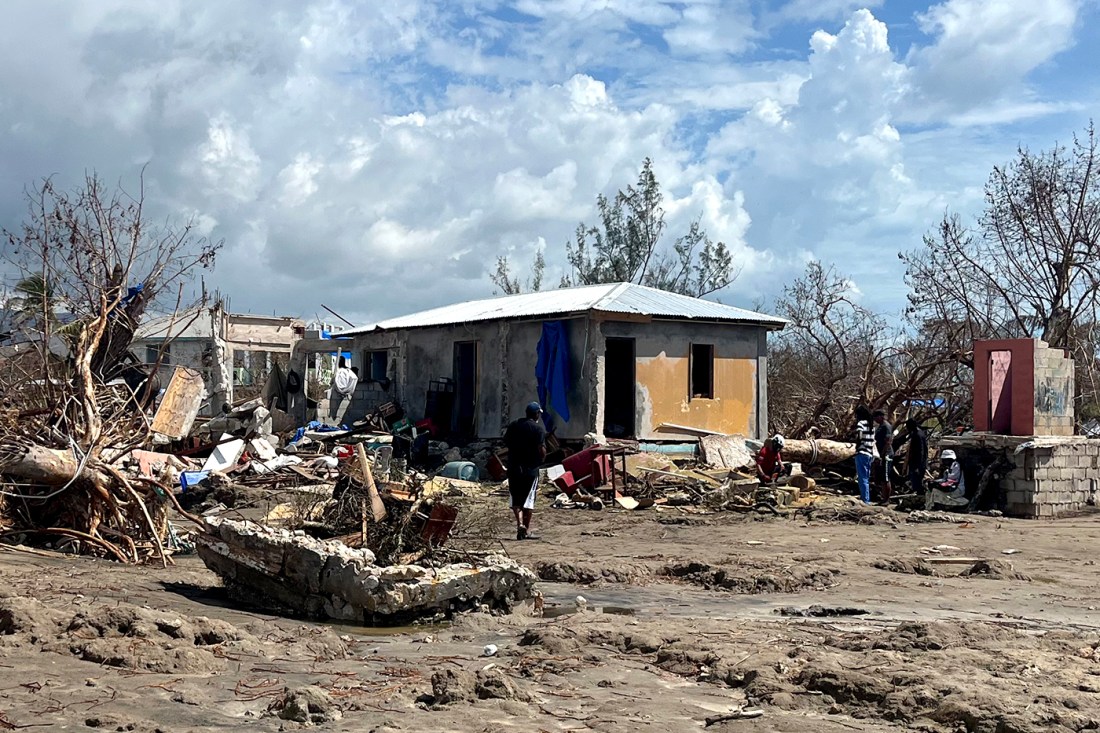
A few days after Hurricane Melissa hit Jamaica in October, Joshua Merson was walking the streets of Kingston, the nation’s capital, trying to track down some gas canisters for a chainsaw crew working on the other side of the island.
“As you can imagine, Google search doesn’t really work all that well,” he said. “There’s no numbers on places in Kingston.”
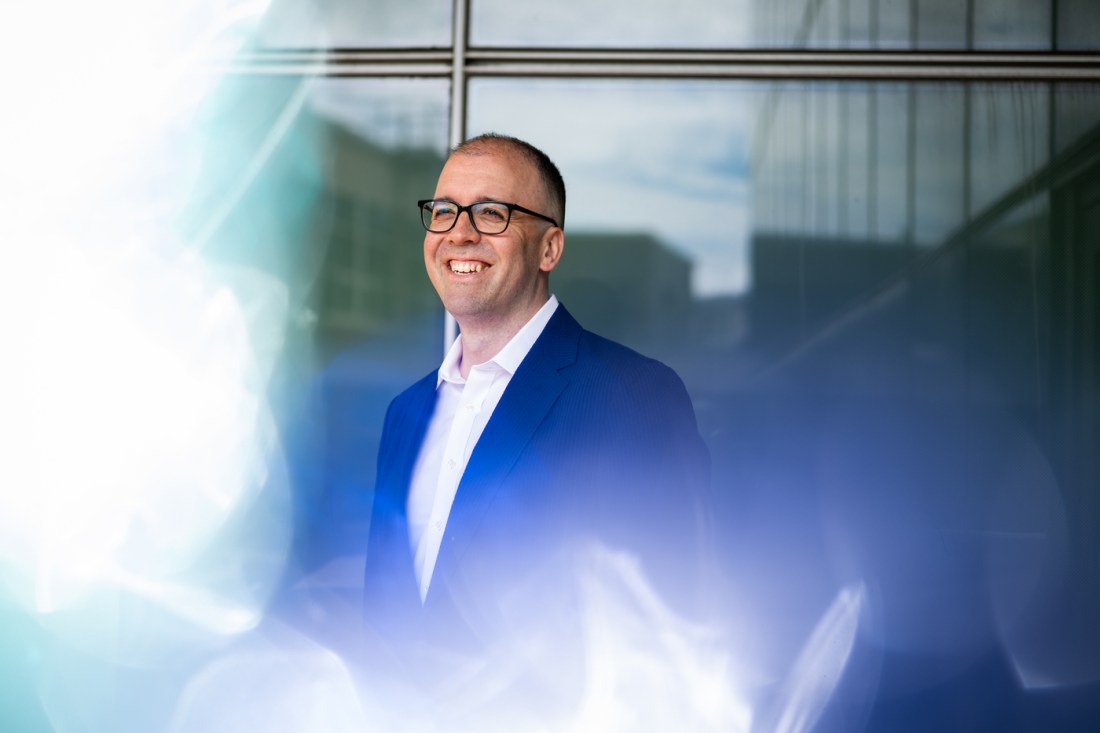
Merson, an associate clinical professor and extreme medicine program director at Northeastern University, went to Jamaica as one of four advance-team members for the veteran-led disaster relief nonprofit Team Rubicon. His role was to support logistics and operations while the team carried out medical assessments.
That day, he relied on the strategy he often uses in chaotic situations: asking people like a bus driver or a security guard where he might find the supplies his team needed. After locating the canisters, he coordinated their delivery to the opposite side of the island with the nonprofit World Central Kitchen.
“Though something small, it was nice to see that coordinated effort,” he said.
Hurricane Melissa made landfall in Jamaica around 1 p.m. on Oct. 28 near the town of New Hope as a Category 5 storm. A record-low central pressure of 892 mb contributed to sustained winds of 185 miles per hour, stronger than a high-speed bullet train. It was the most intense storm ever to hit the island and one of the most powerful Atlantic hurricanes on record.
The advance team flew from Miami on a humanitarian charter as soon as Kingston’s airport reopened. The team consisted of a leader working with Jamaican government officials and partners on the ground, two physicians, and Merson.
Their mission was to work with local authorities to determine where Team Rubicon could provide medical and non-medical support and to set up logistics for a potential large-scale response.
Editor’s Picks



“The main goal with any of these deployments is to work with local organizations, people and the governments on the ground,” Merson said. “Especially from a medical perspective, you never want to just jump in taking care of people when Jamaica has a well-established, functioning government with a strong medical credentialing sector.”
Team Rubicon often works alongside medical and non-medical non-governmental organizations already operating in affected areas, so the group also coordinated with the United Nations Office for the Coordination of Humanitarian Affairs and organizations within its health cluster.
When the team landed at sunset two days after the hurricane, the weather was beautiful, Merson said. Located on the southeastern coast, Kingston saw relatively little damage beyond power outages, nonfunctional traffic lights and spotty cell service.
Each night, the team attended coordination meetings to share what they were seeing in the field — road conditions, travel times, areas with heavy damage, and communities without access to clean water.
After receiving their assignment from Jamaica’s Ministry of Health, the team left Kingston by car for Savanna La Mar Public General Hospital. Because southern roads were closed, they detoured north through Montego Bay, a popular tourist destination.
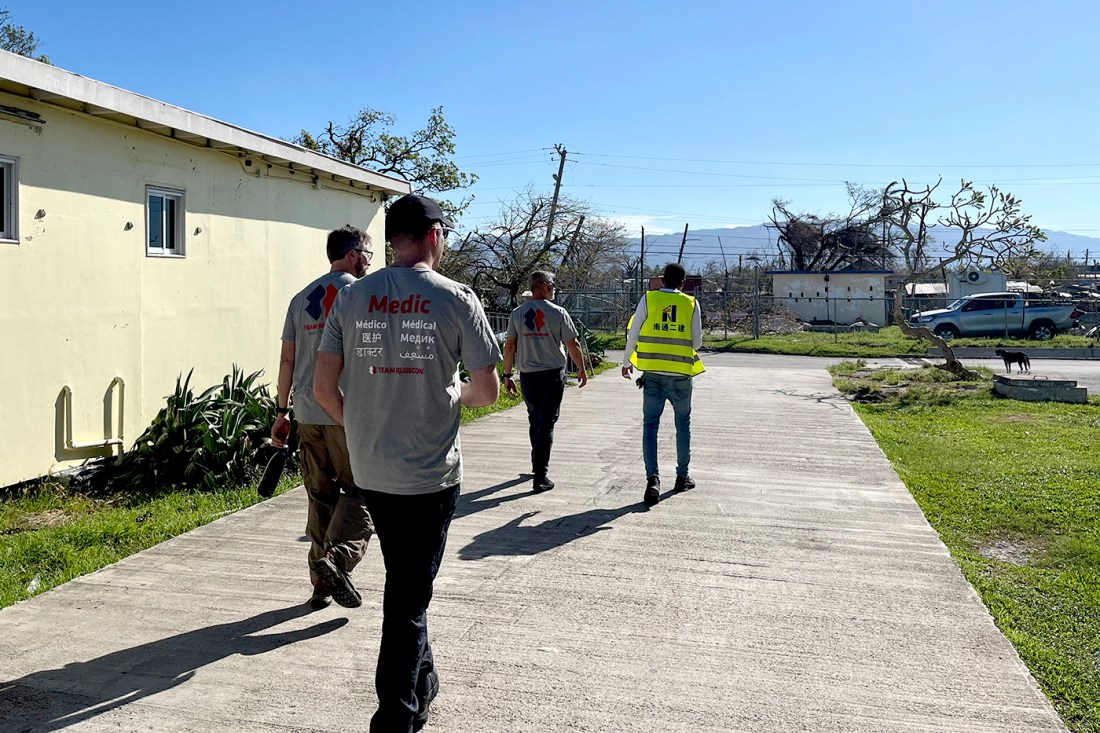
As they headed west, the team began to see more structural damage, downed power lines, debris, uprooted palm trees and heavier traffic. Steady rain that day also forced them to drive through significant flooding as the saturated ground could no longer absorb water.
“It just continued to get worse,” said Merson, who’s seen hurricane and tornado aftermath before.
The destruction in the hurricane’s eye path was staggering, he said, caused by both wind and flooding.
“It’s stuck with me even now, just recognizing what everyone there went through,” Merson said.
After eight hours on the road they stopped for the night in the town of Negril.
“Trying to drive anywhere without power lights is a no-go and a big safety concern,” Merson said.
Northeastern Global News, in your inbox.
Sign up for NGN’s daily newsletter for news, discovery and analysis from around the world.
The team arrived Sunday morning at the hospital that serves about 150,000 of Westmoreland Parish. The hurricane ripped the roof off a section of the building, destroying the entire outpatient wing. The hospital also sustained some flooding damage, Merson said.
Experiencing a hurricane in real time, the loud wind noises, flying debris and collapsing structures, he said, must have been a terrifying experience. A sharp drop in atmospheric pressure can cause people’s ears to hurt. Many people he spoke with at the hospital seemed deeply shaken.
“It wasn’t a small event; it was a pretty exceptional thing to actually live and experience, especially with the deaths that occurred with this type of damage and the injuries that have occurred,” Merson said.
While waiting for their medical credentialing, his team cleared debris
around the hospital and set up a tent to establish a clinic just outside the emergency department. They couldn’t treat acute cases such as severe abdominal pain or heart attacks, but they eased the load on emergency staff by handling basic primary-care needs — cuts, lacerations, bruises, broken bones and small infections.
By the time Merson left Jamaica, the first wave of Team Rubicon’s medical team had already arrived and begun providing care. Chainsaw crews and the medical staff, Merson said, were to stay in Jamaica for at least eight weeks.
Returning home and re-entering everyday life, Merson said, is one of the hardest parts of disaster-relief work. He gives himself time to rest and process what he experienced before going back to work.
“You’re exhausted, you’re tired, you’ve seen a lot, you’ve done a lot, lots of hours of traveling,” he said, “so you need that time to process.”
He typically focuses on sleep, spending time with family and friends and eating good food. Staying connected with teammates is also important, he said, because they can share stories and support one another.
Reflecting also helps him reaffirm that he can continue doing disaster-relief work and can handle such stressful situations.
“It reinvigorates my motivation for having a passion and love for being able to do humanitarian disaster work,” Merson said.