These students want to bring wildlife to campus life
A biodome on Northeastern’s new arena? A farm on the quad? The koi pond turned into a wetland? Students in Professor Kathleen Coyne Kelly’s class have radical ideas for how to make Northeastern a reminder of the natural world.

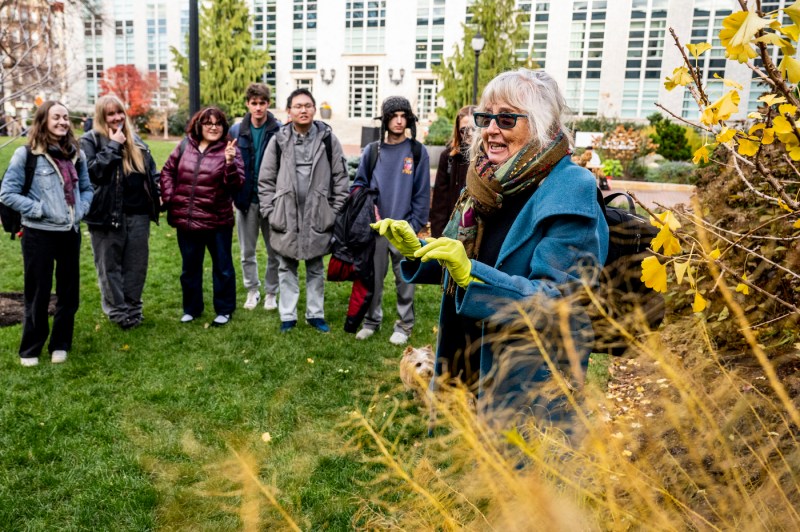
Imagine walking by the beloved koi pond on Northeastern University’s Boston campus and instead of red, white and golden fish, you’re greeted by turtles, trout and catfish. It might sound like heresy to some, but for one group of students, this bold idea brings some much-needed wildlife to campus life.
“Learning about nature really makes you realize how synthetic the world around us is,” said Lucia Barrera, a fourth-year environmental science student at Northeastern, after presenting her proposal to her class of fellow rewilders in Snell Library.
Barrera and her classmates are reimagining campus as an urban nature preserve, bringing wildlife to campus life as part of English professor Kathleen Coyne Kelly’s class simply titled “What is nature?” Kelly’s English course attracts people studying everything from literature to biology with the aim of understanding how people think about their relationship with nature.
Students read the work of writers like 19th century naturalist, poet and essayist Henry David Thoreau alongside scientific research. They keep field notebooks as they observe the natural world. The course culminates with students proposing a pie-in-the-sky rewilding project for campus designed to bring native plants, animals and ecosystems into the equation.
“They never look at the world the same,” Kelly said. “Every place has a history, and for them this is a revelation because we accept what we see. … I want them to spend the rest of their lives walking around and looking at a place and saying, ‘I wonder what was here before.’”
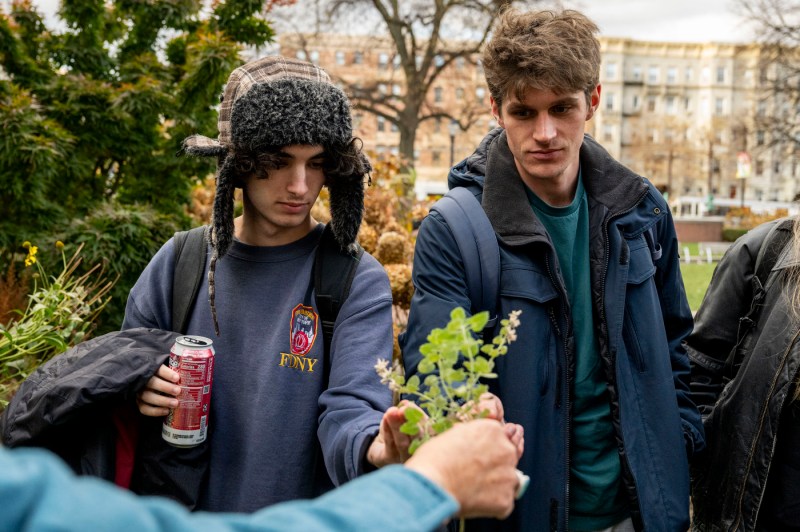
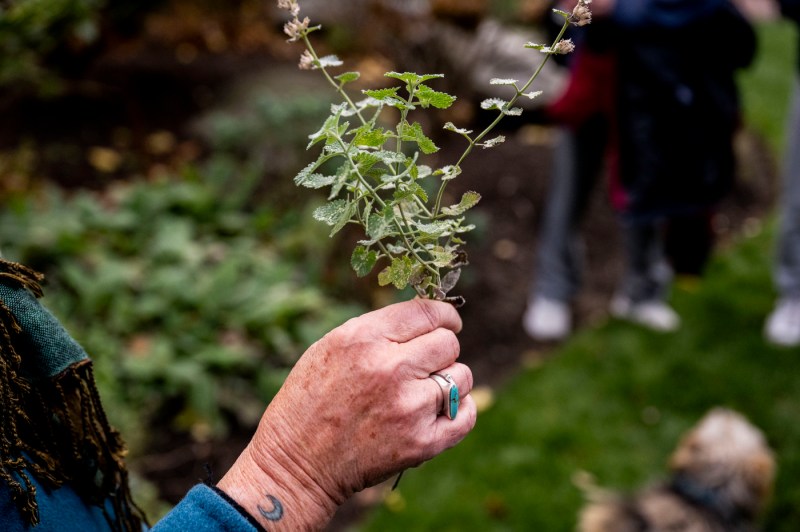
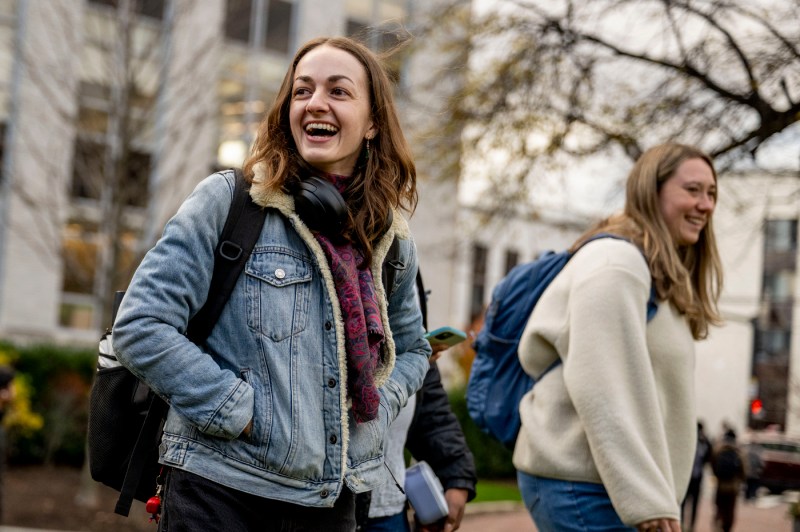
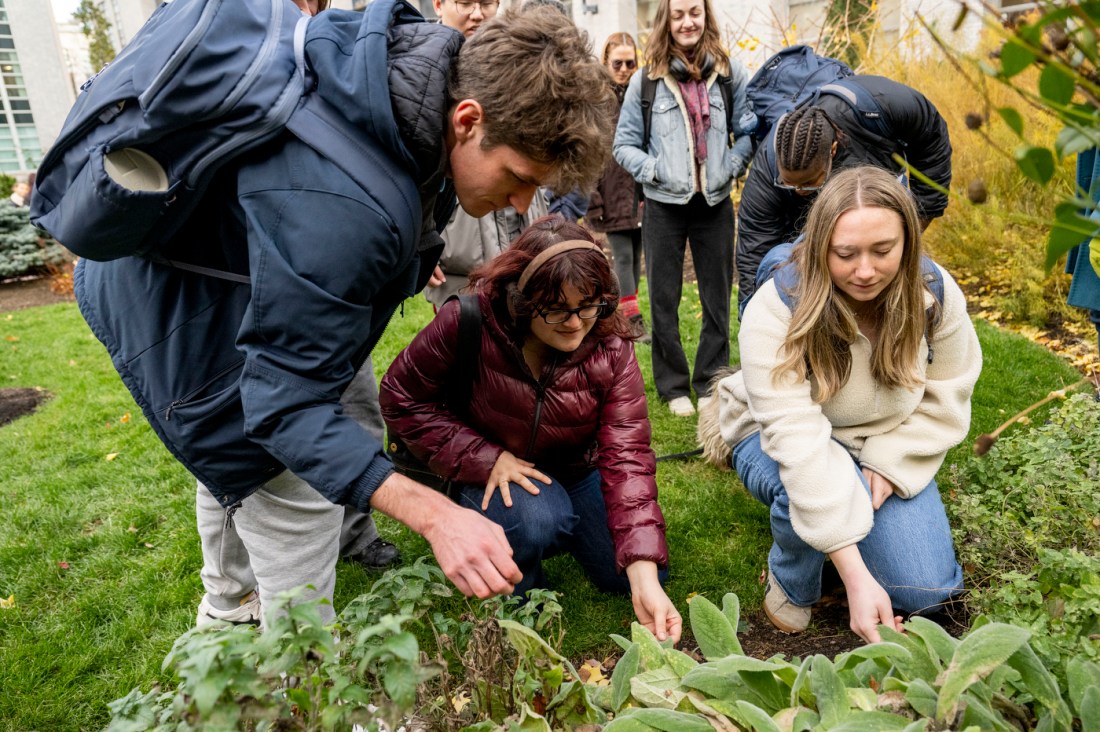
Rewilding is a common form of ecological restoration that lets nature take the lead, reducing human influence.
“Rewilding supports the recovery of ecosystems by re-establishing natural processes, boosting biodiversity and strengthening ecological resilience,” said Ian Convery, co-chair of the International Union for Conservation of Nature’s Commission on Ecosystem Management and Rewilding.
It can also help mitigate climate change by increasing carbon storage in forests, wetlands and soils and improving pollination, water regulation and other vital ecosystem functions.


In Northeastern’s koi pond, Barrera and her classmates, Brooke Glasier, Patrick Cantion and Ben Godish, saw the perfect rewilding opportunity. Their proposal honors the original koi pond but would remake the site into more of a natural wetland, complete with native perennials, pollinator plants, aquatic plants, brook trout, white catfish and even turtles.
The other students in Kelly’s course also found inspiration in Northeastern landmarks.
One student team proposed adding a biodome to the roof of the new multi-purpose athletics and recreation complex that will replace Matthews Arena. The glass-domed rewilded ecosystem would be populated by near-extinct species of plants and animals, fostering biodiversity and giving students natural learning opportunities, according to Kayli Harley, a communication studies student at Northeastern.
The final group of students aimed to transform Northeastern’s Krentzman Quad into a local farm by adding raised garden beds. Run by a student club, the planter boxes grow corn, beans, squash and tomatoes that students and the broader community could use.
“This class forces you to think about what [campus] could be instead of what it is,” said Amy Spreitzer, an environmental and sustainability sciences student.
The goal with all this work is not only to encourage students to reconsider the paths they walk every day. For Kelly, building a bridge between literature and the hard sciences only benefits both disciplines.
“My course is emphasizing you can’t do this kind of work without science, but science needs this kind of work as well,” Kelly said.
One lesson Kelly emphasizes with her students early on is what scientists and poets have in common: a love for literary devices like metaphors, similes and analogies. When students start to see beauty in scientific prose and observational rigor in natural poetry, that’s where Kelly’s course has the potential to change her students’ world, if not the world at large, Kelly said.
“It’s changed my whole worldview,” Spreitzer said. “I really love poetry, but it’d been a while since I’d written any or read any. This class brought me back to that.”