Computer vision expert Lorenzo Torresani named Joseph E. Aoun Professor
As the recently named Joseph E. Aoun Chair, Lorenzo Torresani is designing a new lab at Northeastern University centered on perceptual AI.

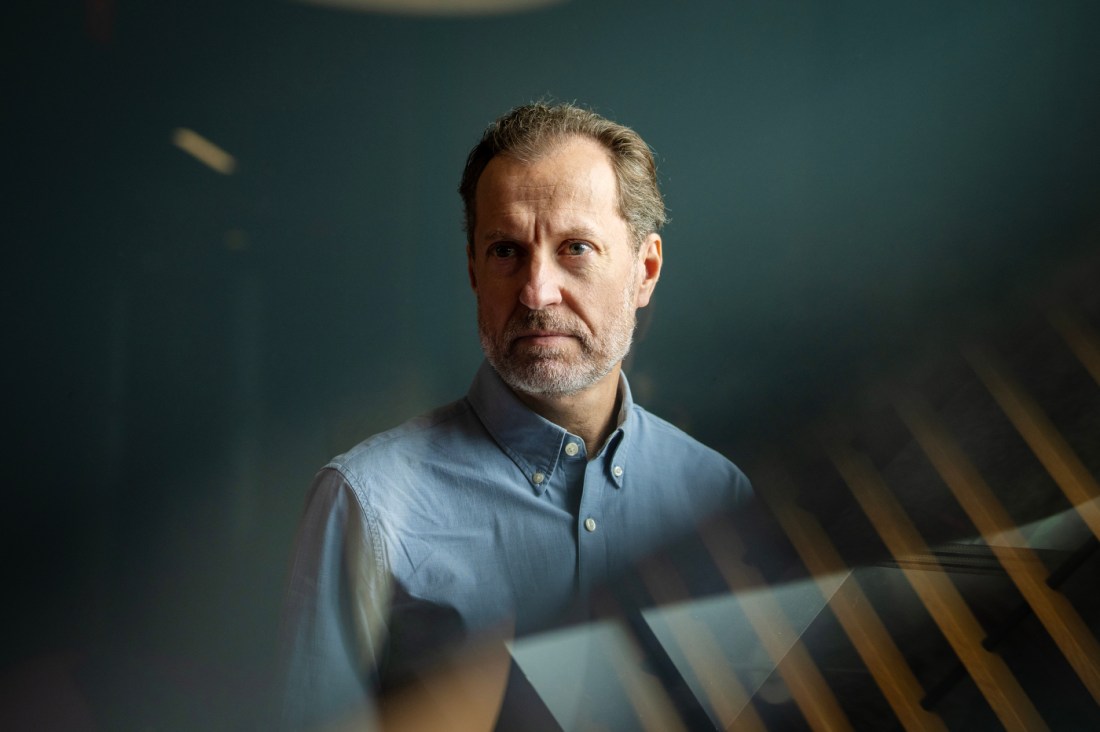
Former Meta research director Lorenzo Torresani aims to usher in “technical breakthroughs” in perceptual artificial intelligence at a new lab he has designed at Northeastern University.
Torresani, recently named the Joseph E. Aoun Professor Chair, says the new lab at the university could support technology companies in refining their AI-based products by working on models designed to analyze video, images and physical objects.
These advances may contribute to the development of AI-powered wearable technologies, humanoid robots, autonomous vehicles and related applications.
“To help develop the next generation of perceptual AI assistants, we could benefit from exploring new technical approaches,” he says. “Academia may offer certain advantages for pursuing this type of research.”
Torresani says being named a Joseph E. Aoun Professor is “a dream come true.”
“I really value being a faculty (member) at Northeastern. One of the reasons I chose to work at Northeastern is because I sense that leadership is really forward-looking. They really want faculty who are making a real-world impact,” Torresani says.
Torresani is one of three appointed Joseph E. Aoun chairs. Eight professorships were established in honor of Aoun through a $25 million gift from Alan McKim, campaign co-chair and vice chair of the university’s Board of Trustees.
Tina Eliassi-Rad was installed as the inaugural Joseph E. Aoun Professor in September 2023. Eliassi-Rad is a professor in the Khoury College of Computer Sciences and holds core faculty appointments in the university’s Network Science and Experiential AI institutes.
Editor’s Picks




Yonina Eldar, in the College of Engineering, has also been named a Joseph E. Aoun Professor.
Elizabeth Mynatt, dean of Khoury College of Computer Sciences, says Torresani’s expertise will help drive the college’s research in the development of physical AI agents.
“Lorenzo’s strength in perceptual AI contributes to our leadership in the overall challenges of embodied AI,” she says. “ChatGPT understands language. We need AI that is just as intelligent about understanding the physical world that we all live in.”
Torresani says he plans to collaborate closely with other Northeastern faculty members in other AI disciplines, including natural language processing, robotics and wearable technologies.
Torresani lays out one smart glasses application the team plans to work on called “episodic memory retrieval.”
“We are basically building these models that can process video that is streamed from these smart glasses and infer what is in front of the camera wearer and then assist the user in a variety of ways by leveraging the context that it infers from the environment,” he adds.
“Because cameras will always be on, it will know everything that I’ve seen, and so I can ask, ‘Hey, assistant, where did I misplace my keys?’ The system will look back from that moment in time to my user memory to see where it was last.”
Torresani has previous experience working in academia and is excited to leverage his experience in both industry and higher education in this new role.
“I’ve always kind of mixed these two interests,” he says.
In academia, researchers are given more freedom to pursue challenging problems without too many constraints. Business, on the other hand, is oriented toward solving challenges on much shorter timescales.
“At this stage in my career, I really want to work on fundamental technology with fewer constraints and have the opportunity to really go after the breakthroughs that I feel our field needs.”