After Google and Meta antitrust cases, experts say the courtroom may be the wrong venue for challenging Big Tech
Northeastern University experts weigh in on effective policies for regulating the country’s largest tech companies.

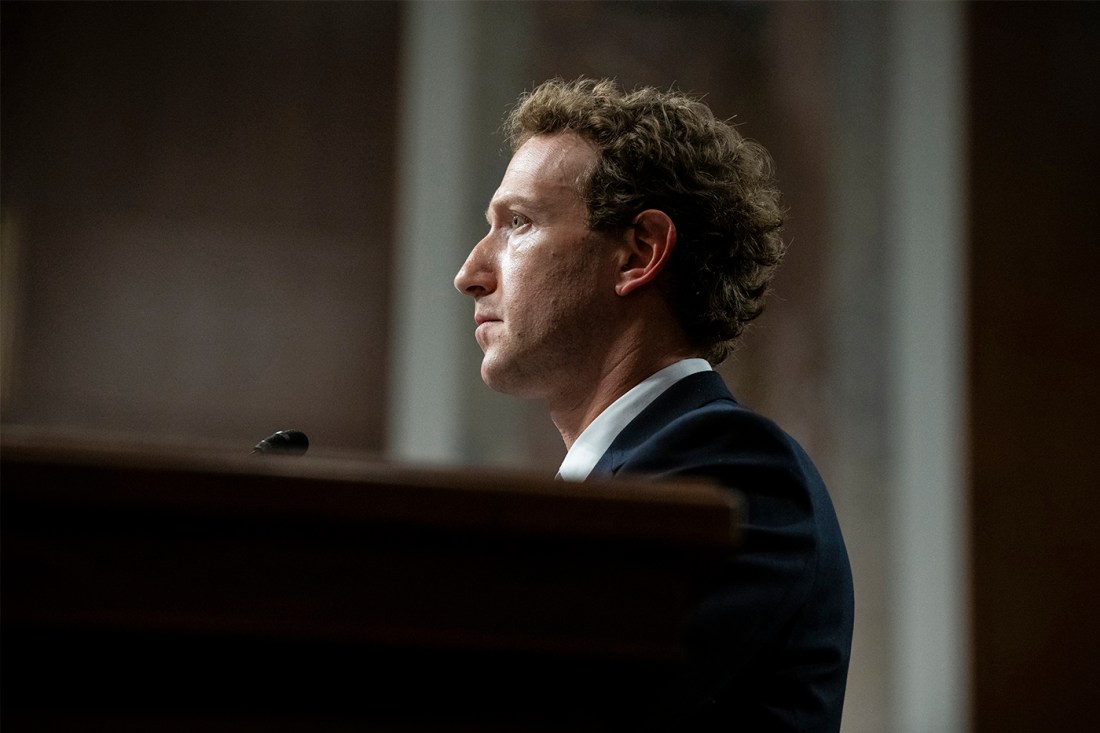
In recent years, Big Tech has been on the defensive following antitrust suits against Google, Facebook, Amazon and Apple.
But after “a slap on the wrist” for Google, and the dismissal of claims against Facebook on Tuesday, Northeastern University law and technology experts say that lawsuits may not be the most effective way to check Big Tech.
“It may be that the court is not the right venue for these issues to be solved, we may need regulations or another law,” said John Kwoka, Neal F. Finnegan distinguished professor of economics at Northeastern.
Elletra Bietti, assistant professor of law and computer science at Northeastern, concurred. Both she and Kwoka noted that the United States has no equivalent to the Digital Markets Act — the European Union’s regulations for large online “gatekeeper” companies that aim to proactively ensure a fair and competitive digital market.
“There’s something problematic about relying on antitrust litigation for trying to correct big accumulations of power in the tech space,” Bietti said.
A federal judge on Tuesday dismissed claims that Meta Platforms — the parent company of Facebook, Instagram, WhatsApp and Threads — had an illegal monopoly on social media that it maintained by buying up nascent competitors.
In a statement posted on the company’s website in April, Jennifer Newstead, Meta’s chief legal officer, described the Federal Trade Commission’s lawsuit against the company as “weak.” Following the ruling in Meta’s favor this week, she told the Associated Press that the decision “recognizes that Meta faces fierce competition” and that its products are “beneficial for people and businesses and exemplify American innovation and economic growth,” the news agency reported.
It was a different outcome than the case against Google, where courts ruled that the tech giant acted illegally to maintain a monopoly in search and open-web digital advertising markets. But the judge’s remedy in the Google search case surprised experts as ineffective and incongruent with the monopoly finding.
“They were ruled a monopolist in 2024, but by 2025 they got a slap on the wrist,” Kwoka said.
All three experts also said they disagreed with the outcome of the Meta case — although they differed on an appropriate remedy.
But the requirements of antitrust law presented some challenges in both cases, experts said.
To prevail in an antitrust case, the government must successfully define the marketplace and demonstrate that the defendant has enough power to manipulate prices within that market.
But in the Facebook case, the government essentially argued that social media consisted of two markets, explained Christo Wilson, professor and associate dean of undergraduate programs at Northeastern’s Khoury College of Computer Sciences.
“They tried to draw this distinction between personal social networking, where you connect with family, and general social media like Twitter or TikTok where you just see stuff from whomever,” said Wilson, who has done digital consumer protection research on online platforms including Google. “That distinction feels kind of artificial.”
Also, unlike the Google cases where bundled ads or search couldn’t be uncoupled from other products, Wilson pointed out that “no one’s forcing anyone to sign up for Facebook accounts or Instagram accounts,” and the accounts are free.
That left the government to rely on the argument that the 2012 Instagram acquisition and 2014 WhatsApp acquisitions — although both deals were approved by the FTC — were illegal monopolization actions.
That reveals another problem with antitrust litigation, however, the experts said, the timeframe.
“It’s somewhat hard to argue what the anti-competitive conduct was other than these old acquisitions, which probably shouldn’t have happened but, frankly, are yesterday’s news,” Wilson said.
The judge seems to have agreed.
“Whether or not Meta enjoyed monopoly power in the past … the agency must show that it continues to hold such power now,” U.S. District Judge James Boasberg ruled. “The court’s verdict today determines that the FTC has not done so.”
Kwoka disagreed with the judge’s reasoning, saying it provided “a path for companies to follow for escaping antitrust penalties for what they may have done.”
“‘No current harm, no foul’ is to my mind illogical,” Kwoka said. “It incentivizes companies to run out the clock — it’s always true that if you wait long enough, companies will have competition.”
Bietti said such delaying tactics are a fundamental problem in antitrust cases.
“I think when the (Facebook) lawsuit started, the FTC thought that there would be enough appetite on the part of society for strong antitrust enforcement,” Bietti said. “I think we’re not in that world.”
But in the world we’re in, at least the world American consumers and American tech companies are in, antitrust litigation is the only option.
“The real issue is there’s no alternative avenue for holding these companies to account,” Bietti said.