Marathoner offers advice on running in the winter
Nine-time marathoner Michaela Quigley hates cold weather. She hates treadmills even more.

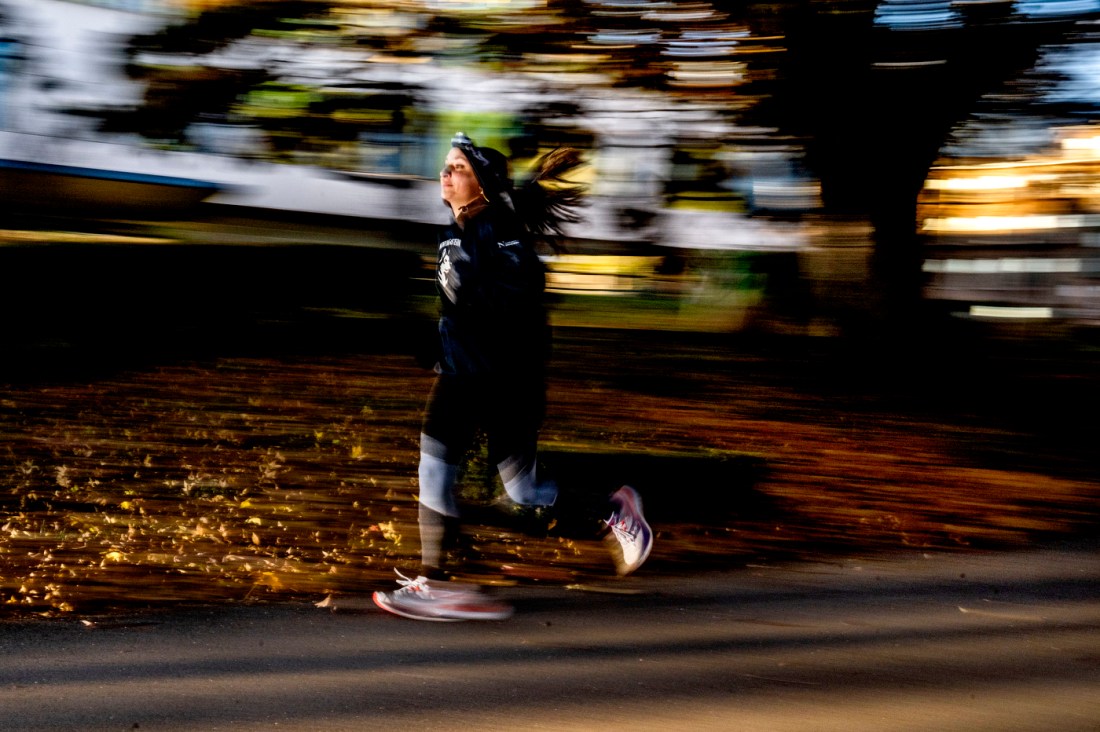
Nine-time marathoner Michaela Quigley says she hates two things: the cold and the treadmill.
It makes training for spring marathons a little tough.
“There’s nothing worse than having to run on a treadmill,” says Quigley, a digital media producer at Northeastern University. “So, I try to run outside as much as possible, even in the winter.”
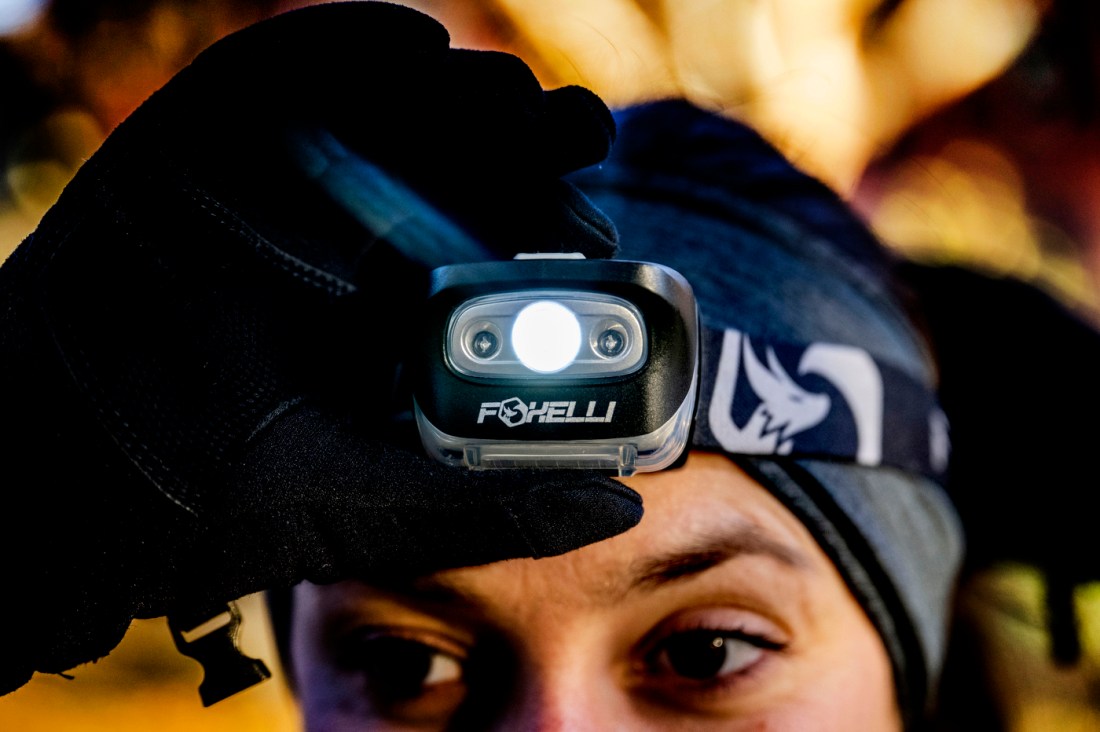
So, yes, that’s Quigley’s headlamp you see bobbing along as she does her “run commute” to North Station at the end of a winter workday. That’s Quigley who is sidestepping black ice on the Minuteman Bikeway on the weekends. And that’s Quigley who is prepping for her ninth marathon (possibly, she’s lost track) by running into the biting wind down by the banks of the Charles River.
It takes dedication.
It also takes a certain amount of delusion.
“I have to essentially play tricks on myself,” Quigley says.
But she’s gotten used to it. After all, she began her fitness routine by running laps around a park in Syracuse, New York, one of the few U.S. cities with more miserable winter weather than Boston.
So, whether you’re a fairweather pavement pounder or are lacing up your running shoes for the first time as temperatures plunge, Quigley has some advice on how to make your run as comfortable as possible.
Find your people
Accountability is key, Quigley says, which is why running twice a week with a running group in her hometown of Woburn is such a benefit and motivator.”
“If you don’t show up, people will ask ‘Where were you?’” Quigley says.
Running in a group also has other benefits during the long, cold winter.
“It’s hard to feel safe when it gets dark so quickly,” Quigley notes. “I kind of freak myself out if I’m alone running in the dark, so I try not to do that, which is also where running with a group really helps.”
A third benefit? More runners means more lights.
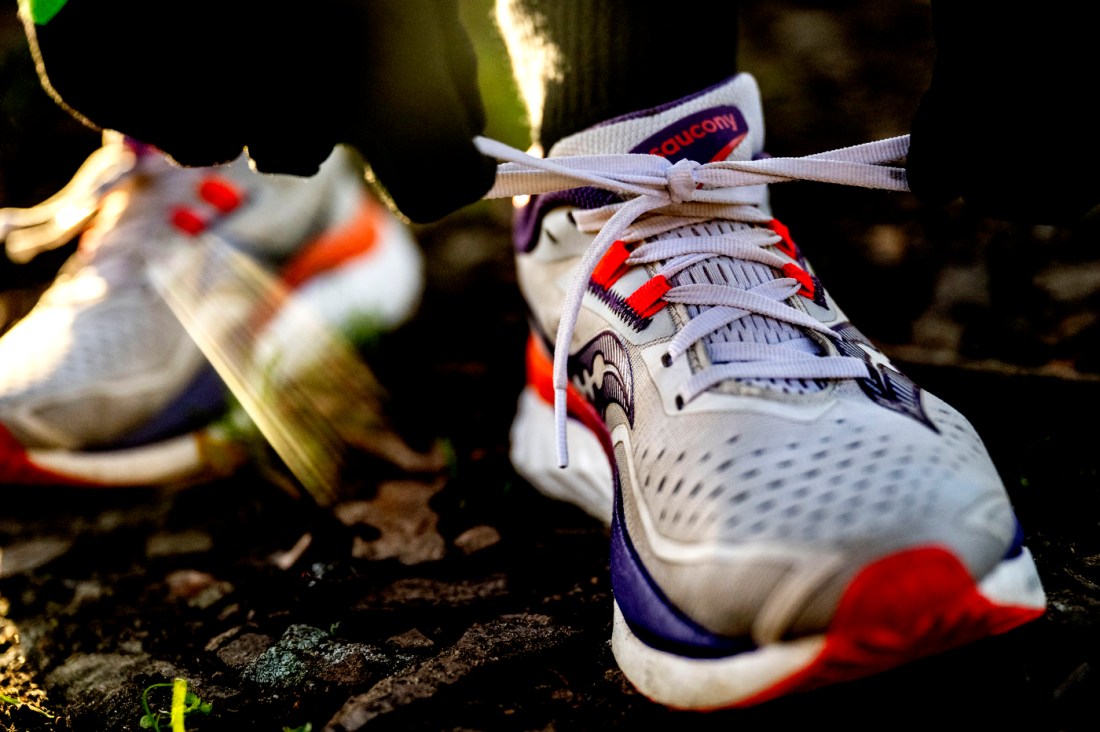
Quigley notes that in addition to headlamps, runners use lights that clip on to clothing, handheld flashlights and even “shoe headlights.”
“I did run with those at one point,” Quigley says. “They’re a little silly.”

Sign up for a race
Quigley started running her sophomore year of college, and she distinctly remembers her first race the following summer.
“It felt terrible, it felt awful,” Quigley says of the 5-mile race. “I was truly dragging through it.”
But she signed up for a half-marathon and continued training.
And when she crossed the finish line of the half-marathon, she didn’t feel misery. She felt the “addictive” adrenaline rush that keeps her running today.
The lesson? Sign up for a race to give yourself a training goal.
“That always gets me out the door,” Quigley says. “If you don’t train for your race — no matter what distance it is — it’s just not going to feel as great as if you had signed up and prepared.”
Make your run your first journey outside
Quigley doesn’t obsessively monitor the weather to schedule her runs.
Instead, she likes to run early in the morning or after a workday sitting inside, so that she has no preconception of how cold it may be.
“That way you’re really not thinking and realizing how cold it is outside,” Quigley says.
The one exception. Wind chill.
“There’s no reason to be getting the wind whipped in your face and frostbite,” Quigley says. “Just move to the treadmill and take it one mile at a time and find ways to entertain yourself on the treadmill instead.”
If you’re going to commit, wear the right clothes
Quigley admits she’s not always good at the all-important task of keeping her core warm when she runs in the cold. However, over the years, she has picked up two general recommendations for what to wear for your winter run.
First, wear lots of layers.
On the coldest days, Quigley dons a tank top, long-sleeved shirt, a sweatshirt and a zip-up vest on her upper body; leggings and sweatpants on her lower body; a winter hat; and mittens with hand warmers.
Warmer days may allow for gloves rather than mittens, no vest or fewer top layers, but layering gives you some flexibility as the weather changes or your body heats up from the exercise.
Secondly, wear clothes that are designed for runners or athletes.
The tank top and long-sleeved shirt should be made of breathable, sweat-wicking material (no cotton!), and Quigley says there are a few requirements for leggings.
“Don’t just buy the comfy, lounging-around-the-house, fleece-lined leggings because those will be too thick, and then that fleece is gonna get pretty nasty with sweat,” Quigley says. “Running ones are a thinner fleece and they do a good job.”
Many leggings also have material that blocks the wind, Quigley adds.
Finally, tuck in. Don’t allow wind to get in by tucking in wherever possible — your tank top into leggings, your leggings into socks (again, breathable, sweat-wicking socks), etc.
Be aware that the cold weather may require extra route planning
Some runners like to meander. But the cold weather can require a few extra steps — pun intended — when planning your run.
Snowplowing and sidewalk shoveling, or lack thereof, can limit your routes, which is why Quigley recommends bike paths or common running routes like the Esplanade.
She also suggests that you plan your route around a source of warmth, say your house or your car, not just as “an out” for yourself should the cold eventually be overwhelming, but for the things you’ll need on the run.
“In the winter I would opt for using gels over gummies for nutrition on long runs,” Quigley says. “Your gummies will freeze, and then if you’re out on a long run, now you have frozen gummies and you’re cracking a tooth … it’s not good.”
Similarly, your water will freeze, Quigley warns, and you may want to discard layers as your body warms up.
Which gets to the final point.
“Warm up before you go outside!” Quigley says. “It can feel so awful if you just start running without warming up your legs — it almost feels like shocks going up your legs.”
Quigley recommends swinging your legs, doing lunges in all directions, some squats, bridges to stretch your hip flexors, and rolling your ankles.
And finally, when you step into the Arctic temperatures of February, remember that spring is just around the corner.