Trump tariff stimulus checks could fuel inflation, complicate Fed policy, economists say
Whether a fiscal stimulus would make a difference depends on how economists view the economy — and on whether the money would be disbursed during a period of growth or recession, experts say.

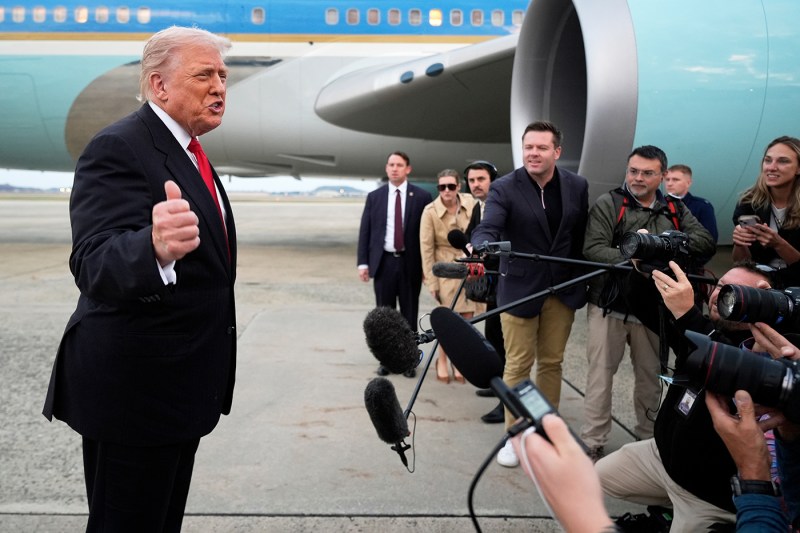
President Donald Trump is proposing to send most Americans a payment of at least $2,000 a person from revenue raised by his tariff program, according to his social media posts over the weekend.
The announcement came with few details about how the administration would distribute the money — or whether it would be legal, as the Supreme Court weighs whether the emergency powers Trump invoked to collect the tariff revenue were constitutional.
While the proposal to send $2,000 stimulus checks to low- and middle-income Americans is “politically shrewd,” financially it is unrealistic, says William Dickens, university distinguished professor emeritus of economics and public policy. Tariff revenues cover only a fraction of the roughly $660 billion price tag needed to cover the plan to pay more than 300 million citizens, he says.
Additionally, Congress would need to approve the payments.
“If the courts don’t stop him — which they probably won’t for a long time — by January they will have taken in about one-third of what [Trump] would need” to make good on the proposal, Dickens says.
Whether a fiscal stimulus would make a difference depends on how economists view the economy — and on whether the money would be disbursed during a period of growth or recession, experts say.
And by most accounts, the U.S. economy has shown signs of a slowdown. Job growth has slowed, with unemployment creeping up to 4.3%, and manufacturing activity has remained in contraction for months, according to the latest data from the Bureau of Labor Statistics. Amid the ongoing government shutdown, the agency has not released its monthly jobs for two consecutive months.
Some economists warn that the stimulus checks could do more harm than good — fueling inflation, complicating the U.S. Federal Reserve’s plans to cut rates further and signaling fiscal irresponsibility at a moment when the government is already coping with a burgeoning national debt crisis.
Bob Triest, a professor of economics at Northeastern University, says at present there is not “a sound macroeconomic case” for a fiscal stimulus. “Although the economy appears to be weakening,” he says, “the Fed has plenty of room to cut interest rates if that is warranted.”
But Dickens says the $2,000 bump “would help support the economy” if the U.S. were to enter a recession, and would have little to no impact on prices.
Editor’s Picks





“On the other hand, if the economy is running strong and he doles out $2,000 to everyone, it could drive inflation up,” Dickens says.
The last time a large swath of Americans saw a fiscal stimulus of this size was during the COVID-19 pandemic, when the economy was reeling from mass shutdowns, soaring unemployment and an urgent need to keep households and businesses afloat.
Triest says the case for the American Rescue Plan hinged on the fact that the Federal Reserve in 2020 had already cut its policy interest rate — a benchmark that influences borrowing costs across the economy, also called the federal funds rate — to close to zero, which meant that any additional stimulus would need to come from fiscal policy.
“That was also the case with the American Recovery and Reinvestment Act of 2009,” he says.
Triest notes that inflation is already above the Federal Reserve’s 2% target — and is likely to worsen as a result of lagged effects from tariffs. The potential impacts of the tariffs are already causing the Federal Reserve to tread lightly about how quickly to bring down the federal funds rate, with Chairman Jerome Powell and some other central bank officials saying that a cut at the Federal Open Market Committee’s December meeting is not assured, Triest says.
Should the federal government send $2,000 checks to Americans at this time, it would create inflationary pressure and make the Federal Reserve more hesitant to cut the federal funds rate further, or to at least slow the pace of rate decreases substantially, Triest says.
“So, the macroeconomic effects of the fiscal stimulus would likely be largely undone by monetary policy leaning in the opposite direction as the Fed tries to stabilize the inflation rate,” he says.
What’s more, an “unneeded fiscal stimulus” might be interpreted as a signal that the administration does not take “our unsustainable federal fiscal trajectory seriously,” and might put upward pressure on long-term interest rates, Triest says.


