Darin Detwiler has a lot of food safety fail stories and now, a podcast where he shares them
Detwiler and his wife, Gennette Zimmer, launched “Confessions of a Food Safety A-hole” as a space to discuss another side of the industry.

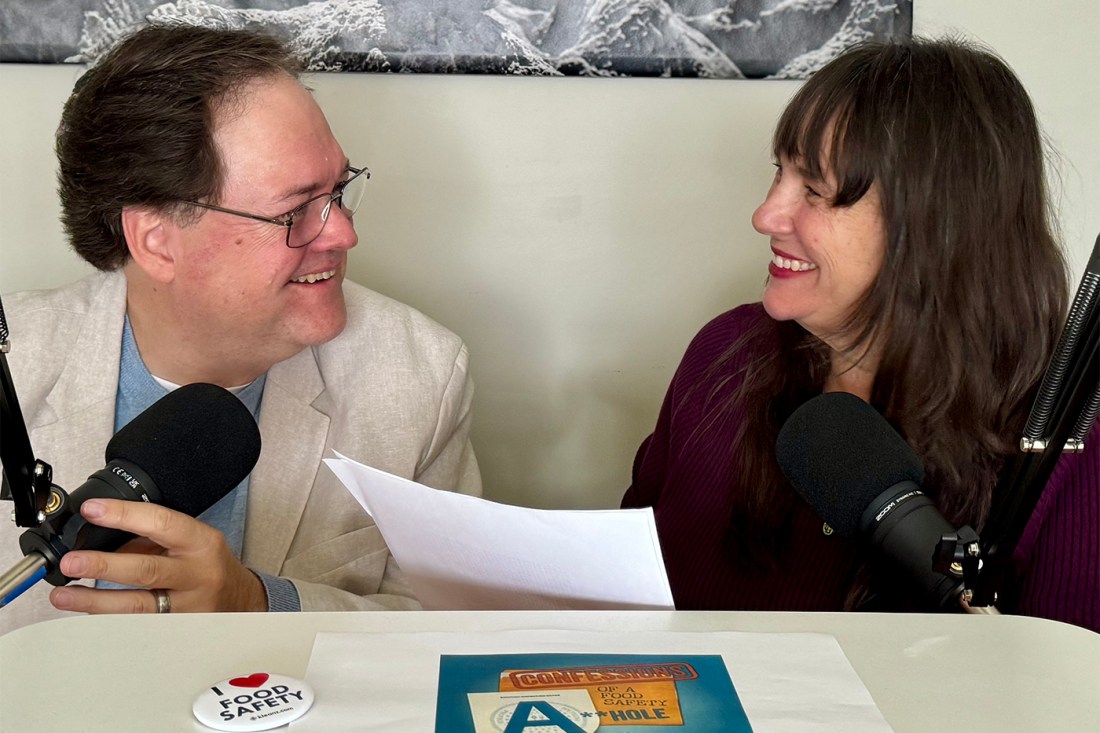
Northeastern associate teaching professor Darin Detwiler has made a career out of food safety. So as you can imagine, he has quite a few stories about food safety failures he’s spotted while dining out (like the time he got served a hamburger that was raw in the middle).
Detwiler sits on boards for institutes like the USDA, helps write changes in federal regulatory compliance and advises businesses on best practices. So he feels compelled to speak up, leading to some awkward moments.
In light of this, Detwiler and his wife and business partner, Gennette Zimmer, decided to start the podcast “Confessions of a Food Safety A-hole,” which offers a look into their work and moments when speaking up wasn’t so popular while supporting, validating and celebrating the people who work in food safety.
“When I interact with industry, it’s like flipping a coin,” Detwiler says. “Are they going to be like, ‘Oh, yeah, you’re right. We should be doing this. Sorry.’ Or say ‘I know what I’m doing. You’re an a-hole for telling me that I don’t know how to do my job.’”
The podcast also offers an inside glimpse at the food safety industry, including what Detwiler describes as the “funny moments” and “awkward observations” that happen behind the scenes and often don’t get discussed in other professional settings.
For example, Zimmer confesses in episode one that she noticed early on in their relationship that if the pair went to a restaurant with an open kitchen, Detwiler watched for food safety issues the whole time. So she started making sure he sat with his back to the kitchen.

“It took me a while to realize that was what she was doing,” Detwiler says. “We’ve talked about that with so many couples where one of them works in food safety and they all just laugh because it’s true. That’s what goes on behind the scenes. I’m able to talk about it from a very real perspective and I respect this opportunity because I realize I’m speaking for a lot of families that don’t get a place at the table. This podcast is the opportunity to not talk about the same corporate or regulatory elements, but the real culture and lifestyle. Sometimes it’s things that make me angry and sometimes it’s things that are very sad. But there are times when it’s hilarious.”
“We have fun helping give that perspective of the everyday person and what they notice,” adds Zimmer. “It’s stuff that everybody should know about.”
The couple will also invite guests to discuss issues in and the history of the industry. Listeners will come away with tidbits about how poorly constructed gloves contribute to contamination and the history of 20th-century activist and journalist Olive Christian Malvery.
“We’re going to be spotlighting people who helped us get to where we are today in food safety and finding unique and entertaining ways to highlight what they did and how they helped us get to where we are today in food safety and why they technically are also a food safety a-hole,” says Zimmer.
The couple, who originally met in high school, began dating in 2012. As their relationship progressed, so did Zimmer’s involvement in Detwiler’s work. Together, they run a consulting business and multimedia company, PEP Nexus, that is dedicated to food safety.
“Being a part of food safety has become part of my world,” she says. “We basically were already creating content together.”
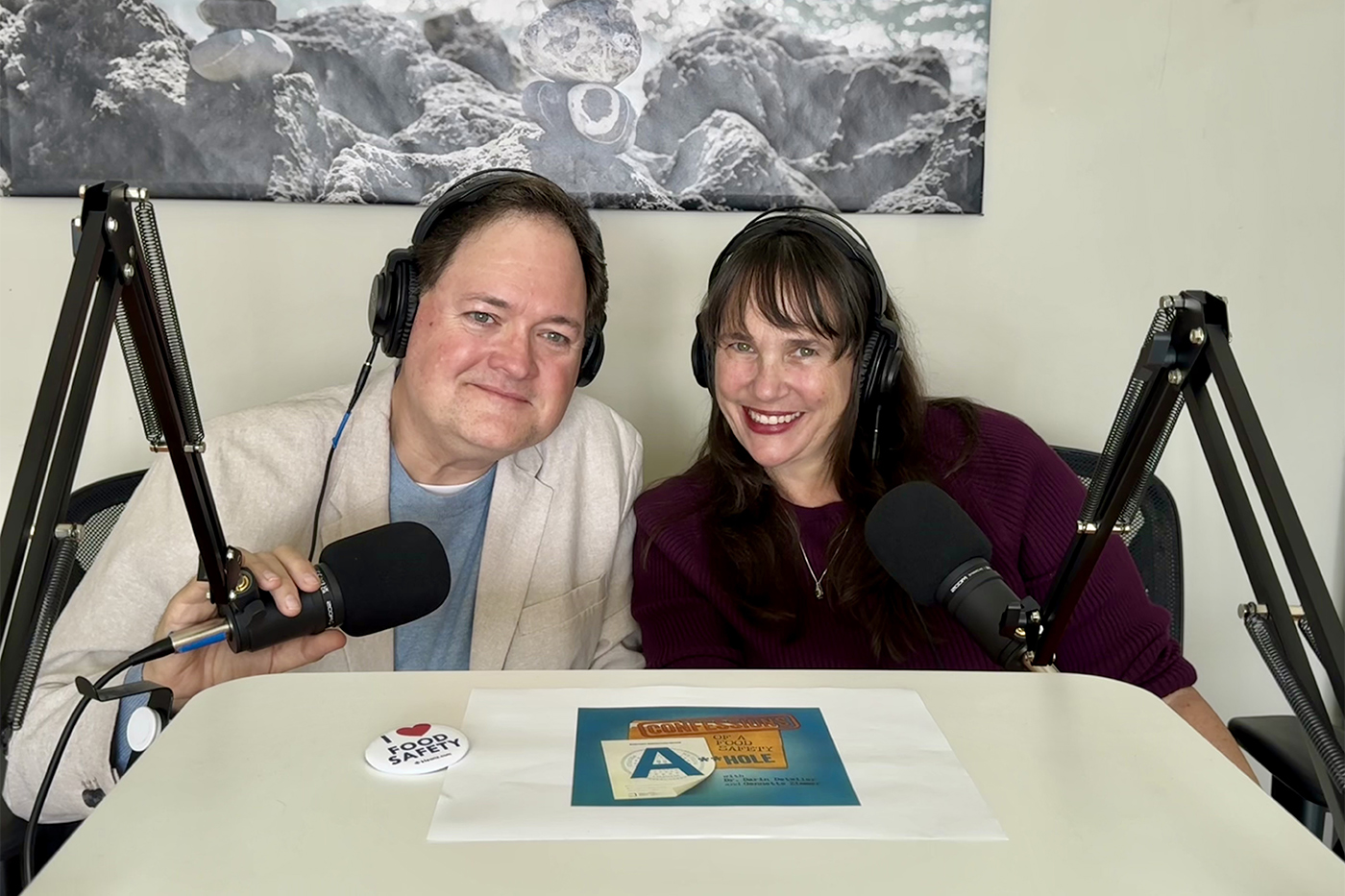
Detwiler has a history of making podcasts for the courses he teaches, as well as serving as a guest on other podcasts and making videos for his classroom. Zimmer directs and edits a lot of Detwiler’s video work, and ran her own podcast, “Midlife Metamorphosis.” So the transition to starting a podcast together was a natural one.
Zimmer now does the editing of the podcast.
“I don’t think we could be as successful as we are if it wasn’t for the work (Zimmer) put in,” Detwiler says.
Editor’s Picks





The episodes often feature the couple recapping times Detwiler has spoken up while dining out, like when he spotted a bag of chips on the floor of a kitchen and disappeared to talk to the manager of a restaurant when meeting one of Zimmer’s old friends for the first time.
But it’s a fine line to walk, Detwiler adds, as many people don’t react kindly when he points out their food safety shortcomings.
“I am not trying to be an a-hole, and I know it sounds like a controversial word to use, but the reality is I go about doing what I think is the right thing,” says Detwiler. “You become part of the problem if you don’t. So if I don’t do something, then I’m part of the problem. I become the a-hole.”
But, Detwiler says, he persists in his work, which began after losing his own son in an E.coli outbreak in 1993, and ultimately hopes to encourage others to get over their discomfort and speak up when they see something wrong.
“I still do what I think is the right thing because there are so many families out there that their child has been sick, their child’s quality of life will never be the same or they’ve buried a loved one because of failures in food safety that almost always get traced back to some decision that was made somewhere because someone didn’t say or do something,” he says. “And if I have the opportunity to say or do something, I’m always going to do that, even if I am perceived as the a-hole for saying that.”