Tennis club’s success is causing a racket
Last year, Northeastern’s club tennis teams qualified for the national championships after finishing in the top seven at sectionals.

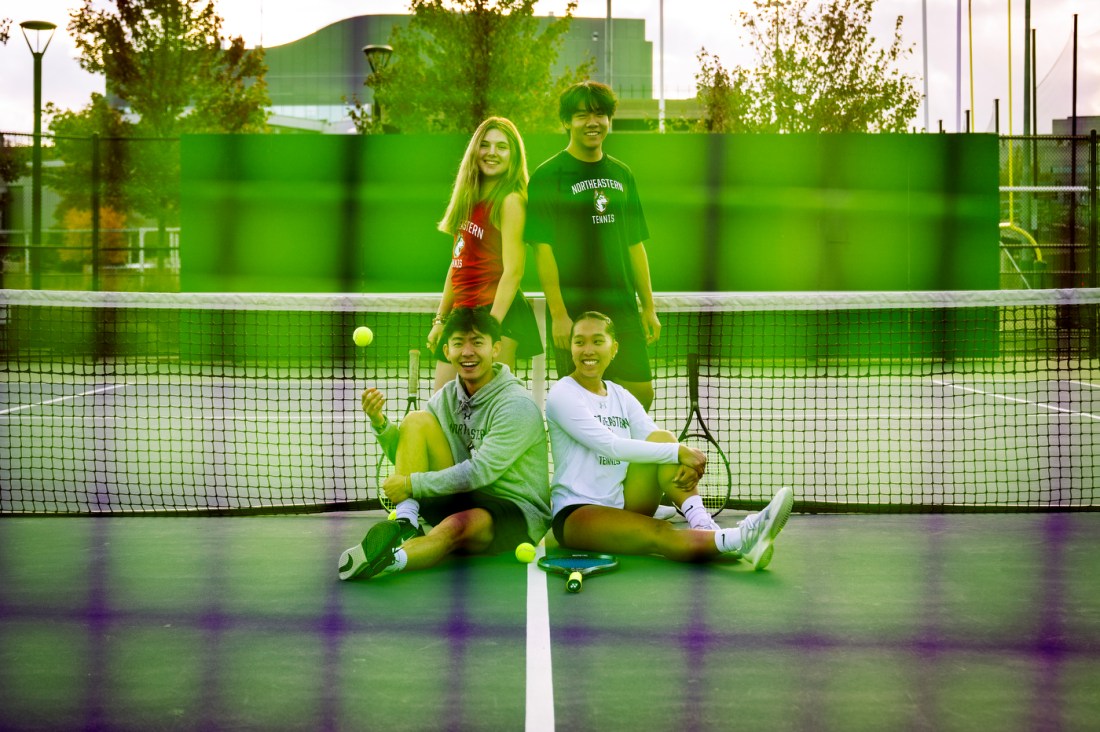
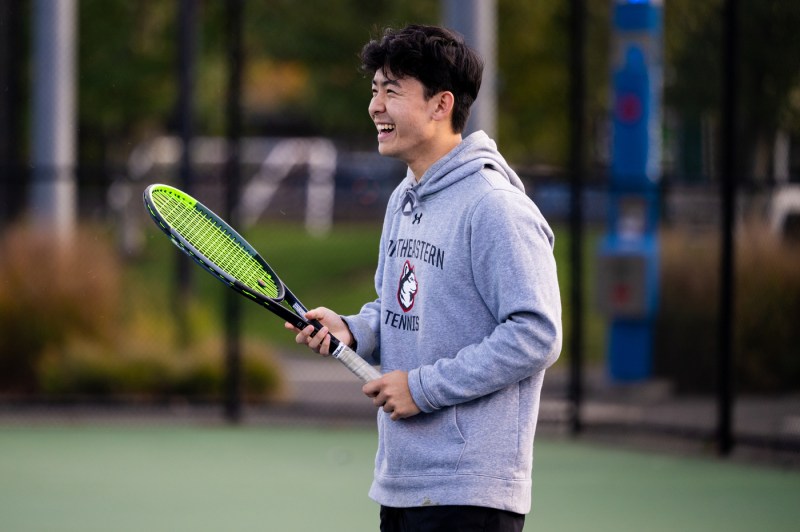
Joshua Song, co-president of Northeastern’s Club Tennis team, is a self-described tennis nerd.
The fifth-year mechanical engineering student can hold his own in the “GOAT” debate, manages the men’s club roster and teaches tennis on the side — all while keeping up with his coursework.
Song transferred from Rutgers University during his sophomore year. Knowing full well he wanted to play club tennis, he tried out for Northeastern’s team — managing not only to earn a spot on the talented roster, but also compete in the U.S. Tennis Association’s “Tennis on Campus” national championships.
“We placed 15th overall, which was really exciting at the time,” Song says.
The national championships represent the pinnacle of college club-level competition, a way for schools without varsity teams to mix it up with other schools and “scratch the competitive itch,” Song says.
Teams compete in a mixed-gender World TeamTennis format, with tournaments divided into four pool-play tiers: copper, bronze, silver and gold.
It was a formative moment in Song’s tennis-playing career — one that propelled him to eventually seek a leadership role within the club.
For Song, running the club — which he does alongside his co-president, Danny Benjamin — is not all fun and games (and sets and matches). There’s a lot of administrative work: managing contracts for courts; setting deadlines for those contracts; holding tryouts to shape their roster and then onboarding new club members; and organizing transportation when the team is on the road.

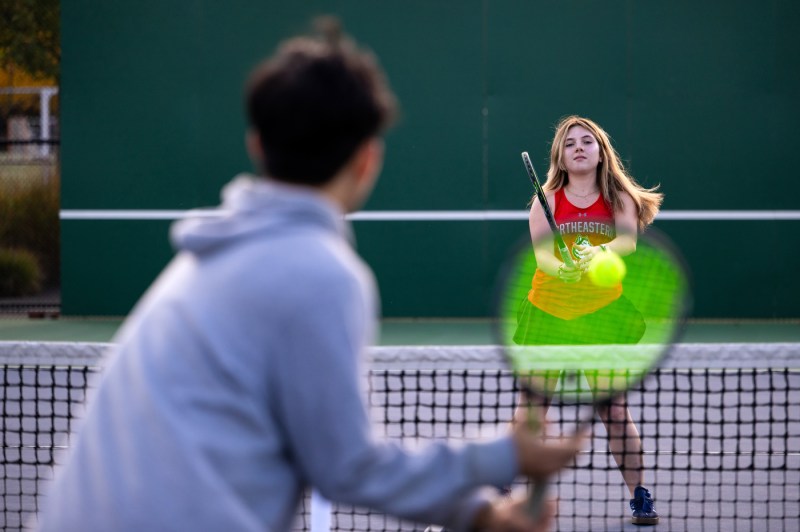
Like all club-level sports, one of the challenges organizers face is striking a balance between the social and competitive dimensions of building a team that by its very nature is both welcoming and driven to win. At Northeastern, it all feeds together: a tight-knit team naturally helps to bring out those competitive juices.
“I feel like the team has become a really big part of my social life,” Song says. “For club, the stakes are a lot lower. Most people aren’t joining to grind five days a week and win some sort of championship. Obviously, that would be nice. But it’s more an outlet for people who enjoy tennis.”


And much like other collegiate clubs, Song says it’s a case of “you get out what you put in.”
The community that’s come together around both the men’s and the women’s teams at Northeastern has forged strong bonds over the last few years, Song says. Those friendships extend well beyond the court — those efforts to consistently perform well at sectionals — to potlucks, fundraisers and social nights out.
Editor’s Picks


Jessica Gionta, president of the women’s club team, says the teams play a lot of scrimmages with area colleges. “We’re playing a different school about every other week,” she says.
Both the men and women play a combined format, meaning the points they accrue count toward Northeastern’s overall standing. During scrimmages and official tournaments, both the men’s and women’s teams play singles, doubles matches and mixed doubles.
“We’re currently doing tryouts right now,” Gionta says. “We also like to really get to know our team, so we ask little questions just to gauge personality.”
Of the dozens of active club members, only a handful — five men and five women — are chosen to compete at sectionals after playing in an internal bracket.
Last year, Northeastern’s men’s and women’s club tennis teams both qualified for the national championships after finishing in the top seven at sectionals.
This year, the Huskies narrowly missed a return trip, placing ninth overall in a 28-team field over the weekend. In 2025, only the top six schools advance to nationals.
Interested in trying out for the team? Song and Gionta encourage anyone with a love of tennis to reach out to them at the start of the semester.
“Every year we have a lot of people trying out, and people always assume it’s competitive and super intense,” Song says. “But it’s a club sport: we’re all doing it for fun. It’s just one big community that loves tennis, and there’s nothing really to be afraid of.”
“There’s no pressure, really,” Gionta says.
The two also help raise funds to ensure the team has what it needs to travel and compete.