This AI-powered autonomous wheelchair will deliver a new level of independence
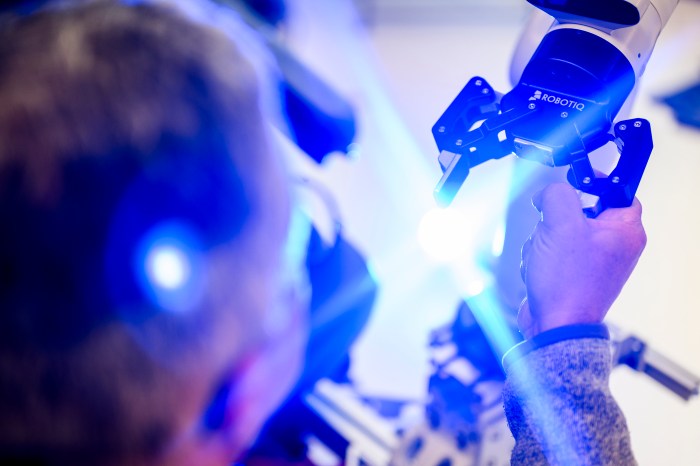
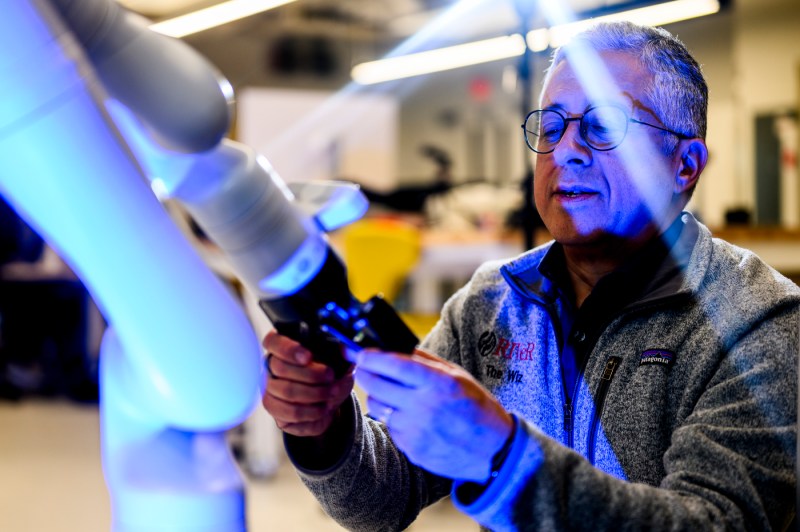
Northeastern’s Robotics and Intelligent Vehicles Research Laboratory is helping develop an autonomous wheelchair with a robot arm.

They weigh more than 400 lbs., are often powered by lead-acid batteries and much of their software is locked behind complicated licensing agreements.
While there have been advancements in the assistive technology space with innovations in computer vision, soft robotics and other AI technologies, motorized wheelchairs are still stuck in the past, says Northeastern graduate Todd Roberts, CEO of Assistive Technology Development Inc., which develops rehabilitation devices.
“What patients can get access to on the market is really stuck in the ’90s,” he says.
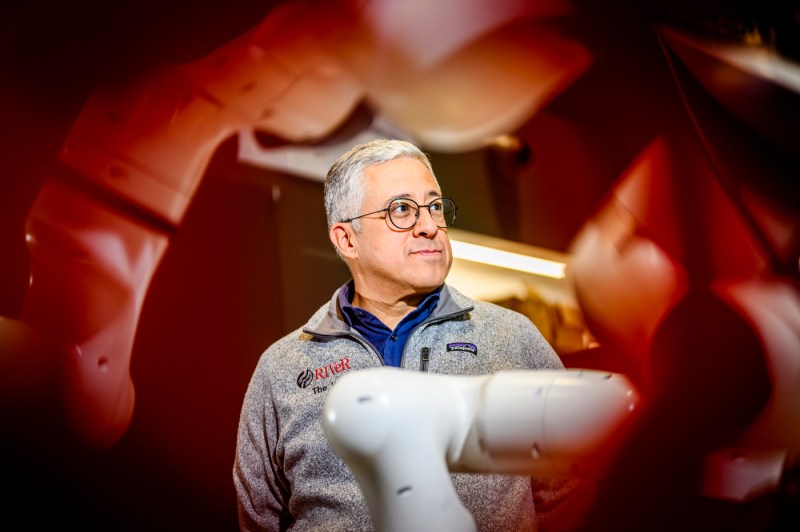
Researchers out of Northeastern University’s Robotics and Intelligent Vehicle Research Laboratory are helping Roberts change that in a major way – they are partnering with the company to develop a new autonomous wheelchair system featuring a robotic arm.
Researchers say the system could enable a new level of independence for people with quadriplegia and other physical conditions that limit mobility.
“This is a big steroid shot to make a difference in the lives of those individuals,” says Taskin Padir, a Northeastern professor of electrical and computer engineering and the director for the RIVeR lab.
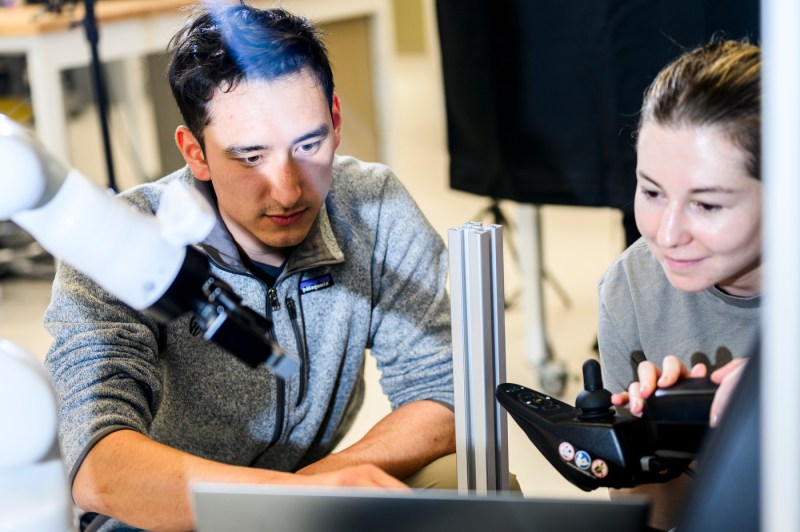
The autonomous wheelchair project is part of the Robotic Assistive Mobility and Manipulation Platform Providing Independence for People with Disabilities project, or RAMMP, a multi-university and private business collaboration funded primarily by the Department of Health and Human Services’ Advanced Research Projects Agency for Health, or ARPA-H, with a total of up to $41 million.
While we are still far away from using robotics for “more complex tasks” like assisting individuals in getting out of bed or dressing themselves, today’s state-of- the art technology could still enable a new level of autonomy, Roberts says.

“Once a person is in their wheelchair there’s no reason why a robotic arm, vision systems and some smart AI, could not help you feed yourself, open doors, take medication and go grocery shopping,” he says.
Padir’s team will specifically help the company develop the wheelchair’s “personal autonomous navigation” capabilities. Not only will the device have to be capable of helping people navigate around their home, but also in more unpredictable outdoor settings.
Padir has spent years working in this space and designing autonomous systems capable of making their way around challenging environments remains a fascinating open research question, he says.
“There are a lot of challenges that still need to be addressed,” says Padir. “You may have to cross a busy street where there may be no light. You may have a walkway blocked by a car.
“In all these situations, the current autonomous systems will just sit, wait and get lost,” he says. “How do we unlock these edge cases? How do we provide an independent mobility platform that can still make progress?”
Roberts — who graduated from Northeastern University in 2019 with a bachelor’s degree in Mechanical Engineering — knows the rehabilitation industry well.
ATDev develops accessible physical health care devices, and its first product is the Reflex Robotic Rehabilitation Device, which it designed for orthopedic knee rehabilitation.
Editor’s Picks


RAMMP is the company’s biggest undertaking yet, but it’s been years in the making for Roberts and his co-founder, Owen Kent.
Kent was born with muscular dystrophy, a genetic disorder that causes the progressive weakening and loss of muscle mass, making him “effectively paralyzed from the neck down,” says Roberts.
Because of that, Kent has been in wheelchairs his whole life and has been at the “forefront of whatever new technology comes out,” says Roberts. The current systems on offer have left a lot to be desired.
“He’s had this vision of developing an autonomous wheelchair that would allow somebody like himself to stay fully independent,” says Roberts.
Northeastern partners on the five-year research project with the University of Pittsburgh, Carnegie Mellon University, Cornell University and Purdue University.
Private companies include Kinova Robotics, which will be building the wheelchair’s new robotic arm, and LUCI Mobility, which will be handling the wheelchair’s camera system.
The plan is to have a working prototype within the next 12 months, says Roberts, with the ultimate goal of commercializing it alongside its research efforts.
“Our hope with the outcome of this project is a wheelchair platform that both real people with disabilities are using on a daily basis to be independent and researchers are using to develop new algorithms to make these people even more independent,” he says.


