Finders keepers? Why the British Museum is trying to buy a locket once owned by Katherine of Aragon
The Tudor artifact was found in a field in 2019 by a metal detector hobbyist. A British law allows the finder to profit from the sale of the found treasure.


Around 1518, British monarchs Henry VIII and Katherine of Aragon arranged for their daughter, Princess Mary, to wed the heir to the French throne. To mark the occasion, Henry VIII gifted his wife a 24-carat gold locket.
Like many artifacts from the Tudor era, the locket was lost to the ages until a metal detector hobbyist unearthed it in a field in Warwickshire nearly 500 years after historians suspect it was made.
The British Museum is now fundraising 3.5 million pounds (or $4.6 million) to purchase the so-called “Tudor Heart” so it can be put on display instead of being placed in a private collection.
@northeasternglobalnews Thanks to a British law, a metal detecting hobbyist who found a locket once owned by Katherine of Aragon could profit off of the treasure's sale. The British Museum is fundraising to buy the locket — known as the Tudor Heart — for $4.6 million. #Tudors #BritishMuseum #Treasure #History #RoyalHistory ♬ original sound – NGN
“It’s very rare to have this type of jewel,” says Estelle Paranque, an associate professor in early modern history at Northeastern University. “It’s beautiful that (the British Museum) is trying to keep it. There are so many things kept away from the public. We want people to see it (as) it’s a part of our heritage.”
A museum owning such a significant historic artifact is not a given. Britain’s Treasure Act of 1996 states that anyone who finds an object classified as “treasure” must report it to the local coroner within 14 days. If the object is considered a designated treasure, the finder and landowner can claim a reward, says Susan Frances Jones, an assistant art history professor at Northeastern University’s London campus specializing in medieval and early modern art and culture. The value of the reward is determined by a committee.
Once the price is set, the act states the finder must offer the object for sale to a museum, enabling them to earn a reward from their findings. Otherwise, the finder can keep the item.
“The Tudor Heart is perhaps one of the most incredible pieces of English history to have ever been unearthed,” says Nicholas Cullinan OBE, director of the British Museum. “Support will ensure that this unique and beautiful treasure is secured for the nation, so that it can be enjoyed by and inspire generations to come.”
Other countries have similar laws limiting where people can “treasure hunt” and requiring them to report any findings. A man in Germany was recently under investigation after he revealed he had found “a hoard” of Roman-era artifacts and never reported it.
The ability of museums to purchase historic artifacts is crucial, says Northeastern historians. In addition to ensuring public access to the item, museums have the ability to properly conserve historic items and provide context on the history.

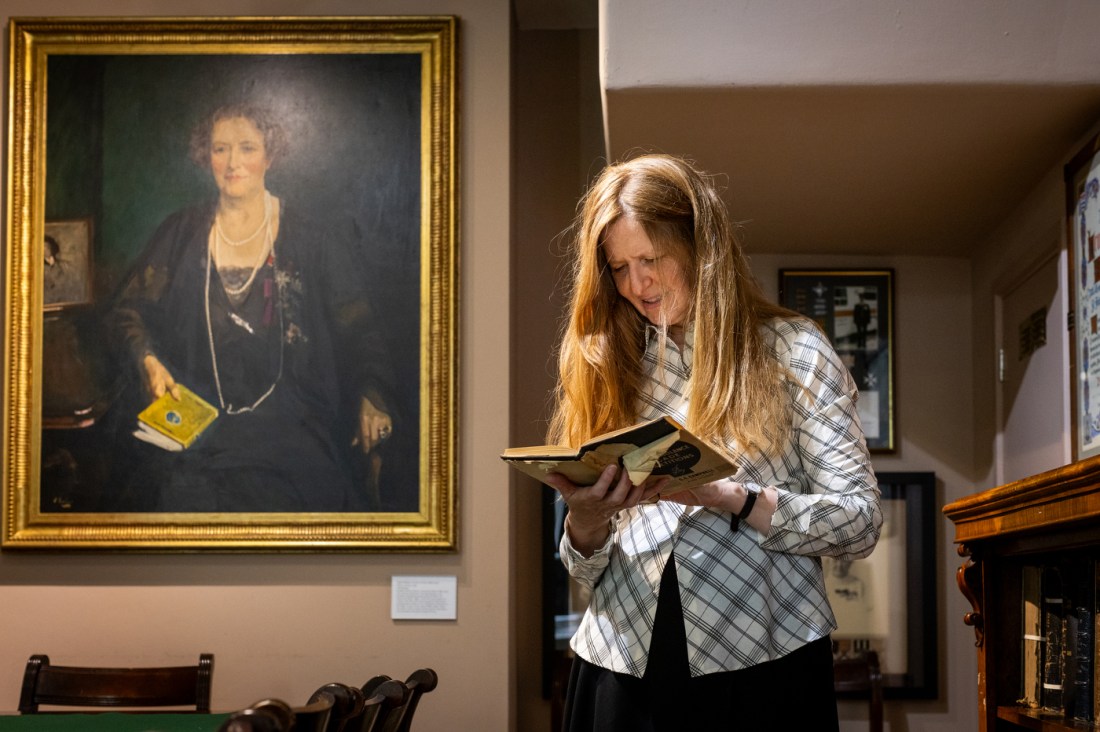
“The permanent collection (at the British Museum) offers a context for the pendant because it already has hundreds of objects connected to Henry VIII,” Jones adds.
“It’s important as an object in that it was produced in the earlier part of Henry’s reign, before he broke with Rome, and became head of the church of England. He was married to Katherine of Aragon for 24 years, but the focus is usually on the period of the annulment and its consequences, so this will allow the museum curators to shift the narrative, and to explore Henry’s marriage to Katherine, his alliance with the Spanish Habsburgs and wider social and political relations.”
Editor’s Picks





The pendant was gifted from husband to wife before Henry VIII ended his marriage to marry Anne Boleyn. Paranque says that while some view it as a symbol of love, he likely gave it to flaunt his wealth and legacy.
“It shows a very strong dynastic alliance,” Paranque says. “My reading of it would be it’s more about proving (their daughter, Mary) comes from two very strong dynastic houses). It’s more to establish Mary is pure royal blood.”
The gold locket is enameled in black, white and red. The red “basse taille” enamelwork was “highly prized” for the period, per Jones. The goldsmith applied a thin layer of translucent fold enamel to shallow recesses in the gold to create a glowing, gem-like effect.
One side of the pendant depicts rose and pomegranate bushes intertwined, symbolizing the couple, Jones says. The red-and-white rose represents the Tudor rose and the pomegranate was Katherine of Aragon’s personal emblem.
Alongside these emblems are the words “toujours” which means “always” in French. The other side of the locket features Henry and Katherine’s initials.
“The pendant is a symbol of love and of marriage,” Jones says. “The imagery — the emblems, the initials and the motto — are part of a well-established emblematic language, a system of signs which arose in the late Middle Ages and was widely understood in the culture.”