Northeastern colleagues remember Phyllis Strauss, ‘tough, generous’ distinguished biology professor
Strauss, who passed away in September, served at Northeastern for 46 years and was among the first biology faculty members to bring in substantial federal research funding.

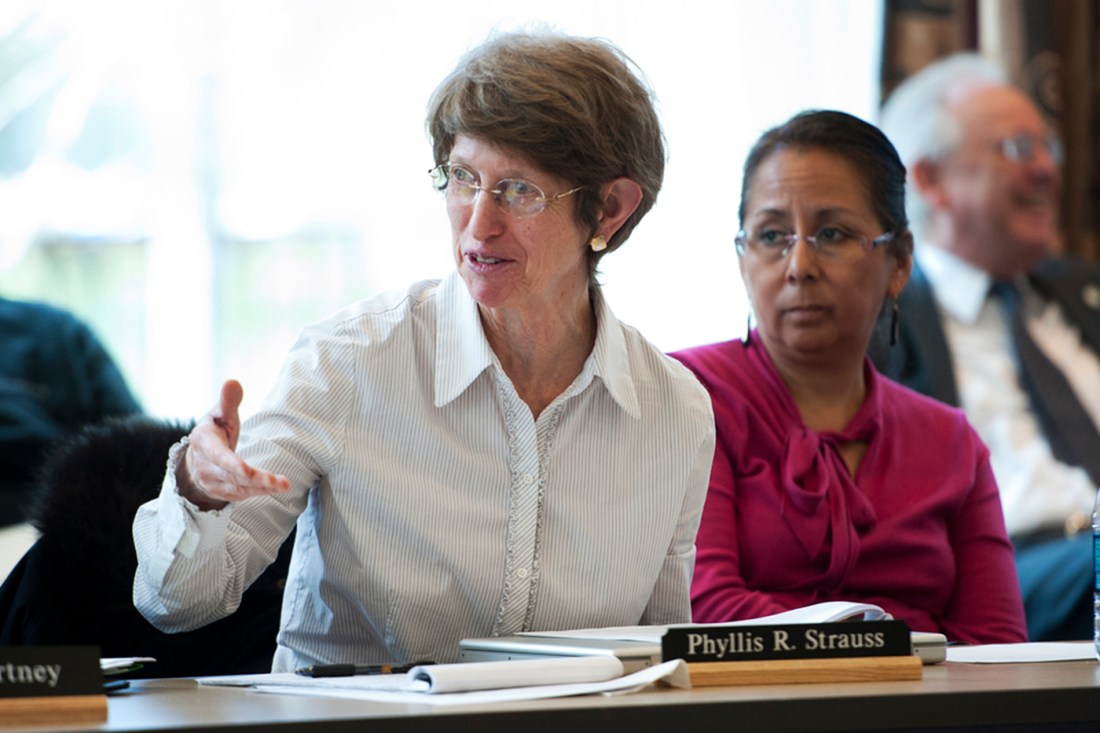
There’s one factoid about Phyllis Strauss that people who knew her tend to bring up. She learned to ski in her 50s — and became so committed to it that she and her husband owned a place in the mountains of Vermont for a time.
“That’s an example of her energy,” says Kostia Bergman, a retired Northeastern biology professor who worked down the hall from Strauss for decades. “Phyllis was intense, and someone who worked very hard.”
Strauss, who died in September at age 82, brought that same intensity to Northeastern’s biology department, where she worked from 1973 to 2019. At retirement, she was a Matthews Distinguished Professor, with past appointments as a Professor of Biochemistry and as a Fulbright Scholar in India.
Expert in a wide range of scientific areas — including molecular biology, cancer biology and immunology — Strauss was particularly renowned for her work on DNA repair mechanisms, during a period in the late 20th century when DNA itself was just becoming more broadly understood.“She leaves behind a remarkable legacy as an educator, researcher, and mentor who touched the lives of countless students, faculty, and staff,” a College of Science announcement of Strauss’s passing reads. “Throughout her tenure, she maintained an unwavering commitment to academic excellence, inspiring and challenging her students to reach their full potential.”
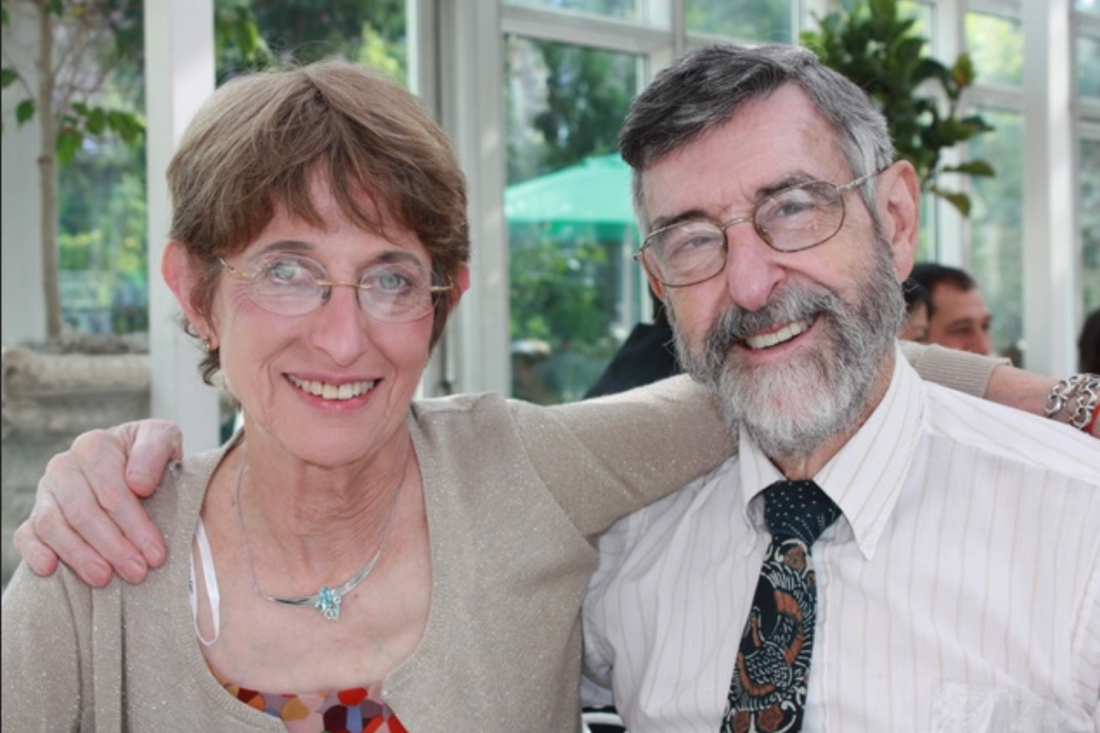
Colleagues remember Strauss as a tireless presence around Northeastern, and someone who was instrumental in the university’s evolution into a competitive, top-tier research institution.
“When I first got here, she was — I wouldn’t even say one of the only women — one of the only [biology] faculty who was bringing in external funding,” says emeritus professor Wendy Smith, who joined Northeastern in 1985. Strauss had federal grants from the National Institutes of Health and the Department of Health and Human Services early in her career — something commonplace at Northeastern these days.
“When we switched to being an R1 institution, Phyllis had a lot to do with that,” Smith says. “She was always in the mix for trying to get external funding, and she was successful at it.”
Bergman, who came to the university a year after Strauss, recalls that early success didn’t slow her down in the least.
Despite heading up her own lab, with undergraduate and graduate assistants on hand, “she did experiments herself,” he says. “I didn’t really do that. She would be in the lab pipetting night and day.”
Strauss was born in Worcester, Massachusetts, in 1943. According to a public obituary, she had “already decided to become a scientist by the time she was a teenager.”
She earned an undergraduate degree in chemistry from Brown University in 1964 and a Ph.D. from Rockefeller University in 1971; her thesis was on Leishmania tarentolae, a type of non- pathogenic protozoa found in reptiles.
During her nearly five-decade tenure at Northeastern, Strauss taught mainly cell biology and was active in the administration, serving on dozens of departmental and university-wide committees as well as the Faculty Senate.
Smith remembers that in her early years in the biology department, faculty and their labs were scattered around a few buildings on the Boston campus — some were in Lake Hall, some in Richards or the Mugar Life Sciences building. Despite that geographical separation, Strauss made a point to ensure the group had cohesion.
“She was really good about stepping up to the plate when there was a social event that needed to happen: Maybe we ought to do a thank you for a retiring chair, or we ought to do a welcome for an incoming chair,” Smith says.
“In a group of science faculty, oftentimes that isn’t the first thing that comes to their mind. We have a tendency to wander off into our own world,” Smith continues. “But she had a good radar for stepping up and doing that, which I really appreciated. Having been in administration, it’s an important thing to do.”
Bergman describes his longtime colleague as unrelenting but kind, and someone who never held a spirited disagreement personally.
“Phyllis, when she believed something, she would trumpet it. Usually louder than anyone else,” he says. “She would fight about an idea but be totally gracious, and never held a grudge.”
When Bergman’s son was born, Strauss sent him a big box of baby clothes handed down from her son. They passed the haul back and forth each time a new baby came along.
In addition to her two sons, Strauss is survived by her husband, sister, brother and four grandchildren, according to her obituary.
“She was tough. And she was generous,” Bergman says of his longtime colleague.