This roving air quality detection van will help Boston neighborhoods breathe easier


Thousands of cars pass through the Boston neighborhood of Allston on the Massachusetts Turnpike every day, emitting fumes that pollute the air around area homes and businesses.
Could one van, operated by a team of researchers from Northeastern, hold the key to cleaner air?
The city of Boston thinks so, funding an effort by the Allston Brighton Health Collaborative to have Northeastern’s iSUPER mobile “lab in a van” identify pollution hotspots in Allston in hopes of finding solutions to the barrage of dirty air.
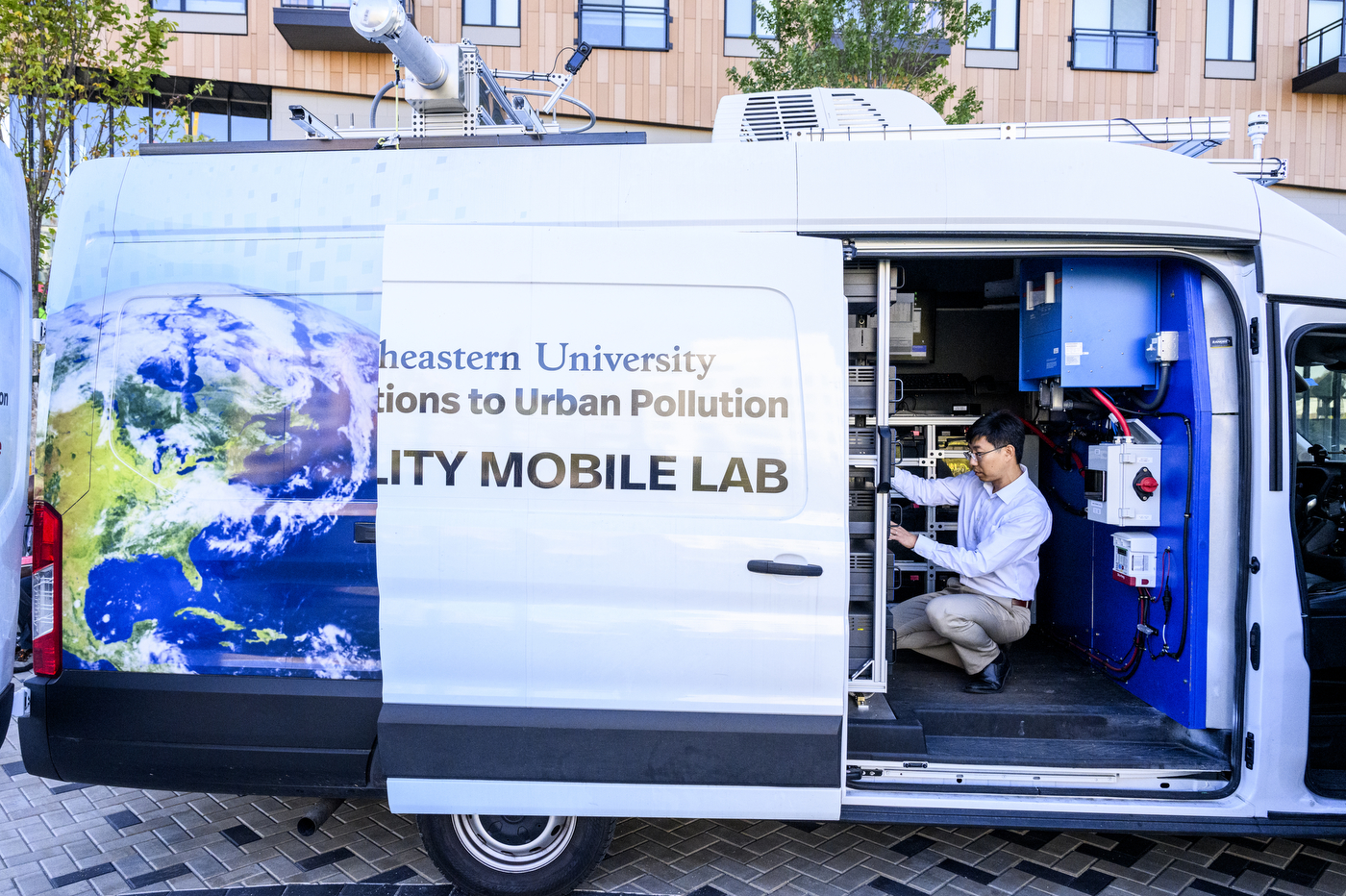
“We’re going to drive around communities near the Mass Pike” in the iSUPER van filled with the latest technology in air quality monitoring equipment, said Shang Liu, assistant professor of civil and environmental engineering at Northeastern.
The van will measure pollutants such as particulate matter, nitrogen oxides, ozone, carbon monoxide and carbon dioxide within Mass Pike communities and at different distances from the highway to see how far the emission plumes travel into the community, he says.
“One of the goals is to identify emission hotspots,” Liu said. “The data could tell us not just how high the pollutant level is but also where it comes from and through what kind of chemical mechanisms and dynamic processes.”
“We want to understand the sources so that the decision-makers can mitigate them,” he says.
Editor’s Picks





The high resolution data being gathered by the van, developed under the Northeastern University’s impact engine project called Healthier Air and People, The Intelligent Solutions to Urban Pollution for Equity and Resilience (iSUPER), is an important piece of the pollution measurement puzzle.
The Allston Brighton Health Collaborative, the lead agency for the project called Breathe Easy, Allston, Brighton, is also installing stationary air quality sensors inside and outside of homes in the area.
After six months, each home will receive an air purifier, and air quality will be measured for comparison purposes.
“We’re going to educate community members and let them know how to interpret the data themselves,” Liu said.
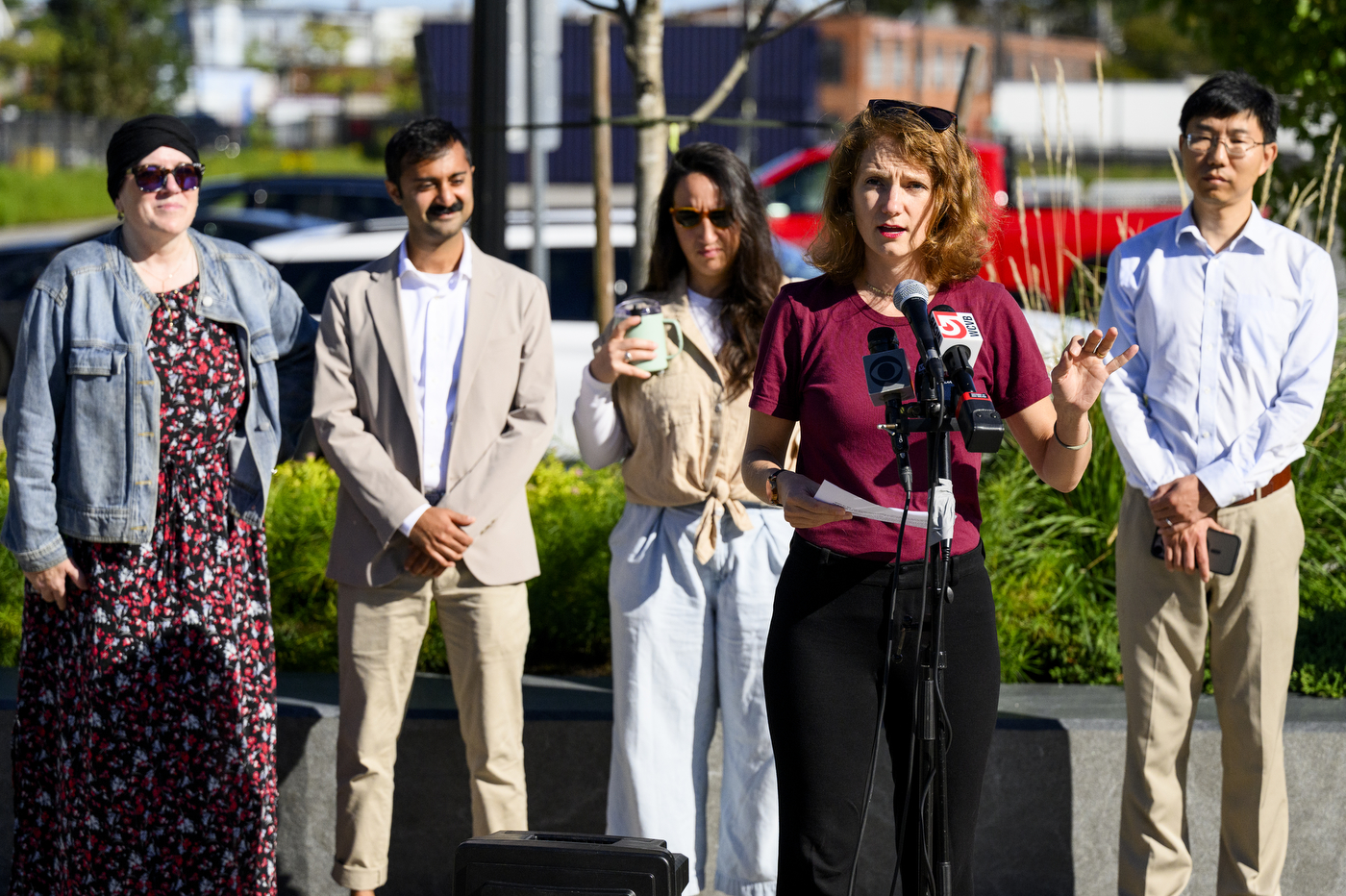
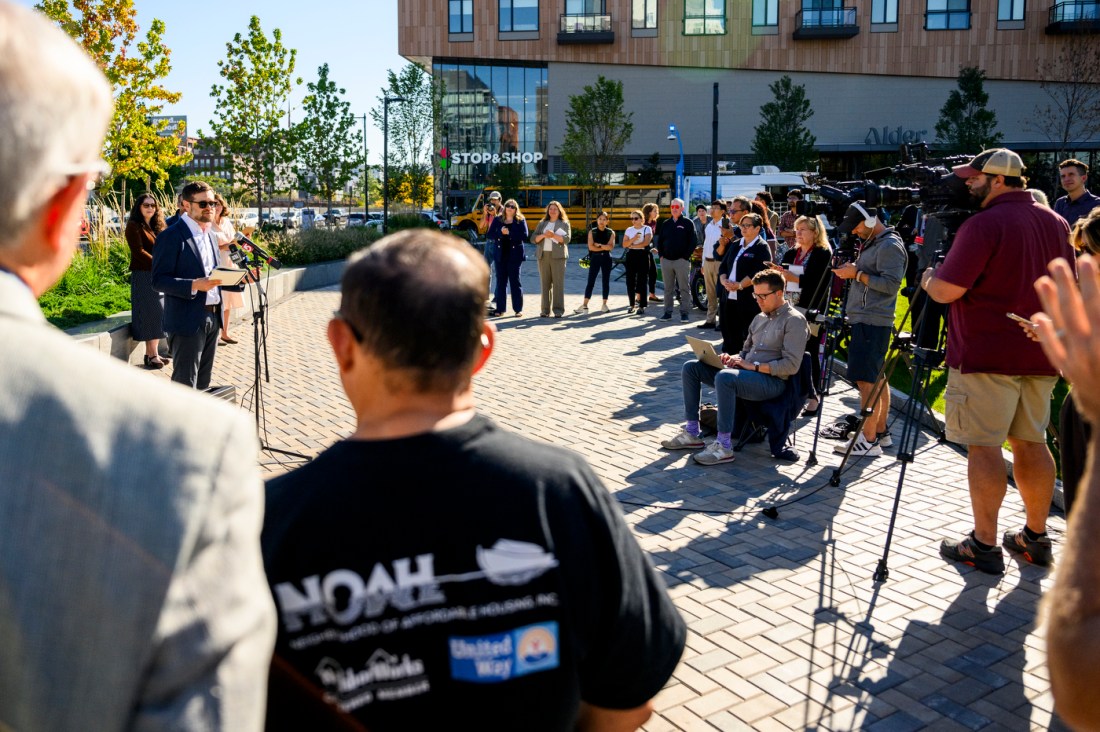
“These community members most impacted by the highway’s pollution will learn what the data means for their health and what steps they can take to ensure cleaner, healthier air inside their own home,” Anna Leslie, director of the Allston Brighton Health Collaborative, said Monday morning during a press conference in Allston.
“Liu’s team will collect new neighborhood-level air quality data with their mobile lab that will become public for all community members to monitor,” she said.
The iSUPER van parked by the Rita Hester Green was the visual star of the press conference that also honored five other air quality grant recipients.
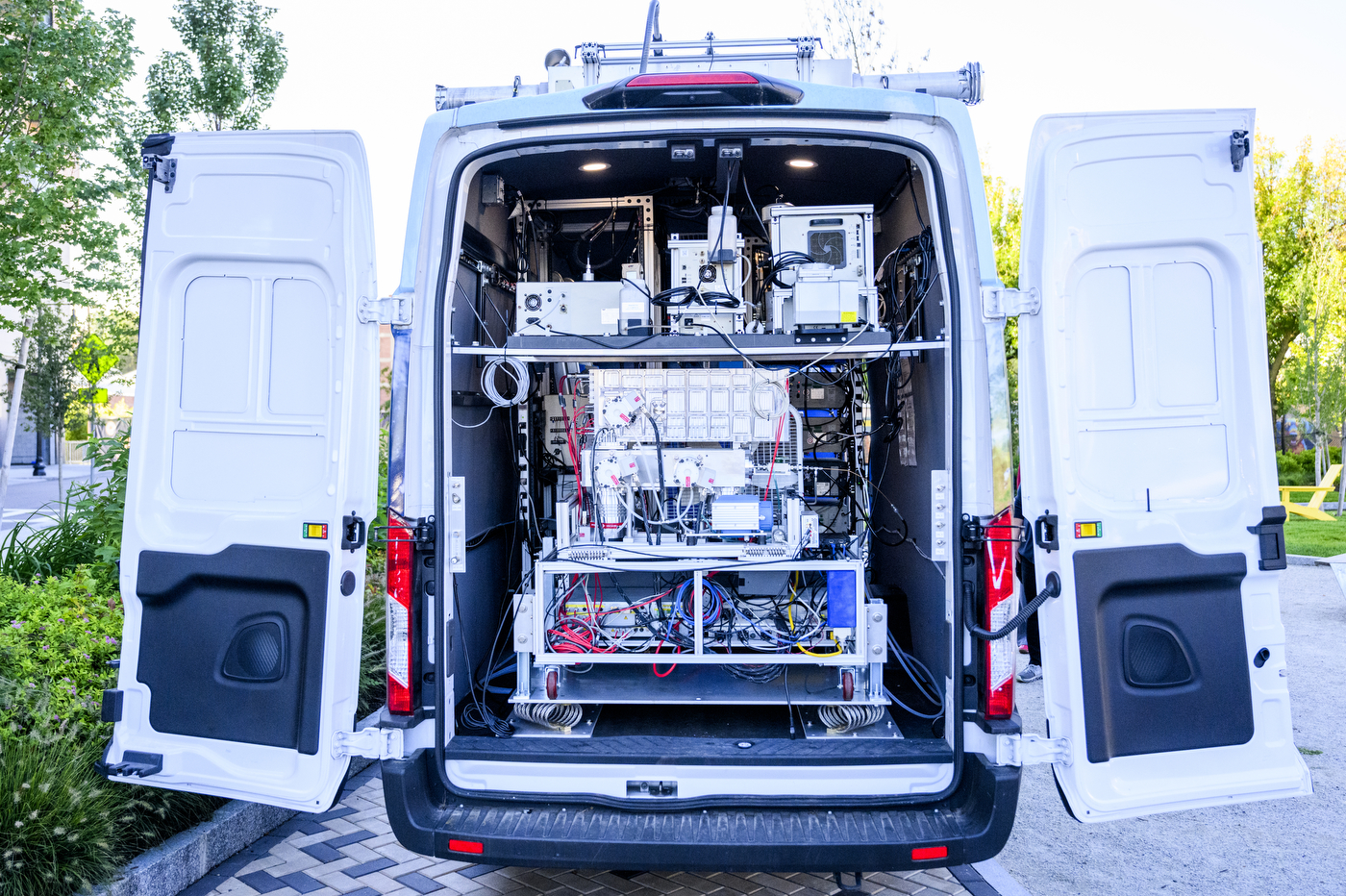
Abir Saha, a Northeastern Ph.D. student, and undergraduate Austin Sanchez gave people tours of the van, which was filled with boxes of equipment to measure gases and particulate matter and topped by a metal isokinetic sampling inlet on the roof.
Elaine McCauley-Meehan, who works for the Allston Brighton Health Collaborative, said she was amazed that not only will Northeastern researchers be able to identify the source of the pollution but also how long the molecules have been hanging around in the air.
The equipment in the van is more advanced than stationary air monitors, being able to identify particle chemical composition such as organic materials quickly and at high resolution, Liu says.
The van is an important complement to Northeastern’s installation of a sensing network consisting of more than 140 air quality monitoring sensors in Chelsea and Brookline, says Yang Zhang, distinguished professor of civil and environmental engineering, who heads the iSUPER impact engine.
Block by block, concentrations of pollutants can vary by a factor of five or eight, leading to disparity in air pollution exposure across streets and neighborhoods, she says.
“One goal is to identify where (pollutants) come from and if it’s from a local source and what source sector—industry, traffic, meat cooking or residential wood combustion. This can inform the most effective air pollution mitigation strategies.”
The World Health Organization says that air pollution causes approximately 7 million premature deaths around the globe each year, with children, the elderly and low-income individuals being the most affected.
The air quality project will help residents see for themselves how they are being affected, Leslie said.
“Through a series of public workshops and leadership building programs, we’ll make sure that the people most impacted are the ones interpreting the results and using them to advocate for a cleaner, healthier future,” she says.